Rupture Disc Operating Ratio Explained (Avoid Premature Failure)
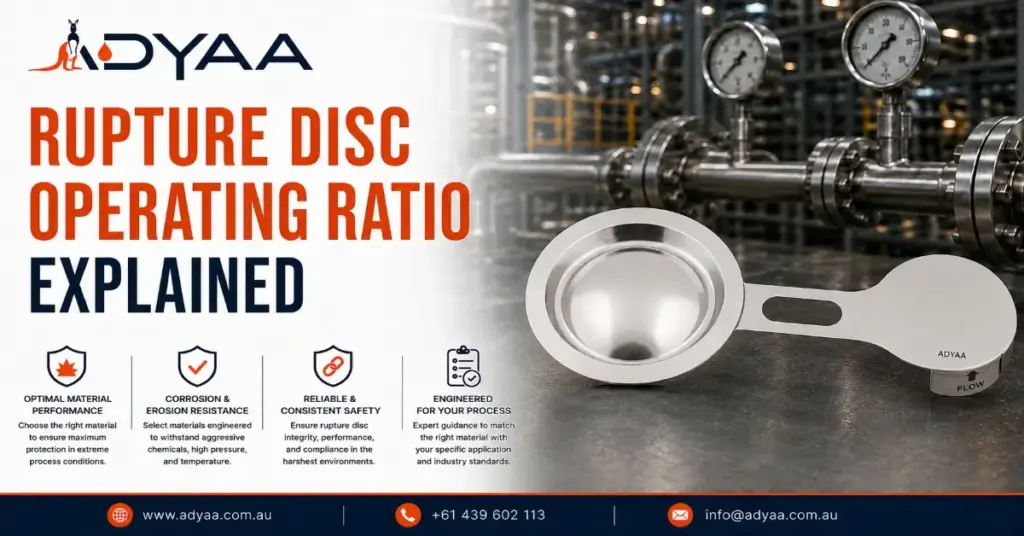
Rupture Disc Operating Ratio Explained (Avoid Premature Failure) If your pressure relief devices are blowing during normal plant operations, you are likely suffering from premature metal fatigue. This happens when your process runs too close to the disc’s breaking point. To prevent these expensive, nuisance shutdowns, you must strictly control your rupture disc operating ratio. Understanding this simple metric ensures you select a disc capable of surviving your daily pressure cycles without weakening. Quick Comparison: Allowable Ratios by Disc Design Rupture Disc Type Loading Type Max Operating Ratio Risk of Premature Fatigue Forward-Acting (Standard) Tension 70% to 80% High (if ratio is exceeded) Reverse-Acting (Buckling) Compression 90% to 95% Very Low Graphite Brittle / Shear 80% Moderate What is a Rupture Disc Operating Ratio? The rupture disc operating ratio is the mathematical relationship between your system’s everyday working pressure and the disc’s rated burst pressure. The Definition: It is the maximum percentage of the burst pressure that your system can safely operate at continuously. The Formula: Normal Operating Pressure ÷ Marked Burst Pressure = Operating Ratio. The Goal: To leave a wide enough safety buffer so the metal dome does not stretch, deform, or fatigue during normal daily pressure fluctuations. Why the “90% Rule” Matters for Plant Safety Engineers often refer to the “90% rule” when designing high-efficiency pipelines. Pushing past a disc’s specific ratio limit guarantees failure. Micro-Stretching: When pressure constantly pushes near a disc’s limit, the molecular structure of the metal begins to stretch irreversibly. Drifting Burst Pressures: A fatigued disc will no longer burst at its stamped rating. It will burst much lower, causing unexpected plant shutdowns. Pulsation Damage: If your pipeline features heavy pumps or compressors, the constant pulsing will accelerate metal fatigue even faster if your operating ratio is too tight. How Disc Engineering Alters the Ratio Not all discs can handle high operating ratios. You must match the mechanics to your process. Forward-Acting Limitations These discs face the process and stretch outward (tension loading). Because tension constantly weakens the metal, they are strictly limited to a 70% or 80% operating ratio. Reverse-Acting Advantages The dome faces against the process (compression loading). Metal resists compression incredibly well, allowing these discs to operate safely up to 90% or 95% of their burst pressure without fatiguing. How to Calculate and Apply the Ratio Do not guess your safety margins. Follow these exact steps to specify the right disc for your line: Step 1: Identify Normal Pressure. Determine the absolute highest pressure your system runs at during normal, non-emergency operations (e.g., 75 PSI). Step 2: Identify Burst Pressure. Determine the critical pressure where the disc must burst to save the vessel (e.g., 100 PSI). Step 3: Do the Math. 75 PSI ÷ 100 PSI = 0.75 (or a 75% ratio). Step 4: Make the Selection. Since 75% exceeds the safe limit of a standard forward-acting disc (usually 70%), you must upgrade to a reverse-acting disc to guarantee a long service life. FAQ – Rupture Disc Operating Ratio Q: What is a rupture disc operating ratio? A: It is the ratio between a system’s normal operating pressure and the disc’s rated burst pressure, expressed as a percentage. Q: What happens if I exceed the recommended operating ratio? A: The rupture disc will suffer from premature metal fatigue, stretching the dome and causing it to burst below its rated pressure during normal operations. Q: Can I operate a rupture disc at 100% of its burst pressure? A: No. Operating continuously at 100% guarantees immediate fatigue and premature failure. The absolute maximum for advanced designs is 95%. Q: Why do reverse-acting discs have higher operating ratios? A: Reverse-acting discs are loaded under compression rather than tension, making the metal highly resistant to stretching and fatigue. Q: Does system temperature affect the operating ratio? A: Yes. High temperatures weaken the metal, artificially lowering the burst pressure and effectively tightening your operating ratio. Q: What is the typical operating ratio for a graphite rupture disc? A: Most standard graphite rupture discs are rated for a maximum operating ratio of 80%. Secure Your Pressure Systems with ADYAA Stop wasting money on replacement discs due to premature fatigue. Designing the perfect pressure relief loop requires strict adherence to operating margins. As Australia’s premium industrial safety supplier, ADYAA provides high-ratio reverse-acting discs and expert engineering support to keep your facility running smoothly. Consult with ADYAA Reliability Experts Today Rupture Disc Operating Ratio Explained (Avoid Premature Failure) Rupture Disc Operating Ratio Explained (Avoid Premature Failure) If your pressure relief devices are blowing during normal plant operations, you… Read More → Rupture Disc Selection Guide: 5 Critical Steps Rupture Disc Selection Guide: 5 Critical Steps Industrial plants cannot afford guesswork when it comes to overpressure protection. Picking a… Read More → Guide to MNSB 53 for Fabrication Guide to MNSB 53 for Fabrication: Stop Moving Heavy Steel Let’s talk about the biggest bottleneck in a heavy fabrication… Read More →
Rupture Disc Selection Guide: 5 Critical Steps
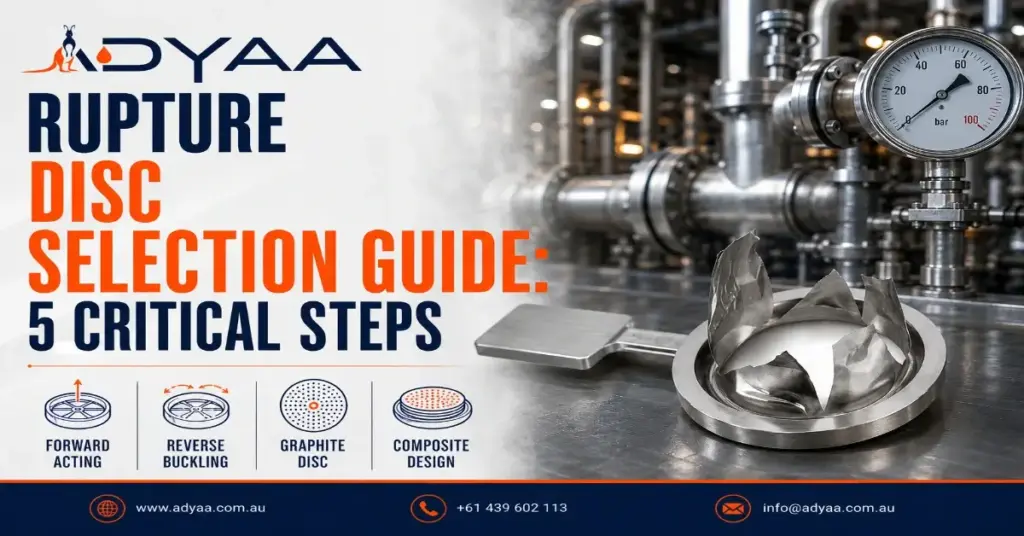
Rupture Disc Selection Guide: 5 Critical Steps Industrial plants cannot afford guesswork when it comes to overpressure protection. Picking a bursting disc out of a catalog based purely on flange size is a recipe for nuisance bursting, premature metal fatigue, or worse—a catastrophic failure to relieve pressure. A rupture disc is a precision-engineered life safety device. To ensure it activates exactly when your system reaches critical mass, you must match the metallurgy and mechanical design to the specific realities of your pipeline. Use this rupture disc selection guide to navigate the five essential engineering steps required to secure your facility. The 5 Steps of Rupture Disc Selection Step 1: Determine Burst Pressure and Coincident Temperature The most critical baseline is establishing your required burst pressure, but pressure never exists in a vacuum. You must define the coincident temperature—the exact temperature of the pipeline at the moment the overpressure event occurs. Because metal weakens as it gets hotter, a stainless steel disc calibrated to burst at 100 PSI at ambient temperature might burst prematurely at 80 PSI if the process runs at 200°C. You must provide your supplier with both variables so they can compensate for thermal weakening during the manufacturing process. Step 2: Calculate Your Operating Ratio Your operating ratio dictates whether you need a forward-acting or reverse-acting disc. This ratio is the gap between your normal operating pressure and your system’s Maximum Allowable Working Pressure (MAWP). Low Operating Ratio (Under 70%): If your system runs at 60 PSI and bursts at 100 PSI, a standard forward-acting disc is sufficient. High Operating Ratio (Up to 95%): If your system runs at 90 PSI and bursts at 100 PSI, a forward-acting disc will fatigue and fail. You must select a reverse-acting disc, which uses compression loading to handle tight pressure margins without degrading. Step 3: Assess Media and Material Compatibility A disc will not burst at its rated pressure if corrosive media has eaten away half its thickness. You must match the disc material to the chemical makeup of your process fluid or gas. Standard Media: 316 Stainless Steel or Nickel are industry standards for water, steam, and non-corrosive gases. Aggressive Media: For highly acidic or sour gas applications, you must upgrade to exotic alloys like Monel, Inconel, Hastelloy, or Tantalum. Extreme Corrosion: If metal cannot survive the environment, specify a graphite rupture disc, which is immune to most industrial solvents and acids. Step 4: Evaluate Downstream Conditions and Fragmentation Where is the pressure going once the disc bursts? If you are venting straight to the atmosphere, a standard fragmenting disc might be acceptable. However, if the disc is installed directly upstream of a mechanical safety relief valve, you must specify a non-fragmenting disc (like a reverse-buckling or cross-scored disc). If a standard disc shatters, the metal shrapnel will lodge in the safety valve, preventing it from closing. A Critical Note on Backpressure If your disc discharges into a common flare header or a closed manifold, you must account for superimposed backpressure. If there is 10 PSI of pressure pushing against the back of the disc, a 100 PSI disc will not burst until the internal system hits 110 PSI. In these scenarios, a balanced rupture disc design is required. Step 5: Select the Right Holder and Accessories A rupture disc is only as reliable as its installation. You cannot clamp a high-performance disc between two standard pipe flanges and expect it to work. You must select a dedicated rupture disc holder designed specifically for the disc profile (e.g., pre-torqued holders or insert-type holders). Additionally, consider integrating a burst indicator sensor that immediately alerts your SCADA system or control room the millisecond the disc activates. FAQ – Rupture Disc Selection Guide Q: What is the most important factor in rupture disc selection? A: Coincident temperature and burst pressure are the most critical, as the temperature directly alters the tensile strength and burst point of the metal. Q: When should I choose a reverse-acting rupture disc? A: Choose a reverse-acting disc when your normal operating pressure is 80% to 95% of your burst pressure, or when you are operating in a high-pulsation environment. Q: Do I need a non-fragmenting rupture disc? A: Yes, you must use a non-fragmenting disc if it is installed upstream of a safety relief valve or sensitive downstream equipment that could be damaged by metal shrapnel. Q: Can I install a rupture disc without a holder? A: No. Rupture discs require highly specific, precision-machined holders to ensure the correct seating, sealing, and bursting mechanics. Q: How does backpressure affect a rupture disc? A: Superimposed backpressure pushes against the downstream side of the disc, artificially raising the internal pressure required to burst it, unless a balanced disc is used. Q: What material is best for highly corrosive processes? A: For extreme chemical environments where stainless steel degrades, graphite, Hastelloy, or Tantalum are the preferred materials to ensure the burst pressure remains stable. Engineer Your Overpressure Protection with ADYAA Relying on a generic rupture disc selection guide is just the first step. Finalizing your safety systems requires exact engineering verification. As Australia’s leading supplier of industrial safety solutions, ADYAA provides ASME-certified rupture discs, precision holders, and thermal relief expertise to keep your plant safe and compliant. Consult with ADYAA Overpressure Experts Today Rupture Disc Operating Ratio Explained (Avoid Premature Failure) Rupture Disc Operating Ratio Explained (Avoid Premature Failure) If your pressure relief devices are blowing during normal plant operations, you… Read More → Rupture Disc Selection Guide: 5 Critical Steps Rupture Disc Selection Guide: 5 Critical Steps Industrial plants cannot afford guesswork when it comes to overpressure protection. Picking a… Read More → Guide to MNSB 53 for Fabrication Guide to MNSB 53 for Fabrication: Stop Moving Heavy Steel Let’s talk about the biggest bottleneck in a heavy fabrication… Read More →
Guide to MNSB 53 for Fabrication
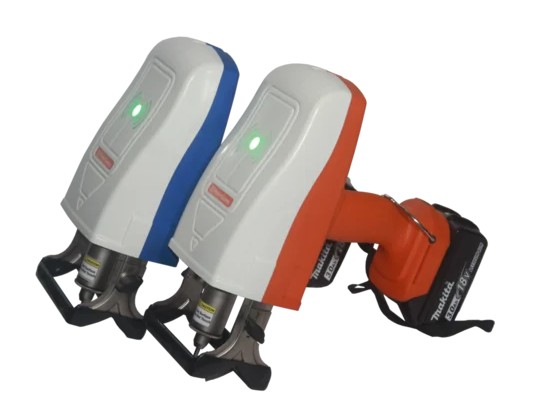
Guide to MNSB 53 for Fabrication: Stop Moving Heavy Steel Let’s talk about the biggest bottleneck in a heavy fabrication shop: material handling. Tying up your overhead cranes and forklifts just to move a 5-ton steel beam to a marking station is a massive waste of time and a serious safety hazard. If you want to keep your shop floor moving efficiently, you need to bring the traceability directly to the asset. That is exactly what the MNSB 53 for fabrication is built to do. It is a highly portable, industrial-grade dot peen marker that allows your team to deep-engrave serial numbers, heat codes, and ISO compliance data right on the sawhorses or out in the staging yard. Quick Specs: MNSB 53 vs Traditional Marking Methods Feature MNSB 53 for Fabrication Manual Hand Stamping Stationary Benchtop Marker Material Handling Zero (Bring tool to part) Zero High (Bring part to tool) Data Accuracy 100% (Digital input/Barcode scan) Low (Human error prone) 100% (Digital input) Operator Safety High (Ergonomic, hands-free options) Low (Hammer strike risks) High Marking Types Text, Logos, 2D Data Matrix codes Basic text only Text, Logos, 2D Data Matrix What Makes the MNSB 53 the Ultimate Shop Tool? The MNSB 53 is a cold-working traceability powerhouse. Instead of burning a shallow mark with a laser, it uses a high-frequency carbide stylus to physically displace the metal. It comes packed in a rugged, portable chassis. With Wifi enabled connection to ensure you can move around the area with keeping the tab or laptop at a stationary place. This means your operators don’t need to drag a laptop through the dirt or trip over extension cords. They just grab the MNSB 53, walk over to a fabricated pipe spool or structural column, type in the data (or scan a barcode), and let the machine hammer out a perfect, permanent mark. Why Fabrication Shops Trust ADYAA in Australia When you run a tight production schedule, you can’t afford equipment that breaks down or a supplier who disappears after the sale. Built for Aussie Shops: ADYAA provides marking systems that easily handle the daily grind, dust, and heavy impacts of local metal fabrication environments. We Come to You: Our engineering team steps onto your shop floor to calibrate the machines, set the correct depths for your specific metals, and train your crew. Local Parts & Support: From replacement styluses to software troubleshooting, our Australian team ensures your production line never stalls. How the MNSB 53 Supercharges Your Workflow Bringing the MNSB 53 for fabrication onto your floor fixes operational headaches immediately: Galvanizing is No Problem: Because the MNSB 53 gouges deep into the metal, the serial numbers stay perfectly readable even after hot-dip galvanizing, sandblasting, or applying thick industrial epoxy. Instant Digital Setup: Integrated Wi-Fi means the marker can sync directly with your shop’s network. Your guys can pull exact work order details straight onto the screen—no more misread handwriting or transposed numbers. Total Versatility: Need to mark a flat steel plate? Done. Need to mark a curved pressure vessel? Snap on a V-shaped front plate, and it sits perfectly flush against the curve. Common Mistakes Fabricators Make with Part Marking Do not let bad equipment choices slow down your output. Here is how ADYAA helps you avoid expensive mistakes: 1. Forgetting About the Final Paint Job The Problem: Buying an expensive, low-power portable laser, only to realize the mark completely disappears once the part gets a heavy coat of primer and paint. The Fix: We dial in the MNSB 53 to punch deep physical craters into the steel, ensuring the ID stays highly tactile and readable through the thickest coatings. 2. Ignoring Operator Fatigue The Problem: Making a guy hold a heavy, vibrating marking head against a steel pipe manually for an entire shift. The text gets crooked, and wrists get sore. The Fix: The MNSB 53 is ergonomically balanced, and ADYAA offers magnetic clamping bases. The operator hits a button, the magnet locks onto the steel, and the machine does the work hands-free. FAQ – MNSB 53 for Fabrication Q: Can it mark stainless steel and aluminum? A: Yes. The MNSB 53 easily marks everything from soft aluminum to mild steel, stainless steel, and hardened alloys. Q: Do I need an air compressor to run it? A: If you need extreme depth for galvanizing, we recommend the pneumatic setup. For standard fabrication, fully electric battery-powered options are available. Q: Can I put my company logo on the parts? A: Absolutely. You can easily upload your shop’s logo via USB and engrave it permanently onto your fabrications. Q: Is it hard for the guys on the floor to learn? A: Not at all. The touchscreen interface is highly intuitive. Most operators master it in under 20 minutes. Q: How long does the stylus last? A: A high-grade tungsten carbide stylus will last for thousands of marks before needing a quick, inexpensive replacement. Q: Does it leave stress fractures in the metal? A: No. Dot peen is a cold-forging process that displaces metal without inducing heat or micro-cracking, preserving the structural integrity of the part. Upgrade Your Fabrication Shop with ADYAA Stop wasting time moving heavy steel just to hit it with a hand stamp. As a premium distributor and supplier, ADYAA provides the industry-leading MNSB 53 for fabrication to shops across Australia. Whether you are building structural frames in Sydney or custom pressure vessels in Melbourne, we supply the rugged, reliable technology you need to work smarter. Consult with ADYAA Traceability Experts Today Why Choose MNSB 53 for Mining Industry? – Copy Guide to MNSB 53 for Fabrication: Stop Moving Heavy Steel Let’s talk about the biggest bottleneck in a heavy fabrication… Read More → Why Choose MNSB 53 for Mining Industry? Why Choose MNSB 53 for the Mining Industry? The Ultimate Rugged Traceability Tool Let’s be real: the Australian outback eats… Read More → Rupture Disc Burst Detection Systems: The Ultimate Guide Rupture Disc Burst Detection Systems: The Ultimate Guide
Why Choose MNSB 53 for Mining Industry?
Why Choose MNSB 53 for the Mining Industry? The Ultimate Rugged Traceability Tool Let’s be real: the Australian outback eats fragile equipment for breakfast. When you are managing heavy haulers, drill rigs, and structural assets out on a remote site, standard part marking methods fail almost immediately. Mud, abrasive iron ore dust, and daily high-pressure washdowns will completely erase paint and surface-level laser marks in a matter of weeks. If you want to maintain your ISO compliance and actually keep track of your assets, you need equipment that hits hard. That is exactly where the MNSB 53 for mining comes in. It is a rugged, fully portable dot peen machine engineered to gouge deep, permanent data directly into the hardest structural steels—without forcing your crew to move massive assets into a workshop. Quick Specs: MNSB 53 vs Standard Commercial Markers Feature MNSB 53 Dot Peen Machine Standard Commercial Handhelds Environmental Build Sealed against heavy dust & moisture Open vents (Susceptible to dust ingress) Marking Depth Deep (Survives rust, mud, and thick paint) Shallow (Easily obscured) Asset Mobility 100% Portable (Bring machine to the asset) Tethered or too fragile for field work What Exactly Is the MNSB 53? Think of the MNSB 53 as a heavy-duty industrial punch that fits in your hand. Instead of using heat, this portable dot peen marker uses a high-frequency tungsten carbide stylus to cold-forge overlapping craters into the metal. Because it operates independently with a built-in controller, your maintenance team can walk right up to an asset and punch permanent serial numbers, 2D Data Matrix codes, and maintenance dates directly into heavy alloys. Real-World Example: A maintenance crew pulling out the MNSB 53 to stamp a verified inspection code right onto a 20-ton excavator bucket while it’s still attached to the rig in the pit. Why ADYAA is the Preferred Mining Supplier in Australia Remote job sites cannot afford to halt production while waiting weeks for replacement parts from overseas. You need local, reliable support. Outback-Ready Gear: ADYAA supplies equipment specifically stress-tested for the extreme heat and abrasive dust of Australian mining operations. Turnkey Site Deployment: We do not just ship a box. We provide localized calibration, custom faceplate machining for uneven surfaces, and hands-on workforce training. Local Inventory: We stock MNSB 53 replacement styluses, batteries, and spare parts right here in Australia. If you need it, we have it ready to go. How the MNSB 53 Makes Site Management Easier Upgrading to the MNSB 53 immediately fixes several major headaches on a busy mine site: It Actually Survives: The deep physical indentations stay perfectly readable even when the asset is caked in thick mud, rust, or heavy protective epoxy. Zero Crane Lifts Needed: Your crew can mark massive chassis exactly where they are parked. You completely eliminate the need for dangerous, time-wasting overhead crane lifts just to log a serial number. No More Typos: With built-in memory and barcode scanning capabilities, operators can scan a work order and pull the exact maintenance log directly into the machine. It prints the right number every single time. Pro Tips for Using the MNSB 53 on Hard Metals To get the most out of the machine in a rugged environment, follow these straightforward setups: Crank the Impact Force: Set the machine to maximum striking pressure when marking assets exposed to severe abrasion. Go deep. Upgrade the Stylus: If you are marking hardened components like drill bits or high-wear tracks, swap in an extreme-density diamond-tipped stylus. Use Magnetic V-Blocks: When marking curved pipeline infrastructure, snap on a magnetic V-block faceplate. The machine will perfectly align itself against the pipe so your operator can mark hands-free. Common Mistakes When Buying Mining Markers Buying standard factory tools for an open-pit mine is a fast way to blow your budget. Here is how ADYAA prevents those expensive mistakes: 1. Ignoring Dust Ratings The Problem: Buying a cheap, open-vented marker. Iron ore dust gets sucked right into the cooling vents and fries the motherboard in a week. The Fix: The MNSB 53 features an industrially sealed chassis built specifically to lock out abrasive mining dust and handle extreme site temperatures. 2. Using Shallow Markers for Muddy Environments The Problem: Handing a worker a low-power electric marker for a haul truck chassis. After one shift in the mud, that shallow mark is gone forever. The Fix: We calibrate the MNSB 53 for mining to deliver maximum deep-impact force. The text stays highly tactile and readable through heavy dirt and subsequent high-pressure washing. FAQ – MNSB 53 for Mining Q: Does it need a generator out in the field? A: No. It runs entirely on high-capacity industrial batteries designed for Hourly job Q: Will the mark wash off during high-pressure blasting? A: Never. The deep physical craters permanently displace the metal and easily survive daily high-pressure washdowns. Q: Can I mark curved slurry pipes with it? A: Yes. There are a variety of accessories which accepts V-shaped attachments that sit perfectly flush on curved and cylindrical assets. Q: Can it generate QR codes on-site? A: Yes. The onboard software instantly generates and engraves 2D Data Matrix and QR codes for immediate digital tracking. Secure Your Mining Traceability with ADYAA Do not leave your critical asset tracking to chance with hardware that cannot handle the job. As a dedicated distributor and supplier, ADYAA provides the battle-tested MNSB 53 for mining across Australia. From the iron ore pits of Western Australia to the coal seams of Queensland, we supply the exact industrial hardware you need to secure your data in the harshest environments on earth. Consult with ADYAA Traceability Experts Today Rupture Disc Burst Detection Systems: The Ultimate Guide – Copy Why Choose MNSB 53 for the Mining Industry? The Ultimate Rugged Traceability Tool Let’s be real: the Australian outback eats… Read More → Rupture Disc Burst Detection Systems: The Ultimate Guide Rupture Disc Burst Detection Systems: The Ultimate Guide A rupture disc is designed to burst and relieve pressure instantly, but… Read More →
Rupture Disc Burst Detection Systems: The Ultimate Guide
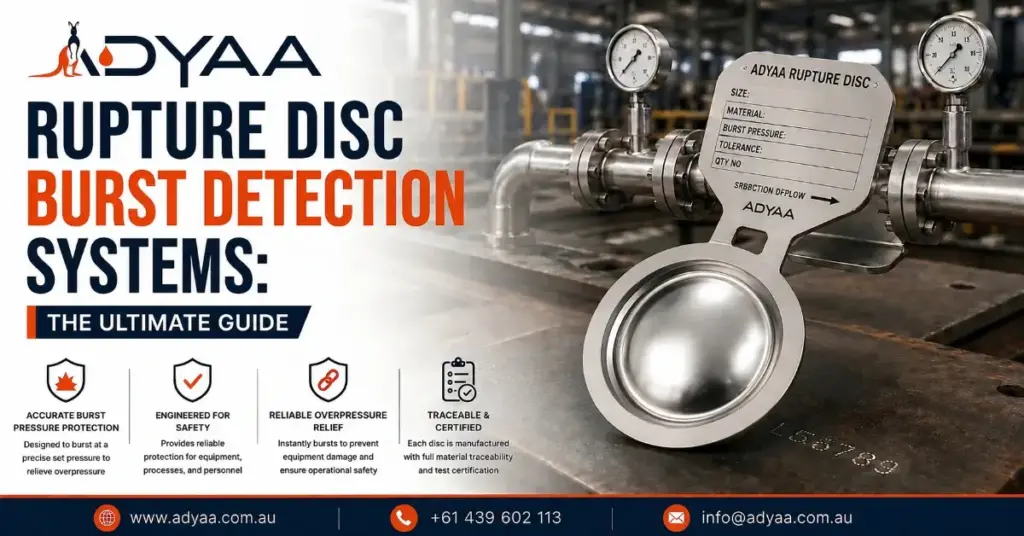
Rupture Disc Burst Detection Systems: The Ultimate Guide A rupture disc is designed to burst and relieve pressure instantly, but what happens after it blows? If a disc vents into a closed manifold, a flare header, or a remote stack, the rupture can go entirely unnoticed by plant operators for hours or even days. This blind spot leads to massive fugitive emissions, lost product, and severe EPA compliance violations. To close this safety gap, modern facilities rely on a rupture disc burst detection system. By integrating smart sensors directly into the pressure relief line, these systems instantly alert your control room the millisecond an overpressure event occurs, allowing you to trigger automated emergency shutdowns and isolate the hazard. Quick Comparison: Common Burst Detection Methods Sensor Type Operating Mechanism Best Application Membrane Wire Indicator Physical circuit break General chemical pipelines, atmospheric venting Magnetic Proximity Non-invasive magnetic shift Highly toxic media, zero-leakage systems Cavity Pressure Switch Pressure buildup detection Installed between a rupture disc and a safety valve What Is a Rupture Disc Burst Detection System? At its core, a rupture disc burst detection system is a specialized electronic circuit designed to monitor the physical integrity of your overpressure relief devices. Instead of relying on manual visual inspections—which are dangerous and time-consuming—these systems use low-voltage sensors to provide 24/7 continuous monitoring. When a disc activates, the sensor state changes (usually from a closed electrical loop to an open one), sending an immediate electrical signal directly to your DCS (Distributed Control System) or SCADA network. Types of Burst Sensors 1. Membrane Wire Burst Indicators This is the most common and cost-effective detection method. A thin Kapton or Teflon membrane containing a conductive copper or tantalum wire loop is installed on the downstream side of the rupture disc. When the disc bursts, the physical force of the escaping gas or fluid tears through the membrane. This severs the conductive wire, breaking the electrical circuit and instantly triggering the alarm relay. 2. Magnetic Proximity Sensors For ultra-critical or highly toxic processes, breaking a physical wire is sometimes undesirable. Magnetic proximity sensors offer a non-invasive alternative. Typically used with reverse-buckling discs, a small magnetic target is attached to the disc dome. A sensor sits outside the process media on the holder. When the disc buckles and opens, the target moves away from the sensor, registering the change in the magnetic field and triggering the alert without ever touching the process fluid. 3. Baffle / Leakage Detectors Also known as “tell-tale” indicators, these are heavily utilized in dual-device setups where a rupture disc isolates a mechanical safety relief valve. If the disc bursts (or develops a pinhole leak), pressure begins to build in the cavity between the disc and the valve. A pressure switch tapped into this cavity detects the rising pressure and alerts the control room before the mechanical safety valve is forced open. Integration and Plant Safety Deploying the physical sensor is only half the battle; integrating the signal into your plant’s safety logic is where the real value lies. Immediate Shutdown Protocols Once a burst is detected, the automated logic can instantly close upstream isolation valves, shut down heavy pumps, or divert process flow. This immediate response stops the loss of expensive raw materials and prevents toxic chemicals from continuously feeding the overpressure leak. Hazardous Area Compliance (ATEX / IECEx) Because pipelines often contain highly flammable hydrocarbons, running raw electricity near a venting point is a severe explosion hazard. A professional rupture disc burst detection system must be wired through intrinsically safe barriers. These isolators limit the electrical energy running to the sensor, ensuring that even if the wire snaps, it cannot generate a spark hot enough to ignite explosive gases. FAQ – Rupture Disc Burst Detection System Q: What is a rupture disc burst detection system? A: It is an electronic sensor network that instantly notifies a plant control room the moment a rupture disc bursts, enabling rapid emergency response. Q: How does a wire burst indicator work? A: It uses a closed-loop conductive wire on a thin membrane; when the disc bursts, the fluid tears the wire, breaking the electrical circuit and triggering an alarm. Q: Can a burst sensor be installed on an existing rupture disc? A: Yes, many membrane-style burst indicators can be retrofitted and installed as standalone units between the downstream flanges of an existing setup. Q: Do burst detection systems require a power supply? A: Yes, they require a low-voltage power supply to maintain the closed-loop electrical circuit or to power proximity sensors. Q: Are these sensors safe for explosive environments? A: Yes, industrial burst sensors are designed to be wired through intrinsically safe barriers, making them fully compliant for use in hazardous ATEX/IECEx zones. Q: How do you know if a rupture disc has blown without a sensor? A: Without a sensor, operators must rely on delayed secondary indicators like downstream pressure drops or conduct dangerous manual visual inspections of the venting line. Automate Your Plant Safety with ADYAA Do not wait for a fugitive emission audit to tell you your safety devices have failed. Upgrading to a continuous rupture disc burst detection system guarantees that your team is never caught off guard. As Australia’s leading supplier of industrial safety solutions, ADYAA provides advanced burst sensors, intrinsically safe relays, and precision rupture discs. Consult with ADYAA Instrumentation Experts Today Rupture Disc Operating Ratio Explained (Avoid Premature Failure) Rupture Disc Operating Ratio Explained (Avoid Premature Failure) If your pressure relief devices are blowing during normal plant operations, you… Read More → Rupture Disc Selection Guide: 5 Critical Steps Rupture Disc Selection Guide: 5 Critical Steps Industrial plants cannot afford guesswork when it comes to overpressure protection. Picking a… Read More → Guide to MNSB 53 for Fabrication Guide to MNSB 53 for Fabrication: Stop Moving Heavy Steel Let’s talk about the biggest bottleneck in a heavy fabrication… Read More →
Rupture Disc Material Selection Guide for Harsh Processes
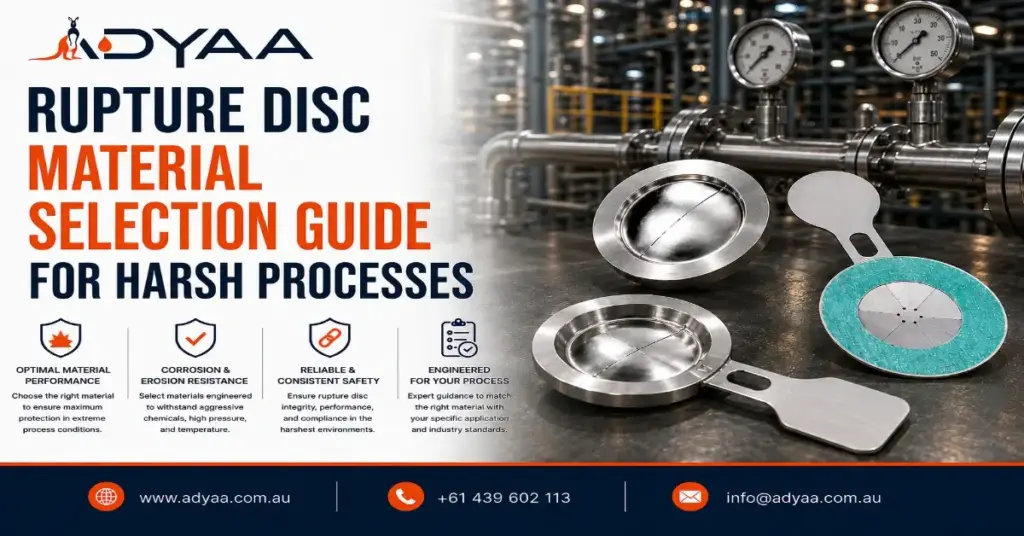
Rupture Disc Material Selection Guide for Harsh Processes If you pump highly corrosive acids or superheated steam through a standard stainless steel rupture disc, you are setting your plant up for failure. Corrosion eats away the metal membrane, artificially lowering the burst pressure and causing unexpected, dangerous blowouts. When dealing with aggressive chemical pipelines or extreme thermal cycling, standard metals simply will not survive. You must consult a dedicated rupture disc material selection guide to match your process media with the exact metallurgy required to prevent premature degradation. Quick Reference: Thermal & Corrosion Limits by Material Material Max Operating Temperature Corrosion Resistance Level Best Application 316 Stainless Steel 480°C Moderate Standard water, steam, non-corrosive gas Nickel 200 400°C Good Alkaline processes, dry halogens Monel 400 430°C High Hydrofluoric acid, saltwater, marine Inconel 600 590°C+ Excellent Extreme high heat, severe thermal cycling Hastelloy C276 480°C Extreme Severe corrosives, chlorides, wet chlorine Graphite 200°C (Standard) Ultimate Highly aggressive acids and solvents Why Material Selection is Critical to Safety A rupture disc is a highly sensitive, calibrated membrane. Its ability to burst at the correct pressure depends entirely on its structural thickness and tensile strength. The Threat of Corrosion: Even a microscopic layer of corrosion thins the metal. A disc rated for 150 PSI could easily weaken and burst at 90 PSI if eaten by acid. The Threat of Heat: Extreme temperatures alter the molecular structure of standard metals, causing them to stretch and fatigue well below their rated burst pressure. The Threat of Contamination: In pharmaceutical or food-grade lines, the disc material must not leach metallic particles or react with the process media. Top Materials for Industrial Rupture Discs 1. Standard Industrial Metals For general manufacturing, standard metals are cost-effective and highly reliable—provided the media is clean. 316 Stainless Steel: The industry default. Highly durable but susceptible to chloride stress-corrosion cracking. Nickel 200: Offers excellent resistance to caustic alkalis and is highly ductile, making it great for low-pressure disc designs. 2. High-Performance Exotic Alloys When process temperatures spike or aggressive chemicals are introduced, you must upgrade to exotic alloys to maintain burst stability. Inconel 600: The ultimate high-temperature alloy. It retains its tensile strength in superheated environments where stainless steel would warp. Monel 400: Highly resistant to sea water and hydrofluoric acid. Ideal for offshore platforms and marine engineering. Hastelloy C276: The ultimate metal for surviving severe chemical attacks, including wet chlorine gas and hypochlorites. 3. Non-Metallic Solutions When the chemical environment is so harsh that no metal can survive, non-metallic options become mandatory. Graphite: Resin-impregnated graphite is entirely immune to most industrial acids, alkalis, and organic solvents. It shatters cleanly upon bursting. PTFE / Fluoropolymer Liners: Instead of buying a solid exotic alloy, engineers often use a standard stainless steel disc protected by a thin layer of PTFE (Teflon) on the process-facing side to block chemical attacks. 3 Steps to Match Material to Your Process Follow this exact workflow to specify your disc material securely: Step 1: Check the Chemical Compatibility Review the Safety Data Sheet (SDS) of your process media. If chlorides, strong acids, or halogens are present, immediately rule out standard Stainless Steel. Step 2: Verify the Coincident Temperature Determine the exact temperature of the process when the overpressure event occurs. If temperatures exceed 480°C, upgrade directly to Inconel to prevent thermal weakening. Step 3: Evaluate the Downstream Environment Standard metals can fragment. Graphite always fragments. If you are discharging into a delicate manifold or a safety valve, you must choose a ductile metal (like Nickel or Stainless Steel) in a non-fragmenting reverse-acting design. FAQ – Rupture Disc Material Selection Guide Q: What is the best rupture disc material for highly corrosive acids? A: Graphite or Hastelloy C276 are the premier choices, as they offer extreme resistance to acidic degradation. Q: Can I use 316 Stainless Steel for high-temperature steam? A: Yes, but only up to roughly 480°C; beyond that, Inconel 600 is required to prevent thermal fatigue. Q: What is a PTFE-lined rupture disc? A: It is a standard metallic rupture disc that features a thin fluoropolymer (Teflon) layer to protect the metal from corrosive chemical attacks. Q: Why would I choose Nickel 200 over Stainless Steel? A: Nickel 200 provides vastly superior corrosion resistance against caustic alkalis and is more ductile for precise low-pressure bursting. Q: Can a graphite rupture disc be used upstream of a safety valve? A: No. Graphite shatters into solid chunks upon bursting, which will instantly jam the internal mechanisms of a downstream safety valve. Q: How does temperature affect my material choice? A: High temperatures lower the tensile strength of metals, meaning a material with high thermal stability (like Inconel) is required to prevent premature bursting. Engineer Your Overpressure Protection with ADYAA Do not guess which material will survive your pipeline. Sourcing the right alloy requires precision engineering and exact process mapping. As Australia’s premium supplier of industrial safety solutions, ADYAA provides fully certified rupture discs in exotic alloys, graphite, and PTFE-lined configurations to secure your most aggressive processes. Consult with ADYAA Materials Experts Today. Rupture Disc Operating Ratio Explained (Avoid Premature Failure) Rupture Disc Operating Ratio Explained (Avoid Premature Failure) If your pressure relief devices are blowing during normal plant operations, you… Read More → Rupture Disc Selection Guide: 5 Critical Steps Rupture Disc Selection Guide: 5 Critical Steps Industrial plants cannot afford guesswork when it comes to overpressure protection. Picking a… Read More → Guide to MNSB 53 for Fabrication Guide to MNSB 53 for Fabrication: Stop Moving Heavy Steel Let’s talk about the biggest bottleneck in a heavy fabrication… Read More →