
Dry Type Water Meters for Accurate Water Measurement
Dry Type Water Meters: Why They Remain a Preferred Choice for Accurate Water Measurement Accurate water measurement is the foundation of effective water management. Whether the objective is utility billing, resource conservation, leak detection, or process monitoring, reliable flow measurement helps organizations make informed decisions. While there are several types of water meters available today, dry type water meters continue to be widely used because of their simple design, dependable performance, and long operational life. In many water distribution systems, a common challenge for operators is maintaining clear and accurate meter readings over time. Exposure to moisture, sediment, and mineral deposits can affect the readability and performance of conventional meters. Dry-type water meters were developed to address these issues by isolating the register mechanism from direct contact with water. As a result, they have become a trusted solution in residential, commercial, municipal, and light industrial applications. Understanding the Dry Type Water Meter At first glance, a dry-type water meter may appear similar to other mechanical water meters. The key difference, however, lies in the design of the register. In a dry type meter, the measuring chamber and the register are separated from one another. Water flows only through the meter’s measuring section, while the counting mechanism remains enclosed in a sealed compartment. The movement generated by the flow of water is transferred magnetically to the register, allowing the meter to record consumption without exposing sensitive components to moisture. This design significantly improves readability and protects the register from corrosion, scaling, and contamination that may develop over years of service. How the Meter Measures Water Flow The operating principle of a dry type water meter is relatively straightforward. As water enters the meter body, it passes through a measuring chamber containing a moving element such as a turbine or oscillating piston. The flowing water causes this internal component to move in proportion to the flow rate. Rather than transmitting this movement mechanically through a shaft, a magnetic coupling transfers the motion to the external register. The register then converts the movement into a cumulative volume reading. Because the register remains isolated from the water, it continues to provide clear and accurate readings even after prolonged operation in demanding environments. Why Dry Type Water Meters Are Widely Used From an engineering perspective, reliability and maintainability are often more important than complexity. Dry type water meters have gained widespread acceptance because they offer a practical balance between performance, durability, and cost. One of their biggest advantages is the protection of the register assembly. Anyone who has worked with older water metering systems knows how difficult it can be to read a meter when the dial becomes cloudy or discolored. By keeping the register dry, these problems are largely eliminated. The design also contributes to lower maintenance requirements. Since the register is protected from direct exposure to water, the risk of corrosion and internal damage is significantly reduced. This often results in a longer service life compared to traditional wet-type meters. Key Features Several features make dry type water meters suitable for everyday water measurement applications: Sealed register construction that prevents moisture ingress. Magnetic coupling for non-contact transmission of movement. Clear and easy-to-read display. Durable construction for long-term operation. Resistance to dirt and sediment-related visibility issues. Availability in various sizes for residential and commercial installations. These features allow the meter to maintain reliable performance under normal operating conditions while minimizing maintenance efforts. Typical Applications Dry type water meters are commonly installed wherever accurate water measurement is required and ease of reading is important. Residential Water Supply In residential buildings, dry type meters are widely used to measure household water consumption. Their clear display makes routine meter reading straightforward for both utility personnel and property owners. Commercial Buildings Hotels, office complexes, shopping centers, hospitals, and educational institutions frequently use dry type meters to monitor water usage and manage utility expenses. Municipal Water Distribution Water utilities often select dry type meters because they provide dependable performance and maintain readability throughout their service life. Apartment Complexes In multi-unit residential developments, individual metering helps ensure fair billing and encourages responsible water usage among residents. Industrial Utility Monitoring Although larger industrial systems may use advanced flow measurement technologies, dry type meters are still commonly used for utility water monitoring, employee facilities, and auxiliary water distribution networks. Installation Considerations Even the best water meter cannot perform accurately if it is installed incorrectly. Proper installation practices play a significant role in achieving reliable measurements. The meter should always be installed in the correct flow direction and in a pipeline that remains completely full during operation. Locations immediately downstream of pumps, control valves, or sharp bends should generally be avoided, as turbulence can influence measurement accuracy. Where water quality is poor, installing a strainer upstream of the meter can help protect internal components from excessive debris and sediment. Routine inspections should also be part of the maintenance program to ensure continued performance throughout the meter’s service life. Comparing Dry Type and Wet Type Meters Both dry type and wet type meters are designed to measure water consumption, but their approaches differ. In wet type meters, the register is immersed in water, making it more susceptible to discoloration and reduced visibility over time. Dry type meters eliminate this concern by isolating the register from the measuring chamber. While dry type meters may have a slightly higher purchase cost, many users find that the improved readability, lower maintenance requirements, and extended operational life justify the investment. Limitations to Consider Like any engineering device, dry type water meters are not without limitations. They can be affected by poor water quality, excessive scaling, or the presence of large amounts of suspended solids. In addition, mechanical components may gradually wear after years of operation. Regular inspection and periodic calibration are therefore important to maintain measurement accuracy. For highly specialized industrial processes requiring extremely high precision, advanced electronic flow meters may be a more suitable option. Final Thoughts Dry type water meters have remained a popular choice
How to Select the Right Pressure Transmitter
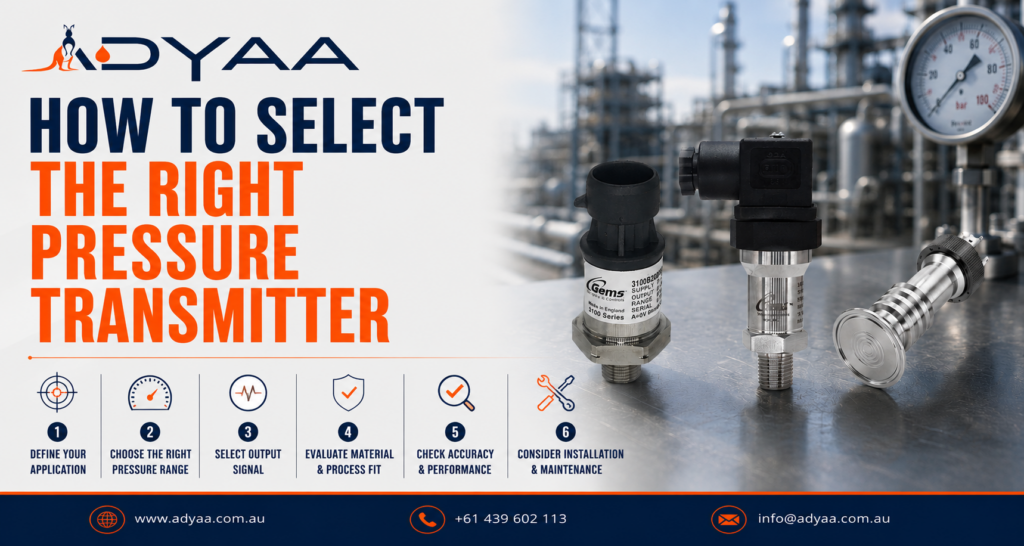
How to Select the Right Pressure Transmitter Pressure transmitters play a critical role in industrial automation, process control, water treatment, mining, manufacturing, and hydraulic systems. Selecting the correct pressure transmitter ensures accurate monitoring, improved equipment protection, and long-term operational reliability. Choosing the wrong sensor can result in inaccurate measurements, premature failures, increased maintenance costs, and process downtime. Understanding the key selection criteria helps engineers and maintenance teams achieve optimal performance from their pressure measurement systems. How to Select the Right Pressure Transmitter Understand the Required Pressure Range The first step in selecting a pressure transmitter is determining the operating pressure range of the application. A transmitter should typically operate within 30% to 80% of its full-scale range during normal conditions. Selecting an excessively large pressure range can reduce measurement accuracy, while choosing an undersized range can expose the sensor to overload conditions. Examples include: Water distribution systems: 0–10 bar Pump monitoring: 0–16 bar Hydraulic systems: 250–1000 bar Industrial compressors: 0–40 bar Always consider pressure spikes and transient conditions when selecting the final range. Choose the Correct Pressure Type Pressure transmitters are available in several measurement configurations: Gauge Pressure Measures pressure relative to atmospheric pressure and is commonly used in industrial processes. Absolute Pressure Measures pressure relative to a perfect vacuum and is often used in vacuum systems and scientific applications. Sealed Gauge Pressure References a fixed atmospheric pressure and is suitable for outdoor installations where environmental conditions vary. Selecting the correct pressure reference is essential for accurate process control. Consider Output Signal Requirements The transmitter output must be compatible with the control system or PLC. Common output signals include: 4–20 mA 0–5 V 0–10 V 1–5 V 1–10 V 0.5–4.5 V Ratiometric The 4–20 mA output remains the most widely used option due to its noise immunity and long-distance transmission capability. Evaluate Process Media Compatibility The wetted materials of the transmitter must be compatible with the process fluid. For demanding industrial environments, 316 Stainless Steel is commonly preferred due to its resistance to: Corrosion Chemical attack Moisture Process contamination Industries such as water treatment, food processing, chemical manufacturing, and mining often require robust stainless-steel construction. Check Environmental Conditions Industrial environments can expose pressure transmitters to: Vibration Hydraulic shock Temperature fluctuations Dust and moisture Chemical exposure Selecting a transmitter with suitable environmental protection improves reliability and service life. Applications involving hydraulic power units or heavy machinery may require sensors specifically designed to withstand pressure spikes and pulsation. Accuracy and Long-Term Stability Accuracy requirements vary between applications. General industrial processes typically use transmitters with accuracies between: ±0.5% Full Scale ±0.25% Full Scale Critical monitoring applications may require higher precision. Long-term stability is equally important as it reduces recalibration frequency and maintenance costs over the life of the equipment. Common Applications for Pressure Transmitters Pressure transmitters are widely used across industries including: Water Treatment Plants Mining Operations Hydraulic Systems Food and Beverage Processing Chemical Manufacturing Oil and Gas Facilities Industrial Automation Systems Pump and Compressor Monitoring Each application requires careful consideration of pressure range, output signal, material compatibility, and environmental conditions. Conclusion Selecting the right pressure transmitter involves more than simply matching a pressure range. Engineers should evaluate pressure type, output signal, process media compatibility, environmental conditions, and accuracy requirements to ensure reliable long-term performance. A properly selected pressure transmitter improves process efficiency, reduces maintenance costs, enhances equipment protection, and supports accurate industrial monitoring across a wide range of applications. Rupture Disc Operating Ratio Explained (Avoid Premature Failure) – Copy Rupture Disc Operating Ratio Explained (Avoid Premature Failure) Pressure transmitters play a critical role in industrial automation, process control, water… Read More → Rupture Disc Operating Ratio Explained (Avoid Premature Failure) Rupture Disc Operating Ratio Explained (Avoid Premature Failure) If your pressure relief devices are blowing during normal plant operations, you… Read More → Rupture Disc Selection Guide: 5 Critical Steps Rupture Disc Selection Guide: 5 Critical Steps Industrial plants cannot afford guesswork when it comes to overpressure protection. Picking a… Read More →
Rupture Disc Operating Ratio Explained (Avoid Premature Failure)
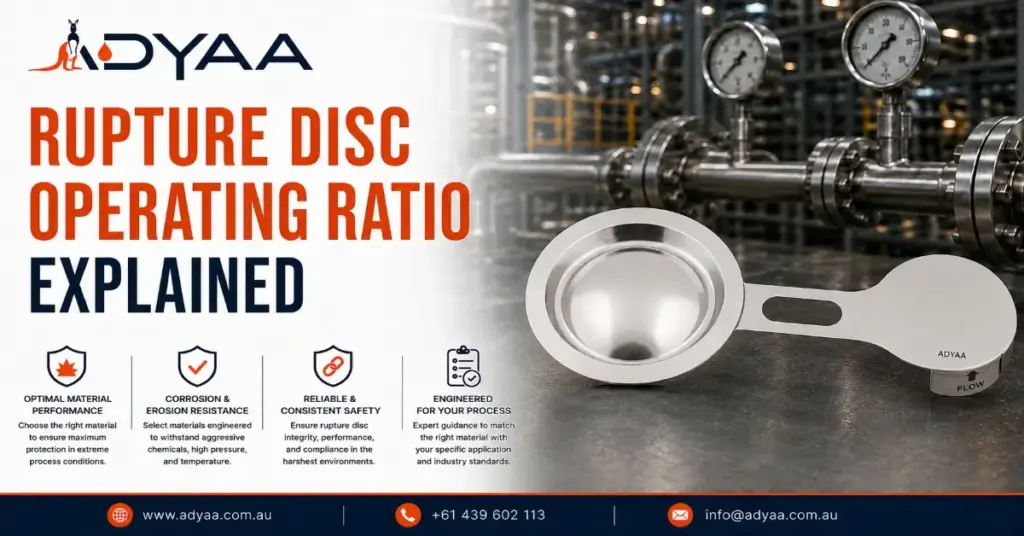
Rupture Disc Operating Ratio Explained (Avoid Premature Failure) If your pressure relief devices are blowing during normal plant operations, you are likely suffering from premature metal fatigue. This happens when your process runs too close to the disc’s breaking point. To prevent these expensive, nuisance shutdowns, you must strictly control your rupture disc operating ratio. Understanding this simple metric ensures you select a disc capable of surviving your daily pressure cycles without weakening. Quick Comparison: Allowable Ratios by Disc Design Rupture Disc Type Loading Type Max Operating Ratio Risk of Premature Fatigue Forward-Acting (Standard) Tension 70% to 80% High (if ratio is exceeded) Reverse-Acting (Buckling) Compression 90% to 95% Very Low Graphite Brittle / Shear 80% Moderate What is a Rupture Disc Operating Ratio? The rupture disc operating ratio is the mathematical relationship between your system’s everyday working pressure and the disc’s rated burst pressure. The Definition: It is the maximum percentage of the burst pressure that your system can safely operate at continuously. The Formula: Normal Operating Pressure ÷ Marked Burst Pressure = Operating Ratio. The Goal: To leave a wide enough safety buffer so the metal dome does not stretch, deform, or fatigue during normal daily pressure fluctuations. Why the “90% Rule” Matters for Plant Safety Engineers often refer to the “90% rule” when designing high-efficiency pipelines. Pushing past a disc’s specific ratio limit guarantees failure. Micro-Stretching: When pressure constantly pushes near a disc’s limit, the molecular structure of the metal begins to stretch irreversibly. Drifting Burst Pressures: A fatigued disc will no longer burst at its stamped rating. It will burst much lower, causing unexpected plant shutdowns. Pulsation Damage: If your pipeline features heavy pumps or compressors, the constant pulsing will accelerate metal fatigue even faster if your operating ratio is too tight. How Disc Engineering Alters the Ratio Not all discs can handle high operating ratios. You must match the mechanics to your process. Forward-Acting Limitations These discs face the process and stretch outward (tension loading). Because tension constantly weakens the metal, they are strictly limited to a 70% or 80% operating ratio. Reverse-Acting Advantages The dome faces against the process (compression loading). Metal resists compression incredibly well, allowing these discs to operate safely up to 90% or 95% of their burst pressure without fatiguing. How to Calculate and Apply the Ratio Do not guess your safety margins. Follow these exact steps to specify the right disc for your line: Step 1: Identify Normal Pressure. Determine the absolute highest pressure your system runs at during normal, non-emergency operations (e.g., 75 PSI). Step 2: Identify Burst Pressure. Determine the critical pressure where the disc must burst to save the vessel (e.g., 100 PSI). Step 3: Do the Math. 75 PSI ÷ 100 PSI = 0.75 (or a 75% ratio). Step 4: Make the Selection. Since 75% exceeds the safe limit of a standard forward-acting disc (usually 70%), you must upgrade to a reverse-acting disc to guarantee a long service life. FAQ – Rupture Disc Operating Ratio Q: What is a rupture disc operating ratio? A: It is the ratio between a system’s normal operating pressure and the disc’s rated burst pressure, expressed as a percentage. Q: What happens if I exceed the recommended operating ratio? A: The rupture disc will suffer from premature metal fatigue, stretching the dome and causing it to burst below its rated pressure during normal operations. Q: Can I operate a rupture disc at 100% of its burst pressure? A: No. Operating continuously at 100% guarantees immediate fatigue and premature failure. The absolute maximum for advanced designs is 95%. Q: Why do reverse-acting discs have higher operating ratios? A: Reverse-acting discs are loaded under compression rather than tension, making the metal highly resistant to stretching and fatigue. Q: Does system temperature affect the operating ratio? A: Yes. High temperatures weaken the metal, artificially lowering the burst pressure and effectively tightening your operating ratio. Q: What is the typical operating ratio for a graphite rupture disc? A: Most standard graphite rupture discs are rated for a maximum operating ratio of 80%. Secure Your Pressure Systems with ADYAA Stop wasting money on replacement discs due to premature fatigue. Designing the perfect pressure relief loop requires strict adherence to operating margins. As Australia’s premium industrial safety supplier, ADYAA provides high-ratio reverse-acting discs and expert engineering support to keep your facility running smoothly. Consult with ADYAA Reliability Experts Today Rupture Disc Operating Ratio Explained (Avoid Premature Failure) Rupture Disc Operating Ratio Explained (Avoid Premature Failure) If your pressure relief devices are blowing during normal plant operations, you… Read More → Rupture Disc Selection Guide: 5 Critical Steps Rupture Disc Selection Guide: 5 Critical Steps Industrial plants cannot afford guesswork when it comes to overpressure protection. Picking a… Read More → Guide to MNSB 53 for Fabrication Guide to MNSB 53 for Fabrication: Stop Moving Heavy Steel Let’s talk about the biggest bottleneck in a heavy fabrication… Read More →
Rupture Disc Selection Guide: 5 Critical Steps
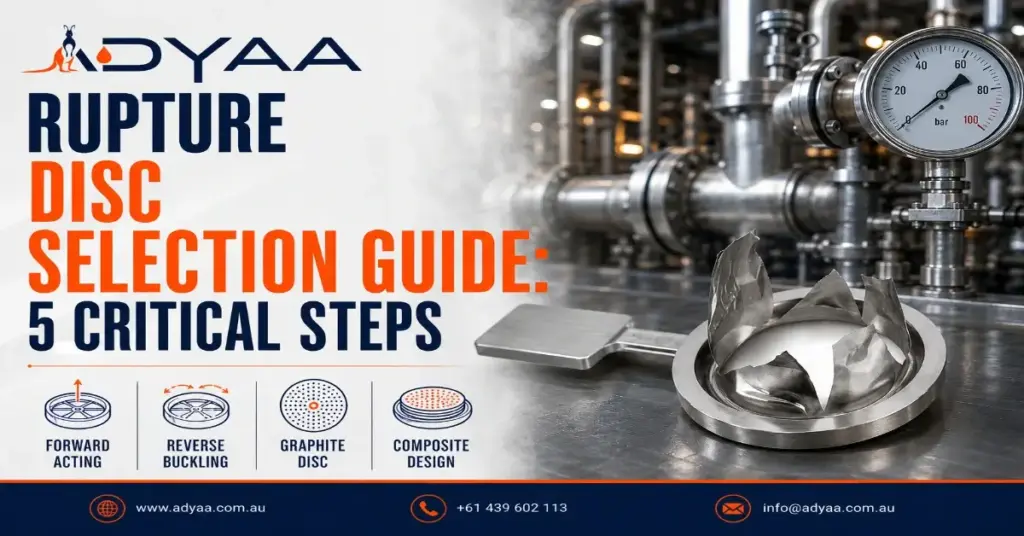
Rupture Disc Selection Guide: 5 Critical Steps Industrial plants cannot afford guesswork when it comes to overpressure protection. Picking a bursting disc out of a catalog based purely on flange size is a recipe for nuisance bursting, premature metal fatigue, or worse—a catastrophic failure to relieve pressure. A rupture disc is a precision-engineered life safety device. To ensure it activates exactly when your system reaches critical mass, you must match the metallurgy and mechanical design to the specific realities of your pipeline. Use this rupture disc selection guide to navigate the five essential engineering steps required to secure your facility. The 5 Steps of Rupture Disc Selection Step 1: Determine Burst Pressure and Coincident Temperature The most critical baseline is establishing your required burst pressure, but pressure never exists in a vacuum. You must define the coincident temperature—the exact temperature of the pipeline at the moment the overpressure event occurs. Because metal weakens as it gets hotter, a stainless steel disc calibrated to burst at 100 PSI at ambient temperature might burst prematurely at 80 PSI if the process runs at 200°C. You must provide your supplier with both variables so they can compensate for thermal weakening during the manufacturing process. Step 2: Calculate Your Operating Ratio Your operating ratio dictates whether you need a forward-acting or reverse-acting disc. This ratio is the gap between your normal operating pressure and your system’s Maximum Allowable Working Pressure (MAWP). Low Operating Ratio (Under 70%): If your system runs at 60 PSI and bursts at 100 PSI, a standard forward-acting disc is sufficient. High Operating Ratio (Up to 95%): If your system runs at 90 PSI and bursts at 100 PSI, a forward-acting disc will fatigue and fail. You must select a reverse-acting disc, which uses compression loading to handle tight pressure margins without degrading. Step 3: Assess Media and Material Compatibility A disc will not burst at its rated pressure if corrosive media has eaten away half its thickness. You must match the disc material to the chemical makeup of your process fluid or gas. Standard Media: 316 Stainless Steel or Nickel are industry standards for water, steam, and non-corrosive gases. Aggressive Media: For highly acidic or sour gas applications, you must upgrade to exotic alloys like Monel, Inconel, Hastelloy, or Tantalum. Extreme Corrosion: If metal cannot survive the environment, specify a graphite rupture disc, which is immune to most industrial solvents and acids. Step 4: Evaluate Downstream Conditions and Fragmentation Where is the pressure going once the disc bursts? If you are venting straight to the atmosphere, a standard fragmenting disc might be acceptable. However, if the disc is installed directly upstream of a mechanical safety relief valve, you must specify a non-fragmenting disc (like a reverse-buckling or cross-scored disc). If a standard disc shatters, the metal shrapnel will lodge in the safety valve, preventing it from closing. A Critical Note on Backpressure If your disc discharges into a common flare header or a closed manifold, you must account for superimposed backpressure. If there is 10 PSI of pressure pushing against the back of the disc, a 100 PSI disc will not burst until the internal system hits 110 PSI. In these scenarios, a balanced rupture disc design is required. Step 5: Select the Right Holder and Accessories A rupture disc is only as reliable as its installation. You cannot clamp a high-performance disc between two standard pipe flanges and expect it to work. You must select a dedicated rupture disc holder designed specifically for the disc profile (e.g., pre-torqued holders or insert-type holders). Additionally, consider integrating a burst indicator sensor that immediately alerts your SCADA system or control room the millisecond the disc activates. FAQ – Rupture Disc Selection Guide Q: What is the most important factor in rupture disc selection? A: Coincident temperature and burst pressure are the most critical, as the temperature directly alters the tensile strength and burst point of the metal. Q: When should I choose a reverse-acting rupture disc? A: Choose a reverse-acting disc when your normal operating pressure is 80% to 95% of your burst pressure, or when you are operating in a high-pulsation environment. Q: Do I need a non-fragmenting rupture disc? A: Yes, you must use a non-fragmenting disc if it is installed upstream of a safety relief valve or sensitive downstream equipment that could be damaged by metal shrapnel. Q: Can I install a rupture disc without a holder? A: No. Rupture discs require highly specific, precision-machined holders to ensure the correct seating, sealing, and bursting mechanics. Q: How does backpressure affect a rupture disc? A: Superimposed backpressure pushes against the downstream side of the disc, artificially raising the internal pressure required to burst it, unless a balanced disc is used. Q: What material is best for highly corrosive processes? A: For extreme chemical environments where stainless steel degrades, graphite, Hastelloy, or Tantalum are the preferred materials to ensure the burst pressure remains stable. Engineer Your Overpressure Protection with ADYAA Relying on a generic rupture disc selection guide is just the first step. Finalizing your safety systems requires exact engineering verification. As Australia’s leading supplier of industrial safety solutions, ADYAA provides ASME-certified rupture discs, precision holders, and thermal relief expertise to keep your plant safe and compliant. Consult with ADYAA Overpressure Experts Today Rupture Disc Operating Ratio Explained (Avoid Premature Failure) Rupture Disc Operating Ratio Explained (Avoid Premature Failure) If your pressure relief devices are blowing during normal plant operations, you… Read More → Rupture Disc Selection Guide: 5 Critical Steps Rupture Disc Selection Guide: 5 Critical Steps Industrial plants cannot afford guesswork when it comes to overpressure protection. Picking a… Read More → Guide to MNSB 53 for Fabrication Guide to MNSB 53 for Fabrication: Stop Moving Heavy Steel Let’s talk about the biggest bottleneck in a heavy fabrication… Read More →
Guide to MNSB 53 for Fabrication
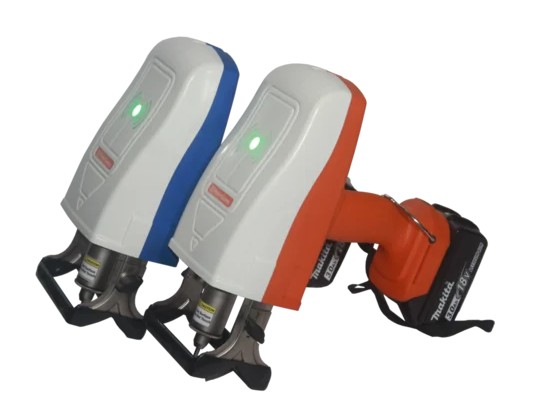
Guide to MNSB 53 for Fabrication: Stop Moving Heavy Steel Let’s talk about the biggest bottleneck in a heavy fabrication shop: material handling. Tying up your overhead cranes and forklifts just to move a 5-ton steel beam to a marking station is a massive waste of time and a serious safety hazard. If you want to keep your shop floor moving efficiently, you need to bring the traceability directly to the asset. That is exactly what the MNSB 53 for fabrication is built to do. It is a highly portable, industrial-grade dot peen marker that allows your team to deep-engrave serial numbers, heat codes, and ISO compliance data right on the sawhorses or out in the staging yard. Quick Specs: MNSB 53 vs Traditional Marking Methods Feature MNSB 53 for Fabrication Manual Hand Stamping Stationary Benchtop Marker Material Handling Zero (Bring tool to part) Zero High (Bring part to tool) Data Accuracy 100% (Digital input/Barcode scan) Low (Human error prone) 100% (Digital input) Operator Safety High (Ergonomic, hands-free options) Low (Hammer strike risks) High Marking Types Text, Logos, 2D Data Matrix codes Basic text only Text, Logos, 2D Data Matrix What Makes the MNSB 53 the Ultimate Shop Tool? The MNSB 53 is a cold-working traceability powerhouse. Instead of burning a shallow mark with a laser, it uses a high-frequency carbide stylus to physically displace the metal. It comes packed in a rugged, portable chassis. With Wifi enabled connection to ensure you can move around the area with keeping the tab or laptop at a stationary place. This means your operators don’t need to drag a laptop through the dirt or trip over extension cords. They just grab the MNSB 53, walk over to a fabricated pipe spool or structural column, type in the data (or scan a barcode), and let the machine hammer out a perfect, permanent mark. Why Fabrication Shops Trust ADYAA in Australia When you run a tight production schedule, you can’t afford equipment that breaks down or a supplier who disappears after the sale. Built for Aussie Shops: ADYAA provides marking systems that easily handle the daily grind, dust, and heavy impacts of local metal fabrication environments. We Come to You: Our engineering team steps onto your shop floor to calibrate the machines, set the correct depths for your specific metals, and train your crew. Local Parts & Support: From replacement styluses to software troubleshooting, our Australian team ensures your production line never stalls. How the MNSB 53 Supercharges Your Workflow Bringing the MNSB 53 for fabrication onto your floor fixes operational headaches immediately: Galvanizing is No Problem: Because the MNSB 53 gouges deep into the metal, the serial numbers stay perfectly readable even after hot-dip galvanizing, sandblasting, or applying thick industrial epoxy. Instant Digital Setup: Integrated Wi-Fi means the marker can sync directly with your shop’s network. Your guys can pull exact work order details straight onto the screen—no more misread handwriting or transposed numbers. Total Versatility: Need to mark a flat steel plate? Done. Need to mark a curved pressure vessel? Snap on a V-shaped front plate, and it sits perfectly flush against the curve. Common Mistakes Fabricators Make with Part Marking Do not let bad equipment choices slow down your output. Here is how ADYAA helps you avoid expensive mistakes: 1. Forgetting About the Final Paint Job The Problem: Buying an expensive, low-power portable laser, only to realize the mark completely disappears once the part gets a heavy coat of primer and paint. The Fix: We dial in the MNSB 53 to punch deep physical craters into the steel, ensuring the ID stays highly tactile and readable through the thickest coatings. 2. Ignoring Operator Fatigue The Problem: Making a guy hold a heavy, vibrating marking head against a steel pipe manually for an entire shift. The text gets crooked, and wrists get sore. The Fix: The MNSB 53 is ergonomically balanced, and ADYAA offers magnetic clamping bases. The operator hits a button, the magnet locks onto the steel, and the machine does the work hands-free. FAQ – MNSB 53 for Fabrication Q: Can it mark stainless steel and aluminum? A: Yes. The MNSB 53 easily marks everything from soft aluminum to mild steel, stainless steel, and hardened alloys. Q: Do I need an air compressor to run it? A: If you need extreme depth for galvanizing, we recommend the pneumatic setup. For standard fabrication, fully electric battery-powered options are available. Q: Can I put my company logo on the parts? A: Absolutely. You can easily upload your shop’s logo via USB and engrave it permanently onto your fabrications. Q: Is it hard for the guys on the floor to learn? A: Not at all. The touchscreen interface is highly intuitive. Most operators master it in under 20 minutes. Q: How long does the stylus last? A: A high-grade tungsten carbide stylus will last for thousands of marks before needing a quick, inexpensive replacement. Q: Does it leave stress fractures in the metal? A: No. Dot peen is a cold-forging process that displaces metal without inducing heat or micro-cracking, preserving the structural integrity of the part. Upgrade Your Fabrication Shop with ADYAA Stop wasting time moving heavy steel just to hit it with a hand stamp. As a premium distributor and supplier, ADYAA provides the industry-leading MNSB 53 for fabrication to shops across Australia. Whether you are building structural frames in Sydney or custom pressure vessels in Melbourne, we supply the rugged, reliable technology you need to work smarter. Consult with ADYAA Traceability Experts Today Why Choose MNSB 53 for Mining Industry? – Copy Guide to MNSB 53 for Fabrication: Stop Moving Heavy Steel Let’s talk about the biggest bottleneck in a heavy fabrication… Read More → Why Choose MNSB 53 for Mining Industry? Why Choose MNSB 53 for the Mining Industry? The Ultimate Rugged Traceability Tool Let’s be real: the Australian outback eats… Read More → Rupture Disc Burst Detection Systems: The Ultimate Guide Rupture Disc Burst Detection Systems: The Ultimate Guide
Why Choose MNSB 53 for Mining Industry?
Why Choose MNSB 53 for the Mining Industry? The Ultimate Rugged Traceability Tool Let’s be real: the Australian outback eats fragile equipment for breakfast. When you are managing heavy haulers, drill rigs, and structural assets out on a remote site, standard part marking methods fail almost immediately. Mud, abrasive iron ore dust, and daily high-pressure washdowns will completely erase paint and surface-level laser marks in a matter of weeks. If you want to maintain your ISO compliance and actually keep track of your assets, you need equipment that hits hard. That is exactly where the MNSB 53 for mining comes in. It is a rugged, fully portable dot peen machine engineered to gouge deep, permanent data directly into the hardest structural steels—without forcing your crew to move massive assets into a workshop. Quick Specs: MNSB 53 vs Standard Commercial Markers Feature MNSB 53 Dot Peen Machine Standard Commercial Handhelds Environmental Build Sealed against heavy dust & moisture Open vents (Susceptible to dust ingress) Marking Depth Deep (Survives rust, mud, and thick paint) Shallow (Easily obscured) Asset Mobility 100% Portable (Bring machine to the asset) Tethered or too fragile for field work What Exactly Is the MNSB 53? Think of the MNSB 53 as a heavy-duty industrial punch that fits in your hand. Instead of using heat, this portable dot peen marker uses a high-frequency tungsten carbide stylus to cold-forge overlapping craters into the metal. Because it operates independently with a built-in controller, your maintenance team can walk right up to an asset and punch permanent serial numbers, 2D Data Matrix codes, and maintenance dates directly into heavy alloys. Real-World Example: A maintenance crew pulling out the MNSB 53 to stamp a verified inspection code right onto a 20-ton excavator bucket while it’s still attached to the rig in the pit. Why ADYAA is the Preferred Mining Supplier in Australia Remote job sites cannot afford to halt production while waiting weeks for replacement parts from overseas. You need local, reliable support. Outback-Ready Gear: ADYAA supplies equipment specifically stress-tested for the extreme heat and abrasive dust of Australian mining operations. Turnkey Site Deployment: We do not just ship a box. We provide localized calibration, custom faceplate machining for uneven surfaces, and hands-on workforce training. Local Inventory: We stock MNSB 53 replacement styluses, batteries, and spare parts right here in Australia. If you need it, we have it ready to go. How the MNSB 53 Makes Site Management Easier Upgrading to the MNSB 53 immediately fixes several major headaches on a busy mine site: It Actually Survives: The deep physical indentations stay perfectly readable even when the asset is caked in thick mud, rust, or heavy protective epoxy. Zero Crane Lifts Needed: Your crew can mark massive chassis exactly where they are parked. You completely eliminate the need for dangerous, time-wasting overhead crane lifts just to log a serial number. No More Typos: With built-in memory and barcode scanning capabilities, operators can scan a work order and pull the exact maintenance log directly into the machine. It prints the right number every single time. Pro Tips for Using the MNSB 53 on Hard Metals To get the most out of the machine in a rugged environment, follow these straightforward setups: Crank the Impact Force: Set the machine to maximum striking pressure when marking assets exposed to severe abrasion. Go deep. Upgrade the Stylus: If you are marking hardened components like drill bits or high-wear tracks, swap in an extreme-density diamond-tipped stylus. Use Magnetic V-Blocks: When marking curved pipeline infrastructure, snap on a magnetic V-block faceplate. The machine will perfectly align itself against the pipe so your operator can mark hands-free. Common Mistakes When Buying Mining Markers Buying standard factory tools for an open-pit mine is a fast way to blow your budget. Here is how ADYAA prevents those expensive mistakes: 1. Ignoring Dust Ratings The Problem: Buying a cheap, open-vented marker. Iron ore dust gets sucked right into the cooling vents and fries the motherboard in a week. The Fix: The MNSB 53 features an industrially sealed chassis built specifically to lock out abrasive mining dust and handle extreme site temperatures. 2. Using Shallow Markers for Muddy Environments The Problem: Handing a worker a low-power electric marker for a haul truck chassis. After one shift in the mud, that shallow mark is gone forever. The Fix: We calibrate the MNSB 53 for mining to deliver maximum deep-impact force. The text stays highly tactile and readable through heavy dirt and subsequent high-pressure washing. FAQ – MNSB 53 for Mining Q: Does it need a generator out in the field? A: No. It runs entirely on high-capacity industrial batteries designed for Hourly job Q: Will the mark wash off during high-pressure blasting? A: Never. The deep physical craters permanently displace the metal and easily survive daily high-pressure washdowns. Q: Can I mark curved slurry pipes with it? A: Yes. There are a variety of accessories which accepts V-shaped attachments that sit perfectly flush on curved and cylindrical assets. Q: Can it generate QR codes on-site? A: Yes. The onboard software instantly generates and engraves 2D Data Matrix and QR codes for immediate digital tracking. Secure Your Mining Traceability with ADYAA Do not leave your critical asset tracking to chance with hardware that cannot handle the job. As a dedicated distributor and supplier, ADYAA provides the battle-tested MNSB 53 for mining across Australia. From the iron ore pits of Western Australia to the coal seams of Queensland, we supply the exact industrial hardware you need to secure your data in the harshest environments on earth. Consult with ADYAA Traceability Experts Today Rupture Disc Burst Detection Systems: The Ultimate Guide – Copy Why Choose MNSB 53 for the Mining Industry? The Ultimate Rugged Traceability Tool Let’s be real: the Australian outback eats… Read More → Rupture Disc Burst Detection Systems: The Ultimate Guide Rupture Disc Burst Detection Systems: The Ultimate Guide A rupture disc is designed to burst and relieve pressure instantly, but… Read More →