
Gaskets vs O-Rings: Which Sealing Solution Is Right for You?
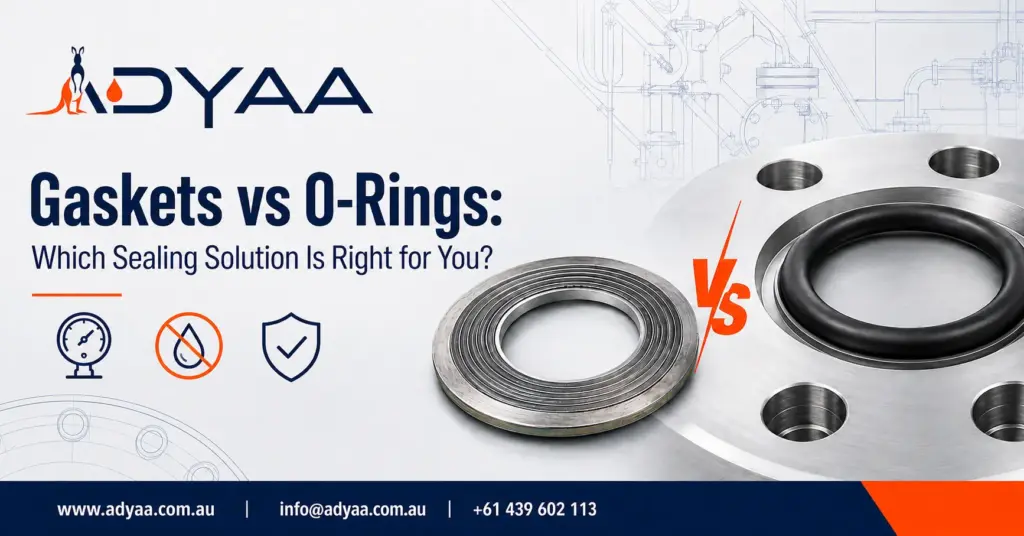
Gaskets vs O-Rings: Which Sealing Solution Is Right for You? In any fluid handling system, the weakest point is always the connection. Whether you are bolting two pipe flanges together or sealing a moving piston, you need a barrier that prevents leaks. This brings us to the most common question in industrial sealing: what is the difference between Gaskets vs O-Rings? While both devices serve the same ultimate purpose—keeping fluids in and contaminants out they function differently and are designed for distinct environments. ADYAA, supply both high-performance gaskets and precision O-rings. In this guide, we break down the battle of Gaskets vs O-Rings to help you select the right solution for your application. Gaskets vs O-Rings for: Mechanical Engineers, Maintenance Technicians, Procurement Officers. 1. What Is a Gasket? (The Static Specialist) A gasket is a flat seal designed to fill the space between two mating surfaces, typically held together by bolts. Function: It creates a seal by being compressed between two stationary parts (like pipe flanges). Common Types: Spiral Wound Gaskets, Ring Type Joints (RTJ), and cut sheet gaskets. Best For: Static applications where the two surfaces do not move relative to each other. 2. What Is an O-Ring? (The Versatile Performer) An O-ring is a loop of elastomer (rubber) or metal with a round cross-section. It sits inside a designated groove and is compressed to create a seal. Function: It can seal against high pressure in both static (stationary) and dynamic (moving) applications. Common Types: NBR, Viton, EPDM, and Metal O-Rings. Best For: Hydraulic cylinders, pump shafts, and precise static grooves. The Key Differences: Gaskets vs O-Rings When deciding between Gaskets vs O-Rings, the choice usually comes down to three factors: Motion, Pressure, and Flange Design. A. Static vs. Dynamic Motion This is the biggest differentiator. Gaskets are almost exclusively used for static seals. If the two surfaces move or vibrate significantly, a standard gasket may tear or lose compression. O-Rings excel in dynamic seals. If you have a piston moving inside a cylinder or a rotating shaft, an O-ring (or dynamic seal) is required because it can handle the friction and motion. B. Pressure Handling In the comparison of Gaskets vs O-Rings, gaskets often win in heavy industrial piping. Gaskets (specifically RTJs): Designed for extreme pressure (up to 20,000 PSI). The harder you bolt the flange, the tighter the seal. O-Rings: Can handle high pressure, but they require backup rings to prevent “extrusion” (where the rubber is blown out of the gap). C. Surface Requirements Gaskets are forgiving. They can seal rougher, uneven flange surfaces because the gasket material deforms to fill the imperfections. O-Rings require precision. The groove must be machined to exact tolerances. If the surface is rough, the O-ring will suffer from abrasion and leak. Selection Guide: Which Should You Choose? To settle the Gaskets vs O-Rings debate for your specific project, ask these questions: Is there movement? Yes (Shafts, Pistons) – Choose an O-Ring. No (Pipe Flanges, Valve Bonnets) – Choose a Gasket. What is the connection type? Flat Flanges – Gasket (Spiral Wound or RTJ). Grooved Housing – O-Ring. What is the Temperature? Extreme Heat (>500°C)? $rightarrow$ You need a Metal RTJ Gasket or a Metal O-Ring (Elastomers will melt). Conclusion Ultimately, the choice of Gaskets vs O-Rings isn’t about which is “better”—it is about which fits the geometry of your equipment. If you are sealing a heavy-duty pipe flange in an oil refinery, you need an ADYAA Ring Type Joint. If you are sealing a hydraulic actuator, you need an ADYAA O-Ring. We stock both, ensuring you never have to compromise on seal quality. Need help specifying the right seal? Explore Our Gaskets & O-Rings Collection. Contact our technical team for advice. Gaskets vs O-Rings: Which Sealing Solution Is Right for You? Gaskets vs O-Rings: Which Sealing Solution Is Right for You? In any fluid handling system, the weakest point is always… Read More → Flow Measurement Solutions for Industrial Processes Flow Measurement Solutions for Industrial Processes Accurate flow measurement is essential for maintaining efficient industrial operations. Whether monitoring water, chemicals,… Read More → Industrial HVAC vs Commercial HVAC: What is the Difference? Industrial HVAC vs Commercial HVAC: Why Equipment Choice Matters If you walk onto the roof of a shopping mall and… Read More →
Industrial HVAC vs Commercial HVAC: What is the Difference?
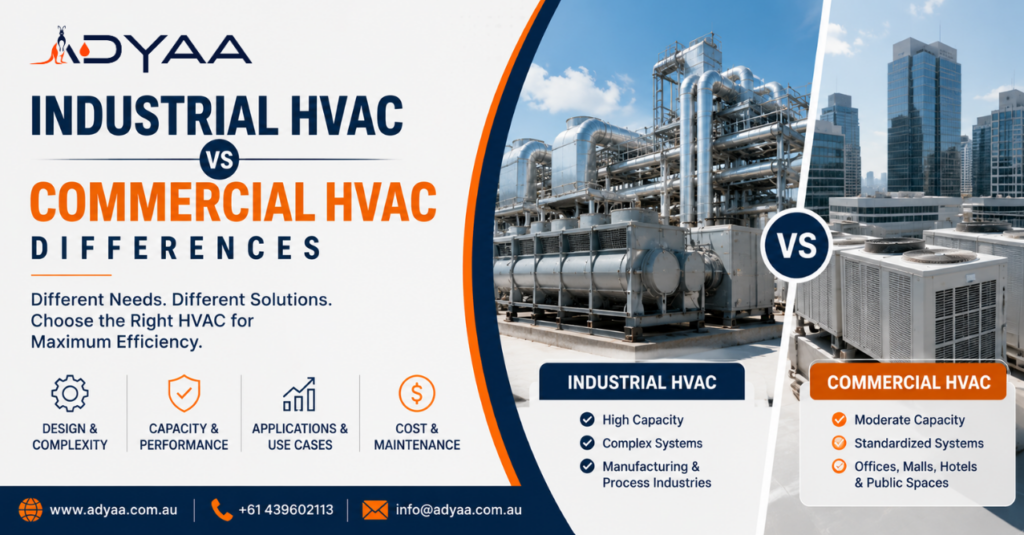
Industrial HVAC vs Commercial HVAC: Why Equipment Choice Matters If you walk onto the roof of a shopping mall and then walk into a pharmaceutical manufacturing plant, you might see large metal boxes blowing air in both places. But make no mistake: that is where the similarities end. The debate of Industrial HVAC vs Commercial HVAC isn’t just about size; it’s about purpose. One system is designed to keep people comfortable while they shop. The other is designed to keep a critical production line from shutting down or a warehouse from spoiling millions of dollars in inventory. Mistaking one for the other is a costly error. We have seen industrial facilities try to cut costs by installing commercial-grade units, only to face constant breakdowns, humidity spikes, and compliance failures. ADYAA, we provide the high-precision sensors that drive these systems. In this guide, we break down the critical differences between Industrial HVAC vs Commercial HVAC so you can make the right investment for your facility 1. Commercial HVAC: The “Human Comfort” Machine Commercial HVAC systems are found in office buildings, retail stores, schools, and hospitals. The Goal: Keep human beings comfortable. The Standard: Maintain a temperature around 21°C–23°C and reasonable humidity. These systems are generally standardized. Whether it’s a split system or a rooftop package unit (RTU), they operate intermittently. They might run hard during the day but dial back or shut off at night when the building is empty. Key Characteristic: Modular and easy to replace. Priority: Energy efficiency and quiet operation Industrial HVAC: The “Process Critical” Beast Industrial HVAC systems are found in manufacturing plants, data centers, food processing facilities, and chemical refineries. The Goal: Maintain precise environmental conditions for equipment or products. The Standard: It varies wildly. A data center might need massive cooling capacity. A paper mill might need strict humidity control to prevent paper curl. A cleanroom needs heavy filtration (HEPA) to remove particles. These systems are heavily customized. They often run 24/7, 365 days a year. If an industrial HVAC unit fails, production stops. Key Characteristic: Heavy-duty, redundant, and highly automated. Priority: Reliability and precision (Tight tolerances on Temperature/Humidity). 3. Industrial HVAC vs Commercial HVAC: The 4 Key Differences To the untrained eye, the equipment looks similar. But for an engineer, the differences are massive. A. Design Complexity & Automation Commercial: Usually a standalone unit controlled by a simple thermostat or basic BMS. Industrial: integrated into a complex ecosystem. It relies on a network of sensors—CO2, Differential Pressure, Dew Point, and Air Velocity—feeding data into a PLC or SCADA system to make micro-adjustments in real-time. B. Location & Access Commercial: almost always located on the roof (Rooftop Units) or on a concrete pad outside. Industrial: Often housed in dedicated “plant rooms” or mechanical galleries. This allows maintenance teams to work on the complex compressors and chillers without being exposed to the weather. C. Durability & Components Commercial: built with standard galvanized steel and plastic fans. Expected lifespan: 15–20 years. Industrial: Built to survive harsh environments. They use heavy-gauge steel, industrial-grade centrifugal pumps, and titanium heat exchangers if corrosive fumes are present. Expected lifespan: 20–30+ years. D. The “Cost of Failure” Commercial Failure: The office gets hot, and staff complain. Industrial Failure: A server room overheats and data is lost; or humidity rises in a pharma lab, ruining a batch of medicine. The cost is measured in production downtime, not just sweat. 4. Why Sensors Are the Heart of Industrial HVAC Because Industrial HVAC is about precision, the system is useless without accurate data. You can have a million-dollar chiller, but if the sensor feeding it data is drifting, the system fails. ADYAA supplies, we specialize in the “eyes and ears” of these systems: Dew Point Sensors: Critical for compressed air lines and drying rooms. CO2 Sensors: Essential for demand-controlled ventilation in factories. Differential Pressure Transmitters: Required to monitor filter health in cleanrooms. Air Velocity Transmitters: To ensure proper airflow in exhaust ducts. Conclusion: Match the Tool to the Job When evaluating Industrial HVAC vs Commercial HVAC, don’t just look at the price tag. If you are running a warehouse, a manufacturing line, or a critical infrastructure site, a commercial unit is a band-aid solution that will eventually peel off. You need equipment built for the load, and you need sensors that tell you the truth about your environment. Is your facility monitoring its environment correctly? 👉 Explore ADYAA HVAC Sensors 👉 View our CO2 & Dew Point Transmitters 📞 Contact our Engineering Team for a Sensor Audit. Industrial HVAC vs Commercial HVAC: What is the Difference? Industrial HVAC vs Commercial HVAC: Why Equipment Choice Matters If you walk onto the roof of a shopping mall and… Read More → How Industrial Automation Sensors Improve Manufacturing Efficiency How Industrial Automation Sensors Improve Efficiency in Manufacturing Efficiency is the primary metric of success. The difference between a profitable… Read More → Gems 3100/3200 Pressure Transmitters : Complete Guide Gems 3100/3200 Pressure Transmitters: Complete Guide Accurate pressure monitoring is essential across industrial environments where process visibility, operational consistency and… Read More →
How Industrial Automation Sensors Improve Manufacturing Efficiency
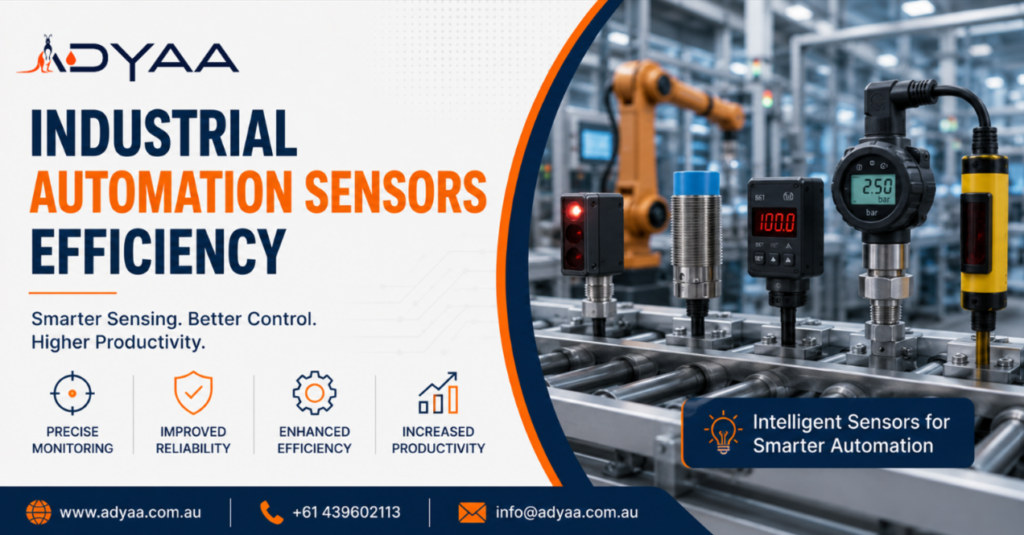
How Industrial Automation Sensors Improve Efficiency in Manufacturing Efficiency is the primary metric of success. The difference between a profitable plant and a struggling one often comes down to Overall Equipment Effectiveness (OEE)—how well your machinery is actually performing versus its theoretical potential. Achieving high OEE is impossible with manual monitoring alone. This is where Industrial Automation Sensors become the most critical assets on your factory floor. ADYAA specializes in the “nervous system” of the smart factory. We know that Industrial Automation Sensors are not merely components that switch things on and off; they are data generators that unlock higher throughput, lower waste, and zero unplanned downtime. In this deep dive, we explore exactly how these sensors transform raw machinery into intelligent, efficient systems. The Role of Industrial Automation Sensors in Industry 4.0 Before we look at efficiency, we must define what these devices do. Industrial Automation Sensors are input devices that provide a signal regarding a specific physical condition—heat, light, pressure, motion, or distance. In the past, sensors were simple, discrete devices (giving a basic “Yes/No” signal). Today, in the era of Industry 4.0 and the Industrial Internet of Things (IIoT), Industrial Automation Sensors are smart. They don’t just trigger an alarm; they communicate real-time data trends to PLCs (Programmable Logic Controllers) and SCADA systems, allowing the factory to “think” and adjust itself. 5 Ways Industrial Automation Sensors Drive Efficiency Implementing the right sensor strategy directly impacts your bottom line. Here is how: 1. Enabling Predictive Maintenance (Eliminating Downtime) The biggest killer of efficiency is unplanned downtime. When a motor burns out or a bearing seizes unexpectedly, production stops for hours. The Old Way: Run the machine until it breaks, or replace parts on a schedule whether they need it or not. The Sensor Way: Vibration and Temperature Sensors continuously monitor the health of rotating equipment. By analyzing vibration signatures, Industrial Automation Sensors can detect a misalignment or bearing wear weeks before failure occurs. This allows maintenance to be scheduled during planned shutdowns, keeping the line running during profitable hours. 2. Increasing Speed and Throughput Human operators have reaction times measured in seconds. Machines react in milliseconds. High-Speed Processing: Photoelectric and Laser Sensors can detect product presence on a conveyor belt moving at hundreds of meters per minute. They trigger actuators, fillers, and sorters with micro-second precision. Gap Control: Precise distance sensors reduce the necessary gap between products on a line, effectively squeezing more production volume into the same operating time. 3. Reducing Waste and Scrap (Quality Control) Producing defective parts is a double loss: you lose the raw material and the production time. Vision Sensors: As discussed in our previous articles, vision-based Industrial Automation Sensors inspect every single unit for defects (label alignment, cap seal, dimensions). Process Sensors: Pressure and flow sensors ensure that ingredients in chemical or food processing are mixed in exact ratios. If the pressure drops, the sensor halts the process instantly to prevent a bad batch, ensuring “First Time Right” manufacturing. 4. Enhancing Energy Efficiency Energy is a major operational cost. Sensors help manage it. Current Sensors: Monitor the power draw of large motors. If a conveyor is running empty, the system can detect the load drop and ramp down the motor speed (via VFDs), saving electricity. Compressed Air Monitoring: Flow Sensors can detect leaks in pneumatic lines—one of the most expensive forms of energy waste in factories—alerting teams to fix the leak immediately. 5. Improving Safety and Ergonomics An accident stops production immediately and triggers investigations. Safety is efficiency. Safety Light Curtains: These specialized Industrial Automation Sensors create an invisible wall. If an operator reaches into a dangerous area, the machine stops instantly. This allows for easier access to machines for loading/unloading without physical cages slowing down the workflow. Key Types of Industrial Automation Sensors You Need To optimize a facility, you need the right mix of sensor technologies. Here are the staples of efficient automation: Inductive Proximity Sensors: The workhorse of the industry. They detect metal targets without contact. Essential for positioning, counting, and confirming tooling location. Photoelectric Sensors: Use light beams to detect objects of any material. Critical for packaging lines and material handling. Laser Distance Sensors: Provide precise analog measurement of distance. Used for tank level monitoring, roll diameter measurement, and robot positioning. Pressure & Temperature Transmitters: Vital for process industries (Oil & Gas, Food & Bev) to maintain safe and efficient operating conditions. Conclusion: Data Is the New Oil The modern factory runs on data, and Industrial Automation Sensors are the pumps that keep that data flowing. By transitioning from reactive manual checks to proactive sensor-based monitoring, manufacturers can achieve a level of efficiency that was previously impossible. Whether you are looking to retrofit an old machine with smart capabilities or design a new, fully automated line, the quality of your sensors dictates the quality of your production. ADYAA supplies high-grade sensors designed to withstand the harsh conditions of Australian industry—from the dust of mining to the wash-downs of food processing. Ready to optimize your manufacturing process? View Our Range of Industrial Automation Sensors. Consult with our automation specialists today. Industrial HVAC vs Commercial HVAC: What is the Difference? Industrial HVAC vs Commercial HVAC: Why Equipment Choice Matters If you walk onto the roof of a shopping mall and… Read More → Gems 3100/3200 Pressure Transmitters : Complete Guide – Copy How Industrial Automation Sensors Improve Efficiency in Manufacturing Efficiency is the primary metric of success. The difference between a profitable… Read More → Gems 3100/3200 Pressure Transmitters : Complete Guide Gems 3100/3200 Pressure Transmitters: Complete Guide Accurate pressure monitoring is essential across industrial environments where process visibility, operational consistency and… Read More →
Flow Measurement Solutions for Industrial Processes
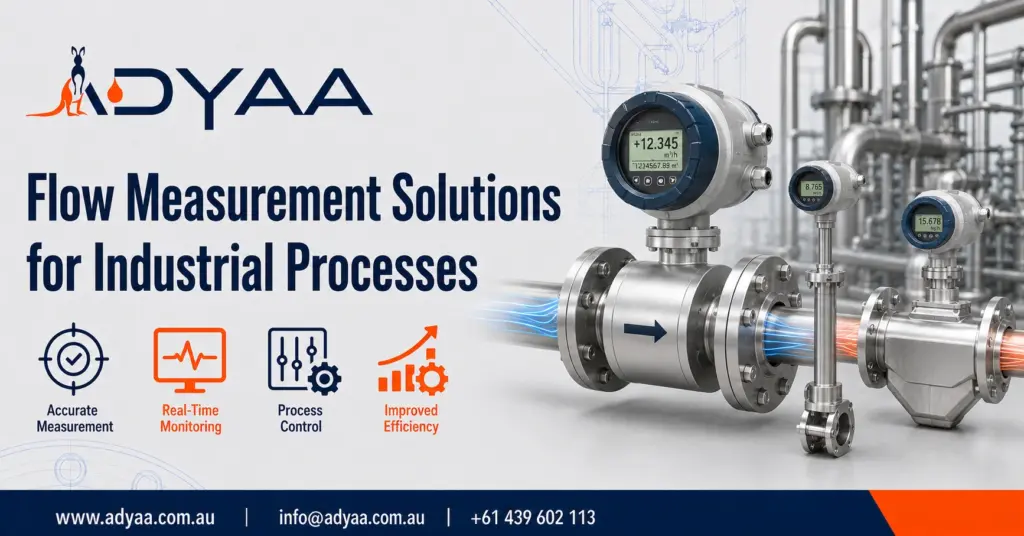
Flow Measurement Solutions for Industrial Processes Accurate flow measurement is essential for maintaining efficient industrial operations. Whether monitoring water, chemicals, steam, fuel or gases, reliable Flow Measurement Solutions help businesses improve process control, optimise resource consumption and maintain product quality. From manufacturing facilities to water treatment plants, selecting the right flow measurement technology supports better operational decisions while reducing waste and unnecessary downtime. What Are Flow Measurement Solutions? Flow measurement solutions include the instruments and technologies used to measure the movement of liquids, gases and steam within industrial processes. These solutions provide continuous flow data that helps operators monitor production, manage resources and improve overall process performance. Modern flow measurement systems can also integrate with PLC, SCADA and distributed control systems, providing real-time information for automated process control. Why Flow Measurement Matters? Reliable flow measurement supports safer and more efficient industrial operations. Improve Process Efficiency Monitor flow continuously to optimise production and reduce waste. Increase Measurement Accuracy Accurate flow data supports consistent process performance. Reduce Operating Costs Identify product losses and inefficient process conditions. Improve Product Quality Maintain consistent flow throughout manufacturing processes. Support Automation Provide reliable data for PLC, SCADA and industrial control systems. Better Resource Management Monitor water, chemicals, fuel and energy usage more effectively. How Flow Measurement Works Although different technologies are used, the measurement process follows a similar sequence. The flow meter detects the movement of liquid, gas or steam. Sensors measure the flow characteristics. The instrument converts the measurement into an electrical signal. The data is transmitted to a monitoring or control system. Operators use the information to monitor and optimise the process. Continuous monitoring helps improve efficiency and process stability. Common Flow Measurement Technologies Different industrial applications require different measurement principles. Electromagnetic Flow Meters Ideal for conductive liquids such as water, wastewater and chemicals. Coriolis Flow Meters Provide highly accurate mass flow measurement for liquids and gases. Ultrasonic Flow Meters Measure flow using ultrasonic signals without restricting the process. Vortex Flow Meters Suitable for measuring steam, gases and industrial liquids. Turbine Flow Meters Offer reliable measurement for clean liquid applications. Variable Area Flow Meters Simple and cost-effective solutions for low-flow industrial processes. Flow Measurement Technology Comparison Technology Best For Common Industries Electromagnetic Conductive Liquids Water & Wastewater Coriolis High Accuracy Mass Flow Chemical, Food & Beverage Ultrasonic Clean Liquids Water Treatment Vortex Steam and Gas Power Generation Turbine Clean Liquids Manufacturing Variable Area Low Flow Applications General Industry Where Flow Measurement Solutions Are Used Flow measurement supports a wide range of industries. Water & Wastewater Monitor water distribution, treatment and wastewater processes. Oil & Gas Measure hydrocarbons, fuels and process fluids. Chemical Processing Control dosing systems and chemical transfer processes. Food & Beverage Maintain accurate ingredient and product flow. Pharmaceutical Support precise manufacturing and quality control. Mining Monitor slurry, chemicals and water movement. Power Generation Measure steam, cooling water and utility systems. Manufacturing Improve production efficiency through continuous monitoring. Flow Measurement Selection Checklist Before selecting a flow measurement solution, consider: ✔ Type of fluid ✔ Flow range ✔ Operating pressure ✔ Operating temperature ✔ Pipe size ✔ Measurement accuracy ✔ Installation location ✔ Communication protocol ✔ Output signal ✔ Maintenance requirements Selecting the right technology improves reliability and long-term performance. Common Mistakes When Choosing Flow Measurement Solutions Common selection mistakes include: Choosing the wrong flow meter technology Ignoring fluid characteristics Incorrect sizing Poor installation practices Ignoring pressure loss Overlooking maintenance requirements Focusing only on initial cost A proper application assessment helps avoid these issues. Why Accurate Flow Measurement Matters Accurate flow measurement helps industries improve operational efficiency, reduce waste and optimise production processes. Reliable measurement data also supports preventive maintenance, better energy management and more informed operational decisions. Why Choose ADYAA? ADYAA supplies reliable flow measurement solutions for industrial applications across Australia. Comprehensive Flow Measurement Portfolio Electromagnetic, Coriolis, Ultrasonic, Vortex and Turbine Flow Meters. Technical Expertise Support in selecting the right flow measurement technology. Quality Industrial Products Reliable solutions from globally recognised manufacturers. Automation Ready Compatible with PLC, SCADA and process control systems. Australia-wide Support Technical assistance for industries across Australia. Long-Term Reliability Helping businesses improve efficiency through accurate flow measurement. Frequently Asked Questions What are Flow Measurement Solutions? Flow measurement solutions include instruments used to measure the flow of liquids, gases and steam in industrial processes. Which flow meter is best? The best solution depends on the application, process fluid, operating conditions and required measurement accuracy. Where are flow measurement systems used? They are widely used in water treatment, manufacturing, mining, oil & gas, food processing, chemical plants and power generation. Can flow meters integrate with automation systems? Yes. Most modern flow meters support integration with PLC, SCADA and DCS systems. Do flow meters require calibration? Routine calibration helps maintain measurement accuracy and long-term performance. How do I choose the right flow measurement solution? Consider the process fluid, operating conditions, accuracy requirements, installation environment and communication needs. Reliable Flow Measurement Solutions help industries improve process control, reduce operating costs and maintain accurate production data. Choosing the right flow measurement technology ensures efficient operations while supporting long-term equipment performance. ADYAA supplies industrial flow measurement solutions across Australia, helping businesses select technologies that match their applications and operational requirements. Looking for the right Flow Measurement Solution? Our specialists can help you choose the most suitable flow measurement technology for your industry and application. Talk to a Flow Measurement Expert Gems 3100/3200 Pressure Transmitters : Complete Guide – Copy Flow Measurement Solutions for Industrial Processes Accurate flow measurement is essential for maintaining efficient industrial operations. Whether monitoring water, chemicals,… Read More → Industrial HVAC vs Commercial HVAC: What is the Difference? Industrial HVAC vs Commercial HVAC: Why Equipment Choice Matters If you walk onto the roof of a shopping mall and… Read More → How Industrial Automation Sensors Improve Manufacturing Efficiency How Industrial Automation Sensors Improve Efficiency in Manufacturing Efficiency is the primary metric of success. The difference between a profitable… Read More →
Gems 3100/3200 Pressure Transmitters : Complete Guide
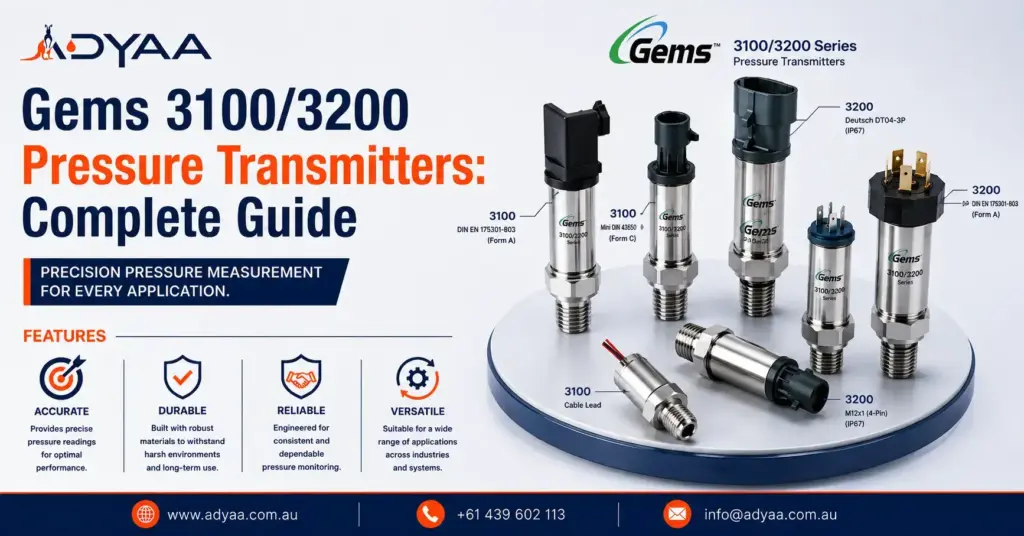
Gems 3100/3200 Pressure Transmitters: Complete Guide Accurate pressure monitoring is essential across industrial environments where process visibility, operational consistency and system performance matter. Selecting the right Pressure Transmitters can support reliable measurement, better integration and improved operational awareness. Whether you are evaluating a new installation or comparing an industrial pressure sensing solution, understanding application requirements is the first step. This guide explains what Gems 3100/3200 Pressure Transmitters are, how they work, selection considerations and practical applications across industrial environments. What Are Gems 3100/3200 Pressure Transmitters ? Gems 3100/3200 Pressure Transmitters are industrial devices designed to convert pressure into electrical output signals that can be interpreted by monitoring and control systems. Pressure Transmitters are widely used where continuous measurement and process visibility are important. Typical environments include: Industrial process applications Water and fluid systems Manufacturing equipment Hydraulic systems Automation environments OEM machinery Their purpose is simple: Measure pressure → convert into signal → support operational decisions. Why Pressure Transmitters Selection Matters Selecting a pressure transmitter involves more than choosing a pressure range. A well-selected industrial pressure Transmitters may support: Better process visibility Reliable pressure monitoring Easier system integration Improved operational awareness More consistent measurements Selecting equipment without considering the application may create: Unstable readings Increased maintenance Reduced measurement confidence Process inefficiencies For example: A production line operating under changing conditions may require a different pressure-sensing approach than a stable water application. 5 Factors to Consider Before Selecting Gems 3100/3200 Pressure Transmitters 1. Understand Operating Pressure Conditions Review: Normal operating pressure Peak conditions Temporary fluctuations Selecting the appropriate range supports measurement consistency. 2. Evaluate Process Compatibility Industrial processes vary. Consider: Water applications Process liquids Hydraulic fluids Industrial operating environments Review process requirements before selecting instrumentation. 3. Confirm Integration Requirements Pressure Transmitters should align with existing infrastructure. Typical environments include: PLC systems SCADA platforms Control systems Industrial monitoring systems System compatibility should always be evaluated before implementation. 4. Assess Environmental Conditions Environmental conditions influence performance. Evaluate: Temperature exposure Installation environment Moisture conditions Mechanical vibration Example: Outdoor industrial environments may have different requirements compared with controlled indoor installations. 5. Plan for Long-Term Operation Selection should support long-term use. Review: Accessibility Maintenance requirements Inspection schedules Operational continuity Reliable measurement starts with selecting solutions suitable for the application lifecycle. Common Applications of Gems 3100/3200 Pressure Transmitters Water Management Supports pressure visibility across fluid systems. Industrial Equipment Helps maintain process awareness. Hydraulic Systems Supports pressure monitoring under changing operating conditions. Manufacturing Applications Improves measurement visibility across production environments. Example: Selecting Pressure Transmitters for a Manufacturing Process Imagine a production environment operating multiple pressure zones. The engineering team reviews: ✔ Pressure requirements ✔ Environmental conditions ✔ Integration requirements ✔ Maintenance expectations Instead of selecting based only on specifications, they evaluate operating requirements first. This approach often supports better long-term outcomes. Best Practices for Pressure Monitoring To improve measurement performance: Select the correct operating range Confirm process compatibility Install according to requirements Perform periodic inspection Review operating conditions regularly Reliable monitoring combines appropriate selection with good operating practices. Frequently Asked Questions What are Gems 3100/3200 Pressure Transmitters used for? They are used to measure pressure and provide electrical signals for industrial monitoring and control applications. How do I select the correct pressure transducer? Review operating pressure, application requirements, environmental conditions and system compatibility. Can pressure transducers be used in water applications? Pressure Transmitters are commonly applied in industrial water environments depending on operating conditions. What industries commonly use pressure Transmitters ? Manufacturing, industrial automation, water systems and hydraulic applications commonly use pressure Transmitters . How often should pressure Transmitters be inspected? Inspection intervals vary depending on operating conditions and maintenance practices. Final Thoughts Selecting the correct pressure sensing solution requires more than reviewing technical specifications. Gems 3100/3200 Pressure Transmitters may be considered where pressure visibility, operational consistency, and industrial integration are important. Before final selection, evaluate operating requirements, installation conditions, and system compatibility to support long-term performance. Explore product details Electromagnetic Flow Meter for Distilled Water Applications – Copy Gems 3100/3200 Pressure Transmitters: Complete Guide Accurate pressure monitoring is essential across industrial environments where process visibility, operational consistency and… Read More → Dry Type Water Meters for Accurate Water Measurement Dry Type Water Meters: Why They Remain a Preferred Choice for Accurate Water Measurement Accurate water measurement is the foundation… Read More → Electromagnetic Flow Meter for Distilled Water Applications Electromagnetic Flow Meter for Distilled Water Applications Can an Electromagnetic Flow Meter Be Used for Distilled Water? Electromagnetic (Mag) flow… Read More →
Gems 3510 Pressure Transmitter: Complete Selection Guide
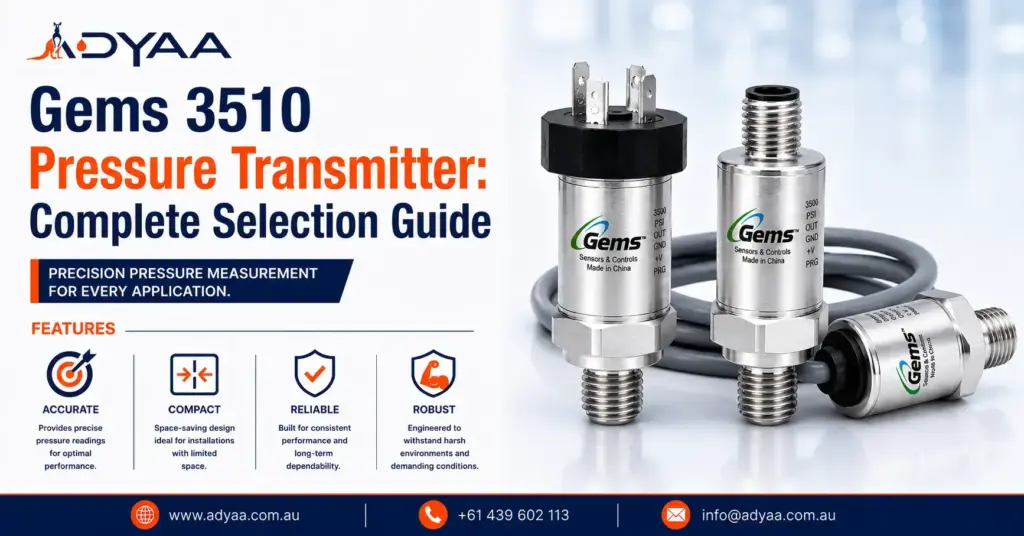
Gems 3510 Pressure Transmitter: Complete Selection Guide Accurate pressure monitoring plays an important role in industrial performance, process visibility and operational consistency. Selecting the right Pressure Transmitter can help improve measurement reliability, support system integration and contribute to more efficient process control. Whether you are evaluating an industrial pressure transmitter, upgrading an existing setup or comparing a pressure measurement solution, understanding selection criteria is essential. This guide explains how to evaluate the Gems 3510 Pressure Transmitter, where it may be applied and what factors to consider before making a decision. What Is a Gems 3510 Pressure Transmitter? The Gems 3510 Pressure Transmitter is designed to convert measured pressure into an output signal that can be used by industrial monitoring and control systems. Pressure transmitters are widely used to support operational monitoring and maintain process visibility across multiple industries. Typical application environments include: Industrial process systems Water and fluid applications Manufacturing environments Hydraulic systems Automation systems OEM equipment As a process pressure transmitter, its purpose is to convert process pressure into usable measurement data. Why Pressure Transmitter Selection Matters Choosing the right transmitter involves more than selecting a specification range. A properly selected pressure monitoring system may support: Improved process visibility More consistent measurements Better operational awareness Easier maintenance planning Reliable system integration Incorrect selection may lead to: Measurement instability Frequent maintenance intervention Reduced operational confidence Increased troubleshooting time For example: A water circulation process may require different pressure measurement conditions compared with a hydraulic production environment. Understanding the application should always come before selecting equipment. 5 Factors to Consider Before Selecting a Gems 3510 Pressure Transmitter 1. Understand the Operating Pressure Range Start by identifying: Normal operating pressure Maximum pressure Temporary surge conditions Selecting an unsuitable range may influence performance. Example: Operating within the normal measurement range instead of near limits may help maintain stable readings. 2. Evaluate Process Media Compatibility Industrial environments operate under different conditions. Consider: Water applications Industrial liquids Hydraulic fluids Process environments Questions to review: What media will be measured? Are environmental conditions stable? Is material compatibility suitable? Selection based on actual operating requirements generally supports better long-term outcomes. 3. Confirm System Integration Requirements Before installation, verify compatibility with: PLC systems SCADA environments Industrial control systems Monitoring platforms An industrial instrumentation setup performs best when devices communicate effectively across the system. 4. Review Environmental Conditions Pressure transmitters often operate in demanding industrial environments. Evaluate: Temperature exposure Moisture conditions Mechanical vibration Installation location Example: Outdoor applications may have different requirements compared with indoor control systems. 5. Consider Lifecycle and Maintenance Selection should support long-term operation. Review: Installation access Service requirements Inspection schedules Operational continuity Selecting a transmitter that supports ongoing maintenance can simplify long-term management. Common Applications of Gems 3510 Pressure Transmitter The Gems 3510 Pressure Transmitter may support several industrial environments. Water Management Systems Pressure monitoring may help improve operational visibility across fluid applications. Manufacturing Equipment Supports measurement awareness across industrial processes. Hydraulic Applications Provides pressure visibility under changing operating conditions. Industrial Automation Supports broader monitoring and operational control environments. Example: Selecting a Pressure Measurement Solution Imagine an industrial facility operating a closed-loop water process. The engineering team evaluates: ✔ Pressure range ✔ Environmental conditions ✔ Process requirements ✔ Integration compatibility Instead of selecting based only on specifications, they evaluate actual operating conditions. This approach may contribute to more reliable measurement outcomes. Best Practices for Better Pressure Measurement To improve long-term measurement performance: Select the correct operating range Verify process compatibility Follow installation recommendations Schedule periodic inspection Review operating conditions regularly The right pressure transmitter applications strategy combines correct selection with suitable operating practices. Frequently Asked Questions What is a Gems 3510 Pressure Transmitter used for? The Gems 3510 Pressure Transmitter is used to measure pressure and provide output signals for monitoring and industrial control environments. How do I choose the correct pressure transmitter? Evaluate operating pressure, environmental conditions, media compatibility and system integration requirements. Can pressure transmitters be used in water applications? Pressure transmitters are commonly applied in industrial water systems depending on operating requirements. What industries commonly use pressure transmitters? Pressure transmitters are frequently used in manufacturing, automation, hydraulic systems and water-related processes. How often should pressure transmitters be inspected? Inspection intervals depend on application conditions, maintenance schedules and operational requirements. Final Thoughts Selecting the right pressure transmitter requires understanding more than technical specifications. The Gems 3510 Pressure Transmitter may be considered where reliable pressure monitoring, process visibility and integration flexibility are important. Before implementation, review application requirements, environmental conditions and compatibility to support long-term operational performance. Explore product details Electromagnetic Flow Meter for Distilled Water Applications – Copy Gems 3100/3200 Pressure Transmitters: Complete Guide Accurate pressure monitoring is essential across industrial environments where process visibility, operational consistency and… Read More → Dry Type Water Meters for Accurate Water Measurement – Copy Gems 3510 Pressure Transmitter: Complete Selection Guide Accurate pressure monitoring plays an important role in industrial performance, process visibility and… Read More → Dry Type Water Meters for Accurate Water Measurement Dry Type Water Meters: Why They Remain a Preferred Choice for Accurate Water Measurement Accurate water measurement is the foundation… Read More →