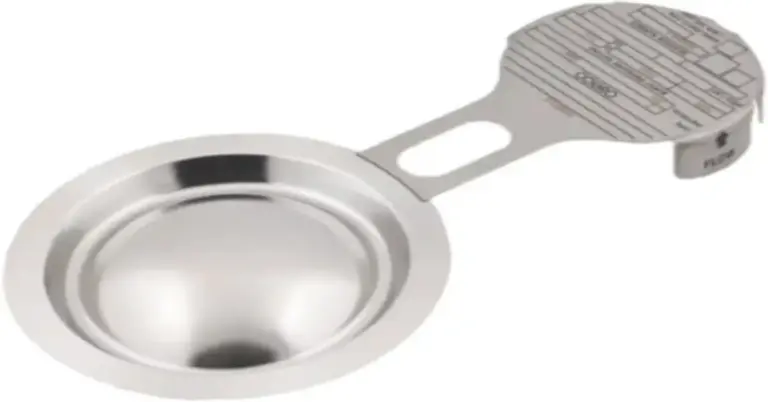
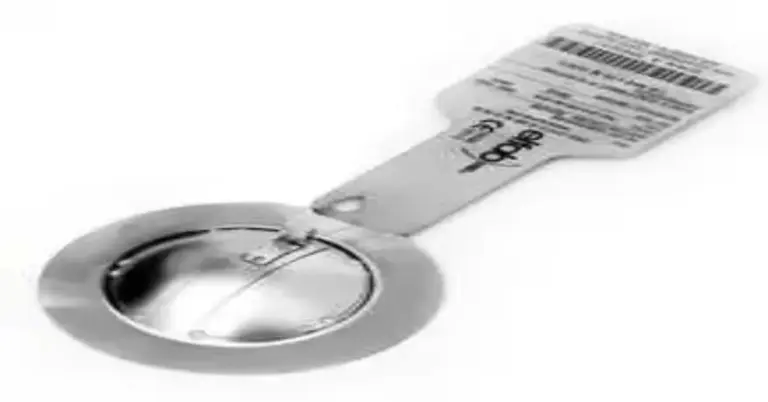
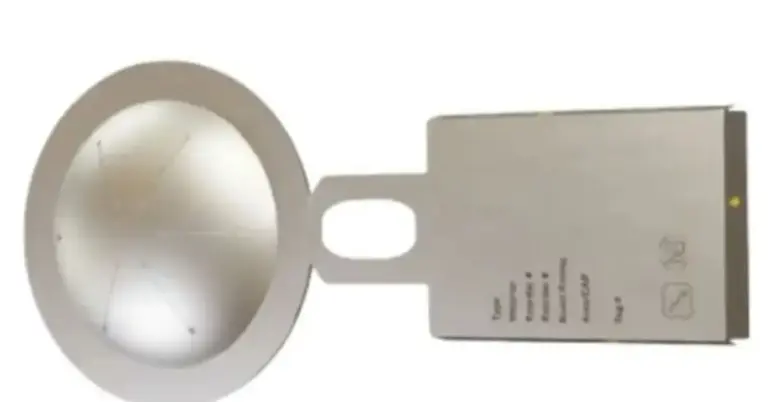
When a pressurized system experiences an unexpected spike, your safety devices need to act instantly. A rupture disc is your facility’s last line of defense against catastrophic equipment failure.
However, a disc is only as good as its specifications. Getting the Burst Pressure Selection for Rupture Disc Safety right is the difference between a safely controlled release and a critical plant emergency.
As specialists in industrial safety and pressure relief systems, we frequently see facilities struggle with premature disc failures. Usually, it comes down to a misunderstanding of how operating pressures interact with disc ratings.
Here is exactly how to navigate this selection process to protect your equipment.
The Baseline: Operating Pressure vs. Burst Pressure
You cannot select a rupture disc simply by looking at your normal daily pressure. You must understand the gap between your normal state and your danger zone.
- Operating Pressure: The pressure your system runs at during standard daily operations.
- Specified Burst Pressure: The exact pressure at which the manufacturer designs the disc to open.
If your burst pressure is set too close to your operating pressure, minor everyday fluctuations will cause the disc to fatigue. This leads to premature bursting, costly downtime, and lost materials.
3 Core Factors of Burst Pressure Selection
To achieve reliable Burst Pressure Selection for Rupture Disc Safety, you must calculate three specific variables.
1. Operating Ratio
This is the relationship between your normal operating pressure and the disc’s marked burst pressure. Different designs handle different ratios.
- Standard Forward-Acting Discs: Typically require a 70% operating ratio. (e.g., If bursting at 100 PSI, operate no higher than 70 PSI).
- Reverse-Acting Discs: Can handle up to a 95% operating ratio. These are ideal for systems running close to the Maximum Allowable Working Pressure (MAWP).
2. Burst Tolerance
No manufacturing process is perfect down to the micro-psi. Burst tolerance is the acceptable variation from the specified burst pressure.
If you order a disc rated for 100 PSI with a +/- 5% tolerance, it might burst anywhere between 95 PSI and 105 PSI.
Factoring in this margin of error is a critical step in Burst Pressure Selection for Rupture Disc Safety. You must ensure the lower end of the tolerance doesn’t overlap with regular pressure spikes.
3. Manufacturing Design Range (MDR)
MDR is a standard agreement regarding where the final stamped burst pressure will fall relative to your requested pressure. Understanding MDR prevents surprises when the final product arrives at your plant.
Real-World Example: Sizing for an Industrial Plant
Imagine a chemical processing tank in an Australian facility with a MAWP of 200 PSI.
- The plant operates the tank normally at 160 PSI.
- Choosing a forward-acting disc (70% ratio) means they must drop operating pressure to 140 PSI. This hurts production.
- The Solution: By selecting a reverse-acting disc (90% ratio), they can set the burst pressure at 200 PSI and maintain their 160 PSI operation.
This highlights why strategic Burst Pressure Selection for Rupture Disc Safety directly impacts both plant profitability and operational flow.
The Impact of Temperature
Temperature is the hidden variable that ruins poorly planned overpressure protection.
As the temperature increases, the metal of the rupture disc weakens. A disc rated to burst at 100 PSI at room temperature will burst at a lower pressure if the system runs at 200°C.
Conversely, extreme cold can strengthen the metal, delaying the burst. Specifying the exact coincident temperature is an absolute requirement for accurate Burst Pressure Selection for Rupture Disc Safety.
People Also Ask (FAQs)
Q: What is a safe operating ratio for rupture discs? A: It depends on the disc type. Forward-acting discs usually require a 70% ratio, while reverse-acting discs can safely operate up to 90% or 95% of the burst pressure.
Q: Can temperature affect my rupture disc’s burst pressure? A: Yes. High temperatures weaken the disc material, causing it to burst at a lower pressure. Extreme cold can strengthen the metal and delay the burst.
Q: Why do rupture discs burst prematurely? A: The most common cause is metal fatigue. This happens when the specified burst pressure is set too close to the daily operating pressure, causing the disc to weaken from normal system pulsations.
The Bottom Line
Upgrading your pressure relief systems requires looking at the entire environment—pressure cycles, vacuum conditions, fluid types, and temperature extremes. Skipping just one of these metrics compromises your entire safety infrastructure. Proper sizing prevents premature failures, avoids unexpected downtime, and guarantees regulatory compliance.
Upgrade Your Plant Safety Today
Need help finding the exact rupture disc for your facility’s unique conditions? Don’t leave your overpressure protection to guesswork.
Explore our premium industrial safety solutions or contact the ADYAA Engineering Team today for expert sizing and selection.