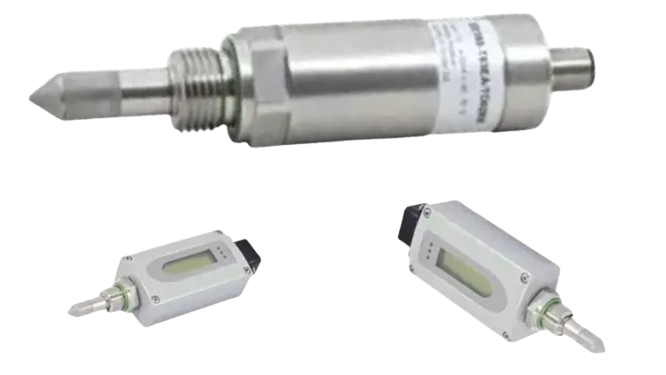
Moisture control is a critical safety factor in industrial automation. Choosing the wrong measurement tool leads to rusted pneumatic lines, ruined products, and massive system failures.
Understanding Dew Point Sensors vs Humidity Sensors is the first step in protecting your facility from hidden water damage.
Here is exactly how these two technologies differ and why choosing the right one matters.
The Core Measurement Difference: Dew Point Sensors vs Humidity Sensors
While both track moisture, they provide entirely different data sets to your control systems.
Humidity Sensors (Relative Moisture) They measure moisture as a percentage of the air’s total capacity, which constantly fluctuates as the room temperature rises and falls.
Dew Point Sensors (Absolute Moisture) They pinpoint the exact temperature threshold where water vapor turns into dangerous liquid condensation, providing an absolute metric regardless of ambient heat.
Why Industrial Plants Rely on Dew Point
In highly technical environments, relative percentages are simply not accurate enough to guarantee safety.
Protecting Compressed Air Systems Knowing the exact condensation point prevents liquid water from pooling inside pipes and destroying expensive pneumatic tools.
Ensuring High-Temperature Drying Accuracy In extreme industrial baking or chemical drying, comparing Dew Point Sensors vs Humidity Sensors is no contest; dew point provides the strict, absolute accuracy required.
Real-World Example: Australian Manufacturing
Consider an Australian manufacturing plant struggling with its pneumatic paint spraying systems.
The Hidden Moisture Failure: The plant relied on standard relative humidity sensors, but undetected temperature drops at night caused invisible moisture spikes in the air lines.
The Sensor Upgrade Solution: By evaluating Dew Point Sensors vs Humidity Sensors and upgrading to a strict dew point transmitter, the plant eliminated pipeline condensation and stopped paint blistering entirely.
People Also Ask (FAQs)
Q: Which sensor is better for compressed air lines?
A: Dew point sensors are mandatory for compressed air systems to definitively prevent liquid water formation inside the piping.
Q: Does ambient temperature affect relative humidity?
A: Yes, as air temperature rises, its capacity to hold water increases, which artificially lowers your relative humidity reading.
Q: Can a standard humidity sensor detect condensation?
A: No, only a dew point sensor calculates the exact temperature threshold where moisture will actively condense into liquid.
The Bottom Line
Relying on relative moisture measurements in high-pressure environments is a massive operational risk. Evaluating Dew Point Sensors vs Humidity Sensors proves that absolute dew point tracking is the only way to guarantee a completely dry, reliable, and compliant industrial process.
Upgrade Your Moisture Control
Stop guessing about the moisture levels inside your critical pipelines. Reach out to the ADYAA Engineering Team today for expert sensor selection and precision automation solutions tailored for your facility.