What Is Industrial Sealing and Why Is It Important?
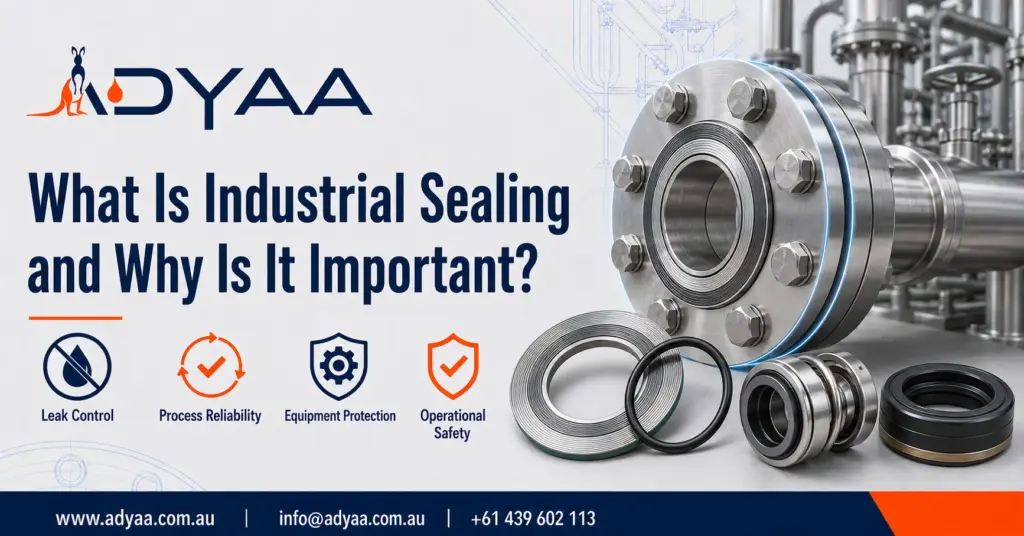
What Is Industrial Sealing and Why Is It Important? In a massive refinery or a high-pressure mining plant, the most critical component often isn’t the largest pump or the tallest reactor—it’s the smallest seal. Industrial sealing is the unsung hero of process integrity. Whether it is a Ring Type Joint (RTJ) gasket in an oil pipeline or a simple O-ring in a hydraulic cylinder, seals are the barrier between a safe, efficient operation and a catastrophic failure. We specialize in high-performance sealing solutions for Australia’s toughest environments. In this guide, we break down what industrial sealing actually is, why it is critical for your bottom line, and the different types you need to know about. Industrial Sealing Solutions for Maintenance Managers, Process Engineers and Procurement Officers in Oil & Gas/Mining. What Is Industrial Sealing? At its core, industrial sealing is the technology used to block the passage of fluids (liquids or gases) through the gap between two joined surfaces. It serves two primary functions: Containment: Keeping the internal media (oil, steam, acid) inside the system. Exclusion: Keeping external contaminants (dust, dirt, moisture) outside the system. While this sounds simple, the challenge lies in the conditions. Industrial seals must maintain this barrier while enduring extreme temperatures (from cryogenic -196°C to scorching +1000°C), massive pressures (up to 20,000 PSI), and aggressive chemical corrosion. Why Is Industrial Sealing Important? You might view seals as cheap consumables, but their failure can cost millions. Here is why investing in quality sealing (like ADYAA’s RX Rings or Spiral Wound Gaskets) is non-negotiable. 1. Safety and Hazard Prevention The most immediate importance of sealing is human safety. In industries like Oil & Gas, a leaking flange isn’t just a mess; it’s a fire hazard or a toxic cloud. Proper sealing ensures that volatile organic compounds (VOCs) and dangerous chemicals stay contained, protecting your workforce from exposure and explosions. 2. Operational Efficiency A system that leaks pressure is a system that bleeds money. Pneumatic systems: Leaking air forces compressors to work harder, driving up electricity bills. Hydraulic systems: Fluid loss results in sluggish machinery and reduced force. High-quality seals ensure your equipment runs at peak parameter settings without wasting energy. 3. Environmental Compliance Australia has strict environmental regulations regarding emissions and ground contamination. A reliable sealing system helps you meet EPA standards by preventing “fugitive emissions”—the slow, invisible leaks of gas from valves and flanges that can lead to heavy fines. 4. Equipment Longevity Seals act as the first line of defense for your expensive assets. For example, a Spring-Energized Seal or a Polymer Bellow protects internal bearings and shafts from grit and corrosion. If the seal fails, contaminants can enter the equipment, accelerating wear and potentially causing premature component failure. Types of Industrial Sealing Solutions Not all seals are created equal. Depending on your application, you will generally rely on one of these categories: A. Static Seals (Gaskets) These are used between two stationary surfaces, such as pipe flanges. RTJ Gaskets (Ring Type Joints): Metal gaskets (Oval, Octagonal, RX, BX) designed for high-pressure/high-temperature applications. They form a metal-to-metal seal ideal for the Oil & Gas industry. Spiral Wound Gaskets: A mix of metal winding and soft filler (graphite/PTFE), offering excellent recovery for fluctuating temperatures. B. Dynamic Seals These seals are between parts that move relative to each other (like a piston rod or a rotating shaft). Spring-Energized Seals: Used when standard elastomers fail. A spring ensures constant contact while maintaining sealing force as the sealing interface changes. Packing: Soft braided material compressed around a shaft to prevent leakage in pumps and valves. C. O-Rings One of the most widely used seal types, O-rings are donut-shaped loops that sit in a groove and compress to prevent fluid leakage. Elastomeric: NBR, Viton® (FKM), or EPDM, selected for suitable operating conditions. Metal O-Rings: Used by ADYAA for extreme environments, such as aerospace and cryogenic applications, where conventional rubber seals may not withstand the operating conditions. Summary: Don’t Let a Leak Stop Your Plant A seal might cost $50, but it protects a $500,000 pump and ensures the safety of everyone on site. Whether you need standard Lens Rings for steam lines or custom CNC-machined sealing components, quality matters. ADYAA supplies a full range of gaskets, O-rings, and custom seals engineered for the Australian industry. Need help selecting the right material for your chemical plant? View Our Full Range of Sealing Solutions. Contact our engineers for a consultation. What Is Industrial Sealing and Why Is It Important? Pressure Instrumentation Suppliers: What to Look for Before You Buy Selecting a pressure instrument isn’t simply about finding the lowest… Read More → Pressure Instrumentation Suppliers: What to Look for Before You Buy. Pressure Instrumentation Suppliers: What to Look for Before You Buy Selecting a pressure instrument isn’t simply about finding the lowest… Read More → The Role of Sealing in Preventing Leakage and Safety Hazards Focus The Role of Sealing in Preventing Leakage and Safety Hazards A leak is rarely just a “drip.” In a chemical… Read More →
Pressure Instrumentation Suppliers: What to Look for Before You Buy.
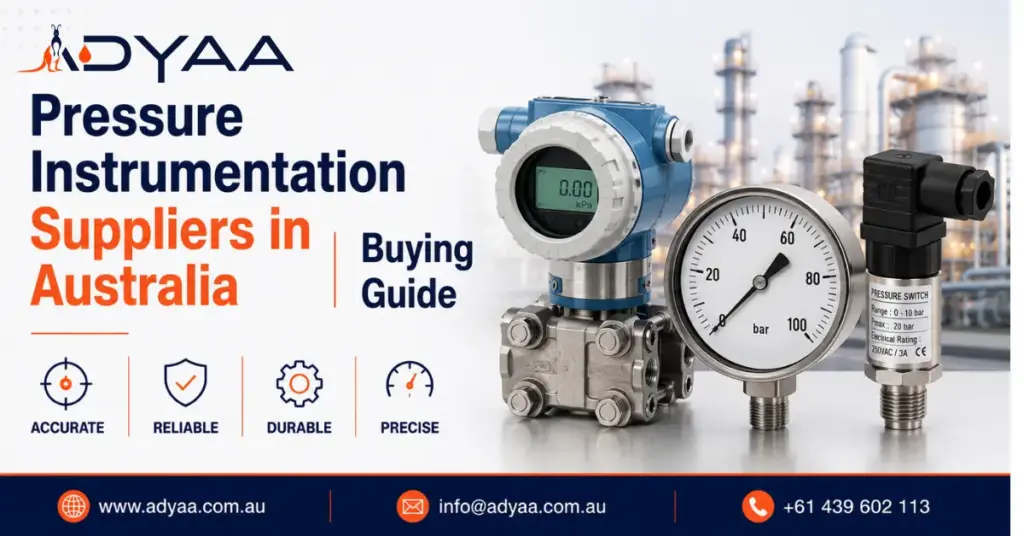
Pressure Instrumentation Suppliers: What to Look for Before You Buy Selecting a pressure instrument isn’t simply about finding the lowest price or the quickest delivery. The right solution depends on your process conditions, operating environment and the level of measurement accuracy your application demands. Many businesses experience recurring maintenance issues because the wrong pressure instrument was selected from the beginning. Working with experienced Pressure Instrumentation Suppliers helps reduce these problems by matching the product to the application rather than simply supplying a catalogue item. Whether you’re installing a new production line or upgrading an existing process, understanding what to look for before purchasing can save time, reduce maintenance and improve long-term reliability. Why Choosing the Right Supplier Matters Pressure instruments play an important role in process safety, equipment protection and production efficiency. Choosing the right Pressure Instrumentation Suppliers means more than buying products. It means receiving guidance on selecting equipment that performs reliably under your operating conditions. A knowledgeable supplier can also help simplify installation, improve compatibility and reduce unexpected downtime. Which Pressure Instruments Are Commonly Used? Different applications require different pressure measurement solutions. Pressure Transmitters Pressure transmitters continuously measure pressure and send electronic signals to PLCs, DCS or automation systems. Common applications include: Chemical processing Water treatment Manufacturing Oil & Gas Food processing Pressure Gauges Pressure gauges provide local pressure indication, allowing operators to monitor system performance quickly. They are commonly installed on: Pumps Compressors Hydraulic systems Steam lines Industrial machinery Pressure Switches Pressure switches activate or deactivate equipment when preset pressure levels are reached. Typical applications include: Pump protection Compressor control Hydraulic systems Safety shutdown systems What Should You Consider Before Buying? Before selecting any industrial pressure instrument, consider the following: Operating pressure range Process temperature Media compatibility Required measurement accuracy Installation location Electrical output requirements Environmental conditions Industry standards and certifications Answering these questions helps ensure the selected instrument performs reliably throughout its service life. Common Mistakes When Purchasing Pressure Instruments Many performance issues begin long before installation. Some common mistakes include: Choosing the wrong pressure range Ignoring process media compatibility Selecting instruments based only on price Overlooking environmental conditions Using incorrect process connections Purchasing without technical guidance These mistakes often lead to inaccurate readings, shorter equipment life and increased maintenance costs. Questions to Ask Your Pressure Instrumentation Supplier Before placing an order, ask: Is this instrument suitable for my application? Which materials are compatible with my process media? What accuracy level is recommended? Does the instrument support my control system? Is calibration required before installation? What maintenance is recommended? The answers will help you make a more informed purchasing decision. Industries That Depend on Pressure Instrumentation Water & Wastewater Monitor pumps, pipelines and treatment systems with reliable pressure measurement. Chemical Processing Maintain safe operating conditions across production processes. Food & Beverage Support hygienic manufacturing and process consistency. Oil & Gas Monitor pressure across upstream, midstream and downstream operations. Power Generation Protect critical equipment through continuous pressure monitoring. Manufacturing Improve automation and production efficiency with accurate pressure measurement. Mining & Minerals Monitor slurry systems, pumps and process equipment. General Industry Support safe and efficient industrial operations through dependable instrumentation. Frequently Asked Questions What products do Pressure Instrumentation Suppliers provide? Most suppliers offer pressure transmitters, pressure gauges, pressure switches and related accessories for industrial applications. How do I choose the right pressure transmitter? Selection depends on pressure range, process media, temperature, installation method and required output signal. Why is pressure measurement important? Accurate pressure measurement helps improve process efficiency, equipment protection and workplace safety. Should pressure instruments be calibrated? Yes. Periodic calibration helps maintain measurement accuracy and reliable system performance. Can one pressure instrument suit every application? No. Different industries and operating conditions require different pressure measurement solutions. Final Thoughts Choosing experienced Pressure Instrumentation Suppliers is just as important as selecting the right instrument. A well-matched pressure solution improves measurement accuracy, supports reliable process control and reduces long-term maintenance. If you’re comparing pressure transmitters, pressure gauges or pressure switches, selecting equipment based on your application rather than price alone usually delivers better long-term results. Pressure Instrumentation Suppliers: What to Look for Before You Buy. How Vision & Imaging Sensors Transform Automated Inspection Systems In the high-speed world of modern manufacturing, zero-defect production is no… Read More → The Role of Sealing in Preventing Leakage and Safety Hazards Focus The Role of Sealing in Preventing Leakage and Safety Hazards A leak is rarely just a “drip.” In a chemical… Read More → How Vision & Imaging Sensors Transform Automated Inspection Systems How Vision & Imaging Sensors Transform Automated Inspection Systems In the high-speed world of modern manufacturing, zero-defect production is no… Read More →
The Role of Sealing in Preventing Leakage and Safety Hazards Focus
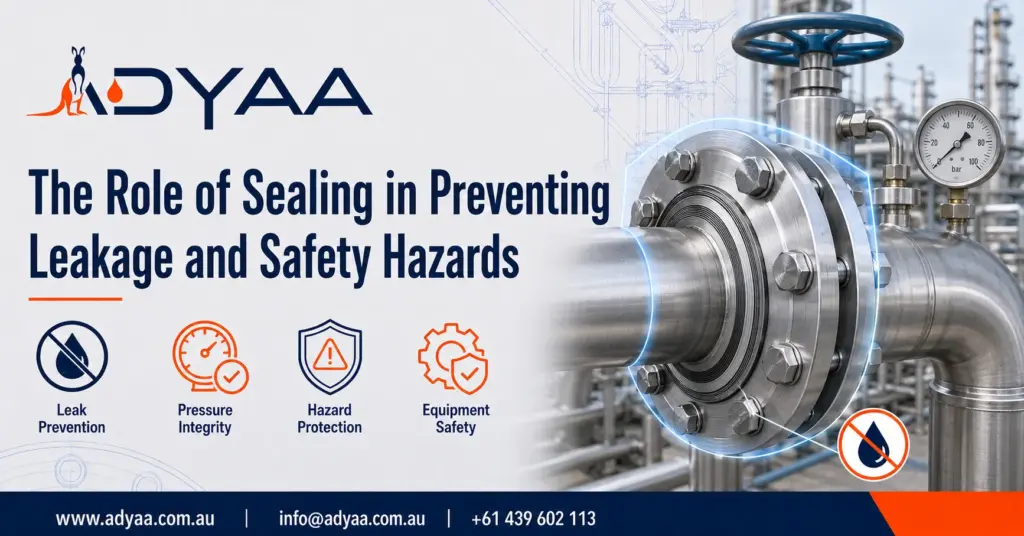
The Role of Sealing in Preventing Leakage and Safety Hazards A leak is rarely just a “drip.” In a chemical plant, a leak poses a significant risk of toxic exposure. In an oil refinery, there is a potential fire. In a high-pressure steam line, it is an explosion hazard. While pumps and reactors get the most attention during safety audits, the role of sealing in preventing leakage is arguably the most critical factor for maintaining facility integrity. It is the invisible shield that keeps your processes contained and your workforce safe. ADYAA understands that gaskets and seals are not just consumables; they are safety devices. In this guide, we explore how high-performance sealing mitigates catastrophic risks. Sealing Solutions for HSE Managers, Maintenance Leads, Reliability Engineers. The Real Cost of Leakage Leakage is often categorized into two types: visible leakage (drips and sprays) and fugitive emissions (invisible gas release). Both pose severe threats: Fire and Explosion: In the Oil & Gas sector, flammable hydrocarbons escaping from a failed flange gasket can be ignited by a single spark. Toxic Exposure: Leaking seals in chemical processing can release hazardous fumes (like chlorine or ammonia), endangering workers’ lungs and skin. Environmental Contamination: Seeping chemicals can contaminate groundwater, leading to massive EPA fines. Understanding the role of sealing in preventing leakage allows plant managers to address these risks before they become accidents. How Advanced Sealing Prevents Hazards Preventing these outcomes requires selecting the right seal for the specific hazard. Standard rubber O-rings often fail under extreme stress. Here is how specialized ADYAA sealing products fulfill the vital role of sealing in preventing leakage across different applications. 1. Controlling Extreme Pressure (The RTJ Solution) When pressures climb above 2,000 PSI, standard flat gaskets can blow out. The Solution: Ring Type Joint (RTJ) Gaskets. How it Works: Used heavily in the Oil & Gas industry, RTJs (like the Type R, RX, and BX) sit in a machined groove. The RX and BX styles are “pressure-energized,” meaning internal pressure pushes the gasket tighter against the flange. This mechanism highlights the active role of sealing in preventing leakage during dangerous pressure spikes. 2. Handling Extreme Temperatures In cryogenic applications (LNG) or superheated steam systems, elastomers become brittle and crack, leading to immediate failure. The Solution: Metal O-Rings and Lens Rings. How it Works: Made from heavy-duty alloys, Metal O-Rings and Lens Rings withstand temperatures that would melt rubber. They provide a reliable metal-to-metal seal and can maintain sealing performance under extreme temperatures and demanding operating conditions. 3. Chemical Resistance Many industrial fluids are corrosive enough to eat through standard seals. The Solution: Spring Energized Seals and Bonded Seals. How it Works: By using high-grade polymers (like PTFE) energized by a corrosion-resistant spring, these seals maintain contact with the sealing surface even under prolonged exposure to aggressive chemicals and demanding operating conditions. . This confirms the role of sealing in preventing leakage of hazardous chemicals that could otherwise cause premature degradation of unsuitable sealing materials. Why Seals Fail (And How to Stop It) Even the best gasket will leak if applied incorrectly. The three most common causes of sealing failure are: Incorrect Material Selection: Using a standard NBR O-ring in a high-temperature acid line. Improper Installation: Uneven bolt torque on a flange can crush a gasket or leave gaps. Reusing Disposable Seals: Many metallic gaskets (like RTJs) deform to create a seal and cannot be reused. Protect Your Workforce with ADYAA Safety is not a place to cut corners. Whether you require Weld Ring Gaskets for a permanent seal or Backup Rings for hydraulics, ADYAA has the engineering expertise to specify the correct component. We supply sealing products designed to Australian and International standards. By prioritizing the role of sealing in preventing leakage, you ensure your plant stays compliant, efficient, and accident-free. Is your facility fully protected? Browse Our Range of RTJ Gaskets & Metal Seals Contact ADYAA for a Sealing Safety Assessment. The Role of Sealing in Preventing Leakage and Safety Hazards Focus How Vision & Imaging Sensors Transform Automated Inspection Systems In the high-speed world of modern manufacturing, zero-defect production is no… Read More → How Vision & Imaging Sensors Transform Automated Inspection Systems How Vision & Imaging Sensors Transform Automated Inspection Systems In the high-speed world of modern manufacturing, zero-defect production is no… Read More → Onsite Instrumentation Calibration: Benefits & Best Practices Onsite Instrumentation Calibration: Benefits & Best Practices A pressure transmitter reading slightly higher than the actual pressure or a temperature… Read More →
How Vision & Imaging Sensors Transform Automated Inspection Systems
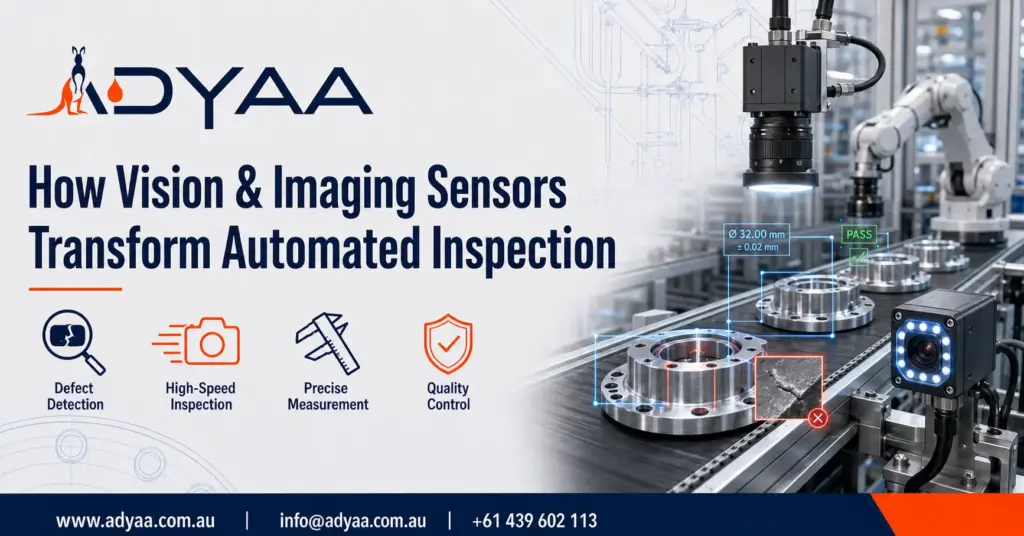
How Vision & Imaging Sensors Transform Automated Inspection Systems In the high-speed world of modern manufacturing, zero-defect production is no longer just a goal; it is an expectation. Relying on manual inspection or basic photoelectric sensors to catch flaws on a fast-moving conveyor belt is a recipe for bottlenecks, missed defects, and costly recalls. The manufacturing landscape is undergoing a significant shift, driven by the adoption of Industry 4.0 technologies. At the forefront of this revolution is the integration of advanced Vision & Imaging Sensors. These are not just cameras; they are the eyes of the intelligent factory, converting visual information into actionable data in milliseconds. ADYAA sees firsthand how implementing the right vision technology moves a facility from reactive quality sorting to proactive Automated Quality Control. In this blog, we explore how advanced Vision & Imaging Sensors are fundamentally transforming automated inspection systems. Vision & Imaging Sensors for Manufacturing Engineers, Quality Control Managers, Automation Specialists and Plant Managers. Beyond the Human Eye: The Power of Machine Vision Traditional inspection methods rely on human operators, who fatigue over time, or simple sensors that can only detect the presence or absence of an object. Neither is sufficient for today’s complex products and high throughput rates. Vision & Imaging Sensors provide a quantum leap in capability. By combining sophisticated optics, specialized lighting, and powerful on-board processing (often enhanced by Deep Learning/AI), these systems can analyze texture, shape, color, and dimensions with astonishing accuracy and consistency that human inspectors cannot match. Key Areas of Transformation in Manufacturing Incorporating these sensors into your production line doesn’t just improve existing processes; it enables entirely new capabilities in Real-time Inspection. 1. Advanced Defect Detection Standard sensors might tell you a bottle is on the line. Vision & Imaging Sensors can tell you if the cap is cross-threaded, if the fill level is low by a millimeter, or if there is a microscopic crack in the glass. Whether it is identifying surface scratches on automotive parts or detecting foreign contaminants in food packaging, these sensors ensure that flawed products are rejected immediately, long before they reach a customer. 2. Precise Non-Contact Metrology (Measurement) In industries like aerospace and electronics, tolerances are measured in microns. Vision & Imaging Sensors allow for precise, non-contact measurement of critical dimensions during production. Instead of stopping the line for manual gauging, the vision system measures parts “on the fly,” ensuring adherence to specifications and providing immediate feedback to process controllers if tooling begins to drift out of tolerance. 3. Identification, Verification, and Traceability Traceability is critical in regulated industries like pharmaceuticals and automotive. Vision systems are essential for reading items that move at high speeds. They utilize Optical Character Recognition (OCR) and Optical Character Verification (OCV) to read alphanumeric codes, date lots, and barcodes/Data Matrix codes. This ensures that the right label is on the right product and that every item is fully traceable throughout the supply chain. The Business Impact of Smart Vision Integrating Vision & Imaging Sensors into your automated inspection systems delivers measurable returns on investment: Increased Throughput: Inspections happen at full production speed, eliminating quality control bottlenecks. Reduced Waste and Rework: Catching defects early in the process prevents adding value to scrap parts. Brand Protection: Ensuring only perfect products leave the facility protects your reputation and avoids costly recalls. Data-Driven Insights: These sensors don’t just reject bad parts; they provide data on why parts are failing, allowing engineers to optimize upstream processes. Conclusion: Seeing the Future of Quality with ADYAA The transition from manual checking to intelligent, automated inspection is essential for staying competitive. However, selecting the right lighting, optics, and sensor resolution for your specific application can be complex. At ADYAA, we help navigate the complexities of industrial automation. We can help you determine how best to deploy Vision & Imaging Sensors to solve your toughest quality challenges, ensuring your production line is faster, smarter, and visibly better. Ready to transform your quality control process? 👉 Explore ADYAA’s Automation & Sensor Solutions 📞 Contact our engineering team to discuss your vision application. How Vision & Imaging Sensors Transform Automated Inspection Systems Onsite Instrumentation Calibration: Benefits & Best Practices A pressure transmitter reading slightly higher than the actual pressure or a temperature… Read More → Onsite Instrumentation Calibration: Benefits & Best Practices Onsite Instrumentation Calibration: Benefits & Best Practices A pressure transmitter reading slightly higher than the actual pressure or a temperature… Read More → Forward Acting vs Reverse Acting Rupture Disc Explained Forward Acting vs Reverse Acting Rupture Disc: Which One Should You Choose? Selecting the wrong Rupture Disc can affect equipment… Read More →
Onsite Instrumentation Calibration: Benefits & Best Practices
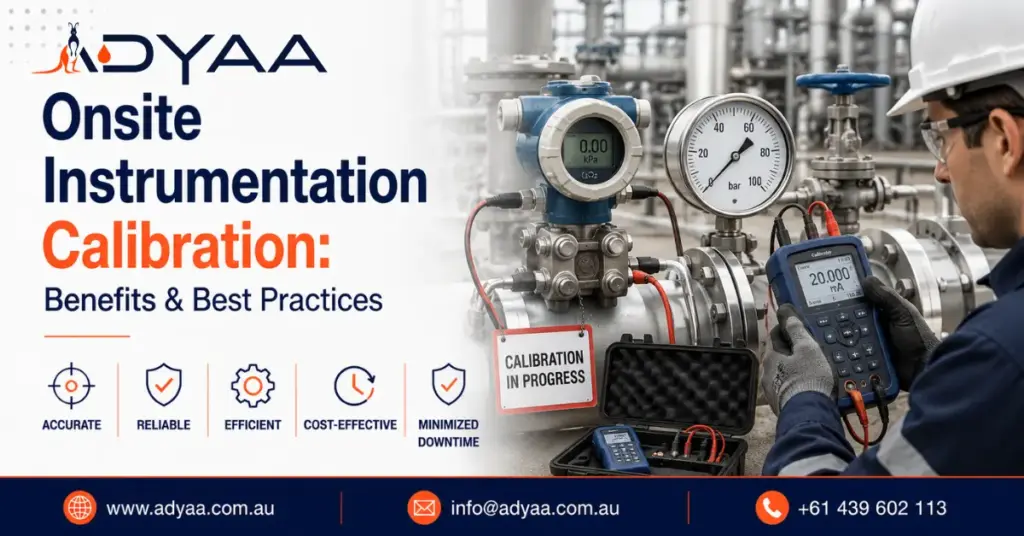
Onsite Instrumentation Calibration: Benefits & Best Practices A pressure transmitter reading slightly higher than the actual pressure or a temperature sensor drifting by just a few degrees may seem insignificant. Over time, these small measurement errors can affect product quality, increase energy consumption and even lead to unexpected equipment shutdowns. This is why Onsite Instrumentation Calibration plays an important role in industrial operations. Instead of removing instruments and sending them to a laboratory, calibration is carried out at the facility, allowing equipment to be verified, adjusted and returned to service with minimal interruption. For industries where continuous operation matters, onsite calibration helps maintain reliable measurements while reducing production downtime. What Is Onsite Instrumentation Calibration? Onsite Instrumentation Calibration is the process of testing, verifying and adjusting industrial instruments at the installation site using certified calibration equipment. It confirms that an instrument continues to measure within its specified accuracy and performs as expected under actual operating conditions. Commonly calibrated instruments include: Pressure Transmitters Pressure Gauges Temperature Transmitters RTDs and Thermocouples Flowmeters Level Transmitters Analytical Instruments Regular Instrumentation Calibration helps maintain process consistency and confidence in measurement data. When Is Onsite Calibration the Better Choice? While laboratory calibration is suitable for many instruments, onsite calibration is often preferred when removing equipment would interrupt production or require significant maintenance. It is particularly valuable when: Production cannot be stopped for long periods. Instruments are installed in difficult-to-access locations. Large process plants require multiple instruments to be calibrated. Verification is needed immediately after installation or maintenance. Shutdown time needs to be minimised. For example, calibrating several Pressure Transmitters during a planned maintenance shutdown is often more practical than removing each instrument and sending it to a calibration laboratory. Why Regular Calibration Matters Accurate measurements support better operational decisions. Routine Onsite Instrumentation Calibration helps: Improve measurement accuracy Reduce unexpected process variations Support product quality Increase equipment reliability Minimise unplanned downtime Maintain process consistency In industries with strict quality requirements, regular calibration also helps maintain confidence in production data and inspection records. Common Mistakes That Affect Calibration Results Calibration is only effective when it follows the correct procedure. Some common mistakes include: Extending calibration intervals without reviewing instrument performance Using uncertified calibration equipment Ignoring environmental conditions during testing Skipping calibration records Reinstalling instruments incorrectly after maintenance These issues can reduce measurement reliability even if the instrument appears to be functioning normally. Onsite Calibration vs Laboratory Calibration Onsite Instrumentation Calibration Laboratory Calibration Performed at the facility Performed in a calibration laboratory Reduces production downtime Requires instrument removal Faster return to operation Longer turnaround time Suitable for installed process instruments Suitable for standalone instruments requiring detailed testing The right approach depends on the application, operational requirements and maintenance strategy. Industries That Benefit from Onsite Instrumentation Calibration Water & Wastewater Maintain accurate monitoring of flow, pressure and level throughout treatment processes. Chemical Processing Support reliable process control and consistent product quality. Food & Beverage Maintain measurement accuracy across hygienic production systems. Pharmaceutical Manufacturing Help ensure precise measurements during regulated production processes. Oil & Gas Improve the reliability of pressure, flow and temperature measurements in critical operations. Power Generation Support accurate monitoring across boilers, turbines and utility systems. Manufacturing Improve process efficiency through dependable measurement performance. General Process Industries Reduce downtime while maintaining confidence in measurement accuracy. Frequently Asked Questions How often should industrial instruments be calibrated? Calibration frequency depends on the instrument type, operating conditions, manufacturer recommendations and quality requirements. Which instruments can be calibrated onsite? Pressure Transmitters, Pressure Gauges, Temperature Transmitters, Flowmeters, Level Transmitters and many Analytical Instruments can often be calibrated onsite. Does onsite calibration reduce downtime? Yes. Since instruments remain at the facility, production interruptions are generally much shorter than laboratory calibration. Why is calibration important even if an instrument appears to be working? Instruments can gradually drift over time. Calibration verifies that measurements remain within acceptable accuracy limits. Can calibration improve product quality? Yes. Accurate measurement supports better process control, consistent production and reduced process variation. Final Thoughts Onsite Instrumentation Calibration helps maintain reliable measurements, minimise downtime and improve process efficiency across industrial operations. Regular calibration ensures your instruments continue to perform accurately, supporting better operational decisions and consistent product quality. If you’re planning to calibrate Pressure Transmitters, Pressure Gauges, Temperature Transmitters, Flowmeters, Level Instruments or other Industrial Instrumentation, ADYAA provides reliable calibration solutions and industrial instrumentation to help keep your processes running with confidence across Australia. Onsite Instrumentation Calibration: Benefits & Best Practices How Industrial Automation Sensors Improve Efficiency in Manufacturing Efficiency is the primary metric of success. The difference between a profitable… Read More → Forward Acting vs Reverse Acting Rupture Disc Explained Forward Acting vs Reverse Acting Rupture Disc: Which One Should You Choose? Selecting the wrong Rupture Disc can affect equipment… Read More → How Industrial Automation Sensors Improve Efficiency in Manufacturing How Industrial Automation Sensors Improve Efficiency in Manufacturing Efficiency is the primary metric of success. The difference between a profitable… Read More →
Forward Acting vs Reverse Acting Rupture Disc Explained
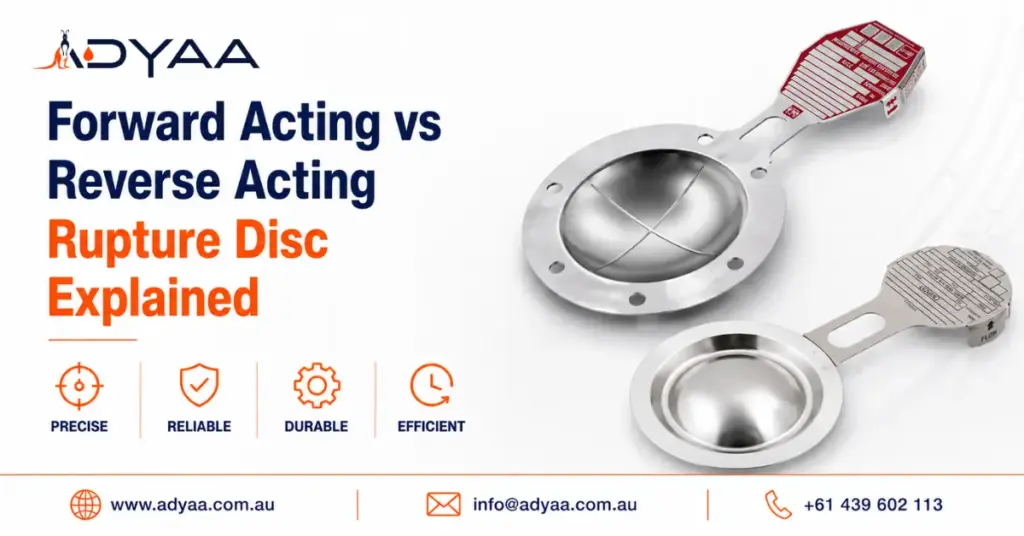
Forward Acting vs Reverse Acting Rupture Disc: Which One Should You Choose? Selecting the wrong Rupture Disc can affect equipment safety, process reliability and maintenance costs. Although both Forward Acting and Reverse Acting Rupture Discs are designed to protect pressure systems from overpressure, they operate differently and are suited to different industrial applications. The right choice depends on operating pressure, process conditions, cycling frequency and the type of media flowing through the system. Understanding these differences makes it easier to choose a solution that delivers reliable protection and longer service life. What Is a Rupture Disc? A Rupture Disc is a non-reclosing pressure relief device designed to burst at a predetermined pressure, protecting vessels, pipelines and process equipment from excessive pressure. Unlike relief valves, rupture discs respond almost instantly and provide full-bore pressure relief when activated. They are commonly installed in: Pressure vessels Chemical reactors Storage tanks Heat exchangers Pipelines Process equipment What Is a Forward Acting Rupture Disc? A Forward Acting Rupture Disc is installed so that process pressure causes the disc to stretch outward. As pressure increases to the rated burst pressure, the disc fails in tension and ruptures, relieving excess pressure. How It Works Process pressure pushes against the disc. The disc stretches under tensile stress. When the burst pressure is reached, the disc tears open. Best Suited For Moderate pressure applications Stable operating conditions General industrial processes Standard pressure protection Advantages Simple construction Cost-effective solution Reliable burst performance Widely used across industries What Is a Reverse Acting Rupture Disc? A Reverse Acting Rupture Disc is installed so that process pressure causes the disc to buckle inward. When the burst pressure is reached, the disc reverses its shape (buckles) and then opens along a scored pattern. How It Works Process pressure compresses the disc. The disc buckles at a predetermined pressure. The disc then opens along precision score lines. Best Suited For High operating pressures Pressure cycling applications Pulsating process conditions Critical industrial systems Advantages Longer service life Excellent fatigue resistance Higher operating ratios Improved durability Forward Acting vs Reverse Acting Rupture Disc Feature Forward Acting Reverse Acting Installation Concept Pressure stretches the disc Pressure compresses the disc Failure Mode Tension rupture Buckling then rupture Pressure Cycling Moderate Excellent Operating Ratio Lower Higher Service Life Standard Longer Best Applications General process protection High-cycle critical applications Neither design is universally better. The correct selection depends on your process requirements. Which Industries Use Each Type? Chemical Processing Both designs are widely used depending on operating pressure and process conditions. Oil & Gas Reverse acting rupture discs are often selected for demanding pressure cycling applications. Pharmaceutical Manufacturing Forward acting rupture discs are commonly used where clean process protection is required. Food & Beverage Pressure protection supports hygienic processing equipment. Power Generation Protect boilers, pressure vessels and heat exchangers. General Manufacturing Provide reliable overpressure protection across industrial production systems. Common Mistakes When Selecting a Rupture Disc Avoid these common issues: Selecting based only on burst pressure Ignoring operating pressure ratio Overlooking pressure cycling Choosing incompatible materials Ignoring temperature effects Installing the disc incorrectly These mistakes can shorten service life and reduce pressure protection reliability. How Do You Choose the Right Rupture Disc? Before selecting a Pressure Relief Device, consider: Operating pressure Burst pressure Process temperature Pressure cycling frequency Process media Corrosion resistance Installation orientation Industry standards and compliance requirements Considering these factors helps improve equipment protection and long-term reliability. Frequently Asked Questions Which rupture disc lasts longer? In applications with frequent pressure cycling, Reverse Acting Rupture Discs generally offer longer service life. Which rupture disc is better? Neither is universally better. The correct choice depends on the application’s pressure, temperature and operating conditions. Can rupture discs replace pressure relief valves? Some applications use rupture discs independently, while others combine them with relief valves for additional protection. What industries commonly use rupture discs? Chemical processing, oil & gas, pharmaceuticals, food processing, power generation and manufacturing. Why is correct rupture disc selection important? Proper selection improves equipment safety, reduces downtime and provides reliable overpressure protection. Final Thoughts Choosing between a Forward Acting vs Reverse Acting Rupture Disc depends on your operating conditions rather than the product alone. Understanding pressure cycling, burst pressure and process requirements helps improve safety, equipment protection and long-term reliability. If you’re selecting Rupture Discs, Pressure Relief Devices or complete Industrial Safety Solutions, ADYAA supplies reliable products designed to support demanding industrial applications across Australia. Forward Acting vs Reverse Acting Rupture Disc Explained How Industrial Automation Sensors Improve Efficiency in Manufacturing Efficiency is the primary metric of success. The difference between a profitable… Read More → How Industrial Automation Sensors Improve Efficiency in Manufacturing How Industrial Automation Sensors Improve Efficiency in Manufacturing Efficiency is the primary metric of success. The difference between a profitable… Read More → Gaskets vs O-Rings: Which Sealing Solution Is Right for You? Gaskets vs O-Rings: Which Sealing Solution Is Right for You? In any fluid handling system, the weakest point is always… Read More →