
Rupture Disc Burst Detection Systems: The Ultimate Guide
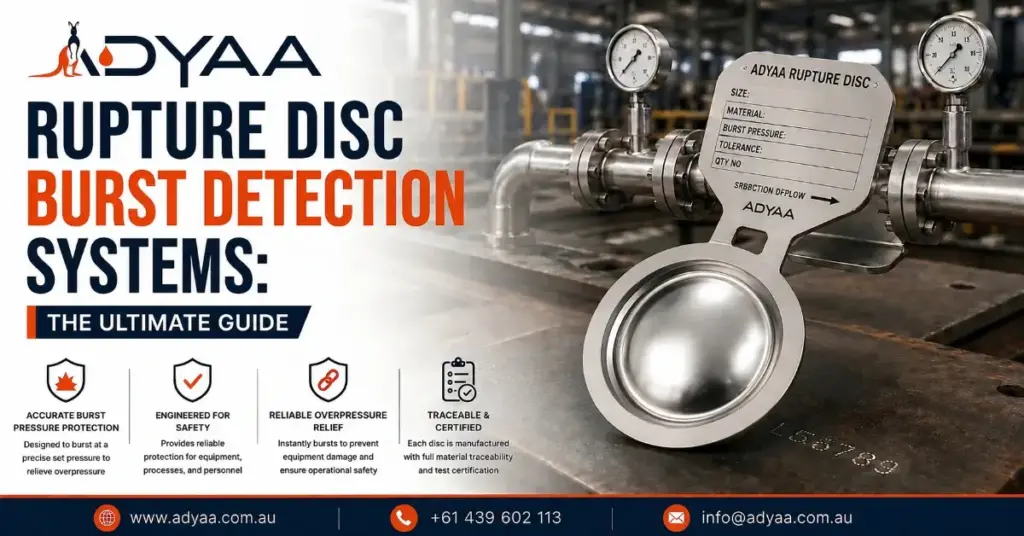
Rupture Disc Burst Detection Systems: The Ultimate Guide A rupture disc is designed to burst and relieve pressure instantly, but what happens after it blows? If a disc vents into a closed manifold, a flare header, or a remote stack, the rupture can go entirely unnoticed by plant operators for hours or even days. This blind spot leads to massive fugitive emissions, lost product, and severe EPA compliance violations. To close this safety gap, modern facilities rely on a rupture disc burst detection system. By integrating smart sensors directly into the pressure relief line, these systems instantly alert your control room the millisecond an overpressure event occurs, allowing you to trigger automated emergency shutdowns and isolate the hazard. Quick Comparison: Common Burst Detection Methods Sensor Type Operating Mechanism Best Application Membrane Wire Indicator Physical circuit break General chemical pipelines, atmospheric venting Magnetic Proximity Non-invasive magnetic shift Highly toxic media, zero-leakage systems Cavity Pressure Switch Pressure buildup detection Installed between a rupture disc and a safety valve What Is a Rupture Disc Burst Detection System? At its core, a rupture disc burst detection system is a specialized electronic circuit designed to monitor the physical integrity of your overpressure relief devices. Instead of relying on manual visual inspections—which are dangerous and time-consuming—these systems use low-voltage sensors to provide 24/7 continuous monitoring. When a disc activates, the sensor state changes (usually from a closed electrical loop to an open one), sending an immediate electrical signal directly to your DCS (Distributed Control System) or SCADA network. Types of Burst Sensors 1. Membrane Wire Burst Indicators This is the most common and cost-effective detection method. A thin Kapton or Teflon membrane containing a conductive copper or tantalum wire loop is installed on the downstream side of the rupture disc. When the disc bursts, the physical force of the escaping gas or fluid tears through the membrane. This severs the conductive wire, breaking the electrical circuit and instantly triggering the alarm relay. 2. Magnetic Proximity Sensors For ultra-critical or highly toxic processes, breaking a physical wire is sometimes undesirable. Magnetic proximity sensors offer a non-invasive alternative. Typically used with reverse-buckling discs, a small magnetic target is attached to the disc dome. A sensor sits outside the process media on the holder. When the disc buckles and opens, the target moves away from the sensor, registering the change in the magnetic field and triggering the alert without ever touching the process fluid. 3. Baffle / Leakage Detectors Also known as “tell-tale” indicators, these are heavily utilized in dual-device setups where a rupture disc isolates a mechanical safety relief valve. If the disc bursts (or develops a pinhole leak), pressure begins to build in the cavity between the disc and the valve. A pressure switch tapped into this cavity detects the rising pressure and alerts the control room before the mechanical safety valve is forced open. Integration and Plant Safety Deploying the physical sensor is only half the battle; integrating the signal into your plant’s safety logic is where the real value lies. Immediate Shutdown Protocols Once a burst is detected, the automated logic can instantly close upstream isolation valves, shut down heavy pumps, or divert process flow. This immediate response stops the loss of expensive raw materials and prevents toxic chemicals from continuously feeding the overpressure leak. Hazardous Area Compliance (ATEX / IECEx) Because pipelines often contain highly flammable hydrocarbons, running raw electricity near a venting point is a severe explosion hazard. A professional rupture disc burst detection system must be wired through intrinsically safe barriers. These isolators limit the electrical energy running to the sensor, ensuring that even if the wire snaps, it cannot generate a spark hot enough to ignite explosive gases. FAQ – Rupture Disc Burst Detection System Q: What is a rupture disc burst detection system? A: It is an electronic sensor network that instantly notifies a plant control room the moment a rupture disc bursts, enabling rapid emergency response. Q: How does a wire burst indicator work? A: It uses a closed-loop conductive wire on a thin membrane; when the disc bursts, the fluid tears the wire, breaking the electrical circuit and triggering an alarm. Q: Can a burst sensor be installed on an existing rupture disc? A: Yes, many membrane-style burst indicators can be retrofitted and installed as standalone units between the downstream flanges of an existing setup. Q: Do burst detection systems require a power supply? A: Yes, they require a low-voltage power supply to maintain the closed-loop electrical circuit or to power proximity sensors. Q: Are these sensors safe for explosive environments? A: Yes, industrial burst sensors are designed to be wired through intrinsically safe barriers, making them fully compliant for use in hazardous ATEX/IECEx zones. Q: How do you know if a rupture disc has blown without a sensor? A: Without a sensor, operators must rely on delayed secondary indicators like downstream pressure drops or conduct dangerous manual visual inspections of the venting line. Automate Your Plant Safety with ADYAA Do not wait for a fugitive emission audit to tell you your safety devices have failed. Upgrading to a continuous rupture disc burst detection system guarantees that your team is never caught off guard. As Australia’s leading supplier of industrial safety solutions, ADYAA provides advanced burst sensors, intrinsically safe relays, and precision rupture discs. Consult with ADYAA Instrumentation Experts Today Rupture Disc Operating Ratio Explained (Avoid Premature Failure) Rupture Disc Operating Ratio Explained (Avoid Premature Failure) If your pressure relief devices are blowing during normal plant operations, you… Read More → Rupture Disc Selection Guide: 5 Critical Steps Rupture Disc Selection Guide: 5 Critical Steps Industrial plants cannot afford guesswork when it comes to overpressure protection. Picking a… Read More → Guide to MNSB 53 for Fabrication Guide to MNSB 53 for Fabrication: Stop Moving Heavy Steel Let’s talk about the biggest bottleneck in a heavy fabrication… Read More →
Rupture Disc Material Selection Guide for Harsh Processes
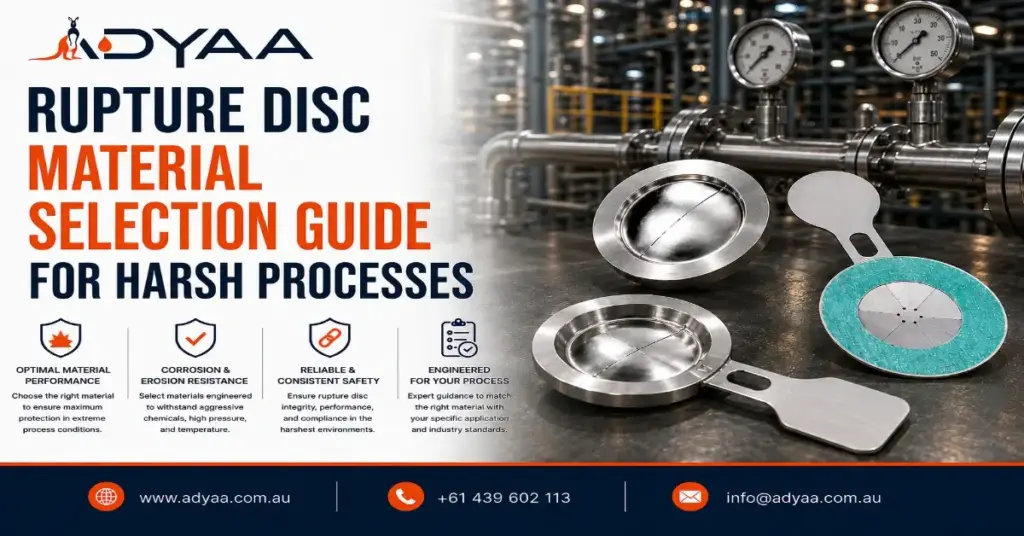
Rupture Disc Material Selection Guide for Harsh Processes If you pump highly corrosive acids or superheated steam through a standard stainless steel rupture disc, you are setting your plant up for failure. Corrosion eats away the metal membrane, artificially lowering the burst pressure and causing unexpected, dangerous blowouts. When dealing with aggressive chemical pipelines or extreme thermal cycling, standard metals simply will not survive. You must consult a dedicated rupture disc material selection guide to match your process media with the exact metallurgy required to prevent premature degradation. Quick Reference: Thermal & Corrosion Limits by Material Material Max Operating Temperature Corrosion Resistance Level Best Application 316 Stainless Steel 480°C Moderate Standard water, steam, non-corrosive gas Nickel 200 400°C Good Alkaline processes, dry halogens Monel 400 430°C High Hydrofluoric acid, saltwater, marine Inconel 600 590°C+ Excellent Extreme high heat, severe thermal cycling Hastelloy C276 480°C Extreme Severe corrosives, chlorides, wet chlorine Graphite 200°C (Standard) Ultimate Highly aggressive acids and solvents Why Material Selection is Critical to Safety A rupture disc is a highly sensitive, calibrated membrane. Its ability to burst at the correct pressure depends entirely on its structural thickness and tensile strength. The Threat of Corrosion: Even a microscopic layer of corrosion thins the metal. A disc rated for 150 PSI could easily weaken and burst at 90 PSI if eaten by acid. The Threat of Heat: Extreme temperatures alter the molecular structure of standard metals, causing them to stretch and fatigue well below their rated burst pressure. The Threat of Contamination: In pharmaceutical or food-grade lines, the disc material must not leach metallic particles or react with the process media. Top Materials for Industrial Rupture Discs 1. Standard Industrial Metals For general manufacturing, standard metals are cost-effective and highly reliable—provided the media is clean. 316 Stainless Steel: The industry default. Highly durable but susceptible to chloride stress-corrosion cracking. Nickel 200: Offers excellent resistance to caustic alkalis and is highly ductile, making it great for low-pressure disc designs. 2. High-Performance Exotic Alloys When process temperatures spike or aggressive chemicals are introduced, you must upgrade to exotic alloys to maintain burst stability. Inconel 600: The ultimate high-temperature alloy. It retains its tensile strength in superheated environments where stainless steel would warp. Monel 400: Highly resistant to sea water and hydrofluoric acid. Ideal for offshore platforms and marine engineering. Hastelloy C276: The ultimate metal for surviving severe chemical attacks, including wet chlorine gas and hypochlorites. 3. Non-Metallic Solutions When the chemical environment is so harsh that no metal can survive, non-metallic options become mandatory. Graphite: Resin-impregnated graphite is entirely immune to most industrial acids, alkalis, and organic solvents. It shatters cleanly upon bursting. PTFE / Fluoropolymer Liners: Instead of buying a solid exotic alloy, engineers often use a standard stainless steel disc protected by a thin layer of PTFE (Teflon) on the process-facing side to block chemical attacks. 3 Steps to Match Material to Your Process Follow this exact workflow to specify your disc material securely: Step 1: Check the Chemical Compatibility Review the Safety Data Sheet (SDS) of your process media. If chlorides, strong acids, or halogens are present, immediately rule out standard Stainless Steel. Step 2: Verify the Coincident Temperature Determine the exact temperature of the process when the overpressure event occurs. If temperatures exceed 480°C, upgrade directly to Inconel to prevent thermal weakening. Step 3: Evaluate the Downstream Environment Standard metals can fragment. Graphite always fragments. If you are discharging into a delicate manifold or a safety valve, you must choose a ductile metal (like Nickel or Stainless Steel) in a non-fragmenting reverse-acting design. FAQ – Rupture Disc Material Selection Guide Q: What is the best rupture disc material for highly corrosive acids? A: Graphite or Hastelloy C276 are the premier choices, as they offer extreme resistance to acidic degradation. Q: Can I use 316 Stainless Steel for high-temperature steam? A: Yes, but only up to roughly 480°C; beyond that, Inconel 600 is required to prevent thermal fatigue. Q: What is a PTFE-lined rupture disc? A: It is a standard metallic rupture disc that features a thin fluoropolymer (Teflon) layer to protect the metal from corrosive chemical attacks. Q: Why would I choose Nickel 200 over Stainless Steel? A: Nickel 200 provides vastly superior corrosion resistance against caustic alkalis and is more ductile for precise low-pressure bursting. Q: Can a graphite rupture disc be used upstream of a safety valve? A: No. Graphite shatters into solid chunks upon bursting, which will instantly jam the internal mechanisms of a downstream safety valve. Q: How does temperature affect my material choice? A: High temperatures lower the tensile strength of metals, meaning a material with high thermal stability (like Inconel) is required to prevent premature bursting. Engineer Your Overpressure Protection with ADYAA Do not guess which material will survive your pipeline. Sourcing the right alloy requires precision engineering and exact process mapping. As Australia’s premium supplier of industrial safety solutions, ADYAA provides fully certified rupture discs in exotic alloys, graphite, and PTFE-lined configurations to secure your most aggressive processes. Consult with ADYAA Materials Experts Today. Rupture Disc Operating Ratio Explained (Avoid Premature Failure) Rupture Disc Operating Ratio Explained (Avoid Premature Failure) If your pressure relief devices are blowing during normal plant operations, you… Read More → Rupture Disc Selection Guide: 5 Critical Steps Rupture Disc Selection Guide: 5 Critical Steps Industrial plants cannot afford guesswork when it comes to overpressure protection. Picking a… Read More → Guide to MNSB 53 for Fabrication Guide to MNSB 53 for Fabrication: Stop Moving Heavy Steel Let’s talk about the biggest bottleneck in a heavy fabrication… Read More →
Rupture Disc Maintenance and Inspection Checklist
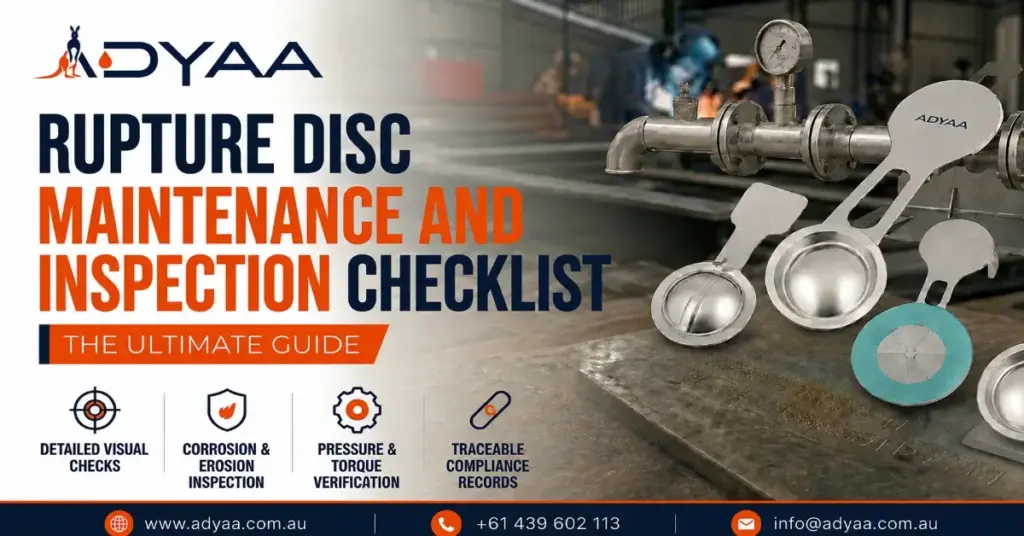
Rupture Disc Maintenance and Inspection Checklist Treating a rupture disc as a “set it and forget it” device is a dangerous compliance violation. Because these are static, non-mechanical safety devices, operators often assume they require zero upkeep. However, hidden corrosion, loose flange bolts, and microscopic metal fatigue can silently alter a disc’s burst pressure over time. To guarantee your overpressure protection activates when needed, plant managers must enforce a strict rupture disc maintenance and inspection protocol. Use this checklist to keep your facility safe and compliant. Quick Reference: Recommended Inspection Frequencies Maintenance Task Recommended Frequency Action Required External Holder Visual Monthly Check for flange corrosion, leaks, and loose bolting. Burst Sensor Loop Test Quarterly Verify electrical continuity to the DCS/SCADA system. Internal Disc Inspection Annual / Turnaround Inspect the dome for pitting, stretching, or product buildup. Preventative Replacement 1 to 3 Years Replacement intervals typically depend on pressure cycling, thermal fatigue, process conditions, and system wear. The Core Rupture Disc Maintenance and Inspection Checklist Routine audits prevent catastrophic failures. Divide your maintenance strategy into external, internal, and electronic checks. 1. External Visual Inspection (Monthly) You do not need to shut down the process to perform external checks. Operators should visually audit the assembly during routine rounds. Inspect the Flange Connections: Look for signs of fugitive emissions, weeping fluids, or localized corrosion around the holder. Check the Tell-Tale Assembly: If you use a pressure gauge between the disc and a safety valve, check it. Any pressure reading above zero indicates a pinhole leak or premature burst. Verify the Tagging: Ensure the stainless steel data tag is securely attached and readable. An auditor will fail your system if the tag is missing. 2. Internal Maintenance (During Shutdowns) When the pipeline is depressurized and safe, remove the holder to inspect the actual rupture disc membrane. Look for Micro-Stretching: If a forward-acting disc looks overly domed or warped, it has suffered metal fatigue from high operating ratios. Check for Chemical Attack: Inspect the process-facing side for microscopic pitting, rust, or chemical discoloration. Examine for Buildup: Ensure polymerized material or crystallized chemicals have not accumulated on the disc, which artificially increases its burst pressure. CRITICAL RULE: Never touch, press, or clean the dome of a rupture disc. Any physical force applied during inspection can damage the calibration. If it is dirty, replace it. 3. Burst Sensor Testing (Quarterly) A burst detector is useless if the wiring is dead. Test the Continuity: Use a multimeter to ensure the closed-loop circuit is intact. Trigger a Test Alarm: Temporarily bypass the sensor to simulate a broken wire, ensuring the control room SCADA system registers the alarm instantly. Establishing Preventative Replacement Intervals You should not wait for a rupture disc to burst before replacing it. The Reality of Fatigue: Every time a pump cycles, the disc flexes. Over months of thermal cycling and pressure spikes, the metal fatigues. Preventative Swaps: To prevent nuisance bursts that shut down production, most reliability engineers mandate a preventative replacement interval. Standard Timelines: In high-pulsation or highly corrosive lines, discs are replaced every 12 months. In stable, clean gas lines, replacement may stretch to 3 years. FAQ – Rupture Disc Maintenance and Inspection Q: Can you repair or clean a rupture disc? A: No. Rupture discs are precision-calibrated, one-time-use items. Cleaning or touching the dome will alter its burst pressure. If it is dirty or damaged, replace it. Q: How often should rupture disc maintenance and inspection be performed? A: External visual checks should be done monthly, electronic sensor tests quarterly, and full internal inspections annually during scheduled plant turnarounds. Q: What causes a rupture disc to burst below its rated pressure? A: Premature bursting is almost always caused by metal fatigue from an excessive operating ratio, temperature spikes, or chemical corrosion thinning the metal. Q: Why is there pressure between my rupture disc and safety valve? A: Pressure in this cavity indicates the rupture disc has developed a pinhole leak, or it has burst entirely. The disc must be replaced immediately. Q: Can I reuse a rupture disc if I remove it for inspection? A: Generally, no. Once a disc is torqued into a holder and exposed to process pressure, removing it alters the critical “bite” of the seal. Most manufacturers strongly advise against re-torquing a used disc. Q: Do rupture disc holders need maintenance? A: Yes. The seating surfaces of the holder must be cleaned with a soft solvent and inspected for scratches or pitting before installing a new disc to ensure a leak-tight seal. Maintain Your Plant Integrity with ADYAA Do not let poor maintenance practices jeopardize your facility. Sourcing the right overpressure devices and maintaining them correctly requires expert guidance. As Australia’s premium industrial safety supplier, ADYAA provides fully certified rupture discs, precision-machined holders, and automated burst detection systems. Consult with ADYAA Maintenance Experts Today Rupture Disc Material Selection Guide for Harsh Processes Rupture Disc Maintenance and Inspection Checklist If you pump highly corrosive acids or superheated steam through a standard stainless steel… Read More → Rupture Disc Maintenance and Inspection Checklist Rupture Disc Maintenance and Inspection Checklist Treating a rupture disc as a “set it and forget it” device is a… Read More → Types of Rupture Discs: Complete Guide to All Designs Types of Rupture Discs: Complete Guide to All Designs Pressure systems are unpredictable. When a mechanical safety valve freezes or… Read More →
Types of Rupture Discs: Complete Guide to All Designs
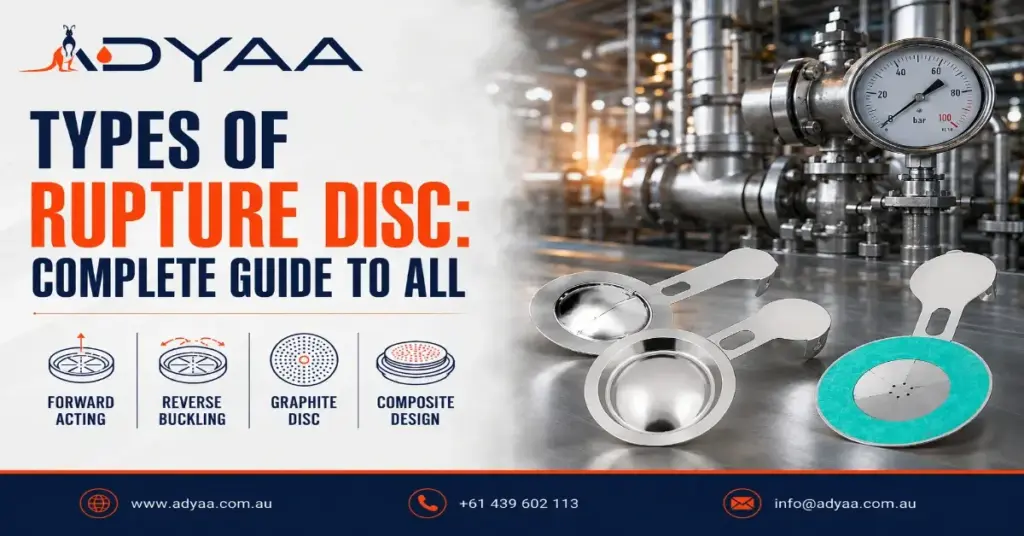
Types of Rupture Discs: Complete Guide to All Designs Pressure systems are unpredictable. When a mechanical safety valve freezes or a process reaction runs away, a rupture disc is your absolute last line of defense against a catastrophic blowout. But not all bursting discs are engineered the same way. Installing the wrong disc in a high-pulsation line or a highly corrosive chemical loop can lead to premature fatigue, nuisance bursting, or worse—total failure to relieve pressure. Understanding the different types of rupture discs is critical for plant managers, reliability engineers, and safety inspectors. In this guide, we break down the core designs, how they operate, and exactly where they belong in your facility. Quick Comparison: Major Rupture Disc Designs Disc Type Operating Ratio Fragmentation Best Application Forward-Acting Up to 80% Often fragments General pressure relief, low cost Reverse-Acting Up to 95% Non-fragmenting High-pulsation, isolating safety valves Graphite Up to 80% Fragments Highly corrosive chemical environments Core Rupture Disc Designs 1. Forward-Acting Rupture Discs (Tension Loaded) The forward-acting disc is the traditional workhorse of overpressure protection. In this design, the dome of the disc faces the process media. As pressure builds, the metal is subjected to tension. Once it hits the exact calibrated burst pressure, the metal stretches past its tensile strength and bursts outward. Operating Ratio: Typically limited to 70% to 80% of the marked burst pressure. Operating too close to the burst limit causes metal fatigue. Fragmentation: Older, solid-metal designs fragment upon bursting. However, modern scored (cross-scored) forward-acting discs open along pre-weakened lines to prevent shrapnel. Best For: General manufacturing applications and low-pulsation environments where downstream debris is not a critical concern. 2. Reverse-Acting Rupture Discs (Compression Loaded) Reverse-acting discs flip the engineering upside down. The dome faces against the process pressure. Instead of stretching the metal (tension), the process pressure pushes against the dome (compression). When the burst pressure is reached, the dome buckles and reverses, striking a knife blade or tearing along a scored line to open fully. High Operating Ratio: Because metal handles compression better than tension, these discs can operate continuously at up to 90% or 95% of their rated burst pressure without suffering fatigue. Non-Fragmenting: The buckling action allows the disc to tear open cleanly without sending metal fragments downstream. Best For: High-pulsation environments, isolating safety relief valves (no shrapnel to damage internal valve mechanics), and high-efficiency gas/liquid lines. 3. Graphite Rupture Discs When process media is heavily corrosive, standard stainless steel or Inconel discs degrade quickly, drastically altering their burst pressure. Graphite rupture discs are machined from high-purity, resin-impregnated graphite, making them immune to most acids, alkalis, and organic solvents. Corrosion Resistance: Offers superior survival in aggressive chemical and petrochemical environments. Fragmentation: Graphite is brittle and shatters upon bursting. It cannot be used directly upstream of a safety relief valve. Best For: Highly corrosive pipelines and low-pressure applications venting to a flare header or containment tank. How to Choose the Right Type of Rupture Disc Specifying the right overpressure device comes down to evaluating your specific pipeline conditions. Essential Selection Criteria 1. Operating Ratio Considerations If your normal operating pressure is very close to your maximum allowable working pressure (MAWP), you must use a reverse-acting disc. A forward-acting disc will fatigue and fail under those tight margins. 2. Downstream Fragmentation Sensitivity If you are venting into a delicate manifold or protecting a safety valve, you must use a non-fragmenting reverse-acting or scored forward-acting disc. Never use a standard solid-metal or graphite disc in these positions. 3. Media and Corrosion Resistance For standard steam, gas, or water, metallic discs are perfect. For aggressive acids like hydrochloric or sulfuric acid, graphite or exotic alloys (like Hastelloy or Tantalum) are mandatory to prevent the burst pressure from drifting due to corrosion. FAQ – Types of Rupture Discs Q: What is a rupture disc? A: A rupture disc is a non-reclosing pressure relief device that bursts at a predetermined pressure to protect industrial systems from catastrophic overpressure. Q: What is the difference between forward-acting and reverse-acting rupture discs? A: Forward-acting discs burst under tension and typically fragment, while reverse-acting discs buckle under compression, allowing for higher operating pressures without sending shrapnel downstream. Q: Can a rupture disc be used with a safety relief valve? A: Yes, but only non-fragmenting discs (like reverse-acting or cross-scored discs) should be used upstream to prevent metal fragments from jamming the safety valve internals. Q: What does the operating ratio of a rupture disc mean? A: It is the maximum allowable ratio between the system’s normal operating pressure and the disc’s marked burst pressure, usually expressed as a percentage (e.g., 80% or 95%). Q: Why use a graphite rupture disc? A: Graphite rupture discs offer extreme corrosion resistance, making them the best choice for highly aggressive chemical and petrochemical environments where metal would degrade. Q: Can you reuse a ruptured disc? A: No. Rupture discs are strictly one-time-use safety devices. Once they burst, they must be completely replaced to restore system protection. Secure Your Plant with ADYAA Pressure Relief Solutions Do not leave your plant’s safety to guesswork. Choosing between the different types of rupture discs requires precision engineering and a deep understanding of process dynamics. As a leading supplier across Australia, ADYAA provides ASME and API-compliant overpressure protection designed to keep your facility safe and operational. Consult with ADYAA Overpressure Experts Today. Rupture Disc Operating Ratio Explained (Avoid Premature Failure) Rupture Disc Operating Ratio Explained (Avoid Premature Failure) If your pressure relief devices are blowing during normal plant operations, you… Read More → Rupture Disc Selection Guide: 5 Critical Steps Rupture Disc Selection Guide: 5 Critical Steps Industrial plants cannot afford guesswork when it comes to overpressure protection. Picking a… Read More → Guide to MNSB 53 for Fabrication Guide to MNSB 53 for Fabrication: Stop Moving Heavy Steel Let’s talk about the biggest bottleneck in a heavy fabrication… Read More →
Choosing Gasket Materials for Chemical Resistance
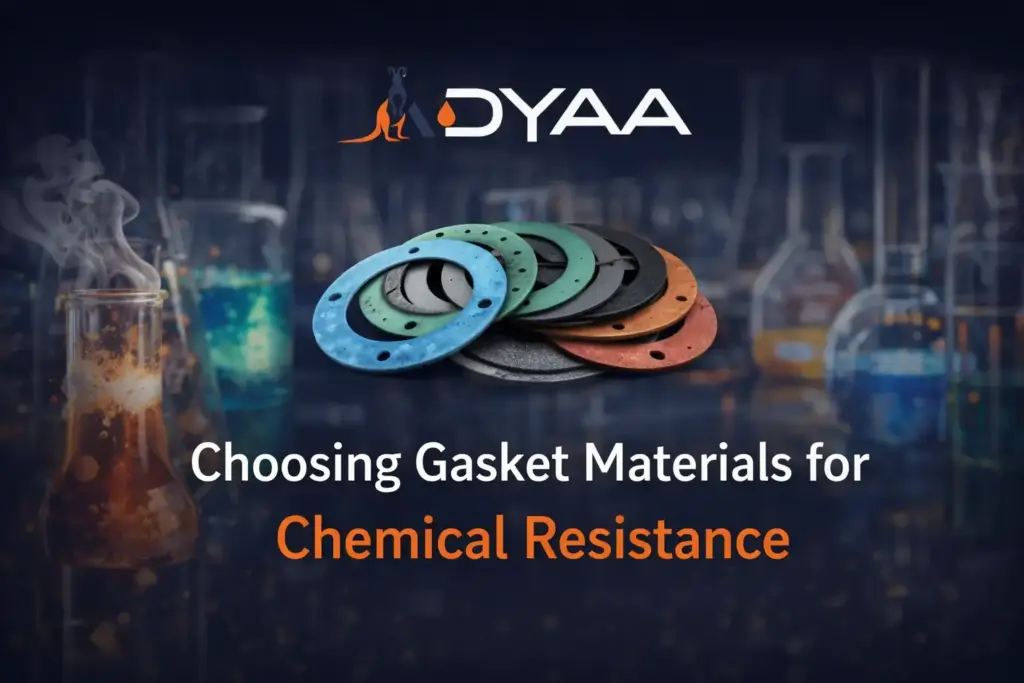
Choosing Gasket Materials for Chemical Resistance When processing volatile chemicals, your flange connections are only as secure as the gaskets sealing them. Installing the wrong elastomer in an aggressive fluid system guarantees a blowout, toxic leaks, and costly plant shutdowns. Choosing gasket materials for chemical resistance requires matching the material to specific media, temperature, and pressure. You cannot rely on guesswork. As we highlighted previously when discussing how Industrial Sealing Systems Prevent Leakage Failures, the material must physically withstand the operating environment without degrading. Always check a chemical compatibility chart to ensure the material resists degradation. Here is a breakdown of the top materials and how to select the right one for your Australian facility. Top Chemical-Resistant Gasket Materials Engineers rely on specific compounds to handle different fluid types. For accurately choosing gasket materials for chemical resistance, you must understand the strengths and limits of these core options: PTFE (Polytetrafluoroethylene): The universal choice for maximum chemical resistance, handling aggressive acids, bases, and solvents. FKM / Viton®: Ideal for high-temperature, aggressive chemical environments, oils, hydrocarbons, and fuels. EPDM: Best for water-based, steam, weak acids, and alkaline environments; excellent weather/UV resistance. Graphite: Excellent for high-temperature, high-pressure steam and hydrocarbons, though limited against strong oxidizers. Nitrile (NBR / Buna-N): Suitable for oil, fuels, and grease at lower temperatures. Neoprene: Good all-purpose elastomer for moderate chemical resistance, including mild acids and oils. Compressed Non-Asbestos Fiber (CNAF): Versatile, cost-effective for general industrial applications. Key Selection Factors You cannot select a gasket based on fluid type alone. Choosing gasket materials for chemical resistance means evaluating the entire operating condition of the flange. Review these four critical factors before installation: Chemical Compatibility: Does the fluid break down the material? Temperature Ranges: EPDM works up to ~150°C, Nitrile up to ~121°C, while PTFE/Graphite handle much higher temperatures. Pressure & Concentration: Higher pressures and stronger concentrations require more robust, specialized materials. Application Type: Consider if it is for chemical processing (PTFE), water treatment (EPDM), or oil/gas (Viton). Real-World Example: Acid Transfer Lines Imagine an industrial plant pumping highly concentrated sulfuric acid. If maintenance installs a standard Nitrile gasket, the acid will rapidly dissolve the rubber. This leads to an immediate loss of containment. By properly choosing gasket materials for chemical resistance and installing a PTFE gasket instead, the plant ensures the seal remains completely inert to the acid, maintaining total safety and operational uptime. People Also Ask (FAQs) Q: Which gasket material has the highest chemical resistance? A: PTFE (Teflon) offers the broadest and highest level of chemical resistance across aggressive acids, bases, and solvents. Q: Can I use EPDM for oil pipelines? A: No. EPDM breaks down when exposed to hydrocarbons and oils. FKM (Viton) or Nitrile are the correct choices for oil and fuel applications. Q: What is the best gasket for high-pressure steam? A: Graphite is the superior choice for high-temperature and high-pressure steam applications, as elastomers will degrade under extreme thermal stress. The Bottom Line Preventing hazardous leaks requires precision. Properly choosing gasket materials for chemical resistance protects your workforce, prevents environmental contamination, and saves your facility from expensive emergency repairs. Always evaluate the specific fluid concentration, operating temperature, and system pressure before specifying a seal. Upgrade Your Flange Safety with ADYAA Are you unsure which gasket material your specific chemical application requires? Don’t risk a blowout with incompatible seals. Contact the ADYAA Engineering Team today for expert selection and supply of high-performance gaskets across Australia. Burst Pressure Selection for Rupture Disc Safety – Copy Choosing Gasket Materials for Chemical Resistance When processing volatile chemicals, your flange connections are only as secure as the gaskets… Read More → Burst Pressure Selection for Rupture Disc Safety Burst Pressure Selection for Rupture Disc Safety When a pressurized system experiences an unexpected spike, your safety devices need to… Read More → When to Replace Rupture Discs in Pressure Equipment: A Maintenance Guide When to Replace Rupture Discs in Pressure Equipment: A Maintenance Guide In the world of pressure safety, the rupture disc… Read More →
Burst Pressure Selection for Rupture Disc Safety
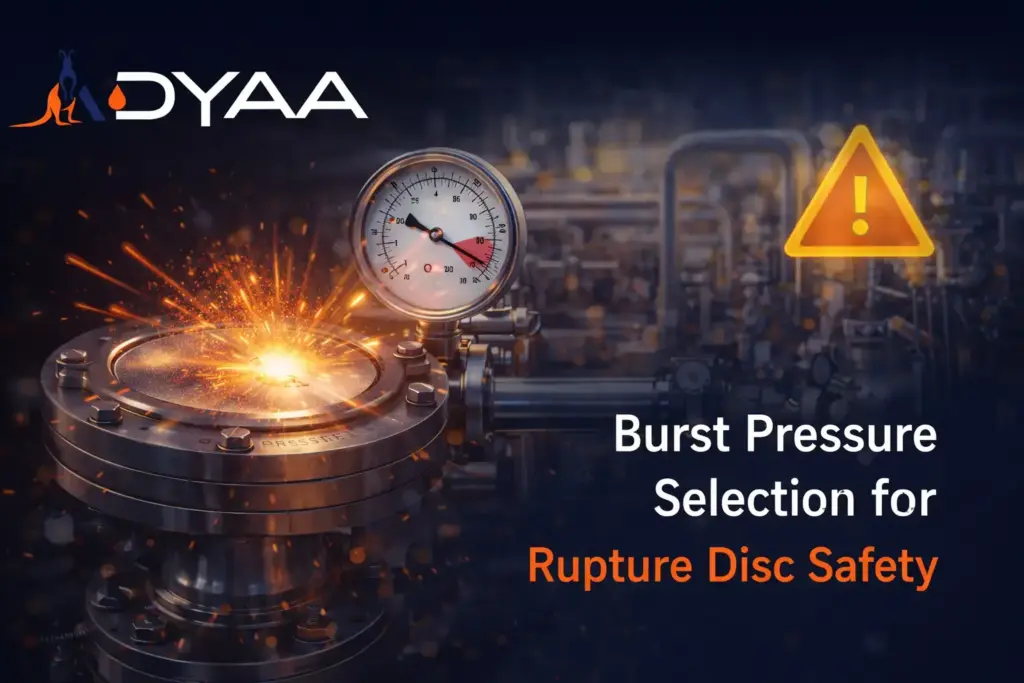
Burst Pressure Selection for Rupture Disc Safety When a pressurized system experiences an unexpected spike, your safety devices need to act instantly. A rupture disc is your facility’s last line of defense against catastrophic equipment failure. However, a disc is only as good as its specifications. Getting the Burst Pressure Selection for Rupture Disc Safety right is the difference between a safely controlled release and a critical plant emergency. As specialists in industrial safety and pressure relief systems, we frequently see facilities struggle with premature disc failures. Usually, it comes down to a misunderstanding of how operating pressures interact with disc ratings. Here is exactly how to navigate this selection process to protect your equipment. The Baseline: Operating Pressure vs. Burst Pressure You cannot select a rupture disc simply by looking at your normal daily pressure. You must understand the gap between your normal state and your danger zone. Operating Pressure: The pressure your system runs at during standard daily operations. Specified Burst Pressure: The exact pressure at which the manufacturer designs the disc to open. If your burst pressure is set too close to your operating pressure, minor everyday fluctuations will cause the disc to fatigue. This leads to premature bursting, costly downtime, and lost materials. 3 Core Factors of Burst Pressure Selection To achieve reliable Burst Pressure Selection for Rupture Disc Safety, you must calculate three specific variables. 1. Operating Ratio This is the relationship between your normal operating pressure and the disc’s marked burst pressure. Different designs handle different ratios. Standard Forward-Acting Discs: Typically require a 70% operating ratio. (e.g., If bursting at 100 PSI, operate no higher than 70 PSI). Reverse-Acting Discs: Can handle up to a 95% operating ratio. These are ideal for systems running close to the Maximum Allowable Working Pressure (MAWP). 2. Burst Tolerance No manufacturing process is perfect down to the micro-psi. Burst tolerance is the acceptable variation from the specified burst pressure. If you order a disc rated for 100 PSI with a +/- 5% tolerance, it might burst anywhere between 95 PSI and 105 PSI. Factoring in this margin of error is a critical step in Burst Pressure Selection for Rupture Disc Safety. You must ensure the lower end of the tolerance doesn’t overlap with regular pressure spikes. 3. Manufacturing Design Range (MDR) MDR is a standard agreement regarding where the final stamped burst pressure will fall relative to your requested pressure. Understanding MDR prevents surprises when the final product arrives at your plant. Real-World Example: Sizing for an Industrial Plant Imagine a chemical processing tank in an Australian facility with a MAWP of 200 PSI. The plant operates the tank normally at 160 PSI. Choosing a forward-acting disc (70% ratio) means they must drop operating pressure to 140 PSI. This hurts production. The Solution: By selecting a reverse-acting disc (90% ratio), they can set the burst pressure at 200 PSI and maintain their 160 PSI operation. This highlights why strategic Burst Pressure Selection for Rupture Disc Safety directly impacts both plant profitability and operational flow. The Impact of Temperature Temperature is the hidden variable that ruins poorly planned overpressure protection. As the temperature increases, the metal of the rupture disc weakens. A disc rated to burst at 100 PSI at room temperature will burst at a lower pressure if the system runs at 200°C. Conversely, extreme cold can strengthen the metal, delaying the burst. Specifying the exact coincident temperature is an absolute requirement for accurate Burst Pressure Selection for Rupture Disc Safety. People Also Ask (FAQs) Q: What is a safe operating ratio for rupture discs? A: It depends on the disc type. Forward-acting discs usually require a 70% ratio, while reverse-acting discs can safely operate up to 90% or 95% of the burst pressure. Q: Can temperature affect my rupture disc’s burst pressure? A: Yes. High temperatures weaken the disc material, causing it to burst at a lower pressure. Extreme cold can strengthen the metal and delay the burst. Q: Why do rupture discs burst prematurely? A: The most common cause is metal fatigue. This happens when the specified burst pressure is set too close to the daily operating pressure, causing the disc to weaken from normal system pulsations. The Bottom Line Upgrading your pressure relief systems requires looking at the entire environment—pressure cycles, vacuum conditions, fluid types, and temperature extremes. Skipping just one of these metrics compromises your entire safety infrastructure. Proper sizing prevents premature failures, avoids unexpected downtime, and guarantees regulatory compliance. Upgrade Your Plant Safety Today Need help finding the exact rupture disc for your facility’s unique conditions? Don’t leave your overpressure protection to guesswork. Explore our premium industrial safety solutions or contact the ADYAA Engineering Team today for expert sizing and selection. When to Replace Rupture Discs in Pressure Equipment: A Maintenance Guide – Copy Burst Pressure Selection for Rupture Disc Safety When a pressurized system experiences an unexpected spike, your safety devices need to… Read More → When to Replace Rupture Discs in Pressure Equipment: A Maintenance Guide When to Replace Rupture Discs in Pressure Equipment: A Maintenance Guide In the world of pressure safety, the rupture disc… Read More → Flange Sealing Solutions for High-Pressure Pipes: Zero Leakage Strategies Flange Sealing Solutions for High-Pressure Pipes: Zero Leakage Strategies In high-pressure industrial environments, the weakest link is rarely the pipe… Read More →