
Pressure Transmitter vs Pressure Sensor: What’s the Difference?[
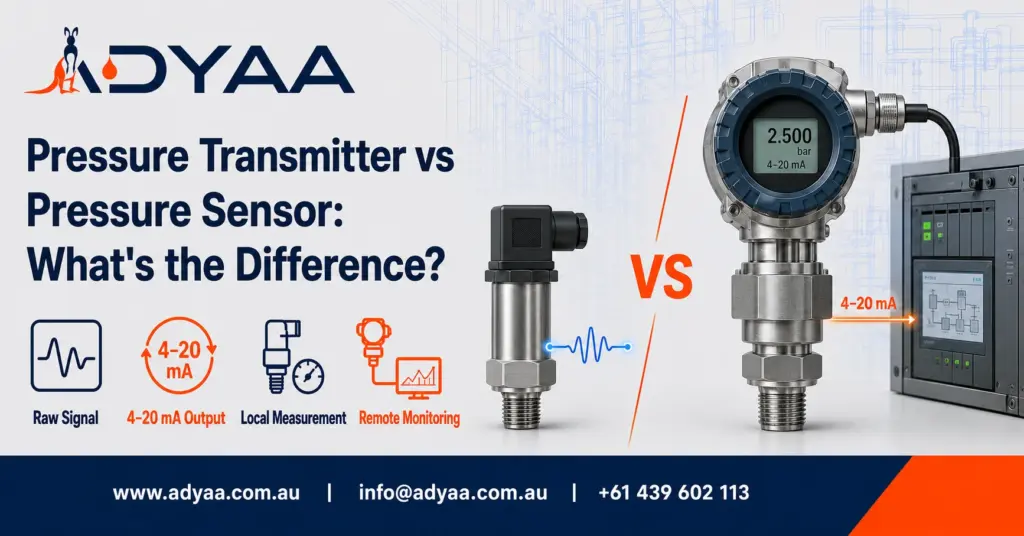
Pressure Transmitter vs Pressure Sensor: What’s the Difference? Pressure measurement is critical in industrial automation, manufacturing and process control. While the terms pressure transmitter and pressure sensor are often used interchangeably, they are not the same. Understanding the differences helps engineers, maintenance teams and procurement professionals choose the right device for accurate and reliable pressure monitoring. This guide explains how each device works, their key differences and where they are commonly used. What Is a Pressure Sensor? A pressure sensor is a device that detects pressure and converts it into an electrical signal. It measures the force exerted by gases or liquids and produces an output that represents the measured pressure. The raw signal generated by a pressure sensor is often processed by external electronics before it can be used by monitoring or control systems. Pressure sensors are the sensing element found inside many pressure measurement devices. Common Pressure Sensor Technologies Piezoresistive Sensors Capacitive Sensors Strain Gauge Sensors Ceramic Sensors Thin Film Sensors MEMS Pressure Sensors What Is a Pressure Transmitter? A pressure transmitter is a complete industrial instrument that includes a pressure sensor along with built-in signal conditioning and electronics. It measures pressure, processes the signal and transmits a standard industrial output such as: 4–20 mA 0–10 V HART Communication Modbus IO-Link Pressure transmitters are designed for direct integration with PLC, SCADA and Distributed Control Systems (DCS). Key Differences Between a Pressure Transmitter and a Pressure Sensor Although both devices measure pressure, they serve different purposes. Measurement Function A pressure sensor detects pressure and generates a raw electrical signal. A pressure transmitter measures pressure and converts it into a standardised output suitable for industrial control systems. Signal Output Pressure sensors typically produce low-level electrical signals that require additional processing. Pressure transmitters provide ready-to-use industrial communication signals. Electronics Pressure sensors contain only the sensing element. Pressure transmitters include built-in electronics for signal conditioning, amplification and communication. Installation Pressure sensors are commonly integrated into OEM equipment or custom systems. Pressure transmitters are designed for direct installation in industrial plants. Industrial Applications Pressure sensors are commonly used in electronic devices and embedded systems. Pressure transmitters are widely used in manufacturing, water treatment, chemical processing, mining and oil & gas industries. Pressure Transmitter vs Pressure Sensor Comparison Feature Pressure Sensor Pressure Transmitter Primary Function Detect Pressure Measure & Transmit Pressure Output Raw Electrical Signal 4–20 mA, HART, Modbus, IO-Link Signal Conditioning External Built-In Industrial Integration Limited Direct PLC/SCADA Integration Installation OEM Equipment Industrial Process Plants Typical Cost Lower Higher Best For Embedded Systems Continuous Industrial Monitoring Advantages of Pressure Sensors Pressure sensors are suitable for applications where additional electronics already exist. Compact Design Ideal for space-constrained equipment. Lower Cost Suitable for high-volume OEM applications. Fast Response Quickly detect pressure changes. Flexible Integration Can be incorporated into custom electronic systems. Low Power Consumption Suitable for battery-powered devices. Wide Range of Technologies Available in various sensing technologies for different applications. Advantages of Pressure Transmitters Pressure transmitters are designed for industrial environments. Ready for Automation Connect directly to PLC, SCADA and DCS systems. High Measurement Accuracy Provide stable and reliable pressure readings. Robust Construction Designed for harsh industrial environments. Long Cable Runs Standard output signals minimise electrical noise over long distances. Easy Installation Simple integration into existing industrial processes. Advanced Diagnostics Many models include self-monitoring and diagnostic capabilities. Where Are They Used? Manufacturing Monitor hydraulic, pneumatic and process systems. Oil & Gas Measure pressure in pipelines, separators and processing equipment. Chemical Processing Control pressure in reactors, tanks and pipelines. Water & Wastewater Monitor pumps, filtration systems and distribution networks. Food & Beverage Maintain consistent process pressure during production. Pharmaceutical Support precise manufacturing processes. Mining Monitor slurry pipelines and hydraulic systems. Power Generation Measure steam, boiler and cooling system pressures. Selection Checklist Before choosing a pressure measurement device, consider: ✔ Measurement accuracy ✔ Pressure range ✔ Process media ✔ Operating temperature ✔ Pressure connection ✔ Output signal ✔ Communication protocol ✔ Environmental conditions ✔ Industry standards ✔ Future maintenance requirements Selecting the correct device improves reliability, efficiency and long-term performance. Common Mistakes When Choosing Pressure Measurement Devices Avoid these common mistakes: Confusing sensors with transmitters Choosing the wrong pressure range Ignoring output signal compatibility Incorrect material selection Overlooking environmental conditions Poor installation practices Delaying calibration and maintenance A proper application assessment helps prevent measurement errors and unnecessary downtime. Why Choosing the Right Device Matters Selecting the correct pressure measurement solution helps improve process reliability, measurement accuracy and operational efficiency. While pressure sensors are ideal for embedded and OEM applications, pressure transmitters provide complete industrial measurement solutions that integrate seamlessly with automation systems. Understanding the application requirements ensures the most appropriate technology is selected. Why Choose ADYAA? ADYAA supplies industrial pressure measurement solutions for businesses across Australia. Comprehensive Pressure Instrumentation Pressure Transmitters, Pressure Gauges, Pressure Switches and Pressure Accessories. Technical Expertise Support in selecting the right pressure measurement technology. Reliable Industrial Products Solutions designed for demanding industrial environments. Automation Compatible Products ready for PLC, SCADA and DCS integration. Australia-wide Support Technical assistance for customers across Australia. Long-Term Performance Helping industries improve process reliability through accurate pressure measurement. Frequently Asked Questions What is the difference between a pressure transmitter and a pressure sensor? A pressure sensor detects pressure and produces a raw electrical signal, while a pressure transmitter processes that signal and provides a standard industrial output for control systems. Which is better for industrial automation? Pressure transmitters are generally preferred because they integrate directly with PLC, SCADA and DCS platforms. Can a pressure transmitter work without a pressure sensor? No. Every pressure transmitter contains a pressure sensor as its primary sensing element. Where are pressure sensors commonly used? Pressure sensors are often used in OEM equipment, automotive systems, medical devices and embedded electronics. Do pressure transmitters require calibration? Routine calibration and inspection help maintain measurement accuracy and long-term reliability. How do I choose between a pressure sensor and a pressure transmitter? Choose a pressure sensor for custom electronic designs and embedded applications. Select a pressure transmitter when
Interface Level Transmitters: Complete Guide
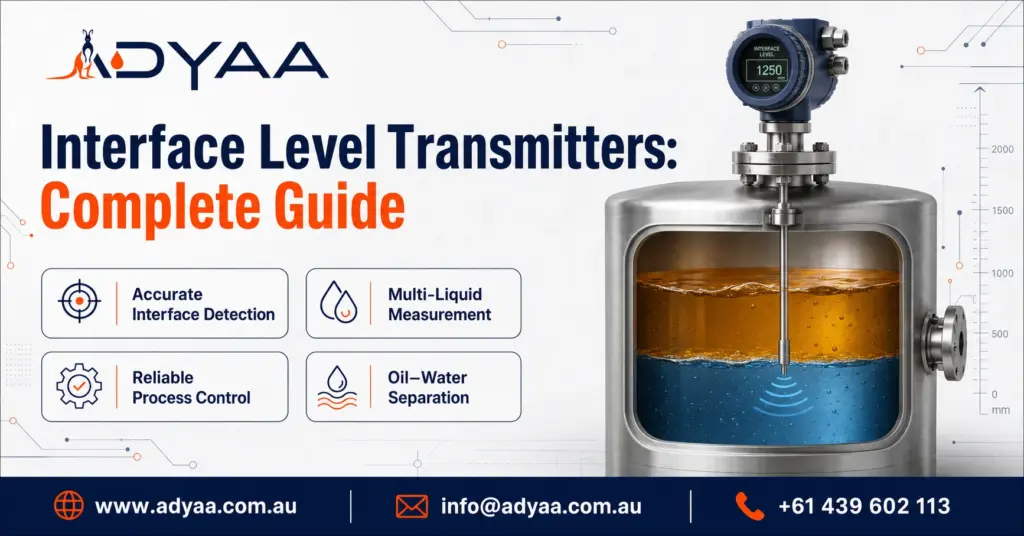
Interface Level Transmitters: Complete Guide Many industrial processes involve storing or processing two immiscible liquids, such as oil and water. Measuring only the total liquid level is often not enough—the interface between the two liquids also needs to be monitored accurately. An Interface Level Transmitter provides continuous measurement of this boundary, helping industries improve process efficiency, product quality and operational reliability. From oil refineries to wastewater treatment plants, interface level transmitters play a vital role in maintaining stable and efficient industrial processes. What Is an Interface Level Transmitter? An Interface Level Transmitter is an instrument designed to measure the boundary between two liquids with different densities. Unlike standard level transmitters that measure the overall liquid level, interface level transmitters continuously monitor where one liquid ends and another begins. Typical examples include: Oil and water Solvent and water Chemical mixtures Fuel and water Sludge and water The measured data is transmitted to monitoring or control systems, enabling operators to optimise industrial processes. Why Interface Level Measurement Matters Accurate interface measurement improves both process efficiency and product quality. Improve Product Quality Maintain proper separation between liquids during processing. Increase Process Efficiency Optimise separation processes and reduce material losses. Reduce Manual Monitoring Continuous automatic measurement eliminates frequent manual inspections. Support Automation Provide reliable level data to PLC and SCADA systems. Minimise Waste Prevent product contamination caused by inaccurate interface detection. Improve Operational Reliability Enable consistent performance across industrial processes. How an Interface Level Transmitter Works Although different technologies are available, the operating principle is generally similar. The transmitter continuously monitors the process vessel. It detects differences in the physical properties of two liquids. The interface position is calculated. Measurement data is transmitted to the control system. Operators use the information to optimise the separation process. Continuous monitoring improves accuracy while reducing manual intervention. Common Technologies Used Several technologies are used depending on the application. Guided Wave Radar Uses microwave pulses to detect both total level and liquid interface with high accuracy. Radar Level Transmitters Suitable for challenging process conditions requiring reliable non-contact measurement. Capacitance Level Measurement Measures changes in electrical capacitance between different liquids. Ultrasonic Level Measurement Suitable for selected interface applications involving relatively stable process conditions. Differential Pressure Measurement Uses pressure differences to estimate interface levels in certain tank configurations. Float-Based Systems Mechanical solutions for basic interface monitoring in specific applications. Interface Measurement Technology Comparison Technology Best For Typical Applications Guided Wave Radar High Accuracy Oil & Gas Radar Non-contact Measurement Chemical Processing Capacitance Conductive Liquids Industrial Tanks Differential Pressure Large Vessels Process Industries Ultrasonic Clean Liquids Water Treatment Float System Simple Applications Storage Tanks Where Interface Level Transmitters Are Used Interface measurement is important across many industries. Oil & Gas Monitor oil-water separation tanks and storage vessels. Chemical Processing Control separation processes involving multiple liquid phases. Water & Wastewater Measure sludge blankets and oil-water separators. Food & Beverage Support controlled separation processes during production. Mining Monitor slurry separation and process tanks. Power Generation Measure condensate and water separation systems. Marine Monitor ballast and fuel storage tanks. Pharmaceutical Maintain accurate liquid separation during specialised manufacturing processes. Interface Level Transmitter Selection Checklist Before selecting an interface level transmitter, consider: ✔ Type of liquids ✔ Density difference ✔ Tank geometry ✔ Operating temperature ✔ Operating pressure ✔ Measurement range ✔ Required accuracy ✔ Process connections ✔ Communication protocol ✔ Installation location Selecting the appropriate technology helps maximise measurement reliability and long-term performance. Common Mistakes When Selecting Interface Level Transmitters Common selection mistakes include: Choosing the wrong measurement technology Ignoring density differences between liquids Incorrect probe selection Poor installation location Overlooking process pressure and temperature Ignoring communication requirements Delaying calibration and maintenance Proper application assessment helps ensure accurate and reliable measurements. Why Accurate Interface Measurement Matters Accurate interface measurement helps industries improve product recovery, reduce waste and optimise separation processes. Reliable interface monitoring also supports automation, reduces manual intervention and improves operational efficiency across industrial facilities. Why Choose ADYAA? ADYAA supplies advanced level measurement solutions for industrial applications across Australia. Comprehensive Level Measurement Solutions Radar, Guided Wave Radar, Ultrasonic, Capacitance and Interface Level Transmitters. Technical Expertise Support in selecting the right technology for your application. Reliable Industrial Products Solutions designed for demanding industrial environments. Automation Ready Compatible with PLC, SCADA and modern process control systems. Australia-wide Support Reliable technical assistance across Australia. Long-Term Performance Helping industries improve process visibility, efficiency and measurement accuracy. Frequently Asked Questions What is an Interface Level Transmitter? An Interface Level Transmitter measures the boundary between two liquids with different densities inside a vessel or tank. Where are Interface Level Transmitters used? They are commonly used in oil & gas, chemical processing, wastewater treatment, mining, food processing and pharmaceutical industries. Which technology is best for interface measurement? The most suitable technology depends on the application, but guided wave radar is widely used for accurate interface measurement. Can an Interface Level Transmitter measure total level as well? Many guided wave radar transmitters can measure both the total liquid level and the interface level simultaneously. How do I choose the right Interface Level Transmitter? Selection depends on liquid properties, tank design, operating conditions, required accuracy and installation requirements. Do Interface Level Transmitters require maintenance? Routine inspection and periodic calibration help maintain reliable long-term measurement performance. Accurate Interface Level Transmitter solutions help industries improve separation efficiency, reduce product losses and maintain consistent process performance. Selecting the right measurement technology ensures reliable operation even in demanding industrial environments. ADYAA supplies industrial interface level transmitters and advanced level measurement solutions for customers across Australia, helping businesses achieve accurate, reliable and efficient level monitoring. Need help selecting the right Interface Level Transmitter? Our specialists can help you choose the most suitable interface level measurement solution for your application. Interface Level Transmitters: Complete Guide Flow Meters Perth: How to Choose the Right Meter Accurate flow measurement is essential for efficient industrial operations. Whether measuring… Read More → Flow Meters Perth: How to Choose the Right Meter Flow Meters Perth: How to Choose the Right Meter Accurate flow
Industrial Instrumentation Australia: Complete Guide
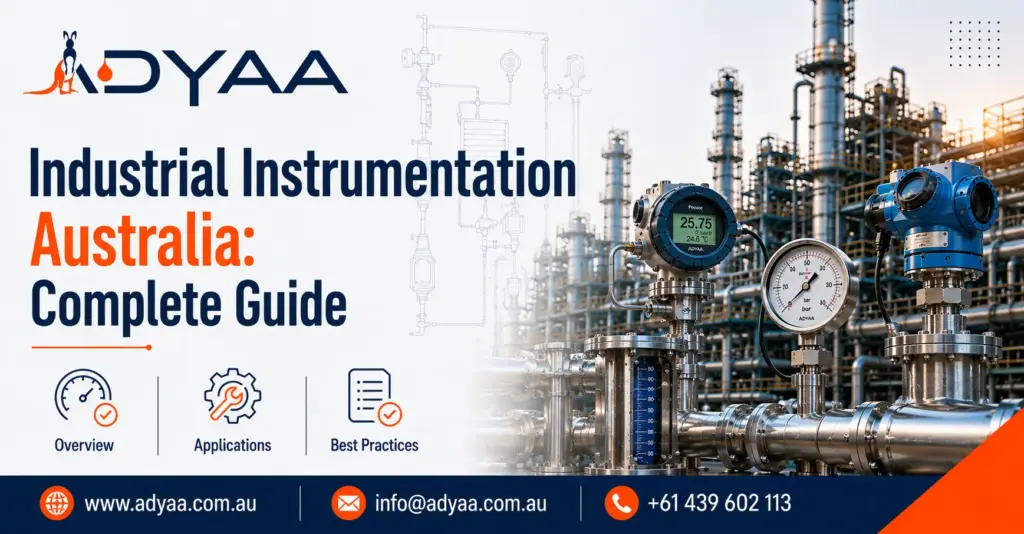
Industrial Instrumentation Australia: Complete Guide Every industrial process depends on reliable measurements. Whether it’s monitoring pressure inside a pipeline, measuring liquid levels in a storage tank or controlling temperature during production, industrial instrumentation provides the information needed to keep operations running efficiently. Across Australia, industries rely on Industrial Instrumentation Australia solutions to improve process control, minimise downtime, increase equipment reliability and support safer working environments. What Is Industrial Instrumentation? Industrial instrumentation refers to the instruments used to measure, monitor and control process variables such as pressure, temperature, flow and level. These instruments continuously collect operational data and send it to operators or automation systems such as PLCs, SCADA and DCS platforms, allowing businesses to monitor processes in real time and make informed operational decisions. From a small manufacturing facility to a large refinery, accurate instrumentation is the foundation of efficient process control. Why Industrial Instrumentation Matters Reliable instrumentation delivers much more than accurate measurements. Improve Process Accuracy Maintain consistent product quality by continuously monitoring critical process variables. Increase Operational Efficiency Real-time process data enables faster decisions and smoother production. Reduce Downtime Detect abnormal operating conditions before they become costly failures. Improve Workplace Safety Monitor pressure, temperature and flow to help reduce operational risks. Support Automation Provide accurate data for PLC, SCADA and distributed control systems. Extend Equipment Life Reliable monitoring helps prevent unnecessary wear on industrial equipment. How Industrial Instrumentation Works Although different instruments perform different tasks, most follow a similar process. A sensor detects a physical process such as pressure, temperature, flow or level. The instrument converts the measurement into a usable electrical signal. The signal is transmitted to a PLC, SCADA or control system. Operators monitor the process in real time. The control system adjusts the process automatically when required. This continuous monitoring improves process stability and operational efficiency. Types of Industrial Instrumentation Different applications require different measurement technologies. Pressure Instrumentation Pressure gauges, pressure transmitters and pressure switches monitor pressure in pipelines, vessels and process equipment. Temperature Instrumentation RTDs, thermocouples, temperature transmitters and thermometers measure process temperatures accurately. Flow Instrumentation Electromagnetic, Coriolis, ultrasonic and vortex flowmeters measure liquid, gas and steam flow. Level Instrumentation Radar, ultrasonic, capacitance and guided wave radar transmitters monitor tank and vessel levels. Analytical Instrumentation pH meters, conductivity meters and dissolved oxygen sensors monitor product quality and process conditions. Calibration Equipment Calibration equipment verifies instrument accuracy and supports reliable long-term performance. Common Industrial Instruments at a Glance Instrument Measures Common Applications Pressure Transmitter Pressure Oil & Gas, Manufacturing Temperature Transmitter Temperature Food Processing, Pharmaceutical Electromagnetic Flowmeter Liquid Flow Water & Wastewater Radar Level Transmitter Tank Level Chemical Processing Conductivity Meter Conductivity Water Treatment Pressure Gauge Pressure General Industrial Applications Where Industrial Instrumentation Is Used Every industry has unique measurement requirements. Manufacturing Manufacturers use instrumentation to improve production efficiency, reduce waste and maintain consistent product quality. Oil & Gas Pressure, flow and temperature instruments support safe exploration, transportation and refining processes. Mining Instrumentation monitors heavy equipment and mineral processing operations under demanding conditions. Chemical Processing Accurate measurement helps maintain product consistency while supporting efficient process control. Food & Beverage Temperature, flow and level instruments help maintain production quality throughout manufacturing. Water & Wastewater Flowmeters, level transmitters and analytical instruments support water treatment and distribution. Power Generation Instrumentation continuously monitors boilers, turbines and utility systems. Pharmaceutical High-accuracy instruments support controlled manufacturing environments and product consistency. Industrial Instrument Selection Checklist Before selecting an industrial instrument, consider the following: ✔ Process variable to be measured ✔ Operating pressure and temperature ✔ Required measurement accuracy ✔ Process connection ✔ Material compatibility ✔ Output signal requirements ✔ Communication protocol ✔ Hazardous area certification ✔ Installation environment ✔ Future maintenance and calibration Choosing the right instrument from the beginning reduces operating costs and improves long-term reliability. Common Mistakes When Selecting Industrial Instrumentation Selecting the wrong instrument can affect both productivity and equipment reliability. Common mistakes include: Choosing the wrong measuring range Ignoring environmental conditions Selecting incompatible wetted materials Overlooking communication protocols Installing instruments incorrectly Skipping routine calibration Prioritising price over application suitability Working with experienced instrumentation specialists helps avoid these issues. Why Measurement Accuracy Matters Even small measurement errors can affect production quality, energy consumption and maintenance costs. Accurate industrial instrumentation provides reliable process data that supports better operational decisions, improved efficiency and more consistent production outcomes. Why Choose ADYAA? ADYAA supplies industrial instrumentation solutions that support reliable process measurement across Australian industries. Comprehensive Product Portfolio Pressure, temperature, flow, level, analytical and calibration solutions from trusted manufacturers. Technical Expertise Support in selecting instrumentation suited to your process requirements. Reliable Industrial Solutions Products designed for demanding industrial environments. Automation Compatibility Solutions compatible with PLC, SCADA and process automation systems. Australia-wide Support Reliable service for customers across Australia. Focus on Long-Term Performance Helping industries improve efficiency, measurement accuracy and operational reliability. Frequently Asked Questions What is industrial instrumentation? Industrial instrumentation includes instruments used to measure, monitor and control industrial processes. What industries use industrial instrumentation? Manufacturing, mining, oil & gas, chemical processing, food & beverage, pharmaceutical, power generation and water treatment. What are the main types of industrial instrumentation? Pressure, temperature, flow, level and analytical instruments are the most widely used. Why is calibration important? Calibration verifies measurement accuracy and helps maintain reliable process performance. How does industrial instrumentation support automation? It provides real-time process data to PLC, SCADA and DCS systems for monitoring and automated control. How do I choose the right industrial instrument? Selection depends on the process variable, operating conditions, accuracy requirements, installation environment and communication needs. Whether you’re expanding a production facility, upgrading existing equipment or implementing a new process, selecting the right Industrial Instrumentation Australia solutions helps improve operational efficiency, process visibility and long-term equipment reliability. ADYAA supplies a comprehensive range of industrial instrumentation products and works with customers to identify solutions that match their operational and technical requirements. Need help selecting the right industrial instrumentation? Our specialists can help you choose the right pressure, temperature, flow, level and analytical instruments for your application. Industrial Instrumentation Australia:
Oil Water Interface Level Sensor: Working Principle & Applications
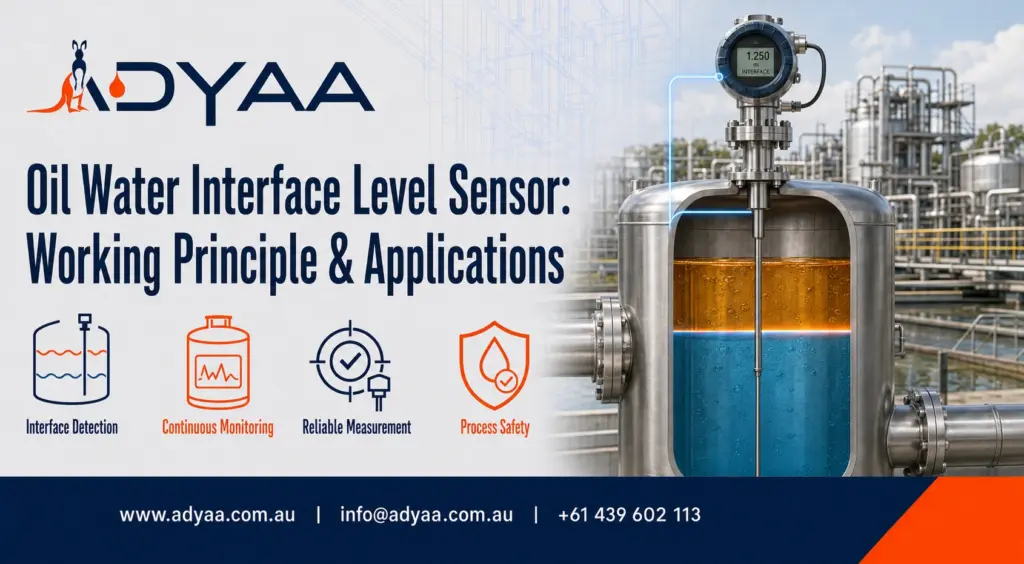
Oil Water Interface Level Sensor: Working Principle & Applications Many industrial processes involve separating oil from water. Measuring only the overall liquid level is often insufficient because operators also need to know exactly where the oil layer meets the water layer. An Oil Water Interface Level Sensor continuously measures this boundary, helping industries improve separation efficiency, reduce product losses and optimise process performance. From refineries and wastewater treatment plants to marine and chemical industries, accurate interface measurement plays a vital role in ensuring reliable operations. What Is an Oil Water Interface Level Sensor? An Oil Water Interface Level Sensor is a specialised instrument that measures the interface between oil and water inside tanks, separators and storage vessels. Unlike conventional level sensors that detect only the total liquid level, an interface level sensor identifies the exact position where the oil layer meets the water layer. The measurement data is continuously transmitted to control systems, allowing operators to monitor separation processes in real time. Why Oil Water Interface Measurement Matters Accurate interface measurement improves operational efficiency and process control. Improve Separation Efficiency Maintain the correct oil-water boundary for efficient separation. Reduce Product Loss Prevent valuable product from being discharged with wastewater. Improve Process Control Provide continuous data for automated separation systems. Minimise Manual Inspection Reduce reliance on manual level checks. Support Environmental Compliance Help manage oil-water separation more effectively. Improve Operational Reliability Provide stable measurements even in demanding industrial environments. How an Oil Water Interface Level Sensor Works Different technologies are available, but the operating principle remains similar. The sensor continuously monitors the process vessel. It detects the physical difference between oil and water. The interface position is calculated. Measurement data is transmitted to PLC or SCADA systems. Operators adjust the process based on real-time information. Continuous monitoring helps maintain efficient and stable separation processes. Common Technologies Used The best technology depends on the application, operating conditions and required accuracy. Guided Wave Radar Sensors One of the most widely used technologies for highly accurate oil-water interface measurement. Capacitance Sensors Measure changes in electrical capacitance between oil and water layers. Ultrasonic Sensors Suitable for selected applications with relatively stable process conditions. Differential Pressure Sensors Estimate the interface position based on pressure differences between liquids. Float-Based Sensors Mechanical solutions used in basic interface monitoring applications. Radar Level Sensors Provide reliable non-contact measurement in challenging industrial environments. Oil Water Interface Sensor Technology Comparison Technology Accuracy Best Application Guided Wave Radar Excellent Oil & Gas Capacitance High Chemical Processing Ultrasonic Moderate Water Treatment Differential Pressure Good Large Storage Tanks Float System Basic Simple Applications Radar High Industrial Storage Tanks Where Oil Water Interface Level Sensors Are Used Interface measurement is critical across many industries. Oil & Gas Monitor crude oil separators, storage tanks and production vessels. Water & Wastewater Measure oil-water separators and sludge treatment systems. Chemical Processing Control separation processes involving multiple liquid phases. Marine Monitor ballast tanks, bilge systems and fuel storage. Petrochemical Improve product recovery in separator vessels. Mining Monitor process tanks and slurry separation systems. Food & Beverage Support specialised liquid separation processes. Power Generation Monitor condensate and oil separation equipment. Oil Water Interface Level Sensor Selection Checklist Before selecting a sensor, consider: ✔ Type of liquids ✔ Density difference ✔ Tank geometry ✔ Operating pressure ✔ Operating temperature ✔ Required measurement accuracy ✔ Probe length ✔ Communication protocol ✔ Installation method ✔ Maintenance requirements Selecting the appropriate technology improves measurement accuracy and long-term reliability. Common Mistakes When Selecting Oil Water Interface Level Sensors Common selection errors include: Choosing the wrong sensing technology Ignoring density variations Incorrect probe sizing Poor installation location Overlooking process conditions Ignoring communication compatibility Delaying calibration and maintenance A proper application assessment helps ensure consistent and reliable measurements. Why Accurate Oil Water Interface Measurement Matters Accurate interface measurement helps industries maximise product recovery, reduce waste and improve process efficiency. Reliable measurement data also supports automation, reduces manual intervention and improves operational decision-making across industrial facilities. Why Choose ADYAA? ADYAA supplies advanced industrial level measurement solutions for customers across Australia. Complete Level Measurement Portfolio Interface Level Transmitters, Guided Wave Radar, Radar, Ultrasonic and Capacitance Level Sensors. Technical Expertise Support in selecting the right interface measurement technology for your application. Reliable Industrial Products High-quality solutions designed for demanding industrial environments. Automation Ready Compatible with PLC, SCADA and DCS platforms. Australia-wide Support Technical assistance for industries across Australia. Long-Term Performance Helping businesses improve process efficiency through accurate level measurement. Frequently Asked Questions What is an Oil Water Interface Level Sensor? It is a device that measures the boundary between oil and water inside tanks, separators and process vessels. Which industries use Oil Water Interface Level Sensors? Oil & Gas, Chemical Processing, Water Treatment, Marine, Mining, Petrochemical, Food & Beverage and Power Generation. Which technology provides the highest accuracy? Guided Wave Radar is widely recognised as one of the most accurate technologies for oil-water interface measurement in many industrial applications. Can one sensor measure both total level and interface level? Yes. Many guided wave radar interface level transmitters can measure both the total liquid level and the oil-water interface simultaneously. Do Oil Water Interface Level Sensors require calibration? Routine inspection and periodic calibration help maintain reliable measurement performance. How do I choose the right Oil Water Interface Level Sensor? Selection depends on the liquid properties, tank design, operating conditions, required accuracy and communication requirements. Accurate Oil Water Interface Level Sensor solutions are essential for maintaining efficient separation processes, improving product recovery and reducing operational losses. Selecting the right sensing technology helps industries achieve reliable measurements while supporting automation and long-term process performance. ADYAA supplies industrial oil-water interface level sensors and advanced level measurement solutions across Australia, helping businesses choose the right technology for demanding industrial applications. Need help selecting the right Oil Water Interface Level Sensor? Our specialists can help you choose the most suitable interface level measurement solution based on your process requirements and operating conditions. Oil Water Interface Level Sensor: Working Principle & Applications Oil Water Interface Level Sensor:
Burst Disk Indicators: Improving Plant Safety
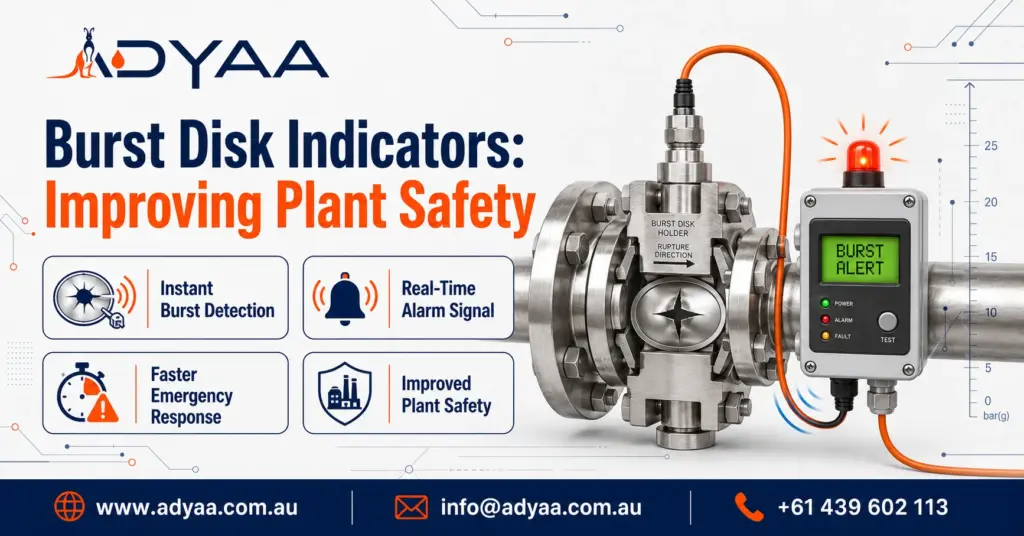
Burst Disk Indicators: Improving Plant Safety A rupture disc provides reliable protection against overpressure, but once it bursts, operators need to know immediately. A Burst Disk Indicator continuously monitors the condition of a rupture disc and instantly signals when the disc has activated. This allows maintenance teams to respond quickly, minimise downtime and restore normal operations as soon as possible. From chemical processing plants to power generation facilities, burst disk indicators improve process visibility while supporting safer and more efficient industrial operations. What Is a Burst Disk Indicator? A Burst Disk Indicator is an electronic monitoring device used with a rupture disc to detect when the disc has burst. During normal operation, the monitoring circuit remains intact. When the rupture disc activates because of an overpressure event, the electrical circuit changes state, sending an alarm or signal to the plant’s control system. This immediate notification helps operators identify pressure events without manually inspecting the rupture disc. Why Burst Disk Indicators Matter Adding a burst disk indicator improves both plant safety and operational efficiency. Immediate Burst Detection Receive instant notification when a rupture disc activates. Reduce Downtime Allow maintenance teams to respond quickly after a pressure event. Improve Plant Safety Reduce the time equipment operates after rupture disc activation. Support Remote Monitoring Transmit alarm signals directly to PLC and SCADA systems. Improve Maintenance Planning Identify activated rupture discs without manual inspections. Increase Operational Reliability Provide continuous monitoring of pressure protection devices. How a Burst Disk Indicator Works Burst disk indicators continuously monitor the rupture disc during operation. The rupture disc remains intact during normal operating conditions. The burst disk indicator monitors the electrical circuit. An overpressure event causes the rupture disc to burst. The monitoring circuit changes state. An alarm is sent to the control room, PLC or SCADA system. Maintenance personnel replace the rupture disc and restore the system. This simple monitoring method improves response times following overpressure events. Types of Burst Disk Indicators Different monitoring solutions are available depending on plant requirements. Electrical Burst Disk Indicators Monitor the rupture disc using electrical continuity. Intrinsically Safe Indicators Designed for hazardous area applications where explosion protection is required. PLC Integrated Indicators Provide direct communication with industrial automation systems. Remote Monitoring Indicators Allow operators to monitor rupture disc status from central control rooms. Visual Indicator Systems Provide local visual confirmation after rupture disc activation. Smart Monitoring Systems Support advanced diagnostics and integration with modern industrial networks. Burst Disk Indicator Comparison Type Best For Typical Application Electrical General Industry Manufacturing Intrinsically Safe Hazardous Areas Oil & Gas PLC Integrated Automation Process Plants Remote Monitoring Central Control Large Facilities Visual Indicator Local Monitoring Storage Tanks Smart System Industry 4.0 Advanced Manufacturing Where Burst Disk Indicators Are Used Burst disk indicators are widely used wherever rupture discs protect critical equipment. Oil & Gas Monitor rupture discs installed on pressure vessels and process equipment. Chemical Processing Provide immediate notification following pressure relief events. Petrochemical Support continuous monitoring of pressure protection systems. Pharmaceutical Monitor sterile process equipment while maintaining system integrity. Food & Beverage Support pressure protection in hygienic production systems. Power Generation Monitor boilers, steam systems and pressure vessels. Water & Wastewater Protect chemical dosing and pressurised treatment systems. Manufacturing Improve equipment monitoring and maintenance response times. Burst Disk Indicator Selection Checklist Before selecting a burst disk indicator, consider: ✔ Rupture disc type ✔ Electrical compatibility ✔ Control system integration ✔ Hazardous area requirements ✔ Operating temperature ✔ Environmental conditions ✔ Alarm requirements ✔ Cable routing ✔ Maintenance accessibility ✔ Industry standards Choosing the correct monitoring system improves safety and operational reliability. Common Mistakes When Selecting Burst Disk Indicators Common issues include: Selecting an incompatible indicator Ignoring hazardous area approvals Incorrect wiring Poor installation practices Failing to test alarm systems Delaying replacement after activation Not integrating with plant monitoring systems A properly designed monitoring system helps avoid these problems. Why Burst Detection Matters A rupture disc performs its job only once before it must be replaced. Without a burst disk indicator, operators may not immediately know that the disc has activated. Continuous monitoring helps reduce production delays, improve maintenance response times and ensure pressure protection systems are restored as quickly as possible. Why Choose ADYAA? ADYAA supplies pressure protection and monitoring solutions for industries across Australia. Complete Pressure Protection Portfolio Rupture Discs, Safety Valves, Tank Protection Systems and monitoring accessories. Technical Expertise Support in selecting compatible rupture disc monitoring solutions. Reliable Industrial Products Designed for demanding industrial operating environments. Automation Ready Compatible with PLC, SCADA and industrial control systems. Australia-wide Support Reliable technical assistance across Australia. Long-Term Reliability Helping industries improve pressure protection, monitoring and operational safety. Frequently Asked Questions What is a Burst Disk Indicator? A Burst Disk Indicator monitors a rupture disc and sends an alarm when the disc bursts during an overpressure event. Does a Burst Disk Indicator prevent overpressure? No. The rupture disc provides pressure protection, while the burst disk indicator detects when the rupture disc has activated. Can Burst Disk Indicators connect to PLC systems? Yes. Many models integrate directly with PLC, SCADA and other industrial automation systems. Where are Burst Disk Indicators commonly used? Oil & Gas, Chemical Processing, Pharmaceutical, Food & Beverage, Manufacturing, Power Generation and Water Treatment industries. Do Burst Disk Indicators require maintenance? Routine inspection and functional testing help ensure reliable operation. How do I choose the right Burst Disk Indicator? Selection depends on the rupture disc type, control system, operating environment, hazardous area requirements and monitoring needs. A Burst Disk Indicator improves the effectiveness of rupture disc systems by providing immediate notification when pressure relief occurs. Fast detection allows maintenance teams to restore equipment quickly, helping minimise downtime and maintain safe industrial operations. ADYAA supplies burst disk indicators, rupture discs and complete pressure protection solutions for industries across Australia, helping businesses improve safety, monitoring and operational reliability. Need help selecting the right Burst Disk Indicator? Our specialists can help you choose a compatible monitoring solution for your rupture disc and pressure protection system. Burst Disk
How to Choose the Right Pressure Transmitter for Industrial Applications
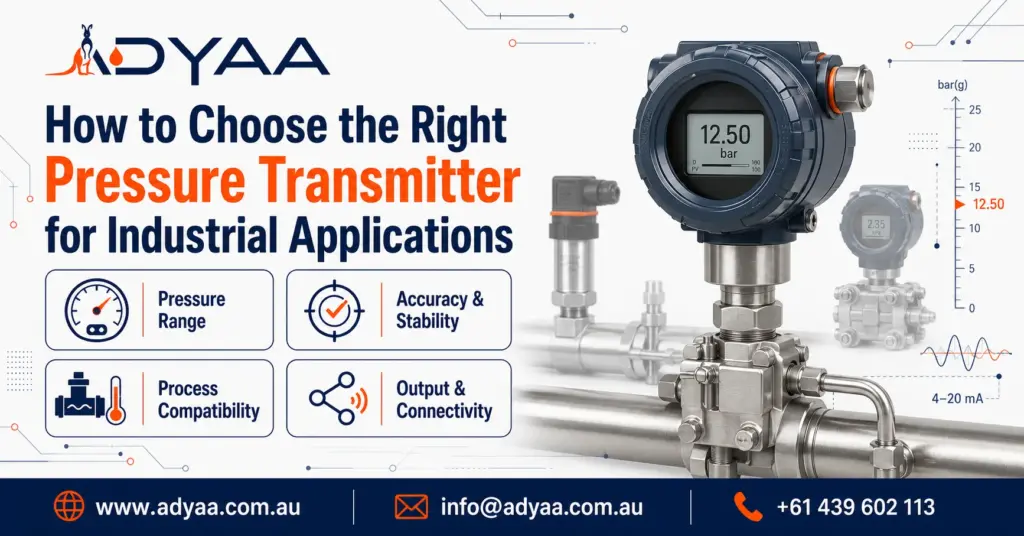
How to Choose the Right Pressure Transmitter for Industrial Applications Pressure transmitters are used across industries to monitor and control the pressure of liquids, gases and steam. However, selecting the right transmitter involves more than choosing a pressure range. Factors such as process media, operating conditions, accuracy requirements and communication protocols all influence performance. Choosing the right Pressure Transmitter helps improve process reliability, reduce maintenance requirements and support long-term operational efficiency. What Is a Pressure Transmitter? A pressure transmitter is an industrial instrument that measures process pressure and converts it into a standard electrical output for monitoring and control systems. Modern pressure transmitters provide continuous pressure measurements and integrate with PLC, SCADA and Distributed Control Systems (DCS), allowing operators to monitor critical processes in real time. They are commonly used in manufacturing, oil & gas, water treatment, chemical processing, mining, food & beverage and pharmaceutical industries. Why Choosing the Right Pressure Transmitter Matters Selecting the correct pressure transmitter helps improve overall plant performance. Improve Measurement Accuracy Accurate pressure readings support better process control and decision-making. Increase Equipment Reliability Using the right transmitter reduces unnecessary wear on equipment. Reduce Downtime Reliable pressure monitoring helps identify issues before they affect production. Improve Process Efficiency Consistent pressure measurements help optimise industrial operations. Support Automation Pressure transmitters provide reliable data for automated control systems. Lower Maintenance Costs Choosing the right instrument reduces unexpected failures and maintenance requirements. Factors to Consider When Choosing a Pressure Transmitter Selecting the right pressure transmitter requires evaluating several process conditions. Pressure Range Choose a transmitter with a pressure range that comfortably covers normal operating conditions without exceeding its limits. Process Media Consider whether the transmitter will measure water, chemicals, steam, gases, oils or corrosive fluids. The wetted materials must be compatible with the process media to ensure long-term reliability. Measurement Accuracy Applications such as pharmaceutical manufacturing and custody transfer often require higher accuracy than general industrial processes. Select a transmitter that matches the required level of measurement precision. Operating Temperature High or low process temperatures can affect transmitter performance. Verify that both the process temperature and ambient temperature fall within the instrument’s operating limits. Pressure Connection Ensure the pressure connection matches your piping or equipment. Common process connections include: BSP NPT Flanged Connections Hygienic Connections Output Signal Most industrial pressure transmitters support one or more communication methods. Common outputs include: 4–20 mA HART Modbus IO-Link PROFIBUS FOUNDATION Fieldbus Choose the communication protocol that integrates with your automation system. Environmental Conditions Consider installation conditions such as: Dust Moisture Vibration Hazardous Areas Outdoor Exposure The enclosure rating should suit the operating environment. Certification Requirements Certain industries require transmitters that comply with recognised standards or hazardous-area approvals. Confirm that the selected transmitter meets the applicable project or industry requirements. Pressure Transmitter Selection Checklist Selection Factor Why It Matters Pressure Range Prevents overloading and improves measurement accuracy Process Media Ensures material compatibility Accuracy Supports reliable process control Temperature Maintains stable performance Output Signal Enables seamless automation integration Process Connection Simplifies installation Environmental Rating Protects against harsh conditions Certifications Supports project compliance Industrial Applications Pressure transmitters are used in a wide variety of industries. Oil & Gas Monitor pipelines, separators, storage tanks and compressors. Chemical Processing Measure reactor, vessel and pipeline pressures. Water & Wastewater Monitor pumps, filters and distribution systems. Food & Beverage Control process pressure during production and cleaning operations. Pharmaceutical Maintain consistent process conditions during manufacturing. Mining Measure slurry transport, hydraulic systems and process equipment. Power Generation Monitor boilers, turbines and cooling systems. Manufacturing Support automation across production lines and industrial machinery. Common Mistakes When Selecting a Pressure Transmitter Many pressure measurement issues result from incorrect selection. Common mistakes include: Selecting an incorrect pressure range Ignoring media compatibility Choosing unsuitable wetted materials Overlooking temperature limitations Selecting the wrong communication protocol Incorrect installation location Skipping routine calibration Proper planning helps improve measurement reliability and extend equipment life. Why Professional Selection Matters Pressure transmitters are often installed in critical process applications where measurement accuracy directly affects safety, efficiency and product quality. Working with experienced instrumentation specialists helps ensure the transmitter matches the operating conditions, process requirements and automation system. The right selection reduces maintenance costs while improving long-term operational performance. Why Choose ADYAA? ADYAA supplies industrial pressure measurement solutions for customers across Australia. Extensive Pressure Instrumentation Range Pressure Transmitters, Pressure Gauges, Pressure Switches and Pressure Accessories. Technical Product Expertise Support in selecting the right pressure measurement solution for your application. Reliable Industrial Products Solutions designed for demanding industrial environments. Automation Ready Compatible with PLC, SCADA and DCS platforms. Australia-wide Support Reliable technical assistance across Australia. Long-Term Process Reliability Helping industries improve measurement accuracy and operational efficiency. Frequently Asked Questions What pressure range should I choose? The transmitter should cover your normal operating pressure while allowing sufficient margin for temporary pressure fluctuations. Which output signal is most commonly used? The 4–20 mA output remains one of the most widely used standards in industrial automation, while HART, Modbus and IO-Link are also common. Can one pressure transmitter measure all process fluids? No. Material compatibility must be evaluated based on the process media and operating conditions. How accurate should a pressure transmitter be? The required accuracy depends on the application. General industrial processes and precision manufacturing may have different accuracy requirements. How often should pressure transmitters be calibrated? Calibration intervals depend on the application, operating conditions and maintenance programme. Can pressure transmitters be installed outdoors? Yes. Many industrial models are designed for outdoor use when installed with the appropriate environmental protection. Selecting the right Pressure Transmitter is essential for achieving accurate pressure measurement, reliable process control and efficient industrial operations. By considering pressure range, media compatibility, environmental conditions and communication requirements, businesses can improve equipment performance while reducing maintenance and downtime. ADYAA provides industrial pressure transmitters and instrumentation solutions across Australia, helping businesses select reliable products for a wide range of industrial applications. Need help choosing the right Pressure Transmitter? Our instrumentation specialists can help you select a pressure transmitter that matches your process conditions,