
Pressure Safety Valve: Selection and Applications
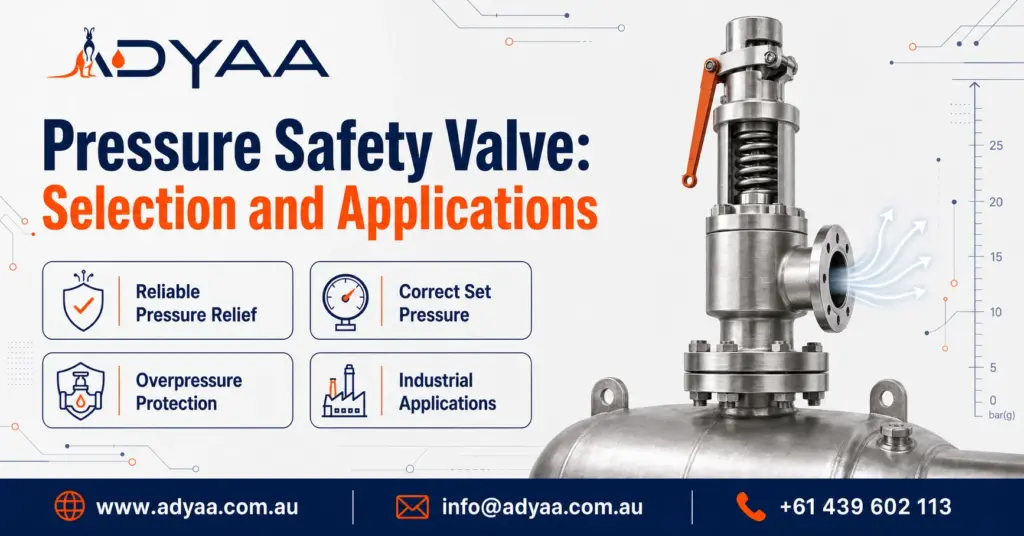
Pressure Safety Valve: Selection and Applications Industrial systems often operate under high pressure, making reliable pressure protection essential. A Pressure Safety Valve automatically releases excess pressure before it reaches unsafe levels, helping protect equipment, personnel and production processes. From pressure vessels and boilers to pipelines and storage systems, these valves play a critical role in maintaining safe and efficient industrial operations. What Is a Pressure Safety Valve? A Pressure Safety Valve is a mechanical safety device designed to automatically open when system pressure exceeds a predetermined set point. Once the pressure returns to a safe operating range, the valve closes automatically, allowing the system to continue operating normally. Pressure safety valves are commonly installed on pressure vessels, boilers, compressors, pipelines and process equipment where overpressure could damage assets or interrupt production. Why Pressure Safety Valves Matter Pressure safety valves are a key component of industrial pressure protection systems. Protect Equipment Prevent excessive pressure from damaging valuable industrial assets. Improve Plant Safety Help reduce the risks associated with overpressure conditions. Reduce Downtime Minimise equipment failures and unexpected production interruptions. Support Regulatory Compliance Assist industries in meeting recognised pressure protection practices. Maintain Process Stability Keep pressure within safe operating limits during process fluctuations. Extend Equipment Life Reduce stress on equipment and improve long-term reliability. How a Pressure Safety Valve Works Although designs vary, most pressure safety valves follow the same operating principle. The valve remains closed during normal operating conditions. System pressure gradually increases. When the preset pressure is reached, the valve automatically opens. Excess pressure is safely discharged. Once pressure returns to an acceptable level, the valve reseats and closes. This automatic operation helps protect both equipment and personnel without requiring manual intervention. Types of Pressure Safety Valves Different industrial applications require different valve designs. Spring Loaded Safety Valves The most common design, using a calibrated spring to control the opening pressure. Pilot Operated Safety Valves Designed for high-pressure applications requiring accurate pressure control and reduced leakage. Threaded Safety Valves Suitable for compact process systems and smaller pipe sizes. Flanged Safety Valves Used in larger industrial installations where higher flow capacity is required. Hygienic Safety Valves Designed for food, beverage and pharmaceutical applications requiring sanitary construction. Cryogenic Safety Valves Used in low-temperature applications involving liquefied gases and cryogenic systems. Pressure Safety Valve vs Pressure Relief Valve Although the terms are often used interchangeably, there are operational differences. Feature Pressure Safety Valve Pressure Relief Valve Primary Purpose Protect against overpressure Control excess system pressure Opening Action Opens rapidly at set pressure Opens gradually as pressure increases Typical Applications Steam, gas and compressed air Liquid systems Closing Action Automatically reseats Gradually closes as pressure decreases Selecting the correct valve depends on the process media, operating conditions and application requirements. Where Pressure Safety Valves Are Used Pressure safety valves protect a wide range of industrial processes. Oil & Gas Protect pipelines, separators and pressure vessels operating under high pressure. Chemical Processing Prevent excessive pressure in reactors, tanks and processing equipment. Manufacturing Protect compressed air systems, hydraulic equipment and industrial machinery. Food & Beverage Maintain pressure protection in hygienic processing systems. Pharmaceutical Support controlled pressure conditions during production processes. Power Generation Protect boilers, steam systems and pressure vessels. Water & Wastewater Safeguard pumps, pipelines and pressure systems. Mining Protect high-pressure process equipment operating in demanding environments. Pressure Safety Valve Selection Checklist Before selecting a pressure safety valve, consider the following: ✔ Operating pressure ✔ Set pressure ✔ Process media ✔ Flow capacity ✔ Operating temperature ✔ Valve connection type ✔ Material compatibility ✔ Installation orientation ✔ Industry standards ✔ Maintenance requirements Selecting the correct valve improves both operational reliability and long-term equipment protection. Common Mistakes When Selecting Pressure Safety Valves Improper valve selection can affect both safety and performance. Common mistakes include: Selecting an incorrect pressure setting Choosing the wrong valve size Ignoring process media compatibility Using unsuitable materials Incorrect installation Delaying inspection and maintenance Overlooking discharge capacity requirements Working with experienced pressure protection specialists helps minimise these risks. Why Pressure Safety Valves Are Important Overpressure events can occur unexpectedly due to equipment failures, thermal expansion, blocked outlets or control system malfunctions. A properly selected Pressure Safety Valve provides automatic protection, helping reduce equipment damage, production losses and maintenance costs while supporting safer plant operations. Why Choose ADYAA? ADYAA supplies pressure protection solutions for industrial applications across Australia. Comprehensive Pressure Protection Solutions Safety Valves, Rupture Discs, Tank Protection Systems and related accessories. Technical Product Selection Support in selecting valves based on process conditions and industry requirements. Quality Industrial Products Solutions designed for reliable performance in demanding environments. Industry Experience Supporting a wide range of industrial process applications. Australia-wide Support Reliable assistance for industries across Australia. Long-Term Performance Helping improve operational safety, equipment protection and process reliability. Frequently Asked Questions What is a Pressure Safety Valve? A Pressure Safety Valve automatically releases excess pressure to protect industrial equipment from overpressure conditions. Where are Pressure Safety Valves used? They are commonly used in boilers, pressure vessels, pipelines, compressors and industrial process equipment. What causes a Pressure Safety Valve to open? The valve opens automatically when system pressure exceeds its preset operating pressure. What is the difference between a Pressure Safety Valve and a Relief Valve? Safety valves generally open rapidly for gas or steam applications, while relief valves usually open progressively for liquid systems. How often should Pressure Safety Valves be inspected? Inspection intervals depend on operating conditions, industry standards and maintenance programs. How do I choose the right Pressure Safety Valve? Selection depends on operating pressure, process media, temperature, flow capacity, material compatibility and applicable industry standards. A Pressure Safety Valve is one of the most important components of any industrial pressure protection system. Choosing the right valve helps improve process safety, protect valuable equipment and maintain reliable plant operations. ADYAA supplies industrial pressure safety solutions designed to support a wide range of process applications across Australia. Need help selecting the right Pressure Safety Valve? Our team can help you choose the right pressure protection
Forward Acting vs Reverse Acting Rupture Disc Explained
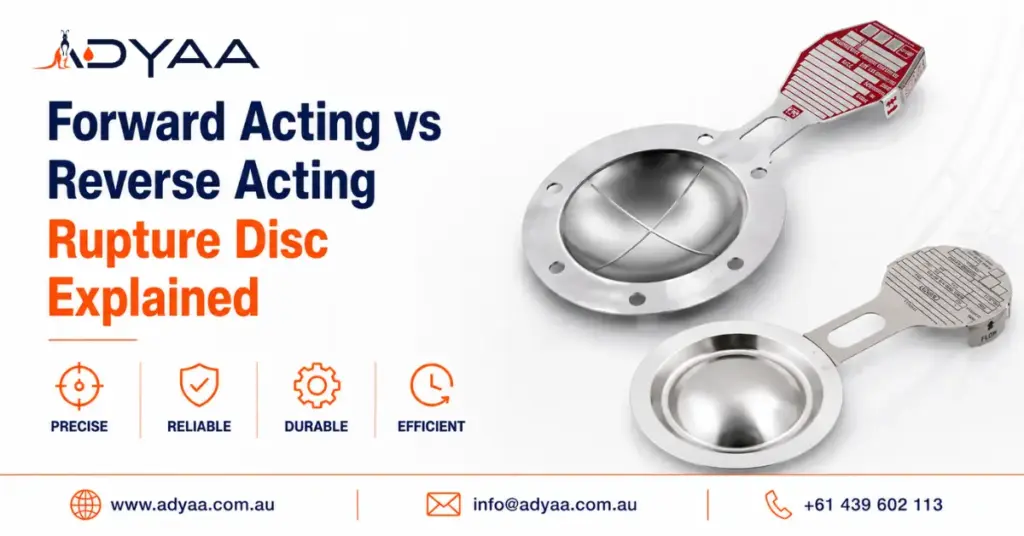
Forward Acting vs Reverse Acting Rupture Disc: Which One Should You Choose? Selecting the wrong Rupture Disc can affect equipment safety, process reliability and maintenance costs. Although both Forward Acting and Reverse Acting Rupture Discs are designed to protect pressure systems from overpressure, they operate differently and are suited to different industrial applications. The right choice depends on operating pressure, process conditions, cycling frequency and the type of media flowing through the system. Understanding these differences makes it easier to choose a solution that delivers reliable protection and longer service life. What Is a Rupture Disc? A Rupture Disc is a non-reclosing pressure relief device designed to burst at a predetermined pressure, protecting vessels, pipelines and process equipment from excessive pressure. Unlike relief valves, rupture discs respond almost instantly and provide full-bore pressure relief when activated. They are commonly installed in: Pressure vessels Chemical reactors Storage tanks Heat exchangers Pipelines Process equipment What Is a Forward Acting Rupture Disc? A Forward Acting Rupture Disc is installed so that process pressure causes the disc to stretch outward. As pressure increases to the rated burst pressure, the disc fails in tension and ruptures, relieving excess pressure. How It Works Process pressure pushes against the disc. The disc stretches under tensile stress. When the burst pressure is reached, the disc tears open. Best Suited For Moderate pressure applications Stable operating conditions General industrial processes Standard pressure protection Advantages Simple construction Cost-effective solution Reliable burst performance Widely used across industries What Is a Reverse Acting Rupture Disc? A Reverse Acting Rupture Disc is installed so that process pressure causes the disc to buckle inward. When the burst pressure is reached, the disc reverses its shape (buckles) and then opens along a scored pattern. How It Works Process pressure compresses the disc. The disc buckles at a predetermined pressure. The disc then opens along precision score lines. Best Suited For High operating pressures Pressure cycling applications Pulsating process conditions Critical industrial systems Advantages Longer service life Excellent fatigue resistance Higher operating ratios Improved durability Forward Acting vs Reverse Acting Rupture Disc Feature Forward Acting Reverse Acting Installation Concept Pressure stretches the disc Pressure compresses the disc Failure Mode Tension rupture Buckling then rupture Pressure Cycling Moderate Excellent Operating Ratio Lower Higher Service Life Standard Longer Best Applications General process protection High-cycle critical applications Neither design is universally better. The correct selection depends on your process requirements. Which Industries Use Each Type? Chemical Processing Both designs are widely used depending on operating pressure and process conditions. Oil & Gas Reverse acting rupture discs are often selected for demanding pressure cycling applications. Pharmaceutical Manufacturing Forward acting rupture discs are commonly used where clean process protection is required. Food & Beverage Pressure protection supports hygienic processing equipment. Power Generation Protect boilers, pressure vessels and heat exchangers. General Manufacturing Provide reliable overpressure protection across industrial production systems. Common Mistakes When Selecting a Rupture Disc Avoid these common issues: Selecting based only on burst pressure Ignoring operating pressure ratio Overlooking pressure cycling Choosing incompatible materials Ignoring temperature effects Installing the disc incorrectly These mistakes can shorten service life and reduce pressure protection reliability. How Do You Choose the Right Rupture Disc? Before selecting a Pressure Relief Device, consider: Operating pressure Burst pressure Process temperature Pressure cycling frequency Process media Corrosion resistance Installation orientation Industry standards and compliance requirements Considering these factors helps improve equipment protection and long-term reliability. Frequently Asked Questions Which rupture disc lasts longer? In applications with frequent pressure cycling, Reverse Acting Rupture Discs generally offer longer service life. Which rupture disc is better? Neither is universally better. The correct choice depends on the application’s pressure, temperature and operating conditions. Can rupture discs replace pressure relief valves? Some applications use rupture discs independently, while others combine them with relief valves for additional protection. What industries commonly use rupture discs? Chemical processing, oil & gas, pharmaceuticals, food processing, power generation and manufacturing. Why is correct rupture disc selection important? Proper selection improves equipment safety, reduces downtime and provides reliable overpressure protection. Final Thoughts Choosing between a Forward Acting vs Reverse Acting Rupture Disc depends on your operating conditions rather than the product alone. Understanding pressure cycling, burst pressure and process requirements helps improve safety, equipment protection and long-term reliability. If you’re selecting Rupture Discs, Pressure Relief Devices or complete Industrial Safety Solutions, ADYAA supplies reliable products designed to support demanding industrial applications across Australia. Forward Acting vs Reverse Acting Rupture Disc Explained How Industrial Automation Sensors Improve Efficiency in Manufacturing Efficiency is the primary metric of success. The difference between a profitable… Read More → How Industrial Automation Sensors Improve Efficiency in Manufacturing How Industrial Automation Sensors Improve Efficiency in Manufacturing Efficiency is the primary metric of success. The difference between a profitable… Read More → Gaskets vs O-Rings: Which Sealing Solution Is Right for You? Gaskets vs O-Rings: Which Sealing Solution Is Right for You? In any fluid handling system, the weakest point is always… Read More →