
Burst Disk Indicators: Improving Plant Safety
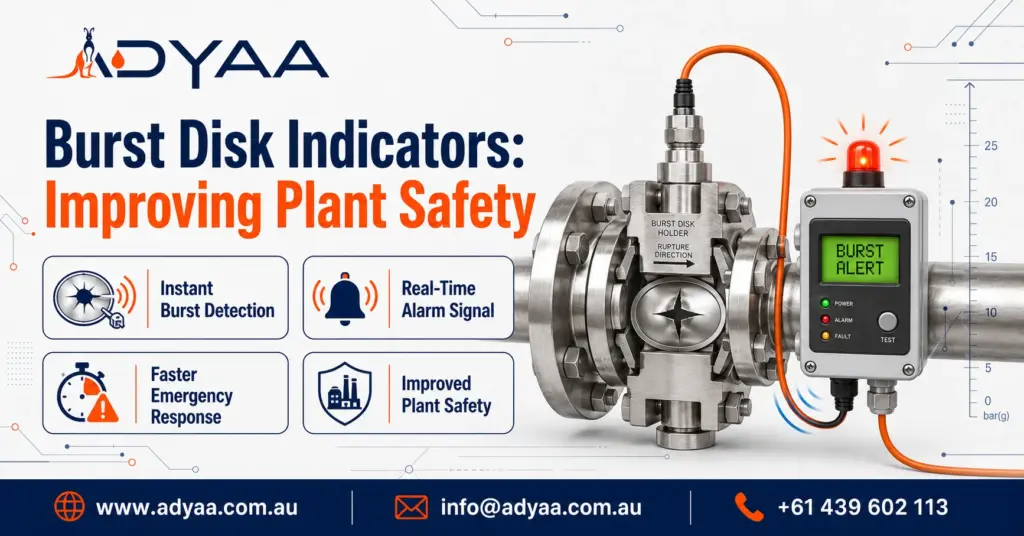
Burst Disk Indicators: Improving Plant Safety A rupture disc provides reliable protection against overpressure, but once it bursts, operators need to know immediately. A Burst Disk Indicator continuously monitors the condition of a rupture disc and instantly signals when the disc has activated. This allows maintenance teams to respond quickly, minimise downtime and restore normal operations as soon as possible. From chemical processing plants to power generation facilities, burst disk indicators improve process visibility while supporting safer and more efficient industrial operations. What Is a Burst Disk Indicator? A Burst Disk Indicator is an electronic monitoring device used with a rupture disc to detect when the disc has burst. During normal operation, the monitoring circuit remains intact. When the rupture disc activates because of an overpressure event, the electrical circuit changes state, sending an alarm or signal to the plant’s control system. This immediate notification helps operators identify pressure events without manually inspecting the rupture disc. Why Burst Disk Indicators Matter Adding a burst disk indicator improves both plant safety and operational efficiency. Immediate Burst Detection Receive instant notification when a rupture disc activates. Reduce Downtime Allow maintenance teams to respond quickly after a pressure event. Improve Plant Safety Reduce the time equipment operates after rupture disc activation. Support Remote Monitoring Transmit alarm signals directly to PLC and SCADA systems. Improve Maintenance Planning Identify activated rupture discs without manual inspections. Increase Operational Reliability Provide continuous monitoring of pressure protection devices. How a Burst Disk Indicator Works Burst disk indicators continuously monitor the rupture disc during operation. The rupture disc remains intact during normal operating conditions. The burst disk indicator monitors the electrical circuit. An overpressure event causes the rupture disc to burst. The monitoring circuit changes state. An alarm is sent to the control room, PLC or SCADA system. Maintenance personnel replace the rupture disc and restore the system. This simple monitoring method improves response times following overpressure events. Types of Burst Disk Indicators Different monitoring solutions are available depending on plant requirements. Electrical Burst Disk Indicators Monitor the rupture disc using electrical continuity. Intrinsically Safe Indicators Designed for hazardous area applications where explosion protection is required. PLC Integrated Indicators Provide direct communication with industrial automation systems. Remote Monitoring Indicators Allow operators to monitor rupture disc status from central control rooms. Visual Indicator Systems Provide local visual confirmation after rupture disc activation. Smart Monitoring Systems Support advanced diagnostics and integration with modern industrial networks. Burst Disk Indicator Comparison Type Best For Typical Application Electrical General Industry Manufacturing Intrinsically Safe Hazardous Areas Oil & Gas PLC Integrated Automation Process Plants Remote Monitoring Central Control Large Facilities Visual Indicator Local Monitoring Storage Tanks Smart System Industry 4.0 Advanced Manufacturing Where Burst Disk Indicators Are Used Burst disk indicators are widely used wherever rupture discs protect critical equipment. Oil & Gas Monitor rupture discs installed on pressure vessels and process equipment. Chemical Processing Provide immediate notification following pressure relief events. Petrochemical Support continuous monitoring of pressure protection systems. Pharmaceutical Monitor sterile process equipment while maintaining system integrity. Food & Beverage Support pressure protection in hygienic production systems. Power Generation Monitor boilers, steam systems and pressure vessels. Water & Wastewater Protect chemical dosing and pressurised treatment systems. Manufacturing Improve equipment monitoring and maintenance response times. Burst Disk Indicator Selection Checklist Before selecting a burst disk indicator, consider: ✔ Rupture disc type ✔ Electrical compatibility ✔ Control system integration ✔ Hazardous area requirements ✔ Operating temperature ✔ Environmental conditions ✔ Alarm requirements ✔ Cable routing ✔ Maintenance accessibility ✔ Industry standards Choosing the correct monitoring system improves safety and operational reliability. Common Mistakes When Selecting Burst Disk Indicators Common issues include: Selecting an incompatible indicator Ignoring hazardous area approvals Incorrect wiring Poor installation practices Failing to test alarm systems Delaying replacement after activation Not integrating with plant monitoring systems A properly designed monitoring system helps avoid these problems. Why Burst Detection Matters A rupture disc performs its job only once before it must be replaced. Without a burst disk indicator, operators may not immediately know that the disc has activated. Continuous monitoring helps reduce production delays, improve maintenance response times and ensure pressure protection systems are restored as quickly as possible. Why Choose ADYAA? ADYAA supplies pressure protection and monitoring solutions for industries across Australia. Complete Pressure Protection Portfolio Rupture Discs, Safety Valves, Tank Protection Systems and monitoring accessories. Technical Expertise Support in selecting compatible rupture disc monitoring solutions. Reliable Industrial Products Designed for demanding industrial operating environments. Automation Ready Compatible with PLC, SCADA and industrial control systems. Australia-wide Support Reliable technical assistance across Australia. Long-Term Reliability Helping industries improve pressure protection, monitoring and operational safety. Frequently Asked Questions What is a Burst Disk Indicator? A Burst Disk Indicator monitors a rupture disc and sends an alarm when the disc bursts during an overpressure event. Does a Burst Disk Indicator prevent overpressure? No. The rupture disc provides pressure protection, while the burst disk indicator detects when the rupture disc has activated. Can Burst Disk Indicators connect to PLC systems? Yes. Many models integrate directly with PLC, SCADA and other industrial automation systems. Where are Burst Disk Indicators commonly used? Oil & Gas, Chemical Processing, Pharmaceutical, Food & Beverage, Manufacturing, Power Generation and Water Treatment industries. Do Burst Disk Indicators require maintenance? Routine inspection and functional testing help ensure reliable operation. How do I choose the right Burst Disk Indicator? Selection depends on the rupture disc type, control system, operating environment, hazardous area requirements and monitoring needs. A Burst Disk Indicator improves the effectiveness of rupture disc systems by providing immediate notification when pressure relief occurs. Fast detection allows maintenance teams to restore equipment quickly, helping minimise downtime and maintain safe industrial operations. ADYAA supplies burst disk indicators, rupture discs and complete pressure protection solutions for industries across Australia, helping businesses improve safety, monitoring and operational reliability. Need help selecting the right Burst Disk Indicator? Our specialists can help you choose a compatible monitoring solution for your rupture disc and pressure protection system. Burst Disk
The Role of Sealing in Preventing Leakage and Safety Hazards Focus
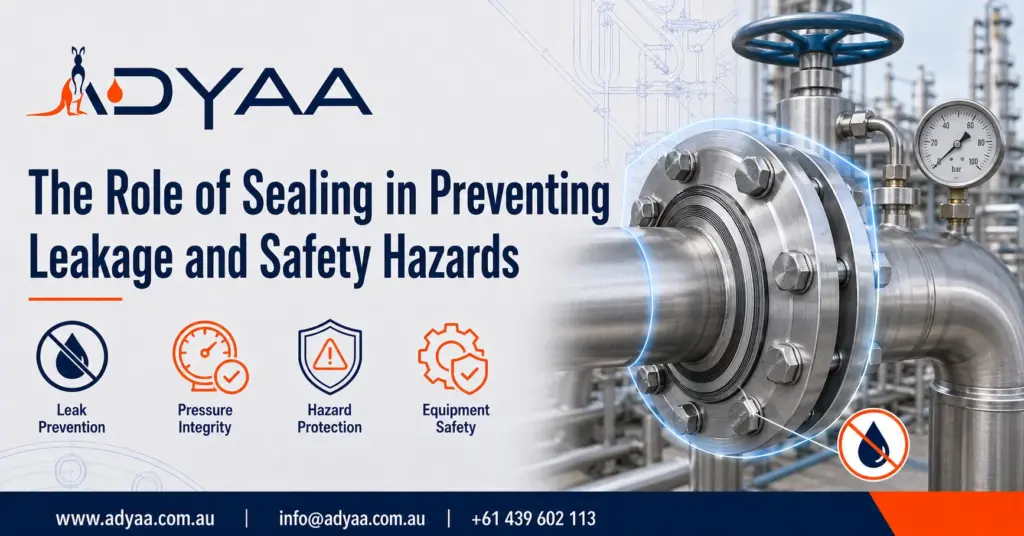
The Role of Sealing in Preventing Leakage and Safety Hazards A leak is rarely just a “drip.” In a chemical plant, a leak poses a significant risk of toxic exposure. In an oil refinery, there is a potential fire. In a high-pressure steam line, it is an explosion hazard. While pumps and reactors get the most attention during safety audits, the role of sealing in preventing leakage is arguably the most critical factor for maintaining facility integrity. It is the invisible shield that keeps your processes contained and your workforce safe. ADYAA understands that gaskets and seals are not just consumables; they are safety devices. In this guide, we explore how high-performance sealing mitigates catastrophic risks. Sealing Solutions for HSE Managers, Maintenance Leads, Reliability Engineers. The Real Cost of Leakage Leakage is often categorized into two types: visible leakage (drips and sprays) and fugitive emissions (invisible gas release). Both pose severe threats: Fire and Explosion: In the Oil & Gas sector, flammable hydrocarbons escaping from a failed flange gasket can be ignited by a single spark. Toxic Exposure: Leaking seals in chemical processing can release hazardous fumes (like chlorine or ammonia), endangering workers’ lungs and skin. Environmental Contamination: Seeping chemicals can contaminate groundwater, leading to massive EPA fines. Understanding the role of sealing in preventing leakage allows plant managers to address these risks before they become accidents. How Advanced Sealing Prevents Hazards Preventing these outcomes requires selecting the right seal for the specific hazard. Standard rubber O-rings often fail under extreme stress. Here is how specialized ADYAA sealing products fulfill the vital role of sealing in preventing leakage across different applications. 1. Controlling Extreme Pressure (The RTJ Solution) When pressures climb above 2,000 PSI, standard flat gaskets can blow out. The Solution: Ring Type Joint (RTJ) Gaskets. How it Works: Used heavily in the Oil & Gas industry, RTJs (like the Type R, RX, and BX) sit in a machined groove. The RX and BX styles are “pressure-energized,” meaning internal pressure pushes the gasket tighter against the flange. This mechanism highlights the active role of sealing in preventing leakage during dangerous pressure spikes. 2. Handling Extreme Temperatures In cryogenic applications (LNG) or superheated steam systems, elastomers become brittle and crack, leading to immediate failure. The Solution: Metal O-Rings and Lens Rings. How it Works: Made from heavy-duty alloys, Metal O-Rings and Lens Rings withstand temperatures that would melt rubber. They provide a reliable metal-to-metal seal and can maintain sealing performance under extreme temperatures and demanding operating conditions. 3. Chemical Resistance Many industrial fluids are corrosive enough to eat through standard seals. The Solution: Spring Energized Seals and Bonded Seals. How it Works: By using high-grade polymers (like PTFE) energized by a corrosion-resistant spring, these seals maintain contact with the sealing surface even under prolonged exposure to aggressive chemicals and demanding operating conditions. . This confirms the role of sealing in preventing leakage of hazardous chemicals that could otherwise cause premature degradation of unsuitable sealing materials. Why Seals Fail (And How to Stop It) Even the best gasket will leak if applied incorrectly. The three most common causes of sealing failure are: Incorrect Material Selection: Using a standard NBR O-ring in a high-temperature acid line. Improper Installation: Uneven bolt torque on a flange can crush a gasket or leave gaps. Reusing Disposable Seals: Many metallic gaskets (like RTJs) deform to create a seal and cannot be reused. Protect Your Workforce with ADYAA Safety is not a place to cut corners. Whether you require Weld Ring Gaskets for a permanent seal or Backup Rings for hydraulics, ADYAA has the engineering expertise to specify the correct component. We supply sealing products designed to Australian and International standards. By prioritizing the role of sealing in preventing leakage, you ensure your plant stays compliant, efficient, and accident-free. Is your facility fully protected? Browse Our Range of RTJ Gaskets & Metal Seals Contact ADYAA for a Sealing Safety Assessment. The Role of Sealing in Preventing Leakage and Safety Hazards Focus How Vision & Imaging Sensors Transform Automated Inspection Systems In the high-speed world of modern manufacturing, zero-defect production is no… Read More → How Vision & Imaging Sensors Transform Automated Inspection Systems How Vision & Imaging Sensors Transform Automated Inspection Systems In the high-speed world of modern manufacturing, zero-defect production is no… Read More → Onsite Instrumentation Calibration: Benefits & Best Practices Onsite Instrumentation Calibration: Benefits & Best Practices A pressure transmitter reading slightly higher than the actual pressure or a temperature… Read More →