
Pressure Transmitter vs Pressure Sensor: What’s the Difference?[
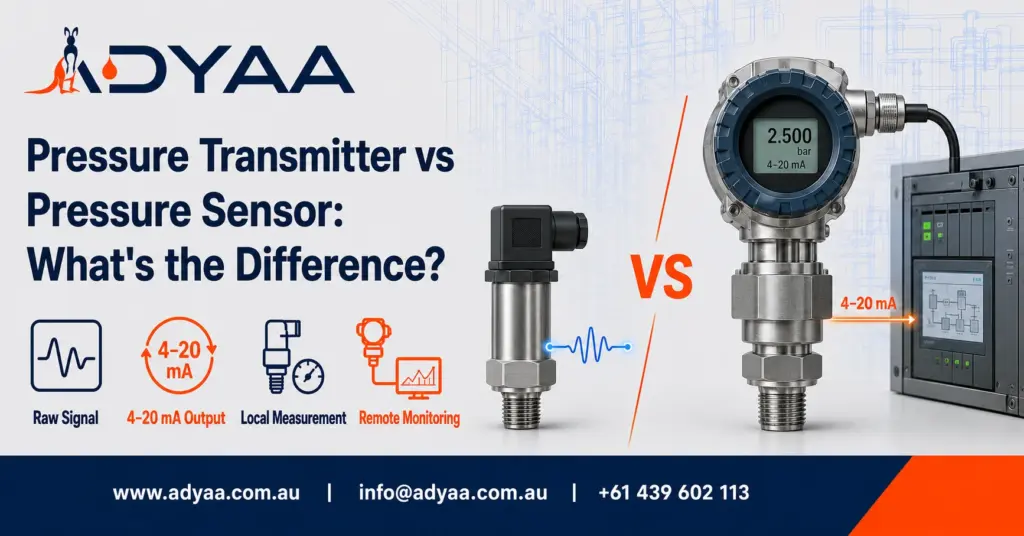
Pressure Transmitter vs Pressure Sensor: What’s the Difference? Pressure measurement is critical in industrial automation, manufacturing and process control. While the terms pressure transmitter and pressure sensor are often used interchangeably, they are not the same. Understanding the differences helps engineers, maintenance teams and procurement professionals choose the right device for accurate and reliable pressure monitoring. This guide explains how each device works, their key differences and where they are commonly used. What Is a Pressure Sensor? A pressure sensor is a device that detects pressure and converts it into an electrical signal. It measures the force exerted by gases or liquids and produces an output that represents the measured pressure. The raw signal generated by a pressure sensor is often processed by external electronics before it can be used by monitoring or control systems. Pressure sensors are the sensing element found inside many pressure measurement devices. Common Pressure Sensor Technologies Piezoresistive Sensors Capacitive Sensors Strain Gauge Sensors Ceramic Sensors Thin Film Sensors MEMS Pressure Sensors What Is a Pressure Transmitter? A pressure transmitter is a complete industrial instrument that includes a pressure sensor along with built-in signal conditioning and electronics. It measures pressure, processes the signal and transmits a standard industrial output such as: 4–20 mA 0–10 V HART Communication Modbus IO-Link Pressure transmitters are designed for direct integration with PLC, SCADA and Distributed Control Systems (DCS). Key Differences Between a Pressure Transmitter and a Pressure Sensor Although both devices measure pressure, they serve different purposes. Measurement Function A pressure sensor detects pressure and generates a raw electrical signal. A pressure transmitter measures pressure and converts it into a standardised output suitable for industrial control systems. Signal Output Pressure sensors typically produce low-level electrical signals that require additional processing. Pressure transmitters provide ready-to-use industrial communication signals. Electronics Pressure sensors contain only the sensing element. Pressure transmitters include built-in electronics for signal conditioning, amplification and communication. Installation Pressure sensors are commonly integrated into OEM equipment or custom systems. Pressure transmitters are designed for direct installation in industrial plants. Industrial Applications Pressure sensors are commonly used in electronic devices and embedded systems. Pressure transmitters are widely used in manufacturing, water treatment, chemical processing, mining and oil & gas industries. Pressure Transmitter vs Pressure Sensor Comparison Feature Pressure Sensor Pressure Transmitter Primary Function Detect Pressure Measure & Transmit Pressure Output Raw Electrical Signal 4–20 mA, HART, Modbus, IO-Link Signal Conditioning External Built-In Industrial Integration Limited Direct PLC/SCADA Integration Installation OEM Equipment Industrial Process Plants Typical Cost Lower Higher Best For Embedded Systems Continuous Industrial Monitoring Advantages of Pressure Sensors Pressure sensors are suitable for applications where additional electronics already exist. Compact Design Ideal for space-constrained equipment. Lower Cost Suitable for high-volume OEM applications. Fast Response Quickly detect pressure changes. Flexible Integration Can be incorporated into custom electronic systems. Low Power Consumption Suitable for battery-powered devices. Wide Range of Technologies Available in various sensing technologies for different applications. Advantages of Pressure Transmitters Pressure transmitters are designed for industrial environments. Ready for Automation Connect directly to PLC, SCADA and DCS systems. High Measurement Accuracy Provide stable and reliable pressure readings. Robust Construction Designed for harsh industrial environments. Long Cable Runs Standard output signals minimise electrical noise over long distances. Easy Installation Simple integration into existing industrial processes. Advanced Diagnostics Many models include self-monitoring and diagnostic capabilities. Where Are They Used? Manufacturing Monitor hydraulic, pneumatic and process systems. Oil & Gas Measure pressure in pipelines, separators and processing equipment. Chemical Processing Control pressure in reactors, tanks and pipelines. Water & Wastewater Monitor pumps, filtration systems and distribution networks. Food & Beverage Maintain consistent process pressure during production. Pharmaceutical Support precise manufacturing processes. Mining Monitor slurry pipelines and hydraulic systems. Power Generation Measure steam, boiler and cooling system pressures. Selection Checklist Before choosing a pressure measurement device, consider: ✔ Measurement accuracy ✔ Pressure range ✔ Process media ✔ Operating temperature ✔ Pressure connection ✔ Output signal ✔ Communication protocol ✔ Environmental conditions ✔ Industry standards ✔ Future maintenance requirements Selecting the correct device improves reliability, efficiency and long-term performance. Common Mistakes When Choosing Pressure Measurement Devices Avoid these common mistakes: Confusing sensors with transmitters Choosing the wrong pressure range Ignoring output signal compatibility Incorrect material selection Overlooking environmental conditions Poor installation practices Delaying calibration and maintenance A proper application assessment helps prevent measurement errors and unnecessary downtime. Why Choosing the Right Device Matters Selecting the correct pressure measurement solution helps improve process reliability, measurement accuracy and operational efficiency. While pressure sensors are ideal for embedded and OEM applications, pressure transmitters provide complete industrial measurement solutions that integrate seamlessly with automation systems. Understanding the application requirements ensures the most appropriate technology is selected. Why Choose ADYAA? ADYAA supplies industrial pressure measurement solutions for businesses across Australia. Comprehensive Pressure Instrumentation Pressure Transmitters, Pressure Gauges, Pressure Switches and Pressure Accessories. Technical Expertise Support in selecting the right pressure measurement technology. Reliable Industrial Products Solutions designed for demanding industrial environments. Automation Compatible Products ready for PLC, SCADA and DCS integration. Australia-wide Support Technical assistance for customers across Australia. Long-Term Performance Helping industries improve process reliability through accurate pressure measurement. Frequently Asked Questions What is the difference between a pressure transmitter and a pressure sensor? A pressure sensor detects pressure and produces a raw electrical signal, while a pressure transmitter processes that signal and provides a standard industrial output for control systems. Which is better for industrial automation? Pressure transmitters are generally preferred because they integrate directly with PLC, SCADA and DCS platforms. Can a pressure transmitter work without a pressure sensor? No. Every pressure transmitter contains a pressure sensor as its primary sensing element. Where are pressure sensors commonly used? Pressure sensors are often used in OEM equipment, automotive systems, medical devices and embedded electronics. Do pressure transmitters require calibration? Routine calibration and inspection help maintain measurement accuracy and long-term reliability. How do I choose between a pressure sensor and a pressure transmitter? Choose a pressure sensor for custom electronic designs and embedded applications. Select a pressure transmitter when
Industrial Instrumentation Services Explained
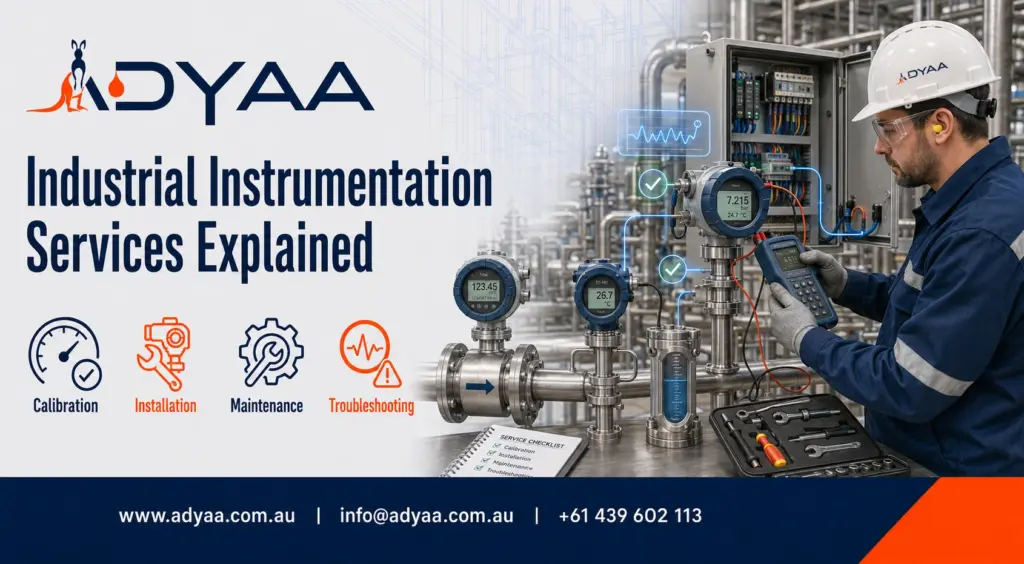
Industrial Instrumentation Services Explained Industrial instruments deliver accurate process data only when they are installed, calibrated and maintained correctly. Industrial Instrumentation Services help businesses maximise equipment performance, improve measurement accuracy and reduce unplanned downtime throughout the lifecycle of their instrumentation systems. Whether commissioning a new production line or maintaining an existing facility, professional instrumentation services support safer operations and more reliable process control. What Are Industrial Instrumentation Services? Industrial Instrumentation Services include the installation, calibration, inspection, maintenance and troubleshooting of instruments used to measure pressure, temperature, flow, level and analytical parameters. These services help ensure that instruments operate accurately, communicate effectively with control systems and continue to perform reliably under industrial operating conditions. They are an essential part of maintaining efficient production processes across a wide range of industries. Why Industrial Instrumentation Services Matter Reliable instrumentation depends on more than selecting the right products. Improve Measurement Accuracy Regular servicing helps instruments maintain reliable and consistent measurements. Reduce Downtime Identify potential problems before they affect production. Extend Equipment Life Routine maintenance reduces unnecessary wear and improves long-term reliability. Support Compliance Maintain instruments in accordance with maintenance programmes and industry requirements. Improve Process Efficiency Accurate measurements support better process control and operational performance. Increase Plant Reliability Well-maintained instrumentation helps reduce unexpected equipment failures. How Industrial Instrumentation Services Work Professional instrumentation services follow a structured process. Review the application and existing instrumentation. Inspect instrument condition and installation. Perform calibration or functional testing where required. Adjust, repair or replace components if necessary. Verify performance and document the results. This approach helps maintain reliable measurements and minimise production interruptions. Common Industrial Instrumentation Services Industrial facilities typically require a combination of services throughout the equipment lifecycle. Instrument Installation Correct installation ensures instruments perform as designed from the start. Instrument Calibration Verify measurement accuracy against recognised reference standards. Preventive Maintenance Routine servicing helps identify issues before they cause failures. Troubleshooting Diagnose communication, measurement or performance problems efficiently. Instrument Replacement & Upgrades Replace ageing equipment or upgrade to newer technologies. Commissioning & Start-Up Support Verify correct operation before equipment enters full production. Instrumentation Services Comparison Service Purpose Benefit Installation Correct instrument setup Reliable operation Calibration Verify measurement accuracy Improved process control Preventive Maintenance Reduce failures Less downtime Troubleshooting Identify faults Faster problem resolution Commissioning Validate new systems Smooth project start-up Upgrades Improve technology Better efficiency Where Industrial Instrumentation Services Are Used Professional instrumentation services support many industries. Manufacturing Maintain production efficiency through reliable process measurements. Oil & Gas Support pressure, flow and temperature monitoring across production facilities. Mining Maintain instrumentation operating in harsh environments. Chemical Processing Ensure accurate monitoring of critical process variables. Food & Beverage Support product consistency through reliable instrumentation. Water & Wastewater Maintain accurate monitoring across treatment facilities. Power Generation Improve reliability of boilers, turbines and utility systems. Pharmaceutical Support controlled manufacturing processes with accurate instrumentation. Industrial Instrumentation Service Checklist When planning instrumentation services, consider: ✔ Instrument condition ✔ Calibration status ✔ Operating environment ✔ Maintenance history ✔ Communication performance ✔ Process criticality ✔ Spare parts availability ✔ Documentation ✔ Compliance requirements ✔ Future upgrade opportunities A planned maintenance strategy improves equipment reliability and operational efficiency. Common Instrumentation Maintenance Mistakes Many avoidable issues result from inadequate maintenance practices. Common mistakes include: Skipping routine calibration Ignoring early warning signs Poor installation practices Delaying preventive maintenance Using unsuitable replacement parts Failing to document maintenance activities Waiting until equipment fails before servicing Regular servicing helps prevent these problems. Why Preventive Instrumentation Services Matter Waiting for an instrument to fail often results in costly downtime, inaccurate measurements and emergency repairs. Preventive instrumentation services help businesses identify problems early, improve process reliability and reduce long-term operating costs. A proactive maintenance approach also supports safer operations and more consistent production performance. Why Choose ADYAA? ADYAA supports Australian industries with industrial instrumentation products and technical expertise to help improve process performance. Comprehensive Instrumentation Solutions Pressure, temperature, flow, level and analytical instrumentation. Technical Product Support Assistance in selecting suitable instrumentation for industrial applications. Reliable Industrial Products Solutions from trusted global manufacturers. Automation Compatible Products designed for integration with PLC, SCADA and DCS systems. Australia-wide Support Supporting industries across Australia with dependable instrumentation solutions. Long-Term Performance Helping businesses improve operational efficiency through reliable measurement solutions. Frequently Asked Questions What are Industrial Instrumentation Services? They include installation, calibration, maintenance, troubleshooting and commissioning of industrial instruments. Why is calibration important? Calibration helps maintain measurement accuracy and reliable process performance. How often should industrial instruments be serviced? Service intervals depend on the application, operating conditions and maintenance programme. Which industries require instrumentation services? Manufacturing, mining, oil & gas, chemical processing, food & beverage, pharmaceutical, water treatment and power generation. Can instrumentation services reduce downtime? Yes. Preventive maintenance helps identify issues before they lead to equipment failures. How do I know when an instrument needs servicing? Signs include unstable readings, communication errors, reduced accuracy or scheduled calibration intervals. Reliable Industrial Instrumentation Services help industries maintain accurate measurements, improve operational efficiency and reduce unexpected downtime. Regular installation, calibration and maintenance ensure that instrumentation continues to deliver dependable performance throughout its service life. ADYAA provides industrial instrumentation solutions and technical expertise, helping businesses across Australia improve measurement reliability and process efficiency. Need help with your instrumentation requirements? Our specialists can help you select the right instrumentation solutions and provide guidance for reliable long-term process performance. Industrial Instrumentation Services Explained Industrial Instrumentation Australia: Complete Guide Every industrial process depends on reliable measurements. Whether it’s monitoring pressure inside a pipeline, measuring… Read More → Industrial Instrumentation Australia: Complete Guide Industrial Instrumentation Australia: Complete Guide Every industrial process depends on reliable measurements. Whether it’s monitoring pressure inside a pipeline, measuring… Read More → Oil Water Interface Level Sensor: Working Principle & Applications Oil Water Interface Level Sensor: Working Principle & Applications Many industrial processes involve separating oil from water. Measuring only the… Read More → Talk to a instrumentation expert
Industrial Instrumentation Australia: Complete Guide
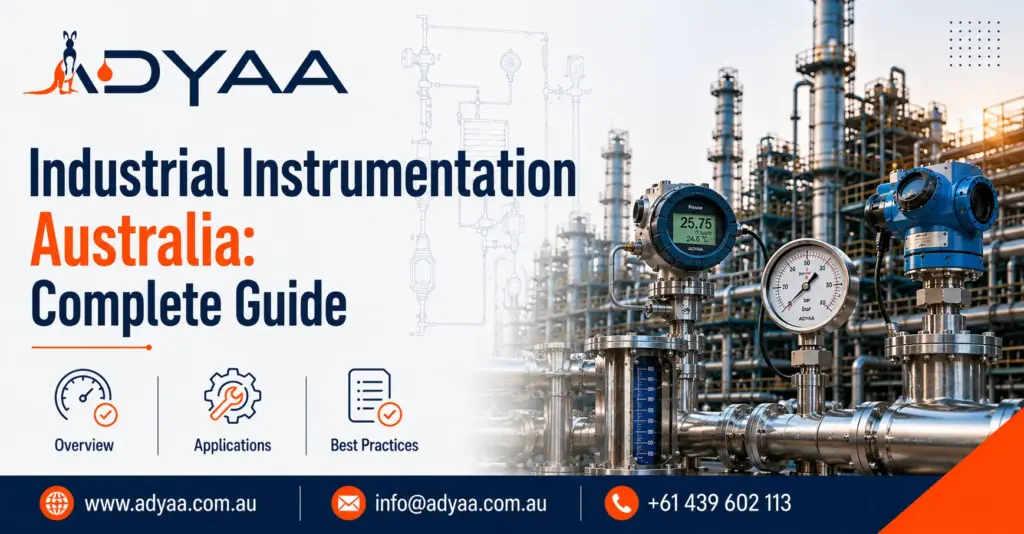
Industrial Instrumentation Australia: Complete Guide Every industrial process depends on reliable measurements. Whether it’s monitoring pressure inside a pipeline, measuring liquid levels in a storage tank or controlling temperature during production, industrial instrumentation provides the information needed to keep operations running efficiently. Across Australia, industries rely on Industrial Instrumentation Australia solutions to improve process control, minimise downtime, increase equipment reliability and support safer working environments. What Is Industrial Instrumentation? Industrial instrumentation refers to the instruments used to measure, monitor and control process variables such as pressure, temperature, flow and level. These instruments continuously collect operational data and send it to operators or automation systems such as PLCs, SCADA and DCS platforms, allowing businesses to monitor processes in real time and make informed operational decisions. From a small manufacturing facility to a large refinery, accurate instrumentation is the foundation of efficient process control. Why Industrial Instrumentation Matters Reliable instrumentation delivers much more than accurate measurements. Improve Process Accuracy Maintain consistent product quality by continuously monitoring critical process variables. Increase Operational Efficiency Real-time process data enables faster decisions and smoother production. Reduce Downtime Detect abnormal operating conditions before they become costly failures. Improve Workplace Safety Monitor pressure, temperature and flow to help reduce operational risks. Support Automation Provide accurate data for PLC, SCADA and distributed control systems. Extend Equipment Life Reliable monitoring helps prevent unnecessary wear on industrial equipment. How Industrial Instrumentation Works Although different instruments perform different tasks, most follow a similar process. A sensor detects a physical process such as pressure, temperature, flow or level. The instrument converts the measurement into a usable electrical signal. The signal is transmitted to a PLC, SCADA or control system. Operators monitor the process in real time. The control system adjusts the process automatically when required. This continuous monitoring improves process stability and operational efficiency. Types of Industrial Instrumentation Different applications require different measurement technologies. Pressure Instrumentation Pressure gauges, pressure transmitters and pressure switches monitor pressure in pipelines, vessels and process equipment. Temperature Instrumentation RTDs, thermocouples, temperature transmitters and thermometers measure process temperatures accurately. Flow Instrumentation Electromagnetic, Coriolis, ultrasonic and vortex flowmeters measure liquid, gas and steam flow. Level Instrumentation Radar, ultrasonic, capacitance and guided wave radar transmitters monitor tank and vessel levels. Analytical Instrumentation pH meters, conductivity meters and dissolved oxygen sensors monitor product quality and process conditions. Calibration Equipment Calibration equipment verifies instrument accuracy and supports reliable long-term performance. Common Industrial Instruments at a Glance Instrument Measures Common Applications Pressure Transmitter Pressure Oil & Gas, Manufacturing Temperature Transmitter Temperature Food Processing, Pharmaceutical Electromagnetic Flowmeter Liquid Flow Water & Wastewater Radar Level Transmitter Tank Level Chemical Processing Conductivity Meter Conductivity Water Treatment Pressure Gauge Pressure General Industrial Applications Where Industrial Instrumentation Is Used Every industry has unique measurement requirements. Manufacturing Manufacturers use instrumentation to improve production efficiency, reduce waste and maintain consistent product quality. Oil & Gas Pressure, flow and temperature instruments support safe exploration, transportation and refining processes. Mining Instrumentation monitors heavy equipment and mineral processing operations under demanding conditions. Chemical Processing Accurate measurement helps maintain product consistency while supporting efficient process control. Food & Beverage Temperature, flow and level instruments help maintain production quality throughout manufacturing. Water & Wastewater Flowmeters, level transmitters and analytical instruments support water treatment and distribution. Power Generation Instrumentation continuously monitors boilers, turbines and utility systems. Pharmaceutical High-accuracy instruments support controlled manufacturing environments and product consistency. Industrial Instrument Selection Checklist Before selecting an industrial instrument, consider the following: ✔ Process variable to be measured ✔ Operating pressure and temperature ✔ Required measurement accuracy ✔ Process connection ✔ Material compatibility ✔ Output signal requirements ✔ Communication protocol ✔ Hazardous area certification ✔ Installation environment ✔ Future maintenance and calibration Choosing the right instrument from the beginning reduces operating costs and improves long-term reliability. Common Mistakes When Selecting Industrial Instrumentation Selecting the wrong instrument can affect both productivity and equipment reliability. Common mistakes include: Choosing the wrong measuring range Ignoring environmental conditions Selecting incompatible wetted materials Overlooking communication protocols Installing instruments incorrectly Skipping routine calibration Prioritising price over application suitability Working with experienced instrumentation specialists helps avoid these issues. Why Measurement Accuracy Matters Even small measurement errors can affect production quality, energy consumption and maintenance costs. Accurate industrial instrumentation provides reliable process data that supports better operational decisions, improved efficiency and more consistent production outcomes. Why Choose ADYAA? ADYAA supplies industrial instrumentation solutions that support reliable process measurement across Australian industries. Comprehensive Product Portfolio Pressure, temperature, flow, level, analytical and calibration solutions from trusted manufacturers. Technical Expertise Support in selecting instrumentation suited to your process requirements. Reliable Industrial Solutions Products designed for demanding industrial environments. Automation Compatibility Solutions compatible with PLC, SCADA and process automation systems. Australia-wide Support Reliable service for customers across Australia. Focus on Long-Term Performance Helping industries improve efficiency, measurement accuracy and operational reliability. Frequently Asked Questions What is industrial instrumentation? Industrial instrumentation includes instruments used to measure, monitor and control industrial processes. What industries use industrial instrumentation? Manufacturing, mining, oil & gas, chemical processing, food & beverage, pharmaceutical, power generation and water treatment. What are the main types of industrial instrumentation? Pressure, temperature, flow, level and analytical instruments are the most widely used. Why is calibration important? Calibration verifies measurement accuracy and helps maintain reliable process performance. How does industrial instrumentation support automation? It provides real-time process data to PLC, SCADA and DCS systems for monitoring and automated control. How do I choose the right industrial instrument? Selection depends on the process variable, operating conditions, accuracy requirements, installation environment and communication needs. Whether you’re expanding a production facility, upgrading existing equipment or implementing a new process, selecting the right Industrial Instrumentation Australia solutions helps improve operational efficiency, process visibility and long-term equipment reliability. ADYAA supplies a comprehensive range of industrial instrumentation products and works with customers to identify solutions that match their operational and technical requirements. Need help selecting the right industrial instrumentation? Our specialists can help you choose the right pressure, temperature, flow, level and analytical instruments for your application. Industrial Instrumentation Australia:
Burst Disk Indicators: Improving Plant Safety
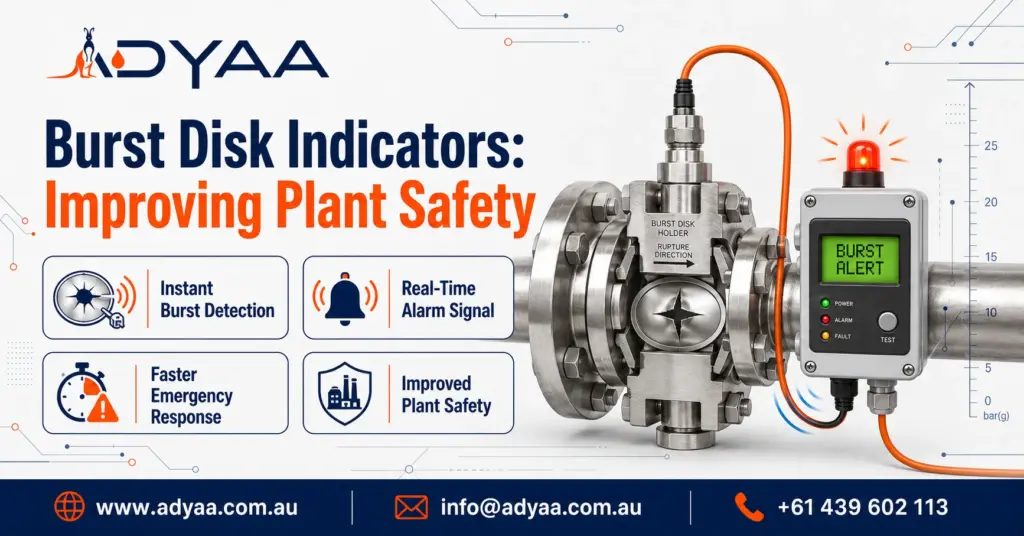
Burst Disk Indicators: Improving Plant Safety A rupture disc provides reliable protection against overpressure, but once it bursts, operators need to know immediately. A Burst Disk Indicator continuously monitors the condition of a rupture disc and instantly signals when the disc has activated. This allows maintenance teams to respond quickly, minimise downtime and restore normal operations as soon as possible. From chemical processing plants to power generation facilities, burst disk indicators improve process visibility while supporting safer and more efficient industrial operations. What Is a Burst Disk Indicator? A Burst Disk Indicator is an electronic monitoring device used with a rupture disc to detect when the disc has burst. During normal operation, the monitoring circuit remains intact. When the rupture disc activates because of an overpressure event, the electrical circuit changes state, sending an alarm or signal to the plant’s control system. This immediate notification helps operators identify pressure events without manually inspecting the rupture disc. Why Burst Disk Indicators Matter Adding a burst disk indicator improves both plant safety and operational efficiency. Immediate Burst Detection Receive instant notification when a rupture disc activates. Reduce Downtime Allow maintenance teams to respond quickly after a pressure event. Improve Plant Safety Reduce the time equipment operates after rupture disc activation. Support Remote Monitoring Transmit alarm signals directly to PLC and SCADA systems. Improve Maintenance Planning Identify activated rupture discs without manual inspections. Increase Operational Reliability Provide continuous monitoring of pressure protection devices. How a Burst Disk Indicator Works Burst disk indicators continuously monitor the rupture disc during operation. The rupture disc remains intact during normal operating conditions. The burst disk indicator monitors the electrical circuit. An overpressure event causes the rupture disc to burst. The monitoring circuit changes state. An alarm is sent to the control room, PLC or SCADA system. Maintenance personnel replace the rupture disc and restore the system. This simple monitoring method improves response times following overpressure events. Types of Burst Disk Indicators Different monitoring solutions are available depending on plant requirements. Electrical Burst Disk Indicators Monitor the rupture disc using electrical continuity. Intrinsically Safe Indicators Designed for hazardous area applications where explosion protection is required. PLC Integrated Indicators Provide direct communication with industrial automation systems. Remote Monitoring Indicators Allow operators to monitor rupture disc status from central control rooms. Visual Indicator Systems Provide local visual confirmation after rupture disc activation. Smart Monitoring Systems Support advanced diagnostics and integration with modern industrial networks. Burst Disk Indicator Comparison Type Best For Typical Application Electrical General Industry Manufacturing Intrinsically Safe Hazardous Areas Oil & Gas PLC Integrated Automation Process Plants Remote Monitoring Central Control Large Facilities Visual Indicator Local Monitoring Storage Tanks Smart System Industry 4.0 Advanced Manufacturing Where Burst Disk Indicators Are Used Burst disk indicators are widely used wherever rupture discs protect critical equipment. Oil & Gas Monitor rupture discs installed on pressure vessels and process equipment. Chemical Processing Provide immediate notification following pressure relief events. Petrochemical Support continuous monitoring of pressure protection systems. Pharmaceutical Monitor sterile process equipment while maintaining system integrity. Food & Beverage Support pressure protection in hygienic production systems. Power Generation Monitor boilers, steam systems and pressure vessels. Water & Wastewater Protect chemical dosing and pressurised treatment systems. Manufacturing Improve equipment monitoring and maintenance response times. Burst Disk Indicator Selection Checklist Before selecting a burst disk indicator, consider: ✔ Rupture disc type ✔ Electrical compatibility ✔ Control system integration ✔ Hazardous area requirements ✔ Operating temperature ✔ Environmental conditions ✔ Alarm requirements ✔ Cable routing ✔ Maintenance accessibility ✔ Industry standards Choosing the correct monitoring system improves safety and operational reliability. Common Mistakes When Selecting Burst Disk Indicators Common issues include: Selecting an incompatible indicator Ignoring hazardous area approvals Incorrect wiring Poor installation practices Failing to test alarm systems Delaying replacement after activation Not integrating with plant monitoring systems A properly designed monitoring system helps avoid these problems. Why Burst Detection Matters A rupture disc performs its job only once before it must be replaced. Without a burst disk indicator, operators may not immediately know that the disc has activated. Continuous monitoring helps reduce production delays, improve maintenance response times and ensure pressure protection systems are restored as quickly as possible. Why Choose ADYAA? ADYAA supplies pressure protection and monitoring solutions for industries across Australia. Complete Pressure Protection Portfolio Rupture Discs, Safety Valves, Tank Protection Systems and monitoring accessories. Technical Expertise Support in selecting compatible rupture disc monitoring solutions. Reliable Industrial Products Designed for demanding industrial operating environments. Automation Ready Compatible with PLC, SCADA and industrial control systems. Australia-wide Support Reliable technical assistance across Australia. Long-Term Reliability Helping industries improve pressure protection, monitoring and operational safety. Frequently Asked Questions What is a Burst Disk Indicator? A Burst Disk Indicator monitors a rupture disc and sends an alarm when the disc bursts during an overpressure event. Does a Burst Disk Indicator prevent overpressure? No. The rupture disc provides pressure protection, while the burst disk indicator detects when the rupture disc has activated. Can Burst Disk Indicators connect to PLC systems? Yes. Many models integrate directly with PLC, SCADA and other industrial automation systems. Where are Burst Disk Indicators commonly used? Oil & Gas, Chemical Processing, Pharmaceutical, Food & Beverage, Manufacturing, Power Generation and Water Treatment industries. Do Burst Disk Indicators require maintenance? Routine inspection and functional testing help ensure reliable operation. How do I choose the right Burst Disk Indicator? Selection depends on the rupture disc type, control system, operating environment, hazardous area requirements and monitoring needs. A Burst Disk Indicator improves the effectiveness of rupture disc systems by providing immediate notification when pressure relief occurs. Fast detection allows maintenance teams to restore equipment quickly, helping minimise downtime and maintain safe industrial operations. ADYAA supplies burst disk indicators, rupture discs and complete pressure protection solutions for industries across Australia, helping businesses improve safety, monitoring and operational reliability. Need help selecting the right Burst Disk Indicator? Our specialists can help you choose a compatible monitoring solution for your rupture disc and pressure protection system. Burst Disk
Pressure Instrumentation Suppliers: What to Look for Before You Buy.
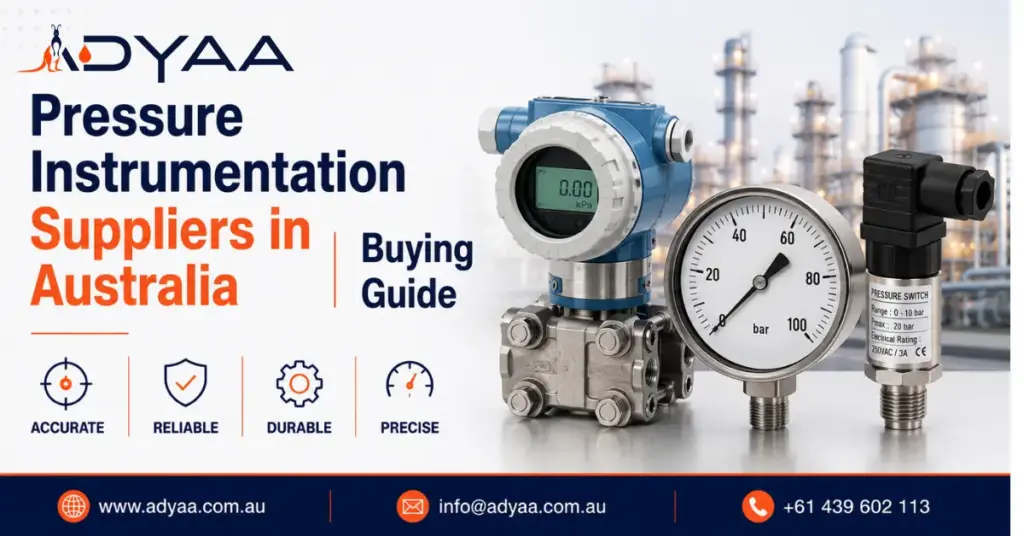
Pressure Instrumentation Suppliers: What to Look for Before You Buy Selecting a pressure instrument isn’t simply about finding the lowest price or the quickest delivery. The right solution depends on your process conditions, operating environment and the level of measurement accuracy your application demands. Many businesses experience recurring maintenance issues because the wrong pressure instrument was selected from the beginning. Working with experienced Pressure Instrumentation Suppliers helps reduce these problems by matching the product to the application rather than simply supplying a catalogue item. Whether you’re installing a new production line or upgrading an existing process, understanding what to look for before purchasing can save time, reduce maintenance and improve long-term reliability. Why Choosing the Right Supplier Matters Pressure instruments play an important role in process safety, equipment protection and production efficiency. Choosing the right Pressure Instrumentation Suppliers means more than buying products. It means receiving guidance on selecting equipment that performs reliably under your operating conditions. A knowledgeable supplier can also help simplify installation, improve compatibility and reduce unexpected downtime. Which Pressure Instruments Are Commonly Used? Different applications require different pressure measurement solutions. Pressure Transmitters Pressure transmitters continuously measure pressure and send electronic signals to PLCs, DCS or automation systems. Common applications include: Chemical processing Water treatment Manufacturing Oil & Gas Food processing Pressure Gauges Pressure gauges provide local pressure indication, allowing operators to monitor system performance quickly. They are commonly installed on: Pumps Compressors Hydraulic systems Steam lines Industrial machinery Pressure Switches Pressure switches activate or deactivate equipment when preset pressure levels are reached. Typical applications include: Pump protection Compressor control Hydraulic systems Safety shutdown systems What Should You Consider Before Buying? Before selecting any industrial pressure instrument, consider the following: Operating pressure range Process temperature Media compatibility Required measurement accuracy Installation location Electrical output requirements Environmental conditions Industry standards and certifications Answering these questions helps ensure the selected instrument performs reliably throughout its service life. Common Mistakes When Purchasing Pressure Instruments Many performance issues begin long before installation. Some common mistakes include: Choosing the wrong pressure range Ignoring process media compatibility Selecting instruments based only on price Overlooking environmental conditions Using incorrect process connections Purchasing without technical guidance These mistakes often lead to inaccurate readings, shorter equipment life and increased maintenance costs. Questions to Ask Your Pressure Instrumentation Supplier Before placing an order, ask: Is this instrument suitable for my application? Which materials are compatible with my process media? What accuracy level is recommended? Does the instrument support my control system? Is calibration required before installation? What maintenance is recommended? The answers will help you make a more informed purchasing decision. Industries That Depend on Pressure Instrumentation Water & Wastewater Monitor pumps, pipelines and treatment systems with reliable pressure measurement. Chemical Processing Maintain safe operating conditions across production processes. Food & Beverage Support hygienic manufacturing and process consistency. Oil & Gas Monitor pressure across upstream, midstream and downstream operations. Power Generation Protect critical equipment through continuous pressure monitoring. Manufacturing Improve automation and production efficiency with accurate pressure measurement. Mining & Minerals Monitor slurry systems, pumps and process equipment. General Industry Support safe and efficient industrial operations through dependable instrumentation. Frequently Asked Questions What products do Pressure Instrumentation Suppliers provide? Most suppliers offer pressure transmitters, pressure gauges, pressure switches and related accessories for industrial applications. How do I choose the right pressure transmitter? Selection depends on pressure range, process media, temperature, installation method and required output signal. Why is pressure measurement important? Accurate pressure measurement helps improve process efficiency, equipment protection and workplace safety. Should pressure instruments be calibrated? Yes. Periodic calibration helps maintain measurement accuracy and reliable system performance. Can one pressure instrument suit every application? No. Different industries and operating conditions require different pressure measurement solutions. Final Thoughts Choosing experienced Pressure Instrumentation Suppliers is just as important as selecting the right instrument. A well-matched pressure solution improves measurement accuracy, supports reliable process control and reduces long-term maintenance. If you’re comparing pressure transmitters, pressure gauges or pressure switches, selecting equipment based on your application rather than price alone usually delivers better long-term results. Pressure Instrumentation Suppliers: What to Look for Before You Buy. How Vision & Imaging Sensors Transform Automated Inspection Systems In the high-speed world of modern manufacturing, zero-defect production is no… Read More → The Role of Sealing in Preventing Leakage and Safety Hazards Focus The Role of Sealing in Preventing Leakage and Safety Hazards A leak is rarely just a “drip.” In a chemical… Read More → How Vision & Imaging Sensors Transform Automated Inspection Systems How Vision & Imaging Sensors Transform Automated Inspection Systems In the high-speed world of modern manufacturing, zero-defect production is no… Read More →
How Industrial Automation Sensors Improve Manufacturing Efficiency
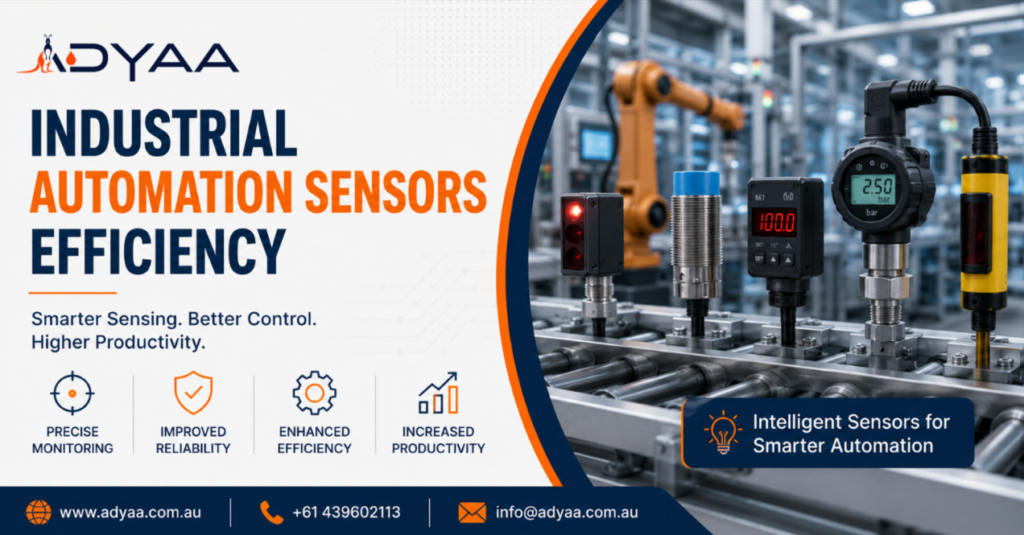
How Industrial Automation Sensors Improve Efficiency in Manufacturing Efficiency is the primary metric of success. The difference between a profitable plant and a struggling one often comes down to Overall Equipment Effectiveness (OEE)—how well your machinery is actually performing versus its theoretical potential. Achieving high OEE is impossible with manual monitoring alone. This is where Industrial Automation Sensors become the most critical assets on your factory floor. ADYAA specializes in the “nervous system” of the smart factory. We know that Industrial Automation Sensors are not merely components that switch things on and off; they are data generators that unlock higher throughput, lower waste, and zero unplanned downtime. In this deep dive, we explore exactly how these sensors transform raw machinery into intelligent, efficient systems. The Role of Industrial Automation Sensors in Industry 4.0 Before we look at efficiency, we must define what these devices do. Industrial Automation Sensors are input devices that provide a signal regarding a specific physical condition—heat, light, pressure, motion, or distance. In the past, sensors were simple, discrete devices (giving a basic “Yes/No” signal). Today, in the era of Industry 4.0 and the Industrial Internet of Things (IIoT), Industrial Automation Sensors are smart. They don’t just trigger an alarm; they communicate real-time data trends to PLCs (Programmable Logic Controllers) and SCADA systems, allowing the factory to “think” and adjust itself. 5 Ways Industrial Automation Sensors Drive Efficiency Implementing the right sensor strategy directly impacts your bottom line. Here is how: 1. Enabling Predictive Maintenance (Eliminating Downtime) The biggest killer of efficiency is unplanned downtime. When a motor burns out or a bearing seizes unexpectedly, production stops for hours. The Old Way: Run the machine until it breaks, or replace parts on a schedule whether they need it or not. The Sensor Way: Vibration and Temperature Sensors continuously monitor the health of rotating equipment. By analyzing vibration signatures, Industrial Automation Sensors can detect a misalignment or bearing wear weeks before failure occurs. This allows maintenance to be scheduled during planned shutdowns, keeping the line running during profitable hours. 2. Increasing Speed and Throughput Human operators have reaction times measured in seconds. Machines react in milliseconds. High-Speed Processing: Photoelectric and Laser Sensors can detect product presence on a conveyor belt moving at hundreds of meters per minute. They trigger actuators, fillers, and sorters with micro-second precision. Gap Control: Precise distance sensors reduce the necessary gap between products on a line, effectively squeezing more production volume into the same operating time. 3. Reducing Waste and Scrap (Quality Control) Producing defective parts is a double loss: you lose the raw material and the production time. Vision Sensors: As discussed in our previous articles, vision-based Industrial Automation Sensors inspect every single unit for defects (label alignment, cap seal, dimensions). Process Sensors: Pressure and flow sensors ensure that ingredients in chemical or food processing are mixed in exact ratios. If the pressure drops, the sensor halts the process instantly to prevent a bad batch, ensuring “First Time Right” manufacturing. 4. Enhancing Energy Efficiency Energy is a major operational cost. Sensors help manage it. Current Sensors: Monitor the power draw of large motors. If a conveyor is running empty, the system can detect the load drop and ramp down the motor speed (via VFDs), saving electricity. Compressed Air Monitoring: Flow Sensors can detect leaks in pneumatic lines—one of the most expensive forms of energy waste in factories—alerting teams to fix the leak immediately. 5. Improving Safety and Ergonomics An accident stops production immediately and triggers investigations. Safety is efficiency. Safety Light Curtains: These specialized Industrial Automation Sensors create an invisible wall. If an operator reaches into a dangerous area, the machine stops instantly. This allows for easier access to machines for loading/unloading without physical cages slowing down the workflow. Key Types of Industrial Automation Sensors You Need To optimize a facility, you need the right mix of sensor technologies. Here are the staples of efficient automation: Inductive Proximity Sensors: The workhorse of the industry. They detect metal targets without contact. Essential for positioning, counting, and confirming tooling location. Photoelectric Sensors: Use light beams to detect objects of any material. Critical for packaging lines and material handling. Laser Distance Sensors: Provide precise analog measurement of distance. Used for tank level monitoring, roll diameter measurement, and robot positioning. Pressure & Temperature Transmitters: Vital for process industries (Oil & Gas, Food & Bev) to maintain safe and efficient operating conditions. Conclusion: Data Is the New Oil The modern factory runs on data, and Industrial Automation Sensors are the pumps that keep that data flowing. By transitioning from reactive manual checks to proactive sensor-based monitoring, manufacturers can achieve a level of efficiency that was previously impossible. Whether you are looking to retrofit an old machine with smart capabilities or design a new, fully automated line, the quality of your sensors dictates the quality of your production. ADYAA supplies high-grade sensors designed to withstand the harsh conditions of Australian industry—from the dust of mining to the wash-downs of food processing. Ready to optimize your manufacturing process? View Our Range of Industrial Automation Sensors. Consult with our automation specialists today. Industrial HVAC vs Commercial HVAC: What is the Difference? Industrial HVAC vs Commercial HVAC: Why Equipment Choice Matters If you walk onto the roof of a shopping mall and… Read More → Gems 3100/3200 Pressure Transmitters : Complete Guide – Copy How Industrial Automation Sensors Improve Efficiency in Manufacturing Efficiency is the primary metric of success. The difference between a profitable… Read More → Gems 3100/3200 Pressure Transmitters : Complete Guide Gems 3100/3200 Pressure Transmitters: Complete Guide Accurate pressure monitoring is essential across industrial environments where process visibility, operational consistency and… Read More →