
What Is Industrial Sealing? Importance, Types & Benefits
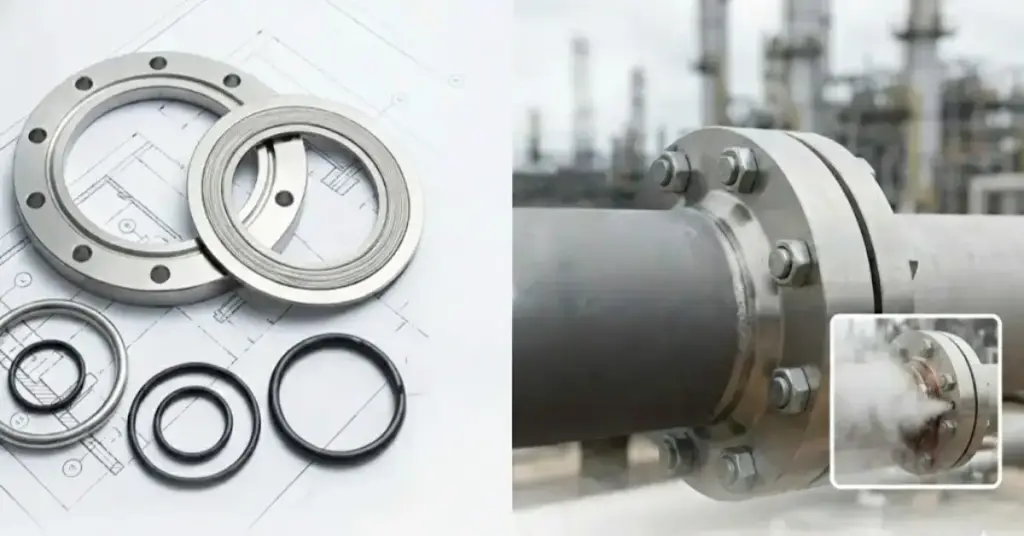
What Is Industrial Sealing and Why Is It Important? In a massive refinery or a high-pressure mining plant, the most critical component often isn’t the largest pump or the tallest reactor—it’s the smallest seal. Industrial sealing is the unsung hero of process integrity. Whether it is a Ring Type Joint (RTJ) gasket in an oil pipeline or a simple O-ring in a hydraulic cylinder, seals are the barrier between a safe, efficient operation and a catastrophic failure. We specialize in high-performance sealing solutions for Australia’s toughest environments. In this guide, we break down what industrial sealing actually is, why it is critical for your bottom line, and the different types you need to know about. Industrial Sealing Solutions for Maintenance Managers, Process Engineers and Procurement Officers in Oil & Gas/Mining. What Is Industrial Sealing? At its core, industrial sealing is the technology used to block the passage of fluids (liquids or gases) through the gap between two joined surfaces. It serves two primary functions: Containment: Keeping the internal media (oil, steam, acid) inside the system. Exclusion: Keeping external contaminants (dust, dirt, moisture) outside the system. While this sounds simple, the challenge lies in the conditions. Industrial seals must maintain this barrier while enduring extreme temperatures (from cryogenic -196°C to scorching +1000°C), massive pressures (up to 20,000 PSI), and aggressive chemical corrosion. Why Is Industrial Sealing Important? You might view seals as cheap consumables, but their failure can cost millions. Here is why investing in quality sealing (like ADYAA’s RX Rings or Spiral Wound Gaskets) is non-negotiable. 1. Safety and Hazard Prevention The most immediate importance of sealing is human safety. In industries like Oil & Gas, a leaking flange isn’t just a mess; it’s a fire hazard or a toxic cloud. Proper sealing ensures that volatile organic compounds (VOCs) and dangerous chemicals stay contained, protecting your workforce from exposure and explosions. 2. Operational Efficiency A system that leaks pressure is a system that bleeds money. Pneumatic systems: Leaking air forces compressors to work harder, driving up electricity bills. Hydraulic systems: Fluid loss results in sluggish machinery and reduced force. High-quality seals ensure your equipment runs at peak parameter settings without wasting energy. 3. Environmental Compliance Australia has strict environmental regulations regarding emissions and ground contamination. A reliable sealing system helps you meet EPA standards by preventing “fugitive emissions”—the slow, invisible leaks of gas from valves and flanges that can lead to heavy fines. 4. Equipment Longevity Seals act as the first line of defense for your expensive assets. For example, a Spring-Energized Seal or a Polymer Bellow protects internal bearings and shafts from grit and corrosion. If the seal fails, the contaminant enters, and the machine destroys itself from the inside out. Types of Industrial Sealing Solutions Not all seals are created equal. Depending on your application, you will generally rely on one of these categories: A. Static Seals (Gaskets) These are used between two stationary surfaces, such as pipe flanges. RTJ Gaskets (Ring Type Joints): Metal gaskets (Oval, Octagonal, RX, BX) designed for high-pressure/high-temperature applications. They form a metal-to-metal seal ideal for the Oil & Gas industry. Spiral Wound Gaskets: A mix of metal winding and soft filler (graphite/PTFE), offering excellent recovery for fluctuating temperatures. B. Dynamic Seals These seals are between parts that move relative to each other (like a piston rod or a rotating shaft). Spring-Energized Seals: Used when standard elastomers fail. A spring ensures constant contact even when the polymer seal wears down. Packing: Soft braided material compressed around a shaft to prevent leakage in pumps and valves. C. O-Rings The most common seal type. These donut-shaped loops sit in a groove and compress to block fluid. Elastomeric: NBR, Viton, or EPDM for standard uses. Metal O-Rings: Used by ADYAA for extreme environments (aerospace, cryogenics) where rubber would melt or shatter. Summary: Don’t Let a Leak Stop Your Plant A seal might cost $50, but it protects a $500,000 pump and ensures the safety of everyone on site. Whether you need standard Lens Rings for steam lines or custom CNC-machined sealing components, quality matters. ADYAA supplies a full range of gaskets, O-rings, and custom seals engineered for the Australian industry. Need help selecting the right material for your chemical plant? View Our Full Range of Sealing Solutions. Contact our engineers for a consultation. How Industrial Automation Sensors Improve Automation & Efficiency in Manufacturing How Industrial Automation Sensors Improve Automation & Efficiency in Manufacturing In modern manufacturing, efficiency, accuracy, and reliability are more important… Read More → How Vision & Imaging Sensors Transform Automated Inspection Systems How Vision & Imaging Sensors Transform Automated Inspection Systems Maintaining product quality while keeping up with high-speed production is crucial…. Read More → IoT and Automation in Industrial Operations: Boost Efficiency, Safety, and Reliability IoT and Automation in Industrial Operations: Boost Efficiency, Safety, and Reliability Discover how IoT and automation revolutionize industrial operations. Improve… Read More →
5 Common Causes of Pressure Sensor Failure in Manufacturing Plants
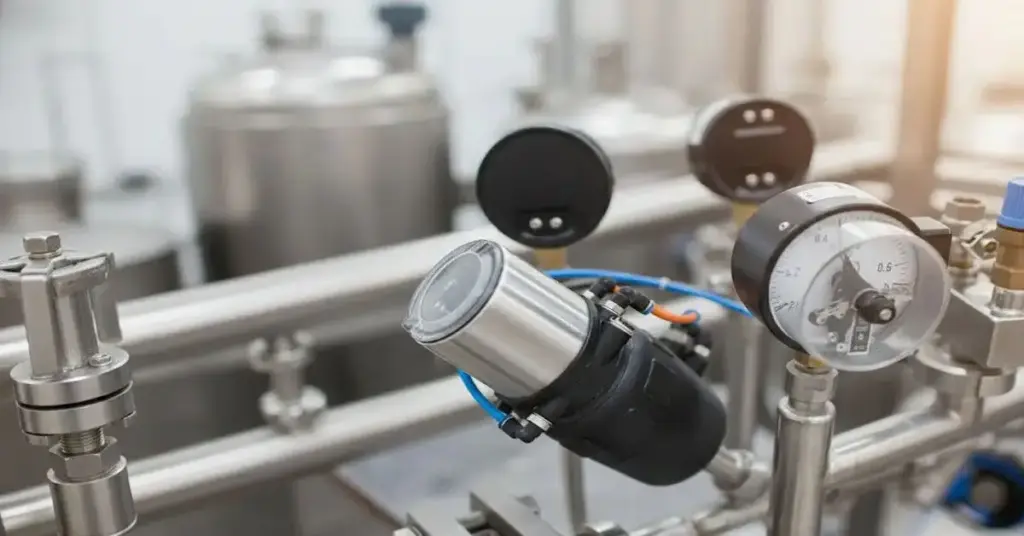
5 Common Causes of Pressure Sensor Failure in Manufacturing Plants Focus There is nothing more frustrating than a process shutdown caused by a $200 part. In modern manufacturing, Pressure Sensors are the “nervous system” of your plant. They monitor everything from hydraulic lines to steam boilers. When they work, you don’t even notice them. But when you experience a Pressure Sensor Failure, the consequences can range from a minor nuisance to a catastrophic safety hazard. ADYAA analyzes hundreds of failed sensors every year. The surprising truth? Most failures aren’t due to manufacturing defects—they are due to installation errors or environmental stressors. If you are tired of replacing the same sensor every few months, check this list. Here are the 5 most common reasons your sensors are dying young. 1. Overpressure (The “Invisible” Spike) Every sensor has a “Proof Pressure” rating (usually 1.5x or 2x the range). If you exceed this, the metal sensing diaphragm permanently deforms. It won’t snap back to its original shape, causing the “Zero” point to shift significantly. Issue: It’s rarely a steady rise in pressure. It’s usually a micro-second Pressure Spike caused by a valve snapping shut or a pump kicking on. Your SCADA system might not even catch it, but the sensor feels it. The Fix: If you suspect Overpressure Damage, install a Snubber (a simple restrictor) to dampen these spikes before they hit the sensitive diaphragm. 2. Water Hammer (The Silent Destroyer) Similar to overpressure, but more violent. Water Hammer occurs in liquid systems when a moving fluid is forced to stop or change direction suddenly (like a quick-closing solenoid valve). The momentum of the water creates a shockwave that travels through the pipe at the speed of sound. When this shockwave hits your pressure sensor, it hits with thousands of PSI of force, instantly destroying the internal mechanism. The Fix: Move the sensor further away from valves or pumps, or use a Pressure Transducer with a higher proof rating and a built-in snubber. 3. Chemical Incompatibility (Corrosion) “Stainless Steel” is not invincible. Many standard industrial sensors use 316L Stainless Steel for the wetted parts (the part that touches your liquid). While 316L is great for water and oil, it will fail rapidly if exposed to certain acids, chlorides, or caustic cleaning solutions. Chemical Corrosion can be sneaky. It might look fine on the outside, but over months, the fluid eats away at the thin sensing diaphragm until it becomes paper-thin. Eventually, it pinches a hole, leaking process fluid directly into the sensor electronics. The Fix: Always check a Chemical Compatibility Chart. For harsh chemicals, switch to sensors with Hastelloy C or Gold-Plated diaphragms. 4. Moisture Ingress (The Connector Killer) Electronics and water don’t mix. Yet, we often see sensors installed in washdown areas with improper cable glands or loose connectors. Moisture Ingress usually happens in two ways: The Connector: If the plug isn’t tightened or the seal is worn, high-pressure washdowns will force water into the housing. The Cable: If the cable jacket is cut or damaged, water can actually “wick” up the inside of the cable (capillary action) and travel all the way into the sensor body. Once water touches the circuit board, you will see erratic readings, Sensor Drift, or a completely dead signal. The Fix: Ensure your sensor has the correct IP Rating (IP67 or IP68) for the environment, and always use a “drip loop” in your cabling so water runs away from the device. 5. Electrical Interference (EMI / RFI) Have you ever seen a sensor reading that “jumps” or looks “fuzzy”? You likely have an electrical noise problem. In a plant full of VFDs (Variable Frequency Drives), large motors, and radios, there is a lot of invisible electromagnetic “noise” in the air. If your sensor cabling isn’t shielded properly, the wires act like an antenna, picking up this EMI/RFI Interference. This doesn’t physically break the sensor, but it causes Signal Noise that makes the data useless for control. The Fix: Always use Shielded Twisted Pair cabling for your 4-20mA signals, and ground the shield at one end only (usually at the control panel) to prevent ground loops. Conclusion: Stop Replacing, Start Troubleshooting A Pressure Sensor Failure is rarely just bad luck. It is almost always a symptom of a larger system issue—whether it’s pressure spikes, chemical attack, or bad wiring. By identifying the root cause, you can stop swapping out parts and start implementing permanent fixes. We help you solve the problem. From high-overpressure sensors to chemical-resistant seals, we have the Australian-engineered solutions to keep your plant running. Need help diagnosing a failed sensor? Troubleshoot with an ADYAA Engineer View our Durable Pressure Transmitters How Industrial Automation Sensors Improve Automation & Efficiency in Manufacturing How Industrial Automation Sensors Improve Automation & Efficiency in Manufacturing In modern manufacturing, efficiency, accuracy, and reliability are more important… Read More → How Vision & Imaging Sensors Transform Automated Inspection Systems How Vision & Imaging Sensors Transform Automated Inspection Systems Maintaining product quality while keeping up with high-speed production is crucial…. Read More → IoT and Automation in Industrial Operations: Boost Efficiency, Safety, and Reliability IoT and Automation in Industrial Operations: Boost Efficiency, Safety, and Reliability Discover how IoT and automation revolutionize industrial operations. Improve… Read More →
Industrial HVAC vs Commercial HVAC: Why Equipment Choice Matters
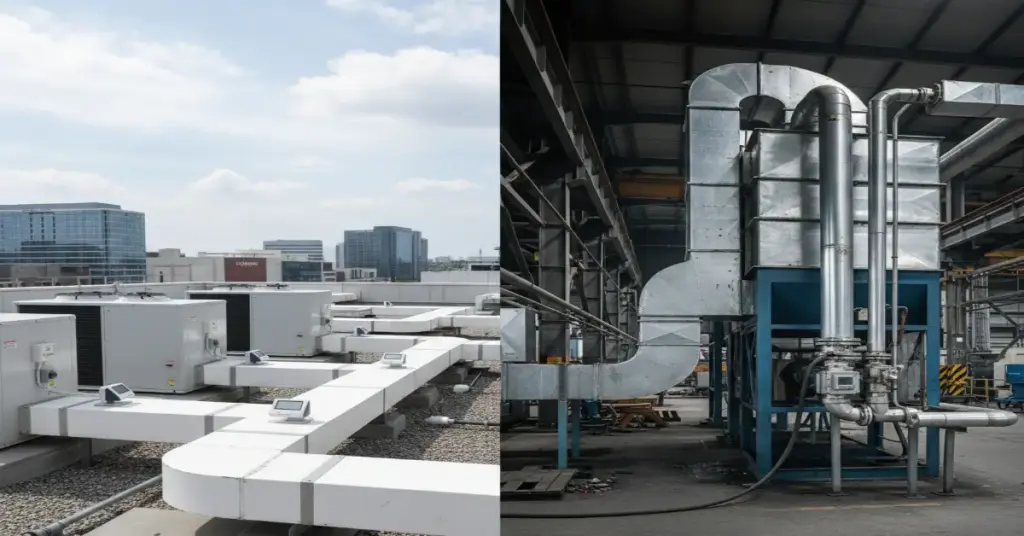
Industrial HVAC vs Commercial HVAC: Why Equipment Choice Matters Industrial HVAC vs Commercial HVAC: Why Equipment Choice Matters If you walk onto the roof of a shopping mall and then walk into a pharmaceutical manufacturing plant, you might see large metal boxes blowing air in both places. But make no mistake: that is where the similarities end. The debate of Industrial HVAC vs Commercial HVAC isn’t just about size; it’s about purpose. One system is designed to keep people comfortable while they shop. The other is designed to keep a critical production line from shutting down or a warehouse from spoiling millions of dollars in inventory. Mistaking one for the other is a costly error. We have seen industrial facilities try to cut costs by installing commercial-grade units, only to face constant breakdowns, humidity spikes, and compliance failures. ADYAA, we provide the high-precision sensors that drive these systems. In this guide, we break down the critical differences between Industrial HVAC vs Commercial HVAC so you can make the right investment for your facility 1. Commercial HVAC: The “Human Comfort” Machine Commercial HVAC systems are found in office buildings, retail stores, schools, and hospitals. The Goal: Keep human beings comfortable. The Standard: Maintain a temperature around 21°C–23°C and reasonable humidity. These systems are generally standardized. Whether it’s a split system or a rooftop package unit (RTU), they operate intermittently. They might run hard during the day but dial back or shut off at night when the building is empty. Key Characteristic: Modular and easy to replace. Priority: Energy efficiency and quiet operation. 2.Industrial HVAC: The “Process Critical” Beast Industrial HVAC systems are found in manufacturing plants, data centers, food processing facilities, and chemical refineries. The Goal: Maintain precise environmental conditions for equipment or products. The Standard: It varies wildly. A data center might need massive cooling capacity. A paper mill might need strict humidity control to prevent paper curl. A cleanroom needs heavy filtration (HEPA) to remove particles. These systems are heavily customized. They often run 24/7, 365 days a year. If an industrial HVAC unit fails, production stops. Key Characteristic: Heavy-duty, redundant, and highly automated. Priority: Reliability and precision (Tight tolerances on Temperature/Humidity). 3. Industrial HVAC vs Commercial HVAC: The 4 Key Differences To the untrained eye, the equipment looks similar. But for an engineer, the differences are massive. A. Design Complexity & Automation Commercial: Usually a standalone unit controlled by a simple thermostat or basic BMS. Industrial: integrated into a complex ecosystem. It relies on a network of sensors—CO2, Differential Pressure, Dew Point, and Air Velocity—feeding data into a PLC or SCADA system to make micro-adjustments in real-time. B. Location & Access Commercial: almost always located on the roof (Rooftop Units) or on a concrete pad outside. Industrial: Often housed in dedicated “plant rooms” or mechanical galleries. This allows maintenance teams to work on the complex compressors and chillers without being exposed to the weather. C. Durability & Components Commercial: built with standard galvanized steel and plastic fans. Expected lifespan: 15–20 years. Industrial: Built to survive harsh environments. They use heavy-gauge steel, industrial-grade centrifugal pumps, and titanium heat exchangers if corrosive fumes are present. Expected lifespan: 20–30+ years. D. The “Cost of Failure” Commercial Failure: The office gets hot, and staff complain. Industrial Failure: A server room overheats and data is lost; or humidity rises in a pharma lab, ruining a batch of medicine. The cost is measured in production downtime, not just sweat. 4. Why Sensors Are the Heart of Industrial HVAC Because Industrial HVAC is about precision, the system is useless without accurate data. You can have a million-dollar chiller, but if the sensor feeding it data is drifting, the system fails. ADYAA supplies, we specialize in the “eyes and ears” of these systems: Dew Point Sensors: Critical for compressed air lines and drying rooms. CO2 Sensors: Essential for demand-controlled ventilation in factories. Differential Pressure Transmitters: Required to monitor filter health in cleanrooms. Air Velocity Transmitters: To ensure proper airflow in exhaust ducts. Conclusion: Match the Tool to the Job When evaluating Industrial HVAC vs Commercial HVAC, don’t just look at the price tag. If you are running a warehouse, a manufacturing line, or a critical infrastructure site, a commercial unit is a band-aid solution that will eventually peel off. You need equipment built for the load, and you need sensors that tell you the truth about your environment. Is your facility monitoring its environment correctly? Explore ADYAA HVAC Sensors View our CO2 & Dew Point Transmitters Contact our Engineering Team for a Sensor Audit. How Industrial Automation Sensors Improve Automation & Efficiency in Manufacturing How Industrial Automation Sensors Improve Automation & Efficiency in Manufacturing In modern manufacturing, efficiency, accuracy, and reliability are more important… Read More → How Vision & Imaging Sensors Transform Automated Inspection Systems How Vision & Imaging Sensors Transform Automated Inspection Systems Maintaining product quality while keeping up with high-speed production is crucial…. Read More → IoT and Automation in Industrial Operations: Boost Efficiency, Safety, and Reliability IoT and Automation in Industrial Operations: Boost Efficiency, Safety, and Reliability Discover how IoT and automation revolutionize industrial operations. Improve… Read More →
Why Precise Temperature Control is the Heart of Food Safety (And Profit)
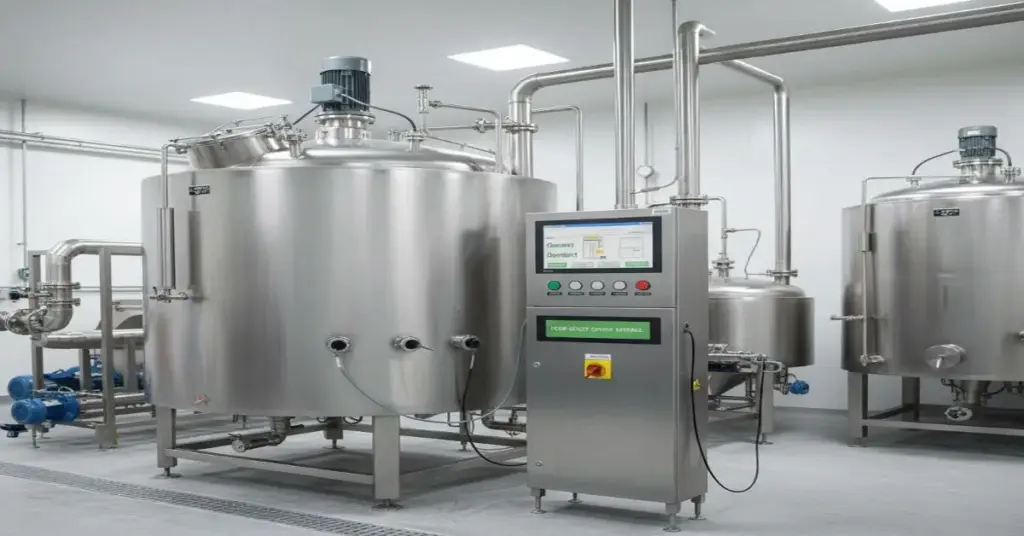
Why Precise Temperature Control is the Heart of Food Safety (And Profit) For a Food Safety Manager, there is one word that causes more stress than any other: Recall. We have all seen the headlines. Dairy goes sour too early, or a specific processing line is found to be the source of a listeria outbreak. The cost isn’t just financial—it’s the damage to your brand’s reputation that can take years to fix. In the food processing industry, the difference between a premium product and a public health risk often comes down to just one variable: Temperature. Effective Temperature Control in Food processing isn’t just about “heating it up” or “cooling it down.” It’s about maintaining a precise, documented thermal window every single second. ADYAA supplies the hygienic instrumentation that keeps food plants compliant. In this guide, we are diving into why precision matters, the hidden risks of sensor drift, and how to bulletproof your HACCP (Hazard Analysis Critical Control Point) plan. 1. The “Danger Zone”: It’s Not Just a Recommendation Let’s start with the biology. You know the rule, but is your equipment actually following it? Pathogenic bacteria (like Salmonella and Listeria) thrive in what food safety standards call the Temperature Danger Zone: between 5°C and 60°C. In this specific window, bacteria can double in number every 20 minutes. The Cooling Risk: If a cooked sauce sits at 15°C for too long because a chiller sensor is reading incorrectly, it becomes a petri dish. The Heating Risk: If you pasteurise milk at 71°C instead of 72°C because of a drifting probe, you might fail to kill the target pathogen. The Reality: A sensor that is off by even 1.0°C isn’t just a minor error. In the Danger Zone, it’s a biological ticking time bomb. 2. Beyond Safety: Taste, Texture, and Yield While safety keeps the auditors happy, Temperature Control in Food is also your secret weapon for profit and quality. If you run a production line, you know that temperature fluctuations destroy consistency: Dairy: Overheat the milk during pasteurisation, and you get a “burnt” or cooked flavour profile. Brewing: Yeast is incredibly fussy. If fermentation temps spike, you get off-flavours (esters) that ruin the batch. Meat Processing: Cooking yield is tied directly to temperature. If you overcook a ham by 2 degrees, you are literally evaporating moisture—and profit—into the air. Chocolate: Miss your tempering setpoint by 0.5°C, and the chocolate “blooms” (turns white and chalky). Key Takeaway: Precision sensors don’t just keep you safe; they ensure every batch tastes exactly the same. 3. Critical Control Points (CCPs): Where Do You Need Eyes? Under your HACCP (Hazard Analysis Critical Control Point) plan, temperature sensors are the gatekeepers. Here is where we typically install ADYAA sensors in a plant: A. Raw Material Storage (Cold Chain) Before you even start cooking, the ingredients must be safe. The Risk: A freezer cycling too warm during a defrost cycle. The Solution: Continuous monitoring with Industrial RTDs that trigger an alarm the moment air temp rises above the limit. B. The “Kill Step” (Cooking/Pasteurisation) This is the most critical moment. Whether it’s a HTST pasteuriser or a steam retort. The Risk: “Cold spots” in the kettle or a slow sensor failing to register a drop in temperature. The Solution: Fast-response Sanitary Sensors placed at the coolest point of the vessel to ensure every particle reaches target temp. C. Rapid Cooling Once cooked, you must rush the food through the Danger Zone to stop spore germination. The Risk: The outside of the food is cold, but the core is still hot. The Solution: Using Insertion Probes to measure the core temperature of the product, not just the air in the blast chiller. 4. The Hidden Enemy: Sensor Drift Here is a common scenario in food plants: You install high-quality sensors 5 years ago. They get blasted with 80°C caustic cleaning chemicals (CIP) every night. They vibrate constantly on pumps. Over time, this harsh environment causes Sensor Drift. The control screen says 72°C, but the product is actually 70°C. Why does this happen? Standard industrial sensors aren’t built for food plants. Moisture from washdowns enters the sensor head, or thermal shock from CIP cycles compromises the internal wires. The ADYAA Solution: We supply Sanitary Temperature Sensors specifically designed for Hygienic Applications. Tri-Clamp Connections: For easy removal and cleaning. IP69K Rating: Totally sealed against high-pressure water jets. Polished Finish: Smooth stainless steel so bacteria has nowhere to hide. 5. How to Choose the Right Sensor for Your Line Don’t just buy a generic sensor from a catalog. Use the right tool for the job. For High Precision (Dairy/Pharma/Labs) Use: RTD (Pt100) Sensor. Why: It offers the highest accuracy (±0.1°C) and stability. Essential for pasteurisation loops. For High Vibration (Packaging/Sealing) Use: Thermocouple. Why: They are tougher and respond faster. Perfect for shrink tunnels or heat sealing bars. For Hygiene (Anything touching food) Use: 316L Stainless Steel with Tri-Clover connections. Never use threaded sensors where food can get trapped and rot. Conclusion: Protect Your Brand with Precision In the food industry, you are only as good as your last batch. Temperature Control in Food processing isn’t just a box to tick for the auditor; it is the foundation of your customer’s trust. Don’t leave it to chance with aging, drifting, or incorrect instrumentation. At ADYAA, we understand the high stakes of food processing. From hygienic RTDs to robust monitoring systems, we help you keep your cool when the heat is on. Is your HACCP plan fully protected? Explore ADYAA’s Sensors Chat with an Engineer today. How Industrial Automation Sensors Improve Automation & Efficiency in Manufacturing How Industrial Automation Sensors Improve Automation & Efficiency in Manufacturing In modern manufacturing, efficiency, accuracy, and reliability are more important… Read More → How Vision & Imaging Sensors Transform Automated Inspection Systems How Vision & Imaging Sensors Transform Automated Inspection Systems Maintaining product quality while keeping up with high-speed production is crucial…. Read More → IoT and Automation in Industrial Operations:
What is a Flame Arrester? A Full Guide (How They Work, Characteristics, & Uses)
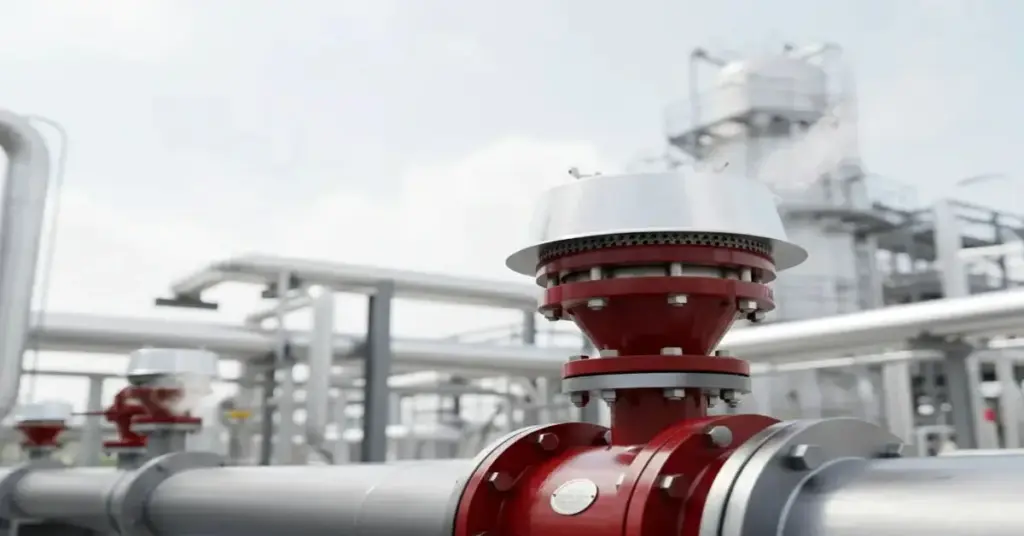
What is a Flame Arrester? A Full Guide (How They Work, Characteristics, & Uses) In industries that handle volatile liquids and gases, a spark is your worst enemy. If a fire starts outside a fuel tank, the real danger isn’t just the fire itself—it is the flame traveling back down the pipe into the tank, causing a catastrophic explosion. To stop this “flashback,” engineers rely on a critical passive safety device: the Flame Arrester. It acts as a firewall for your piping system, allowing gas to flow freely while stopping fire dead in its tracks. But selecting the wrong one (e.g., confusing a deflagration arrester with a detonation arrester) can be a fatal mistake. ADYAA supplies and distributes flame arresters in Australia, protecting local refineries, biogas plants, and storage terminals from disaster. In this guide, we break down the mechanics, functions, and critical applications of these life-saving devices. 1. What is a Flame Arrester? A flame arrester (also known as a flame trap) is a passive safety device installed on a storage tank nozzle or in a pipeline. Its primary function is simple but vital: to allow gas to pass through but stop a flame from passing through. It works on the principle of heat dissipation. By forcing the flame to pass through a series of narrow channels (the element), the device splits the flame into tiny “lets” and absorbs its heat energy until it becomes too cold to sustain combustion. 2. How Do They Work? (The Quenching Principle) The heart of every flame arrester is the “element” or filter bank—usually made of wound crimped metal ribbon or wire mesh. When a flame front hits the element, two things happen: Heat Transfer: The metal element acts as a massive heat sink. It absorbs the heat from the flame faster than the flame can generate it. Quenching: As the flame tries to squeeze through the tiny gaps (called the Maximum Experimental Safe Gap, or MESG), the temperature drops below the ignition point of the gas. The flame essentially “suffocates” and dies out. 3. Key Characteristics & Types Not all fires burn the same way. The type of flame arrester you need depends entirely on how fast the flame is moving and where the device is located. A. End-of-Line vs. In-Line End-of-Line: Installed at the very end of a pipe (e.g., a tank vent) to stop an atmospheric fire from entering the tank. In-Line: Installed in the middle of a pipe to stop a fire from traveling from one piece of equipment to another. B. Deflagration vs. Detonation This is the most critical distinction in safety engineering. Deflagration Arrester: Stops fires moving at subsonic speeds (slower than the speed of sound). Used for short pipe runs. Detonation Arrester: Stops fires moving at supersonic speeds (faster than sound). If a flame travels down a long pipe, it accelerates and creates a shockwave. Only a robust Detonation Arrester can stop this shockwave without shattering. 4. Applications & Use Cases Where are these devices mandatory? Fuel Storage Tanks: To protect diesel, petrol, or solvent tanks from external sparks or lightning strikes igniting the vapors inside. Biogas & Anaerobic Digesters: Methane lines in wastewater treatment plants are highly flammable. A flame arrester prevents a flare stack fire from traveling back into the digester. Vapor Recovery Units (VRU): When collecting fumes from truck loading racks, the piping network connects multiple tanks. Arresters isolate each tank to prevent a chain-reaction explosion. Marine Vessels: Ships carrying oil or chemicals use them to prevent engine room fires from reaching cargo holds. 5. Advantages of Using a Flame Arrester Why is this device essential for your safety strategy? Passive Protection: It has no moving parts, requires no power, and works instantly. Continuous Flow: It allows your system to “breathe” (venting pressure) while maintaining a safety barrier. Insurance Compliance: Most insurance policies for hazardous facilities require a certified flame arrester on all flammable storage vessels. Scalability: From small 1-inch vents to massive 24-inch pipeline units, they scale to fit any plant. 6. FAQ: People Also Ask Here are the answers to the most common questions regarding these safety systems. What is the purpose of a flame arrester? The purpose is to stop the propagation of a flame through a flammable gas or vapor mixture. It protects equipment (like storage tanks) and personnel by extinguishing the flame front before it can cause an explosion. Where are flame arrestors required? They are required anywhere flammable gases are vented or transported. Common locations include: Storage tank vents. Fuel gas lines feeding burners. Vapor recovery piping. Flare stack inlets. What is the purpose of a flame trap? “Flame trap” is simply another name for a flame arrester. Its purpose is to “trap” the flame by absorbing its heat, preventing it from passing further down the line. What is a flame arrester in a ship? On ships, they are installed on fuel tank vents and cargo hold vents. They prevent external sparks (from static electricity or machinery) from igniting the explosive fumes inside the fuel or cargo tanks. Conclusion: The Firewall for Your Pipes A flame arrester is a simple device with a massive responsibility. It stands between a minor fire and a major industrial disaster. Whether you are managing a biogas plant or a fuel terminal, selecting the right element size and location is non-negotiable. ADYAA supplies and distributes flame arresters in Australia, offering expert sizing and selection for Deflagration and Detonation hazards. We ensure your plant meets local safety standards. Is your facility protected from flashback? Explore ADYAA Flame Arresters View Tank Protection Systems Contact our Safety Engineers for a Site Review. How Industrial Automation Sensors Improve Automation & Efficiency in Manufacturing How Industrial Automation Sensors Improve Automation & Efficiency in Manufacturing In modern manufacturing, efficiency, accuracy, and reliability are more important… Read More → How Vision & Imaging Sensors Transform Automated Inspection Systems How Vision & Imaging Sensors Transform Automated Inspection Systems Maintaining product quality while keeping up with high-speed production is crucial….
Critical Signs Your Industrial Relief System Needs Immediate Maintenance
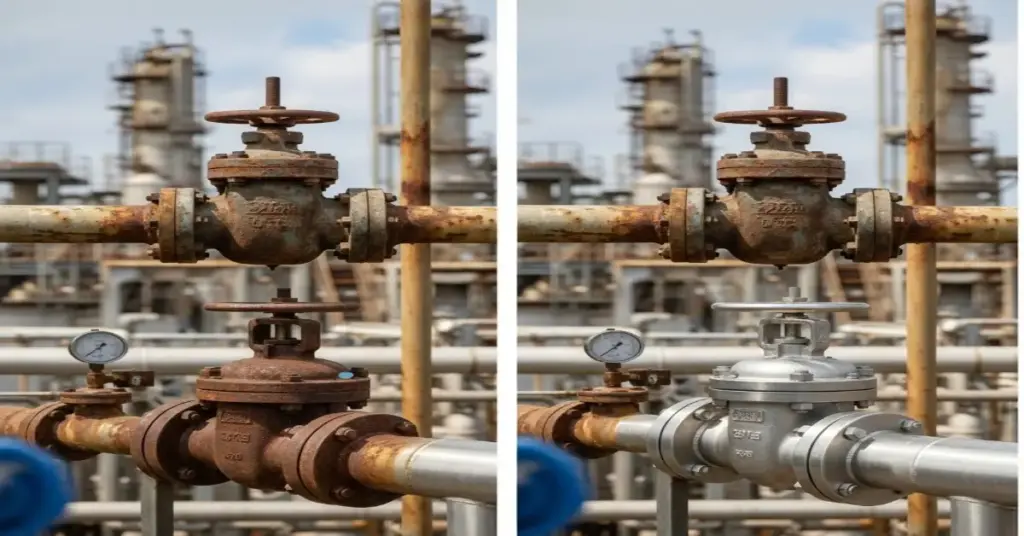
Critical Signs Your Industrial Relief System Needs Immediate Maintenance In any processing plant, the Industrial Relief System is your silent sentinel. It sits quietly on top of your tanks and vessels, waiting for the one moment it is needed to prevent a catastrophe. But because these devices are passive—they don’t spin like motors or light up like screens—they are often ignored until it is too late. A neglected safety valve isn’t just a compliance violation; it is a ticking time bomb. ADYAA inspects hundreds of safety devices across Australia every year. We consistently find that catastrophic failures are rarely sudden; they are usually preceded by warning signs that were missed during routine rounds. Is your plant at risk? Here are the 5 critical signs that your Industrial Relief System requires immediate attention. 1. Audible “Simmering” or Hissing A safety valve should be tight until it hits its set pressure. If you hear a hissing sound (often called “simmering”) well below the setpoint, you have a problem. Simmering occurs when the valve seat is damaged or debris is stuck between the disc and the nozzle. The Risk: This constant leakage erodes the sealing surface (wire drawing). What starts as a tiny leak will quickly destroy the valve’s ability to seal, compromising the integrity of your entire Industrial Relief System. The Fix: Do not tighten the spring to stop the leak! This changes the set pressure. The valve must be pulled for lapping and recalibration. 2. Valve Chatter (Rapid Hammering) Have you ever heard a valve banging rapidly like a machine gun? This is known as Valve Chatter. It happens when a valve opens and closes violently and repeatedly. This is usually caused by excessive inlet pressure loss (the pipe leading to the valve is too long or too narrow) or because the valve is oversized for the flow. Valve Chatter is destructive. It can shatter the internal components, damage the flange connections, and cause massive pipe vibration. If you hear chatter, your Industrial Relief System is not just failing—it is actively damaging your infrastructure. 3. Visible Corrosion or Salt Buildup External rust is bad, but “weeping” is worse. If you see white salt crystals or product buildup around the valve stem or the discharge piping, it means the valve is leaking process fluid. In chemical plants, Corrosion in Safety Valves can seize the stem completely. The Danger: If the stem is seized by rust or crystallized product, the valve will not open when the pressure spikes. This transforms your pressure vessel into a potential bomb. The Fix: Schedule an immediate overhaul and consider upgrading to valves with bellows or rupture disc isolators to protect the moving parts of your Industrial Relief System. 4. Rupture Disc Fatigue (Bulging or Pinholes) Rupture discs are designed to burst at a specific pressure, but they also wear out over time due to pressure cycling. If you inspect a disc and see that it is bulging excessively or has tiny “pinholes” (often visible if you shine a light from behind), it is suffering from Rupture Disc Fatigue. A fatigued disc will burst below its set pressure, causing unnecessary downtime and product loss. While this fails “safe,” it is a nuisance trip that disrupts production and indicates your Industrial Relief System sizing might need a review. 5. Blocked Discharge Lines (The Hidden Trap) Sometimes the valve is fine, but the pipe is the problem. We frequently find discharge pipes blocked by: Bird or Wasp Nests: In open-air vents. Rainwater Accumulation: In pipes without weep holes. Crystallized Product: In chemical lines. If the discharge path is blocked, the back pressure will skyrocket when the valve tries to open. This can prevent the valve from reaching full lift, rendering even a brand-new Industrial Relief System useless. Conclusion: Don’t Wait for the “Pop” Maintenance is not just about fixing things when they break; it’s about ensuring they work when safety depends on them. Ignoring these signs doesn’t save money—it invites disaster. Whether it’s Leakage and Simmering or a blocked vent, these symptoms are your equipment screaming for help. ADYAA specializes in the testing, sizing, and supply of high-reliability pressure relief devices. We ensure your Industrial Relief System is compliant, calibrated, and ready for the worst-case scenario. Is your plant protected? Explore ADYAA Safety Valves Contact our Safety Team for an Audit. How Industrial Automation Sensors Improve Automation & Efficiency in Manufacturing How Industrial Automation Sensors Improve Automation & Efficiency in Manufacturing In modern manufacturing, efficiency, accuracy, and reliability are more important… Read More → How Vision & Imaging Sensors Transform Automated Inspection Systems How Vision & Imaging Sensors Transform Automated Inspection Systems Maintaining product quality while keeping up with high-speed production is crucial…. Read More → IoT and Automation in Industrial Operations: Boost Efficiency, Safety, and Reliability IoT and Automation in Industrial Operations: Boost Efficiency, Safety, and Reliability Discover how IoT and automation revolutionize industrial operations. Improve… Read More →