
IoT and Automation in Industrial Operations: Boost Efficiency, Safety, and Reliability

IoT and Automation in Industrial Operations: Boost Efficiency, Safety, and Reliability Discover how IoT and automation revolutionize industrial operations. Improve efficiency, enhance safety, and prevent downtime with predictive maintenance, remote monitoring, and smart automation solutions. Why IoT and Automation Matter Industrial operations are rarely simple. A missed maintenance alert, delayed data, or human error can cost thousands—or even millions. IoT and automation are no longer optional—they are critical for: Operational efficiency Safety and compliance Minimizing downtime Callout Box:ADYAA, Tip for Plant Managers: Digital systems act as invisible sentinels, monitoring operations 24/7 and reducing risks before they become costly problems. The Cost of Inefficiency Without IoT Inefficiency shows up in several ways: Unplanned Downtime: Machines fail unexpectedly. Safety Hazards: Human monitoring errors in hazardous environments. Energy and Material Waste: Manual processes consume more resources. Insight: Adopting ADYAA IoT and automation allows plant managers to proactively reduce risks and improve performance. Suggested Image: Industrial plant with IoT sensors – Alt: “Industrial IoT sensors monitoring machinery” How IoT and Automation Transform Industrial Operations Modern industrial operations demand precision, insight, and control. Here’s how smart technologies make a difference: Predictive Maintenance – Stop Downtime Before It Happens Manual maintenance schedules are reactive and costly. Solution: IoT sensors + AI analytics How it Works: Sensors track temperature, vibration, and performance in real-time. AI predicts failures before they occur. Benefit: Continuous production with minimal unplanned downtime. Suggested Icon/Image: Gear with sensor – Alt: “Predictive maintenance using IoT sensors” Process Automation – Consistency & Efficiency Manual operations introduce variability and errors. Solution: PLCs and automation software How it Works: Automated systems control machine sequences, fluid levels, and assembly lines with precision. Benefit: High-quality output and efficient resource use. Suggested Icon/Image: Robotic arm on production line – Alt: “Industrial automation controlling production line” Remote Monitoring – Control Operations Anywhere Many plants operate in hazardous or remote areas. Solution: IoT gateways + cloud dashboards How it Works: Real-time data is sent to dashboards, allowing engineers to monitor and adjust operations remotely. Benefit: Continuous operational control and safety, even off-site. Suggested Icon/Image: Cloud dashboard – Alt: “IoT remote monitoring dashboard” Data-Driven Decision Making – Insights That Drive Action Data is valuable only if it informs action. Solution: Industrial AI + analytics platforms How it Works: Aggregated sensor data identifies trends and anomalies, allowing managers to optimize production schedules and improve safety protocols. Benefit: Smarter decisions, less waste, safer operations. Suggested Icon/Image: Analytics graph – Alt: “Data-driven decision making in industrial operations” Why IoT and Automation Projects Fail (And How to Avoid It) Even advanced systems fail without proper management: Poor Integration: Disconnected devices lead to fragmented insights. Insufficient Training: Operators misinterpret dashboards. Neglecting Maintenance: Sensors and PLCs need periodic checks. Callout Box: Partner with experienced vendors who understand industrial processes and system integration. Secure Your Industrial Future Efficiency and safety cannot rely on human vigilance alone. IoT and automation provide: Predictive intelligence Precise control Actionable insights Investing in smart industrial systems ensures your plant stays future-ready, efficient, and risk-free. Explore ADYAA’s Industrial Sensors Collection Contact ADYAA’s technical team for expert advice How Industrial Automation Sensors Improve Automation & Efficiency in Manufacturing How Industrial Automation Sensors Improve Automation & Efficiency in Manufacturing In modern manufacturing, efficiency, accuracy, and reliability are more important… Read More → How Vision & Imaging Sensors Transform Automated Inspection Systems How Vision & Imaging Sensors Transform Automated Inspection Systems Maintaining product quality while keeping up with high-speed production is crucial…. Read More → IoT and Automation in Industrial Operations: Boost Efficiency, Safety, and Reliability IoT and Automation in Industrial Operations: Boost Efficiency, Safety, and Reliability Discover how IoT and automation revolutionize industrial operations. Improve… Read More →
5 Common Causes of Pressure Sensor Failure in Manufacturing Plants
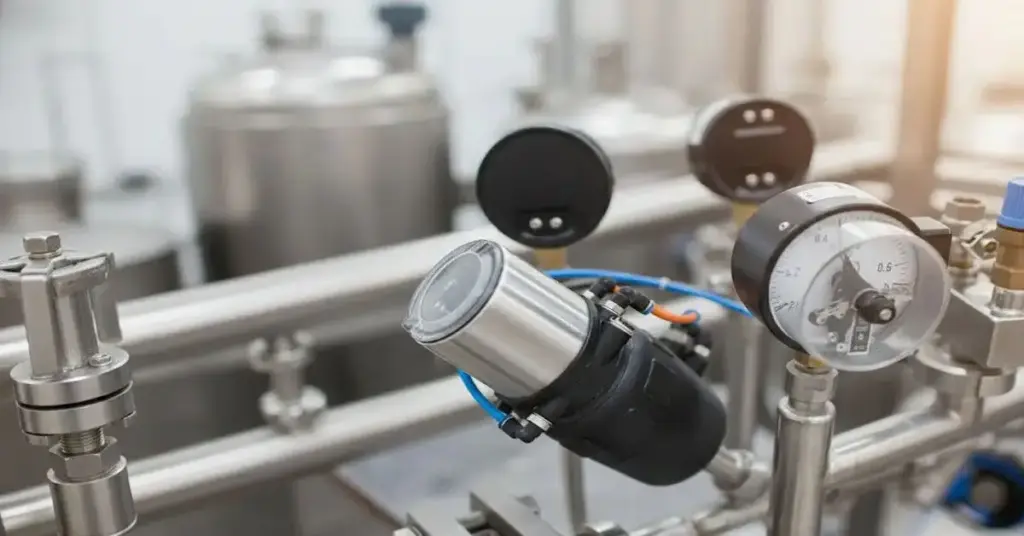
5 Common Causes of Pressure Sensor Failure in Manufacturing Plants Focus There is nothing more frustrating than a process shutdown caused by a $200 part. In modern manufacturing, Pressure Sensors are the “nervous system” of your plant. They monitor everything from hydraulic lines to steam boilers. When they work, you don’t even notice them. But when you experience a Pressure Sensor Failure, the consequences can range from a minor nuisance to a catastrophic safety hazard. ADYAA analyzes hundreds of failed sensors every year. The surprising truth? Most failures aren’t due to manufacturing defects—they are due to installation errors or environmental stressors. If you are tired of replacing the same sensor every few months, check this list. Here are the 5 most common reasons your sensors are dying young. 1. Overpressure (The “Invisible” Spike) Every sensor has a “Proof Pressure” rating (usually 1.5x or 2x the range). If you exceed this, the metal sensing diaphragm permanently deforms. It won’t snap back to its original shape, causing the “Zero” point to shift significantly. Issue: It’s rarely a steady rise in pressure. It’s usually a micro-second Pressure Spike caused by a valve snapping shut or a pump kicking on. Your SCADA system might not even catch it, but the sensor feels it. The Fix: If you suspect Overpressure Damage, install a Snubber (a simple restrictor) to dampen these spikes before they hit the sensitive diaphragm. 2. Water Hammer (The Silent Destroyer) Similar to overpressure, but more violent. Water Hammer occurs in liquid systems when a moving fluid is forced to stop or change direction suddenly (like a quick-closing solenoid valve). The momentum of the water creates a shockwave that travels through the pipe at the speed of sound. When this shockwave hits your pressure sensor, it hits with thousands of PSI of force, instantly destroying the internal mechanism. The Fix: Move the sensor further away from valves or pumps, or use a Pressure Transducer with a higher proof rating and a built-in snubber. 3. Chemical Incompatibility (Corrosion) “Stainless Steel” is not invincible. Many standard industrial sensors use 316L Stainless Steel for the wetted parts (the part that touches your liquid). While 316L is great for water and oil, it will fail rapidly if exposed to certain acids, chlorides, or caustic cleaning solutions. Chemical Corrosion can be sneaky. It might look fine on the outside, but over months, the fluid eats away at the thin sensing diaphragm until it becomes paper-thin. Eventually, it pinches a hole, leaking process fluid directly into the sensor electronics. The Fix: Always check a Chemical Compatibility Chart. For harsh chemicals, switch to sensors with Hastelloy C or Gold-Plated diaphragms. 4. Moisture Ingress (The Connector Killer) Electronics and water don’t mix. Yet, we often see sensors installed in washdown areas with improper cable glands or loose connectors. Moisture Ingress usually happens in two ways: The Connector: If the plug isn’t tightened or the seal is worn, high-pressure washdowns will force water into the housing. The Cable: If the cable jacket is cut or damaged, water can actually “wick” up the inside of the cable (capillary action) and travel all the way into the sensor body. Once water touches the circuit board, you will see erratic readings, Sensor Drift, or a completely dead signal. The Fix: Ensure your sensor has the correct IP Rating (IP67 or IP68) for the environment, and always use a “drip loop” in your cabling so water runs away from the device. 5. Electrical Interference (EMI / RFI) Have you ever seen a sensor reading that “jumps” or looks “fuzzy”? You likely have an electrical noise problem. In a plant full of VFDs (Variable Frequency Drives), large motors, and radios, there is a lot of invisible electromagnetic “noise” in the air. If your sensor cabling isn’t shielded properly, the wires act like an antenna, picking up this EMI/RFI Interference. This doesn’t physically break the sensor, but it causes Signal Noise that makes the data useless for control. The Fix: Always use Shielded Twisted Pair cabling for your 4-20mA signals, and ground the shield at one end only (usually at the control panel) to prevent ground loops. Conclusion: Stop Replacing, Start Troubleshooting A Pressure Sensor Failure is rarely just bad luck. It is almost always a symptom of a larger system issue—whether it’s pressure spikes, chemical attack, or bad wiring. By identifying the root cause, you can stop swapping out parts and start implementing permanent fixes. We help you solve the problem. From high-overpressure sensors to chemical-resistant seals, we have the Australian-engineered solutions to keep your plant running. Need help diagnosing a failed sensor? Troubleshoot with an ADYAA Engineer View our Durable Pressure Transmitters How Industrial Automation Sensors Improve Automation & Efficiency in Manufacturing How Industrial Automation Sensors Improve Automation & Efficiency in Manufacturing In modern manufacturing, efficiency, accuracy, and reliability are more important… Read More → How Vision & Imaging Sensors Transform Automated Inspection Systems How Vision & Imaging Sensors Transform Automated Inspection Systems Maintaining product quality while keeping up with high-speed production is crucial…. Read More → IoT and Automation in Industrial Operations: Boost Efficiency, Safety, and Reliability IoT and Automation in Industrial Operations: Boost Efficiency, Safety, and Reliability Discover how IoT and automation revolutionize industrial operations. Improve… Read More →
RTD vs Thermocouple: The Complete Guide to Industrial Sensors
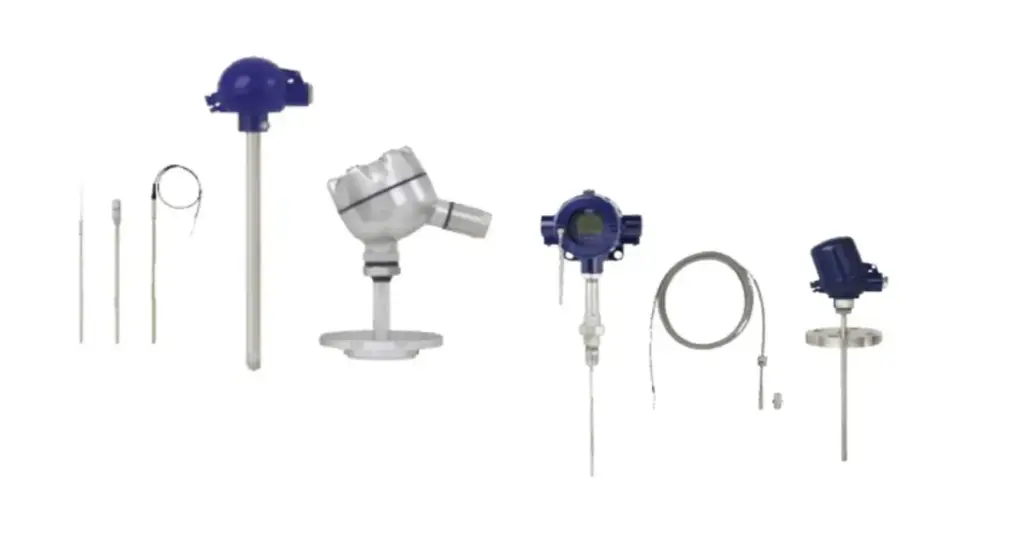
RTD vs. Thermocouple: The Complete Guide to Industrial Temperature Sensors RTD vs. Thermocouple: Which Sensor is Right for Your Application? In industrial automation, temperature is not just a number, it’s the heartbeat of your process. Whether you are pasteurizing milk, refining oil, or monitoring exhaust gas, your control system is only as good as the sensor feeding it data. But when you need to spec a new project, you face the classic engineering debate: RTD vs. Thermocouple. To the naked eye, they look identical. But inside the metal sheath, they operate on completely different physics. Choosing the wrong one can lead to “drifting” readings, frequent failures from vibration, or unnecessary costs. ADYAA supplies RTD and thermocouples to all industries across Australia. In this guide, we break down the technical differences to help you choose the right tool for the job. RTD and Thermocouples for Engineers, Maintenance Managers, and Procurement. What is the Difference Between RTD and Thermocouple? Before we compare them, we need to define what they actually are. What is an RTD Sensor? (Resistance Temperature Detector) Think of the RTD as the “Precision Instrument.” It works on a physical principle: as metal gets hotter, it becomes harder for electricity to pass through it (resistance increases). By measuring this resistance, we calculate the exact temperature. Most Common Type: Pt100 (Platinum element, 100 ohms at 0°C). Key Characteristic: High accuracy and long-term stability. What is a Thermocouple? (T/C) Think of the Thermocouple as the “Rugged Workhorse.” It works on the Seebeck Effect. Two different metal wires are joined together at a tip. When that tip heats up, it generates a tiny voltage signal. Most Common Type: Type K (Nickel-Chromium). Key Characteristic: Extreme durability and high-heat handling. Comparison: RTD vs. Thermocouple Accuracy & Range When choosing between these two, the decision usually comes down to four critical factors. 1. Temperature Range: How Hot Does It Get? This is your primary filter. RTD Range (-200°C to +850°C): This covers 90% of industrial applications, including Food & Beverage, Pharma, and HVAC. Thermocouple Range (-200°C to +2300°C): If you are working with fire—blast furnaces, kilns, or jet engines—you must use a Thermocouple. A standard Type K handles 1250°C easily. 2. Accuracy: Do You Need Precision? RTD Accuracy: If your process needs to be within ±0.1°C (like dairy or chemical dosing), the RTD is the winner. They are linear, stable, and don’t “drift” much over time. Thermocouple Accuracy: They are generally less precise, typically drifting by ±1.0°C to ±2.0°C. Over time, the internal wires can degrade, causing the reading to shift. 3. Response Time: How Fast Does It React? Thermocouples: Because the measuring point is just a tiny welded bead, they react almost instantly to temperature spikes. RTDs: The platinum element is often encased in ceramic or glass, which adds mass. This means they take a few seconds longer to register a temperature change. 4. Durability: Handling Vibration Thermocouples: Being essentially solid wire, they are incredibly tough. They are the best choice for high-vibration environments like engines, compressors, and crushers. RTDs: The internal element is delicate. Heavy vibration can break the fine platinum wires inside, leading to sensor failure. Comparison Chart: Pt100 vs. Type K Quick reference guide for Engineers. Feature RTD (Pt100) Thermocouple (Type K) Best Application Precision Control (Food, Pharma) High Heat & Vibration (Furnace, Mining) Temp Limit Up to 850°C Up to 1250°C+ Accuracy High (±0.15°C) Medium (±1.1°C – ±2.2°C) Response Time Slower Fast Drift / Stability Very Stable Prone to drift over time Cost Moderate Low When Should You Use an RTD? Choose an ADYAA RTD if: Accuracy is critical: Your process requires tight control (e.g., pasteurization, labs). Temperature is moderate: The process is below 600°C. Stability matters: You want a “set and forget” sensor that won’t drift over the years. When Should You Use a Thermocouple? Choose an ADYAA Thermocouple if: Heat is extreme: You are measuring over 850°C. Vibration is high: The sensor is mounted on a heavy engine or vibrating machine. Budget is tight: You need a simple, low-cost solution for general monitoring. Speed is key: You need to catch rapid temperature spikes instantly. Conclusion: Making the Right Choice There is no “bad” sensor, only the wrong application. Putting a delicate RTD in a blast furnace will destroy it. Putting a generic Thermocouple in a vaccine fridge will compromise your data. ADYAA helps you engineer the loop. From custom-length thermocouples to sanitary RTDs, we have the stock and the expertise to get your process running right. Need help selecting the right sensor? Explore ADYAA Temperature Sensors. Chat with an ADYAA Engineer today. How Industrial Automation Sensors Improve Automation & Efficiency in Manufacturing How Industrial Automation Sensors Improve Automation & Efficiency in Manufacturing In modern manufacturing, efficiency, accuracy, and reliability are more important… Read More → How Vision & Imaging Sensors Transform Automated Inspection Systems How Vision & Imaging Sensors Transform Automated Inspection Systems Maintaining product quality while keeping up with high-speed production is crucial…. Read More → IoT and Automation in Industrial Operations: Boost Efficiency, Safety, and Reliability IoT and Automation in Industrial Operations: Boost Efficiency, Safety, and Reliability Discover how IoT and automation revolutionize industrial operations. Improve… Read More →