
Sealing Solutions for Cryogenic Processing Systems: Surviving the Deep Freeze
Sealing Solutions for Cryogenic Processing Systems: Surviving the Deep Freeze Handling fluids at -196°C (Liquid Nitrogen) or -253°C (Liquid Hydrogen) changes the rules of engineering. In these environments, standard materials shatter like glass. A leak in a cryogenic line is an immediate safety hazard. Escaping fluid expands rapidly (700x for nitrogen), freezing nearby structures until they crack. Implementing effective Sealing Solutions for Cryogenic Processing Systems means using seals that stay flexible when everything else freezes solid. Why Standard Seals Fail in the Cold Standard seals fail due to two main physical barriers: Glass Transition : Standard polymers turn brittle and glass-like around -20°C. Any movement causes them to snap. Thermal Contraction: Metal flanges shrink as they cool. If the bolts shrink less than the flange, clamping force vanishes, opening a leak path. Top Sealing Solutions for Cryogenic Processing Systems To maintain a seal at absolute zero, you generally rely on active compensation. 1. Spring-Energised PTFE Seals Teflon (PTFE) stays flexible to -200°C but suffers from “cold flow” (creep). The Solution: A metal spring inside a U-shaped PTFE jacket. How it Works: As the material shrinks, the spring pushes outwards, maintaining contact with the sealing face. 2. Metal C-Rings and O-Rings For extreme cold (Liquid Hydrogen/Helium), polymers are too hard. The Solution: Hollow metal rings (Inconel/Stainless) plated with soft Silver or Indium. How it Works: The seal acts like a spring, while the soft plating flows into flange imperfections to create a gas-tight barrier. 3. Cryogenic Gaskets (Sheet) For pipe flanges, standard gaskets are unsafe. The Solution: Flexible Graphite laminates or high-grade PTFE sheets. Critical Factor: Must use “Live Loading” (Belleville washers) to compensate for gasket shrinkage. Selection Checklist: Designing for the Cold Select Spring-Energized PTFE If: Temp: Down to -196°C (LN2/LNG). Dynamic: The system has moving parts (valves). Friction: You need low friction for control stems. Select Metal Seals If: Temp: Below -200°C (Hydrogen/Helium). Radiation: Radioactive environment (PTFE degrades). Zero Leakage: Hazardous gas containment. Select Flexible Graphite If: Fire Safety: Must be API 607 Fire Safe. Cycling: Frequent hot-to-cold thermal cycles. Frequently Asked Questions Can I use standard bolts? No. Carbon steel becomes brittle and snaps. Use Austenitic Stainless Steel (B8/B8M) for impact strength. What causes most leaks? “Cold Flow.” PTFE seals relax over time. Spring-energised designs prevent this by actively pushing back. Do I need to re-torque? Yes. “Cold Bolting” is often required after the first thermal cycle as materials shrink and settle. The Bottom Line A seal that works at room temperature is meaningless if it fails during cool-down. Successful Sealing Solutions for Cryogenic Processing Systems rely on “live” seals that actively compensate for shrinking hardware. Handling LNG or Hydrogen? Ensure your gaskets can handle the thermal shock. Contact ADYAA Cryogenic Team Get advice on spring-energised seals today. When to Replace Rupture Discs in Pressure Equipment: A Maintenance Guide When to Replace Rupture Discs in Pressure Equipment: A Maintenance Guide In the world of pressure safety, the rupture disc… Read More → Flange Sealing Solutions for High-Pressure Pipes: Zero Leakage Strategies Flange Sealing Solutions for High-Pressure Pipes: Zero Leakage Strategies In high-pressure industrial environments, the weakest link is rarely the pipe… Read More → How to Select Pressure Relief Valves for Industrial Plants How to Select Pressure Relief Valves for Industrial Plants If a pump fails, production stops. If a control valve fails,… Read More →
Tank Venting Systems for Hazardous Materials: Safety in Storage
Tank Venting Systems for Hazardous Materials: Safety in Storage Storing water is simple. Storing volatile, flammable, or toxic chemicals is a completely different engineering challenge. When you are housing thousands of liters of benzene, methanol, or crude oil, the storage tank becomes a dynamic pressure vessel that reacts to every change in the environment. If a tank cannot “breathe” safely, it becomes a ticking time bomb. A blocked vent can cause a catastrophic rupture during filling or a structural implosion during emptying. When dealing with dangerous chemicals, standard venting isn’t enough; you need specialised Tank Venting Systems for Hazardous Materials designed to contain vapors, prevent explosions, and protect structural integrity. Why Do Storage Tanks Need to Breathe? A storage tank is never static. It is constantly inhaling and exhaling due to two primary factors: Thermal Breathing: As the sun heats the tank during the day, vapors expand and pressure rises (Out-breathing). At night, the tank cools, vapors contract, and a vacuum forms (In-breathing). Liquid Movement: Filling the tank displaces vapors (pushing them out), while pumping liquid out creates a void that must be filled with air or gas (pulling them in). For hazardous substances, allowing these vapors to escape freely into the atmosphere is often illegal due to environmental regulations and unsafe due to flammability risks. This is where Storage Tank Protection devices come into play. The First Line of Defense: Pressure Vacuum Relief Valves (PVRV) The workhorse of any tank farm is the Pressure Vacuum Relief Valve (PVRV), often called a breather valve. Unlike a standard open pipe, a PVRV remains sealed until the tank reaches a specific set pressure or vacuum. Pressure Relief: When pressure builds, the valve lifts to release just enough vapor to prevent the tank from bulging, then reseats to minimize Fugitive Emissions. Vacuum Relief: When the tank cools or drains, the valve opens to let air (or inert gas) in, preventing the tank from crumpling like a crushed soda can. For hazardous liquids, these valves are critical for minimizing product loss and reducing the “cloud” of flammable gas around the tank vent. Preventing External Ignition with Flame Arrestors If a tank is venting flammable vapors (like gasoline or acetone), there is a risk that an external spark—from lightning, static electricity, or nearby maintenance work—could ignite the plume. Without protection, the flame can travel back down the pipe and into the tank, causing an explosion. A Flame Arrestor is a passive safety device consisting of a wound metal ribbon (element) with tiny gaps. It allows gas to flow through but absorbs the heat of a flame front, extinguishing it before it can pass into the vapor space. Integrating Flame Arrestors into your Tank Venting Systems for Hazardous Materials is a non-negotiable safety requirement for low-flashpoint liquids. Nitrogen Blanketing for Toxic and Sensitive Media For highly volatile or oxygen-sensitive chemicals, letting air into the tank is dangerous. Oxygen can degrade the product or create a flammable mixture inside the headspace. The solution is Nitrogen Blanketing (or Tank Padding). Instead of breathing in air, the tank is supplied with inert nitrogen gas. A specialized regulator system maintains a constant “blanket” of pressure on top of the liquid. Safety: It eliminates oxygen, making combustion inside the tank impossible. Quality: It prevents moisture and contaminants from touching the chemical. The Role of Emergency Relief Vents Standard breather valves handle normal daily operations. But what happens if a fire surrounds the tank? The liquid inside boils rapidly, generating massive amounts of vapor that a small PVRV cannot handle. Emergency Relief Vents are large, weighted covers that pop open only when pressure rises to a critical level (typically just below the tank’s failure point). They provide a massive opening to dump pressure instantly, preventing the tank from rupturing during a fire event. Compliance Standards: API 2000 and ISO 28300 Designing these systems is not a guessing game. Engineers must follow strict standards like API 2000, which dictates the calculation methods for venting requirements. You must account for the pumping rate, the surface area of the tank, the liquid’s volatility, and the latitude (solar heat gain) of your facility. Under sizing a vent by even a few inches can lead to catastrophic structural failure. The Bottom Line A storage tank is only as safe as its venting strategy. Whether you are managing aggressive acids or explosive fuels, the hardware on top of the tank—the PVRVs, Flame Arrestors, and Emergency Relief Vents—protects the people on the ground. Tank Venting Systems for Hazardous Materials must be precisely sized, chemically compatible, and regularly maintained to ensure they function when it matters most. Are your tanks compliant with the latest venting standards? Don’t risk structural failure or environmental fines. Let our team assess your storage facility needs. Contact ADYAA Engineering Consult with our experts on API 2000 venting calculations. When to Replace Rupture Discs in Pressure Equipment: A Maintenance Guide When to Replace Rupture Discs in Pressure Equipment: A Maintenance Guide In the world of pressure safety, the rupture disc… Read More → Flange Sealing Solutions for High-Pressure Pipes: Zero Leakage Strategies Flange Sealing Solutions for High-Pressure Pipes: Zero Leakage Strategies In high-pressure industrial environments, the weakest link is rarely the pipe… Read More → How to Select Pressure Relief Valves for Industrial Plants How to Select Pressure Relief Valves for Industrial Plants If a pump fails, production stops. If a control valve fails,… Read More →
Why Pressure Sensor Calibration Is Critical for Plant Safety?
Why Pressure Sensor Calibration Is Critical for Plant Safety? Imagine driving your car on the highway. You look down at the speedometer, and it says you are doing 100 km/h. But in reality, due to a mechanical fault, you are doing 120 km/h. You feel safe, but you are actually in the danger zone, risking a fine or an accident. This same scenario plays out every day in industrial plants, but the stakes are much higher. A pressure transmitter is the speedometer of your process. If it lies to you, your control system makes decisions based on bad data. This is why Pressure Sensor Calibration is not just a “nice-to-have” maintenance task—it is a non-negotiable requirement for operational safety. ADYAA looks at the results of neglected instruments all too often. In this guide, we break down exactly why keeping your pressure instruments accurate is the backbone of a safe facility. The Silent Enemy: What Is Sensor “Drift”? Many facility managers assume that once a sensor is installed, it stays accurate forever. Unfortunately, this is not true. All sensors suffer from “drift”—a gradual degradation of accuracy over time. This happens due to: Mechanical Fatigue: The diaphragm inside a pressure sensor flexes thousands of times a day. Like a paperclip bent back and forth, it eventually loses elasticity. Temperature Cycling: Extreme heat and cold cause expansion and contraction, shifting the sensor’s zero point. Over-Pressure Events: A sudden spike (water hammer) can permanently deform the sensing element. Regular Pressure Sensor Calibration is the only way to detect this drift and reset the instrument to the “truth.” 1. Preventing Catastrophic Failure (The Sealing Connection) The most immediate risk of an uncalibrated sensor is safety. If your pressure transmitter reads 10% lower than the actual pressure, your pumps might keep pushing fluid into a tank that is already full, or a pipe that is already at its limit. As we discussed in our guide on Industrial Sealing, gaskets and O-rings have specific pressure ratings. If the system pressure exceeds these limits because a sensor failed to trigger a shut-off valve, you risk a blowout. Pressure Sensor Calibration ensures that your system pressure never unknowingly exceeds the design limits of your RTJ Gaskets or flanges, preventing leaks, fires, and explosions. 2. Ensuring Product Quality and Consistency In industries like Food & Beverage or Chemical Processing, pressure dictates quality. Filtration: If differential pressure sensors across a filter are inaccurate, you might push contaminants through the filter media. Reaction Vessels: Chemical reactions often require precise pressures to occur. A deviation can ruin an entire batch. By prioritizing Pressure Sensor Calibration, you ensure that your “recipe” is followed exactly, every single time. This reduces scrap and guarantees that the product leaving your factory meets customer specifications. 3. Compliance and Audits (ISO & API) For most Australian industries, calibration is a legal or contractual obligation. ISO 9001: Requires that measuring equipment be verified at specified intervals. Safety Standards: Regulators require proof that safety-critical loops (like Safety Relief Valve triggers) are functional. During an audit, a missing calibration sticker or an expired certificate is a major non-conformance. Routine Pressure Sensor Calibration provides the traceable paper trail you need to pass audits with flying colours. 4. Energy Efficiency An uncalibrated sensor can quietly steal money from your energy budget. Consider a compressed air system. If the pressure switch reads lower than the actual pressure, the compressor will work harder and run longer than necessary to reach the “set point.” You end up paying for electricity to generate pressure you do not actually need. Accurate sensors ensure your automation systems run efficiently, aligning with the principles outlined in our Industrial Automation Sensors efficiency guide. How Often Should You Calibrate? There is no “one size fits all” answer, but here are the general rules of thumb: Critical Safety Transmitters: Every 6 to 12 months. Custody Transfer (Billing) Meters: Every 3 to 6 months. General Process Indication: Every 12 to 24 months. However, if a sensor experiences a shock, vibration, or extreme temperature event, it should be checked immediately. The ADYAA Difference ADYAA does not just put a sticker on the gauge. Whether performed in our NATA-traceable lab or at your site, our Pressure Sensor Calibration service involves a full health check of the unit. We adjust, clean, and verify the instrument across its full range to ensure linearity and hysteresis are within tolerance. Don’t let a $500 sensor put your million-dollar plant at risk. Is your calibration schedule up to date? Book Your Pressure Sensor Calibration Service. Contact us for a free audit of your instrument needs. When to Replace Rupture Discs in Pressure Equipment: A Maintenance Guide When to Replace Rupture Discs in Pressure Equipment: A Maintenance Guide In the world of pressure safety, the rupture disc… Read More → Flange Sealing Solutions for High-Pressure Pipes: Zero Leakage Strategies Flange Sealing Solutions for High-Pressure Pipes: Zero Leakage Strategies In high-pressure industrial environments, the weakest link is rarely the pipe… Read More → How to Select Pressure Relief Valves for Industrial Plants How to Select Pressure Relief Valves for Industrial Plants If a pump fails, production stops. If a control valve fails,… Read More →
Rupture Discs vs Relief Valves Explained: Making the Right Choice
Rupture Discs vs Relief Valves Explained: Making the Right Choice When designing a pressure vessel, you have a critical obligation to ensure it does not fail under pressure. But when it comes to selecting the device that provides that protection, engineers often face a classic debate: Rupture Discs vs Relief Valves. Is it better to have a device that recloses to save your product? Or one that bursts open instantly to guarantee maximum flow? The answer, as with most complex engineering challenges, is rarely black and white. It depends entirely on your process fluid, your risk tolerance, and your maintenance capabilities. We manage the lifecycle of both technologies. We know that choosing the wrong device can lead to expensive product loss or, worse, a safety system that reacts too slowly. In this guide, we break down the Rupture Discs vs Relief Valves comparison to help you select the right strategy for your plant. The Safety Relief Valve (SRV): The Reclosing Workhorse A Safety Relief Valve (SRV) is a mechanical device designed for continuity. A spring holds a disc down against a seat. When the system pressure exceeds the spring force, the valve lifts, releases the excess pressure, and then closes again once safe conditions are restored. The Pros: Reclosing Capability: This is the primary advantage. You don’t lose the entire contents of your tank during a minor pressure spike. Adjustability: The set pressure can often be fine-tuned by a technician to suit changing process needs. Serviceability: These are assets you can maintain. We can test, machine, and repair these valves to extend their operational life significantly. The Cons: Leakage Risk: Because it relies on a mechanical seat, there is always a risk of small “simmering” leaks, especially as operating pressure nears the set point. Mechanical Complexity: With moving parts, they are susceptible to sticking if fouled by product buildup, requiring regular testing. The Rupture Disc: The Instant “Circuit Breaker” A Rupture Disc (or Bursting Disc) is a thin metal membrane engineered to fail at a precise pressure. Think of it as the “fuse” of your pressure system. Once it bursts, it cannot be reset; the process is open to the atmosphere (or flare system) until the disc is physically replaced. The Pros: Hermetic Seal: There is zero leakage. This makes them ideal for toxic, expensive, or hazardous gases where fugitive emissions are unacceptable. Instant Full Bore: The disc opens completely in milliseconds, providing a massive escape path instantly. This is critical for fast-rising pressure events like runaway chemical reactions. Lower Upfront Cost: A disc is generally less expensive to purchase than a high-specification valve. The Cons: One-Shot Device: Once it activates, your plant is down until a technician installs a new one. Non-Adjustable: You buy it for a specific burst pressure. If your process changes, you must buy new discs. The Showdown: Rupture Discs vs Relief Valves To decide between the two, you need to weigh your priorities. Here is a quick comparison of how they stack up in the field: Feature Safety Relief Valve (SRV) Rupture Disc Action Recloses (Saves Product) Non-reclosing (Sacrificial) Sealing Potential for simmering Zero leakage (Hermetic) Maintenance Requires testing & repair Requires replacement after use Response Time Fast Instant (Milliseconds) Best Application Variable/Minor Upset Conditions Explosions/Runaway Reactions The Ultimate Solution: The Combination Strategy In many critical applications, the best answer to Rupture Discs vs Relief Valves is actually “both.” By installing a Rupture Disc upstream of a Relief Valve, you achieve a superior level of protection: Corrosion Protection: The disc acts as a shield, preventing corrosive process fluids from touching the expensive valve internals during normal operation. Zero Leakage: The disc provides a tight seal, ensuring valuable gas doesn’t leak through the valve seat. Reclosing Capability: If an overpressure event occurs, the disc bursts, the valve opens to relieve pressure, and then the valve closes. You still have to replace the disc, but you do not lose the whole tank inventory. Note: This setup requires careful monitoring of the space between the disc and the valve to ensure no back-pressure builds up, which would change the burst pressure. Managing Your Lifecycle with Data Whether you choose discs, valves, or a combination, they all require intelligent management. At ADYAA, we move beyond rigid, calendar-based maintenance schedules. We utilise Risk-Based Inspection (RBI) methodologies to calculate the unique risk profile for every relief device in your facility. This data-driven approach allows us to tell you exactly which valves need immediate repair and which can safely run longer—optimising your budget without compromising safety. Confused about your safety strategy? Don’t guess with overpressure protection. Let our engineers calculate the right sizing and selection for your specific risk profile. Contact ADYAA for Pressure Relief System Management Call us for support on all major valve brands. When to Replace Rupture Discs in Pressure Equipment: A Maintenance Guide When to Replace Rupture Discs in Pressure Equipment: A Maintenance Guide In the world of pressure safety, the rupture disc… Read More → Flange Sealing Solutions for High-Pressure Pipes: Zero Leakage Strategies Flange Sealing Solutions for High-Pressure Pipes: Zero Leakage Strategies In high-pressure industrial environments, the weakest link is rarely the pipe… Read More → How to Select Pressure Relief Valves for Industrial Plants How to Select Pressure Relief Valves for Industrial Plants If a pump fails, production stops. If a control valve fails,… Read More →
5 Signs Your Equipment Needs Calibration Now
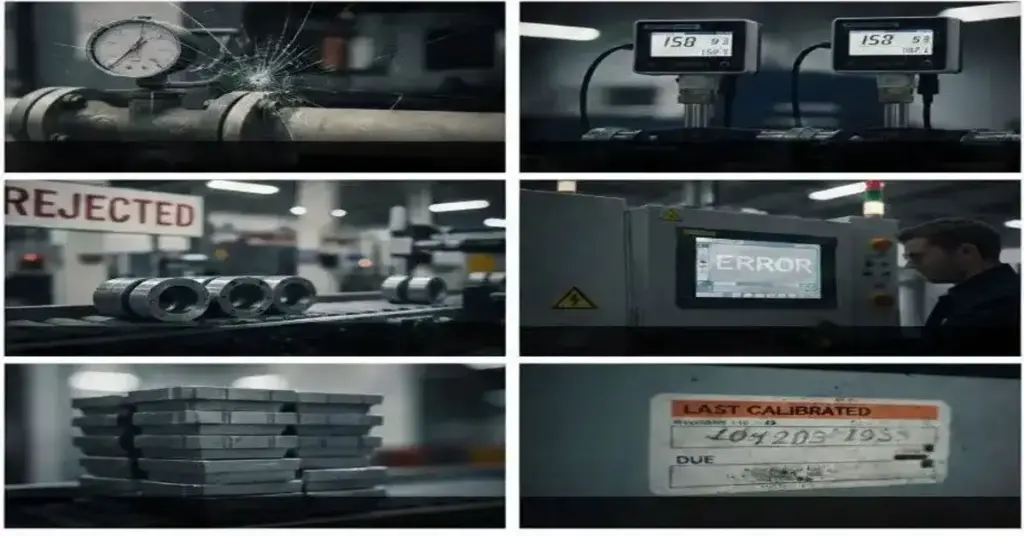
5 Signs Your Equipment Needs Calibration Now In a perfect world, you would calibrate your instruments exactly according to the manufacturer’s schedule—every 6 or 12 months, like clockwork. But in the real world of busy production schedules and tight budgets, maintenance sometimes slips. The problem is, your sensors don’t wait for a schedule to start failing. Drift happens. Wear and tear happen. Accidents happen. Relying on an outdated sticker to tell you if your equipment needs calibration is a risky strategy. Often, your machinery will tell you it’s struggling long before the due date arrives—you just have to know what to listen for. We help industries across Australia stay accurate. Here are the 5 red flags that indicate your equipment needs calibration immediately. 1. Your Product Quality Is Inconsistent The first victim of poor calibration is usually the product itself. The Symptom: You are running the same “recipe” or settings as always, but the results are changing. Maybe the chemical mix is slightly off, the coating thickness varies (a critical issue for our Elcometer users), or the fill levels in bottles are erratic. The Cause: If a flow meter or temperature sensor drifts, the machine thinks it is doing the right thing, but the reality doesn’t match the data. The Fix: If your output quality wavers, don’t blame the raw materials first. Check if your equipment needs calibration. 2. Readings Don’t Match “Common Sense” Experienced operators know their machines by heart. They know that when Pump A is running at 50Hz, the pressure usually sits at 5 Bar. The Symptom: A gauge shows zero pressure when a line is clearly pressurized, or a temperature sensor reads ambient room temp as 40°C. The Cause: Internal electronic components can fail, or diaphragms can become stiff. The Reality: Trust your operators. If they say “that gauge looks wrong,” it is a clear sign the equipment needs calibration or replacement. 3. Physical Damage or “Shock” Events Industrial environments are tough. Tools get dropped, forklifts bump into panels, and steam lines experience “water hammer.” The Symptom: A visible dent in a transmitter housing, a cracked gauge face, or a sensor that has been exposed to a sudden over-pressure spike. The Rule: Any instrument that suffers a significant physical shock is compromised. Even if it still “works,” the internal mechanism may be bent or shifted. The Fix: Don’t wait for the annual check. A shocked sensor is an unreliable sensor. 4. Energy Bills Are Spiking As we explored in our post on Industrial Automation Sensors, efficiency relies on accurate data. The Symptom: Your power consumption is creeping up, but production volume hasn’t increased. The Cause: If a temperature sensor reads lower than the actual temperature, a boiler or heater will burn extra fuel trying to reach a setpoint it has already exceeded. The Reality: In this case, the cost of the wasted energy is often higher than the cost of the service. This phantom cost is a major indicator that your equipment needs calibration. 5. You Have an Audit or Certification Coming Up This is the most common trigger, but often it’s left too late. The Symptom: An ISO 9001, API, or safety audit is scheduled for next month, and you realize your certificates expired three weeks ago. The Risk: An auditor finding an expired label on a critical control point is an immediate non-conformance. The Fix: Proactive planning. If an audit is looming, review every critical asset. If the date is close, assume the equipment needs calibration now to avoid the scramble. Don’t Guess—Verify. Ignoring these signs leads to scrap, safety hazards, and downtime. Whether you need a quick verification of a handheld device or a full loop check of a critical safety system, ADYAA has the solution. We offer both On-Site and Lab Calibration to suit your urgency. If you spot any of these 5 signs, do not wait for the breakdown. Think your sensors are drifting? Schedule a Calibration Check with ADYAA Call our support team for emergency service. Why Dew Point Sensors Are Critical in Industrial Air and Gas Systems Why Dew Point Sensors Are Critical in Industrial Air and Gas Systems In the world of industrial automation and pneumatic… Read More → Understanding Thermowells and Their Role in Process Instrumentation Understanding Thermowells and Their Role in Process Instrumentation In the vast ecosystem of process control, temperature is often the most… Read More → 5 Signs Your Equipment Needs Calibration Now 5 Signs Your Equipment Needs Calibration Now In a perfect world, you would calibrate your instruments exactly according to the… Read More →
How Vision & Imaging Sensors Transform Automated Inspection Systems

How Vision & Imaging Sensors Transform Automated Inspection Systems Maintaining product quality while keeping up with high-speed production is crucial. Vision and imaging sensors are now key components of automated inspection systems, providing fast, reliable, and precise visual analysis that replaces slower, error-prone manual checks. ADYAA, offers advanced vision and imaging sensors that help manufacturers enhance quality, reduce defects, and increase overall production efficiency. What Are Vision & Imaging Sensors? Vision and imaging sensors are compact devices that integrate a camera, illumination, optics, and embedded image-processing software into a single industrial-grade unit. These sensors capture images of products or processes and analyze visual features such as shape, size, color, and defects in real time. Key capabilities include: Multiple Feature Checks: Inspect many characteristics from a single image, including presence, orientation, and print quality. Contour & Color Processing: Detect edges, shapes, and subtle color differences for accurate inspection. Part Localization: Identify and align objects precisely, even if they are not perfectly positioned. Integrated Illumination and Processing: Operate independently without needing an external computer. Vision sensors at ADYAA are designed for industrial environments and can handle high-speed production and complex inspection tasks across multiple industries. How Vision & Imaging Sensors Improve Automated Inspection Vision sensors enhance automated inspection by making processes faster, more accurate, and consistent: High-Speed Evaluation: Inspect thousands of products per minute to keep production lines moving efficiently. Consistent Quality Control: Provide objective and repeatable inspection results, reducing human errors. Early Defect Detection: Identify defects before products leave the line, reducing waste and rework. Data for Process Improvement: Collect visual data for traceability, trend analysis, and process optimization. Seamless Integration: Work with PLCs and robotics for coordinated automation and inspection tasks. Applications of Vision & Imaging Sensors Vision and imaging sensors are widely used to ensure quality and efficiency in multiple industries: Presence & Completeness Checks: Confirm that all components are assembled correctly. Dimensional Measurement: Verify that parts meet required specifications. Reading Codes & Text: Perform barcode scanning and OCR for traceability. Surface Defect Detection: Detects scratches, dents, or surface flaws. These applications demonstrate the importance of vision sensors in automotive, electronics, packaging, food processing, and pharmaceutical manufacturing. Conclusion Vision and imaging sensors are transforming automated inspection systems by delivering fast, accurate, and consistent quality checks. Integrating vision sensors from ADYAA Made by Baumer allows manufacturers to reduce waste, improve product quality, and collect valuable data for continuous process improvement. Investing in advanced vision and imaging technology is key to creating smarter, more efficient, and reliable manufacturing operations. Take the Next Step Explore ADYAA’s Vision & Imaging Sensors Collection Contact ADYAA’s technical team for expert advice How Industrial Automation Sensors Improve Automation & Efficiency in Manufacturing How Industrial Automation Sensors Improve Automation & Efficiency in Manufacturing In modern manufacturing, efficiency, accuracy, and reliability are more important… Read More → How Vision & Imaging Sensors Transform Automated Inspection Systems How Vision & Imaging Sensors Transform Automated Inspection Systems Maintaining product quality while keeping up with high-speed production is crucial…. Read More → IoT and Automation in Industrial Operations: Boost Efficiency, Safety, and Reliability IoT and Automation in Industrial Operations: Boost Efficiency, Safety, and Reliability Discover how IoT and automation revolutionize industrial operations. Improve… Read More →