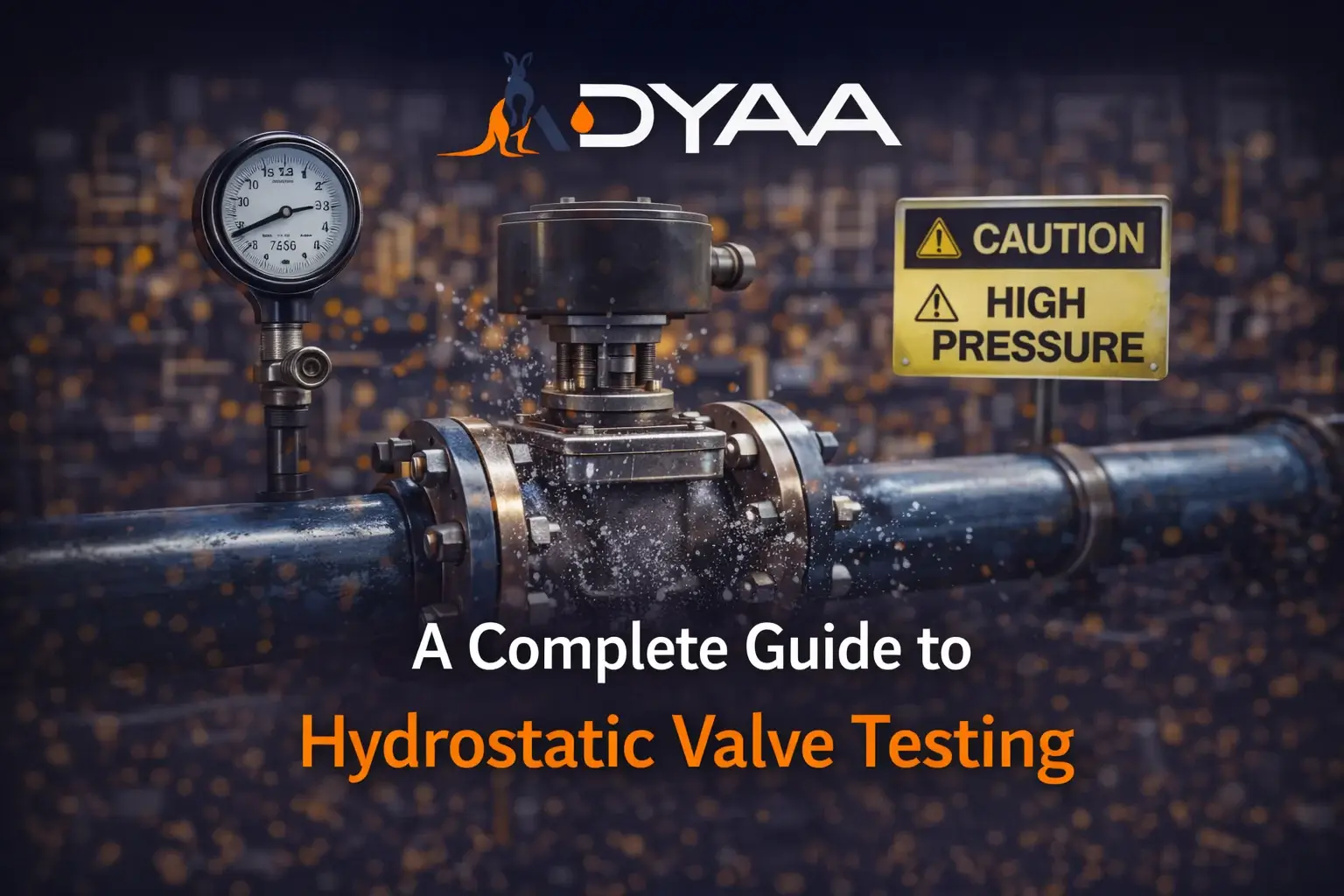
Hydrostatic valve testing is a mandatory, high-pressure diagnostic procedure used to verify the structural integrity and leak-tightness of industrial valves. By filling a closed valve with an incompressible liquid (usually clean water) and pressurizing it—often up to 150% of its maximum designed working limit—engineers can expose microscopic casting defects, body cracks, and internal seat leaks before the valve is installed.
This critical test is the only way to guarantee that a valve can safely contain volatile chemicals, live steam, or high-pressure hydrocarbons in a live plant without suffering a catastrophic blowout.
Quick Comparison: Hydrostatic vs Pneumatic Testing
Testing Method | Test Medium | Primary Purpose | Safety Risk Profile |
Hydrostatic Testing | Incompressible Liquid (Water) | High-pressure shell integrity and gross leak detection. | Low: If the valve fails, water simply depressurizes and spills. |
Pneumatic Testing | Compressible Gas (Air/Nitrogen) | Low-pressure micro-leak detection (often done after hydro). | High: Compressed gas stores massive kinetic energy; a shell failure acts like a bomb. |
Here is a comprehensive engineering breakdown of how this critical diagnostic process is executed to ensure total pipeline safety.
The 4-Step Hydrostatic Testing Process
To execute this procedure safely, technicians utilize heavy-duty, heavily shielded test benches to secure the valve and inject the high-pressure fluid. The standard procedure involves four precise phases.
1. Mounting and Clamping
The valve is placed onto a heavy-duty test rig. High-tonnage hydraulic clamps secure the valve flanges tightly against the test bench’s sealing plates. The clamping force mustn’t warp the valve body, which could cause a false leak reading.
2. Filling and Purging
The internal chamber of the valve is filled with the test fluid (typically water mixed with a rust inhibitor).
- The Crucial Step: Technicians must open a bleed valve at the highest point to purge 100% of the trapped air from the system. If trapped air remains, it becomes compressed during the test, creating a severe safety hazard.
3. The Shell Integrity Test
This phase proves the metal body of the valve is structurally sound.
- The Process: With the valve partially open and the ends sealed, the water pressure is ramped up to 1.5 times (150%) the valve’s maximum cold working pressure.
- The Inspection: The pressure is held for a specified duration while technicians visually inspect the outer casting for “weeping,” sweating, or structural yielding.
4. The Seat Leak Test
This phase proves that the internal mechanisms can actually stop the flow of fluid.
- The Process: The valve is fully closed. Pressure is applied to one side of the valve at 1.1 times (110%) the working pressure.
- The Inspection: Technicians monitor the downstream side to measure if any water manages to push past the internal seating mechanism.
Why We Use Water: The Physics of Safety
Facility managers often wonder why they cannot simply hook a valve up to an air compressor to test for leaks. The answer comes down to pure physics and the protection of the testing technicians.
- Water is Incompressible: Liquid cannot be squeezed into a smaller volume. If a valve body cracks or shatters under 5,000 PSI of hydrostatic pressure, the water instantly loses its pressure and drops to the floor safely.
- Gas is Compressible: Gases like air and nitrogen act like a tightly coiled spring when pressurized. If a valve shell fails during a high-pressure pneumatic test, that stored kinetic energy is released instantly, firing metal shrapnel across the workshop with lethal force.
Mandatory Industry Standards: API 598
Hydrostatic valve testing is a highly regulated process. Globally, the benchmark standard for testing isolation, check, and safety valves is API 598 (Valve Inspection and Testing).
To pass an audit, your testing procedures must perfectly align with this standard, which dictates:
- The exact hydrostatic test pressures required are based on the valve’s metallurgical class and size.
- The mandatory duration that the pressure must be held (ranging from 15 seconds for small valves to several minutes for large-bore valves).
- The maximum allowable leakage rates. (For metal-seated valves, a specific number of drops per minute is allowable; for soft-seated valves, absolutely zero leakage is permitted).
Execute Flawless Valve Diagnostics
Shipping heavy industrial valves off-site for testing causes massive production delays. ADYAA Engineering supplies fully containerized, DNV-rated mobile test benches that bring high-pressure hydrostatic valve testing directly to your remote site, offshore rig, or manufacturing plant. Verify your assets on-site with total safety and compliance.
View our high-pressure valve test benches