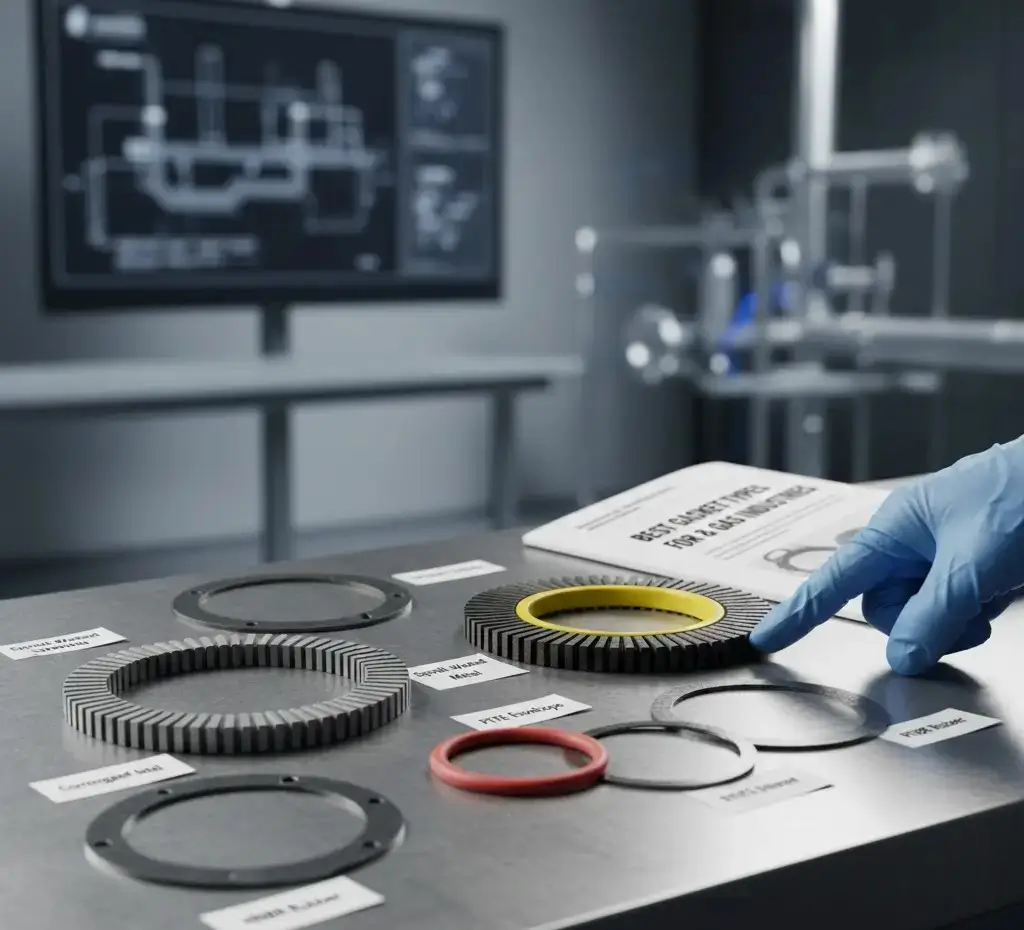
When processing volatile chemicals, your flange connections are only as secure as the gaskets sealing them. Installing the wrong elastomer in an aggressive fluid system guarantees a blowout, toxic leaks, and costly plant shutdowns.
Choosing gasket materials for chemical resistance requires matching the material to specific media, temperature, and pressure. You cannot rely on guesswork.
As we highlighted previously when discussing how Industrial Sealing Systems Prevent Leakage Failures, the material must physically withstand the operating environment without degrading. Always check a chemical compatibility chart to ensure the material resists degradation.
Here is a breakdown of the top materials and how to select the right one for your Australian facility.
Top Chemical-Resistant Gasket Materials
Engineers rely on specific compounds to handle different fluid types. For accurately choosing gasket materials for chemical resistance, you must understand the strengths and limits of these core options:
- PTFE (Polytetrafluoroethylene): The universal choice for maximum chemical resistance, handling aggressive acids, bases, and solvents.
- FKM / Viton®: Ideal for high-temperature, aggressive chemical environments, oils, hydrocarbons, and fuels.
- EPDM: Best for water-based, steam, weak acids, and alkaline environments; excellent weather/UV resistance.
- Graphite: Excellent for high-temperature, high-pressure steam and hydrocarbons, though limited against strong oxidizers.
- Nitrile (NBR / Buna-N): Suitable for oil, fuels, and grease at lower temperatures.
- Neoprene: Good all-purpose elastomer for moderate chemical resistance, including mild acids and oils.
- Compressed Non-Asbestos Fiber (CNAF): Versatile, cost-effective for general industrial applications.
Key Selection Factors
You cannot select a gasket based on fluid type alone. Choosing gasket materials for chemical resistance means evaluating the entire operating condition of the flange.
Review these four critical factors before installation:
- Chemical Compatibility: Does the fluid break down the material?
- Temperature Ranges: EPDM works up to ~150°C, Nitrile up to ~121°C, while PTFE/Graphite handle much higher temperatures.
- Pressure & Concentration: Higher pressures and stronger concentrations require more robust, specialized materials.
- Application Type: Consider if it is for chemical processing (PTFE), water treatment (EPDM), or oil/gas (Viton).
Real-World Example: Acid Transfer Lines
Imagine an industrial plant pumping highly concentrated sulfuric acid.
If maintenance installs a standard Nitrile gasket, the acid will rapidly dissolve the rubber. This leads to an immediate loss of containment. By properly choosing gasket materials for chemical resistance and installing a PTFE gasket instead, the plant ensures the seal remains completely inert to the acid, maintaining total safety and operational uptime.
People Also Ask (FAQs)
Q: Which gasket material has the highest chemical resistance?
A: PTFE (Teflon) offers the broadest and highest level of chemical resistance across aggressive acids, bases, and solvents.
Q: Can I use EPDM for oil pipelines?
A: No. EPDM breaks down when exposed to hydrocarbons and oils. FKM (Viton) or Nitrile are the correct choices for oil and fuel applications.
Q: What is the best gasket for high-pressure steam?
A: Graphite is the superior choice for high-temperature and high-pressure steam applications, as elastomers will degrade under extreme thermal stress.
The Bottom Line
Preventing hazardous leaks requires precision. Properly choosing gasket materials for chemical resistance protects your workforce, prevents environmental contamination, and saves your facility from expensive emergency repairs. Always evaluate the specific fluid concentration, operating temperature, and system pressure before specifying a seal.
Upgrade Your Flange Safety with ADYAA
Are you unsure which gasket material your specific chemical application requires? Don’t risk a blowout with incompatible seals.
Contact the ADYAA Engineering Team today for expert selection and supply of high-performance gaskets across Australia.