When to Replace Rupture Discs in Pressure Equipment: A Maintenance Guide
When to Replace Rupture Discs in Pressure Equipment: A Maintenance Guide In the world of pressure safety, the rupture disc...
Read More →

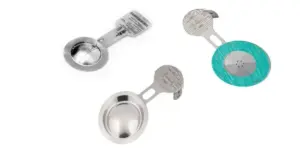
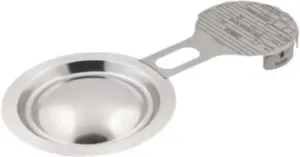
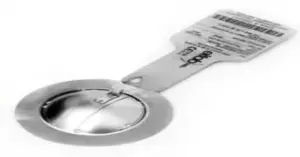
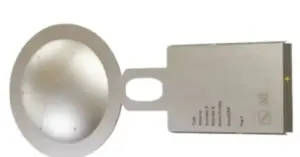


In the world of pressure safety, the rupture disc is a “silent guardian.” It sits quietly in the pipework, waiting for the one bad day when pressure spikes dangerously high. Because it doesn’t move or chatter like a valve, it is easy to forget.
However, forgetting this critical device is a dangerous gamble. Unlike a valve that can be tested and put back, a rupture disc has a finite lifespan. It suffers from fatigue, corrosion, and physical damage just like any other component.
Knowing When to Replace Rupture Discs is the key to preventing two major headaches: nuisance bursts (which stop production) and failure to open (which risks an explosion).
This is the golden rule: If a disc bursts, it must be replaced. But you must also check the discs that didn’t burst.
If your system experienced a pressure spike that came close to the burst pressure (e.g., within 95% of the limit) but didn’t quite pop the disc, the metal membrane may still be stressed. The crystalline structure of the metal can stretch and weaken. If you leave it in service, it will likely fail prematurely later on during normal operation.
Rupture discs are not permanent fixtures. Manufacturers provide a recommended service life based on the material and the design.
Visual inspection is your best friend. During a shutdown, if you inspect the disc and see:
Then it is time to replace it immediately. Even microscopic corrosion thins the metal, which lowers the burst pressure.A disc designed for 100 PSI may fail at 80 PSI if corrosion has reduced its thickness by 20%.
This is a common, silent killer of discs. If a technician installs a disc, torques the flange bolts, and then realizes they need to loosen them to adjust alignment, the disc is ruined.
Once a metal disc has been compressed (bited) into the holder, loosening and re-tightening creates stress fractures and potential leak paths. If a disc is ever removed or loosened for any reason, the rule on When to Replace Rupture Discs is simple: throw it away and install a fresh one.
Did you increase the operating temperature of the vessel? Did you switch from a static load to a pulsating pump?
A rupture disc is a precision instrument, not a simple piece of metal. It is calibrated to save lives.
Determining when to Replace Rupture Discs shouldn’t be a guessing game. It should be a scheduled part of your asset integrity program. Replacing a disc a month early costs a few dollars; replacing it one second too late costs everything.
Stop relying on potentially fatigued equipment. Let our team help you establish a reliable replacement schedule.
Contact ADYAA Pressure Safety Team
Get advice on disc lifecycles and preventative maintenance.