When to Replace Rupture Discs in Pressure Equipment: A Maintenance Guide
When to Replace Rupture Discs in Pressure Equipment: A Maintenance Guide In the world of pressure safety, the rupture disc...
Read More →

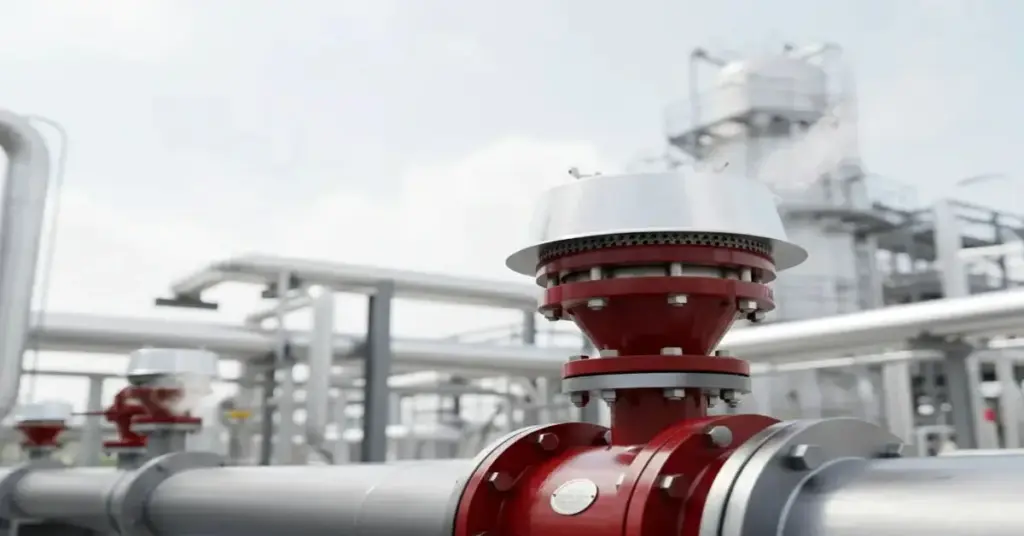
In industries that handle volatile liquids and gases, a spark is your worst enemy. If a fire starts outside a fuel tank, the real danger isn’t just the fire itself—it is the flame traveling back down the pipe into the tank, causing a catastrophic explosion.
To stop this “flashback,” engineers rely on a critical passive safety device: the Flame Arrester.
It acts as a firewall for your piping system, allowing gas to flow freely while stopping fire dead in its tracks. But selecting the wrong one (e.g., confusing a deflagration arrester with a detonation arrester) can be a fatal mistake.
ADYAA supplies and distributes flame arresters in Australia, protecting local refineries, biogas plants, and storage terminals from disaster. In this guide, we break down the mechanics, functions, and critical applications of these life-saving devices.
A flame arrester (also known as a flame trap) is a passive safety device installed on a storage tank nozzle or in a pipeline.
Its primary function is simple but vital: to allow gas to pass through but stop a flame from passing through.
It works on the principle of heat dissipation. By forcing the flame to pass through a series of narrow channels (the element), the device splits the flame into tiny “lets” and absorbs its heat energy until it becomes too cold to sustain combustion.
The heart of every flame arrester is the “element” or filter bank—usually made of wound crimped metal ribbon or wire mesh.
When a flame front hits the element, two things happen:
Not all fires burn the same way. The type of flame arrester you need depends entirely on how fast the flame is moving and where the device is located.
This is the most critical distinction in safety engineering.
Where are these devices mandatory?
Why is this device essential for your safety strategy?
Here are the answers to the most common questions regarding these safety systems.
The purpose is to stop the propagation of a flame through a flammable gas or vapor mixture. It protects equipment (like storage tanks) and personnel by extinguishing the flame front before it can cause an explosion.
They are required anywhere flammable gases are vented or transported. Common locations include:
“Flame trap” is simply another name for a flame arrester. Its purpose is to “trap” the flame by absorbing its heat, preventing it from passing further down the line.
On ships, they are installed on fuel tank vents and cargo hold vents. They prevent external sparks (from static electricity or machinery) from igniting the explosive fumes inside the fuel or cargo tanks.
A flame arrester is a simple device with a massive responsibility. It stands between a minor fire and a major industrial disaster.
Whether you are managing a biogas plant or a fuel terminal, selecting the right element size and location is non-negotiable.
ADYAA supplies and distributes flame arresters in Australia, offering expert sizing and selection for Deflagration and Detonation hazards. We ensure your plant meets local safety standards.
Is your facility protected from flashback?