
Tank Safety Systems: Protecting Industrial Storage Tanks
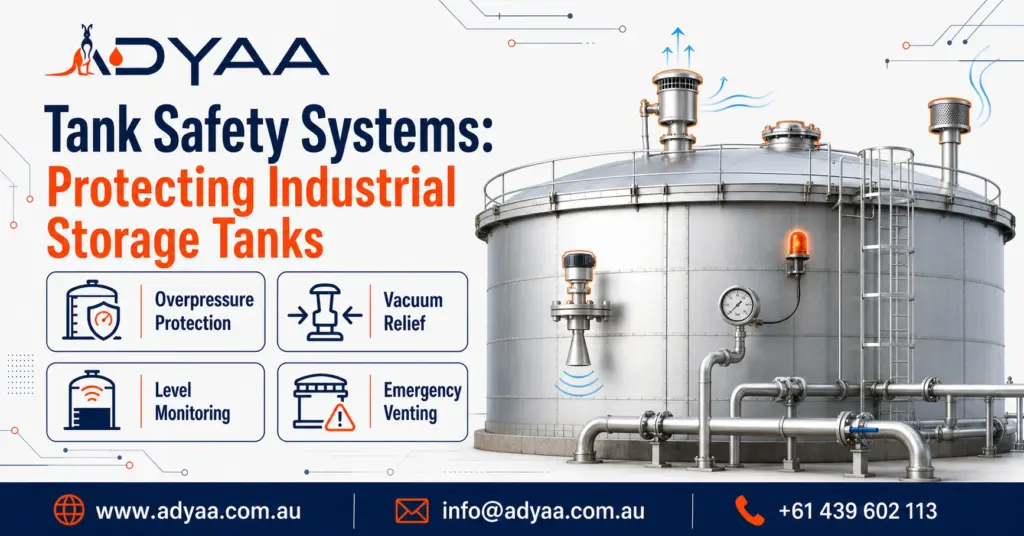
Tank Safety Systems: Protecting Industrial Storage Tanks Industrial storage tanks are designed to safely contain liquids, chemicals and gases under varying operating conditions. However, changes in pressure, vacuum or ignition sources can threaten both equipment and personnel. A Tank Safety System combines multiple protection devices to safeguard storage tanks, maintain process integrity and support safe plant operations. From fuel terminals and chemical plants to food processing facilities, effective tank safety systems play an important role in preventing equipment damage, reducing operational risks and improving long-term reliability. What Is a Tank Safety System? A Tank Safety System is a combination of pressure protection devices that help maintain safe operating conditions inside storage tanks. These systems are designed to control pressure changes caused by filling, emptying, temperature fluctuations or process operations while also reducing the risk of fire and equipment damage. A typical tank safety system may include: Pressure Vacuum Vents Emergency Relief Valves Flame Arrestors Blanket Gas Regulators Level Instrumentation Pressure Monitoring Devices Together, these components help protect both the storage tank and the surrounding facility. Why Tank Safety Systems Matter Proper tank protection improves both operational safety and equipment reliability. Protect Storage Tanks Prevent excessive pressure or vacuum from damaging tanks. Improve Plant Safety Reduce the risks associated with pressure build-up and ignition hazards. Minimise Product Loss Help reduce evaporation losses and product release. Support Reliable Operations Maintain stable operating conditions during filling and emptying. Extend Equipment Life Reduce mechanical stress on tanks and associated equipment. Improve Process Efficiency Support continuous and reliable plant operations. How a Tank Safety System Works Tank safety systems continuously respond to changing operating conditions. Product enters or leaves the storage tank. Internal pressure or vacuum changes. Protection devices monitor these changes. Pressure or vacuum is safely relieved when required. The tank returns to its normal operating condition. This automatic protection helps maintain safe operating conditions without interrupting production. Key Components of a Tank Safety System A complete tank safety solution typically includes several protection devices. Pressure Vacuum Vents Protect tanks against excessive internal pressure and vacuum during normal operation. Emergency Relief Valves Provide additional pressure relief during abnormal operating conditions such as fire exposure or rapid filling. Flame Arrestors Prevent flames from entering or travelling through tank vent systems. Blanket Gas Regulators Maintain protective inert gas pressure inside storage tanks. Pressure Monitoring Instruments Continuously monitor tank pressure and operating conditions. Level Measurement Instruments Measure tank levels to support safe storage operations and inventory management. Tank Safety System Components Comparison Component Primary Function Typical Application Pressure Vacuum Vent Pressure & Vacuum Protection Storage Tanks Emergency Relief Valve Emergency Pressure Relief Chemical Tanks Flame Arrestor Flame Protection Fuel Storage Blanket Gas Regulator Inert Gas Control Chemical Processing Pressure Instruments Pressure Monitoring Process Industries Level Transmitters Inventory Monitoring Tank Farms Where Tank Safety Systems Are Used Tank protection is essential across many industries. Oil & Gas Protect fuel storage tanks, terminals and processing facilities. Chemical Processing Safeguard chemical storage tanks against pressure changes. Petrochemical Support safe storage of volatile process media. Food & Beverage Protect storage vessels used for ingredients and finished products. Pharmaceutical Maintain controlled storage environments. Water & Wastewater Protect chemical dosing and storage tanks. Mining Monitor reagent storage tanks and processing facilities. Power Generation Protect fuel storage and process tanks. Tank Safety System Selection Checklist Before selecting a tank safety system, evaluate: ✔ Tank size ✔ Stored product ✔ Operating pressure ✔ Vacuum requirements ✔ Filling and emptying rates ✔ Venting capacity ✔ Hazard classification ✔ Environmental conditions ✔ Industry standards ✔ Maintenance accessibility Choosing the correct protection devices improves safety, equipment reliability and operational efficiency. Common Mistakes When Designing Tank Safety Systems Poor tank protection can increase operational risks. Common mistakes include: Undersized venting devices Ignoring vacuum protection Incorrect flame arrestor selection Poor equipment sizing Inadequate pressure monitoring Delayed maintenance Ignoring future process expansion A properly engineered system helps reduce these risks. Why Tank Protection Matters Storage tanks are continuously exposed to changing operating conditions. Even routine filling or temperature changes can create pressure or vacuum conditions capable of damaging equipment. A well-designed Tank Safety System helps maintain safe operating conditions, protects valuable assets and supports uninterrupted industrial operations. Why Choose ADYAA? ADYAA supplies complete tank protection solutions for industrial facilities across Australia. Comprehensive Tank Protection Solutions Pressure Vacuum Vents, Emergency Relief Valves, Flame Arrestors and related safety products. Technical Expertise Support in selecting the right protection solution for your storage application. Reliable Industrial Products Designed for demanding industrial operating environments. Integrated Safety Solutions Products compatible with modern process instrumentation and control systems. Australia-wide Support Reliable assistance for customers across Australia. Long-Term Equipment Protection Helping industries improve safety, reliability and operational performance. Frequently Asked Questions What is a Tank Safety System? A Tank Safety System protects storage tanks from excessive pressure, vacuum and fire-related hazards using specialised safety devices. What components are included in a Tank Safety System? Common components include Pressure Vacuum Vents, Emergency Relief Valves, Flame Arrestors, Blanket Gas Regulators and monitoring instruments. Why is vacuum protection important? Vacuum conditions can cause storage tanks to collapse if they are not properly protected. Where are Tank Safety Systems used? Oil & Gas, Chemical Processing, Petrochemical, Water Treatment, Food & Beverage, Mining and Pharmaceutical industries. How do I choose the right Tank Safety System? Selection depends on tank size, stored product, operating conditions, venting requirements and applicable engineering standards. Do Tank Safety Systems require maintenance? Yes. Routine inspection and maintenance help ensure reliable long-term performance. A properly designed Tank Safety System is essential for protecting storage tanks, maintaining operational safety and supporting reliable industrial processes. Selecting the right combination of pressure protection devices helps reduce operational risks while improving equipment reliability and process efficiency. ADYAA supplies complete tank safety and pressure protection solutions across Australia, helping industries safeguard storage facilities with reliable, application-specific products. Need help selecting the right Tank Safety System? Our specialists can help you choose the right tank protection solution for your storage application. Tank Safety Systems: Protecting Industrial