
What Additional Substances Are Used for Effective Gasket Sealing?
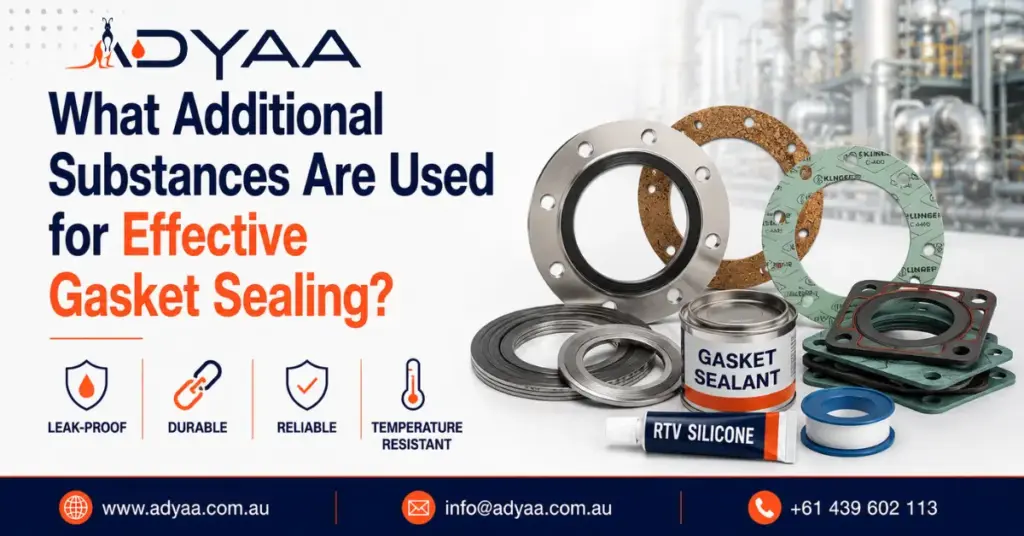
What Additional Substances Are Used for Effective Gasket Sealing? A gasket is designed to seal two mating surfaces and prevent leakage under pressure, temperature and varying process conditions. In many applications, the gasket alone performs exactly as intended. However, certain operating environments demand additional support to maintain a reliable seal over time. The important question isn’t “Which sealant should I use?”—it’s “Does this application actually need one?” Using the wrong sealing compound, applying excessive sealant or relying on additional materials to compensate for poor installation can create more problems than it solves. Understanding where these products fit into gasket sealing helps improve equipment reliability, reduce maintenance and minimise unexpected downtime. When Should Additional Sealing Substances Be Used? Additional sealing products are usually considered when operating conditions place extra stress on the gasket or sealing surface. Common situations include: High operating temperatures High-pressure systems Slightly worn or imperfect flange surfaces Aggressive chemicals Steam applications Frequent equipment maintenance Corrosive environments For example, a chemical processing plant handling aggressive media may require a chemically compatible sealing compound, while a steam pipeline operating at elevated temperatures may benefit from graphite-based lubricants on fasteners to maintain consistent bolt preload. The choice always depends on the process—not simply on the gasket. Common Substances That Support Gasket Sealing Gasket Sealants Gasket sealants are applied as a thin coating to improve contact between the gasket and flange surfaces. They help compensate for minor surface imperfections but should never replace proper flange preparation or correct gasket selection. They are commonly used in: Pumps Gearboxes Compressors Process pipe flanges Applying more sealant does not create a better seal. In many cases, excessive sealant can squeeze into the process line and contaminate equipment. PTFE Tape PTFE tape is one of the most recognised sealing materials, but it is frequently misunderstood. It is intended for threaded pipe connections—not flat gasket faces. Typical applications include: Instrumentation fittings Threaded valves Pipe threads Pneumatic connections Using PTFE tape on flange gasket surfaces is generally not recommended because the gasket is already designed to provide the sealing function. Anti-Seize Compounds Anti-seize compounds are applied to bolts, studs and fasteners rather than the gasket itself. Their purpose is to: Prevent thread galling Reduce corrosion Improve bolt tightening consistency Simplify future maintenance Uniform bolt loading is one of the most important factors in achieving reliable industrial gasket sealing. Graphite Lubricants Graphite lubricants are commonly selected for high-temperature applications where conventional lubricants may degrade or lose their effectiveness. They are widely used in: Boilers Steam systems Thermal processing equipment High-temperature pipework These lubricants help maintain consistent fastening performance during repeated maintenance cycles. Application-Specific Sealing Compounds Certain industries require specialised sealing products designed for specific operating conditions. Examples include: Food-grade sealing compounds Chemical-resistant sealants Oil and gas sealing compounds Pharmaceutical-approved sealing materials Selecting the correct product requires considering the process media, operating temperature, pressure and gasket material. When Additional Sealants Should NOT Be Used One of the biggest misconceptions in industrial maintenance is that adding more sealant automatically improves sealing performance. In reality, additional sealing compounds may be unnecessary when: Flange faces are clean and undamaged. The correct gasket material has been selected. Bolts are tightened correctly. The manufacturer’s installation recommendations are followed. Modern industrial gaskets, including PTFE, graphite and spiral wound gaskets, are often designed to perform without additional sealants. Common Mistakes That Cause Gasket Failure Many sealing failures occur during installation rather than because of the gasket itself. Some of the most common mistakes include: Applying excessive gasket sealant Mixing incompatible sealing compounds Using PTFE tape on flange faces Reusing compressed gaskets Ignoring damaged flange surfaces Uneven bolt tightening Selecting the wrong gasket material Following recognised installation practices, such as ASME PCC-1 bolt tightening guidelines where applicable, can significantly improve sealing reliability. Choosing the Right Sealing Solution Before selecting any additional sealing substance, ask these questions: What fluid is being sealed? Is the media chemically aggressive? What are the operating temperature and pressure? What gasket material is being used? Is the flange surface in good condition? Will the equipment be dismantled regularly? These answers often determine whether the gasket alone is sufficient or whether supporting sealing materials are beneficial. Sealing Material Best Used For Avoid When Gasket Sealant Minor flange imperfections Good flange surfaces with modern gasket materials PTFE Tape Threaded connections Flat gasket joints Anti-Seize Compound Bolts and fasteners Gasket sealing surfaces Graphite Lubricant High-temperature bolting Low-temperature general applications Frequently Asked Questions Can gasket sealant replace a damaged gasket? No. Sealants are designed to support gasket performance, not compensate for damaged or incorrectly selected gaskets. Is PTFE tape suitable for flange connections? Generally no. PTFE tape is intended for threaded fittings rather than gasket sealing surfaces. Can too much gasket sealant cause leaks? Yes. Excess sealant may interfere with gasket compression or enter the process system. Which industries commonly use additional sealing substances? Chemical processing, oil & gas, food manufacturing, pharmaceutical production, power generation and water treatment frequently use specialised sealing products. How can gasket sealing performance be improved? Selecting the correct gasket material, preparing flange surfaces properly, tightening bolts evenly and using additional sealing products only when required provides the most reliable results. Final Thoughts Reliable gasket sealing is rarely achieved by adding more sealing compounds. It begins with selecting the correct gasket material, understanding the operating conditions and following good installation practices. Additional substances such as gasket sealants, PTFE tape, anti-seize compounds and graphite lubricants each have a specific purpose. When selected correctly, they help improve sealing performance and reduce maintenance. When used incorrectly, they can create unnecessary reliability issues. Rather than treating every application the same, evaluate the process conditions, media compatibility and equipment design before deciding whether additional sealing materials are required. Industrial facilities handling demanding process conditions often benefit from using high-quality industrial gaskets, compatible sealing solutions and correctly selected instrumentation to improve long-term equipment reliability. ADYAA supports industries across Australia with a comprehensive range of industrial sealing products, helping maintenance teams and engineers choose solutions that match their application rather
What Is Industrial Sealing and Why Is It Important?
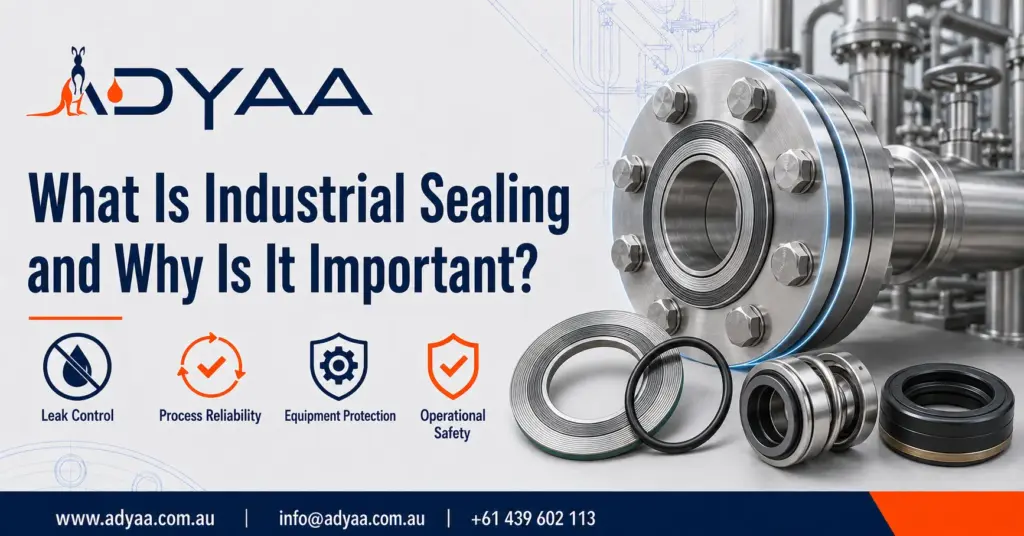
What Is Industrial Sealing and Why Is It Important? In a massive refinery or a high-pressure mining plant, the most critical component often isn’t the largest pump or the tallest reactor—it’s the smallest seal. Industrial sealing is the unsung hero of process integrity. Whether it is a Ring Type Joint (RTJ) gasket in an oil pipeline or a simple O-ring in a hydraulic cylinder, seals are the barrier between a safe, efficient operation and a catastrophic failure. We specialize in high-performance sealing solutions for Australia’s toughest environments. In this guide, we break down what industrial sealing actually is, why it is critical for your bottom line, and the different types you need to know about. Industrial Sealing Solutions for Maintenance Managers, Process Engineers and Procurement Officers in Oil & Gas/Mining. What Is Industrial Sealing? At its core, industrial sealing is the technology used to block the passage of fluids (liquids or gases) through the gap between two joined surfaces. It serves two primary functions: Containment: Keeping the internal media (oil, steam, acid) inside the system. Exclusion: Keeping external contaminants (dust, dirt, moisture) outside the system. While this sounds simple, the challenge lies in the conditions. Industrial seals must maintain this barrier while enduring extreme temperatures (from cryogenic -196°C to scorching +1000°C), massive pressures (up to 20,000 PSI), and aggressive chemical corrosion. Why Is Industrial Sealing Important? You might view seals as cheap consumables, but their failure can cost millions. Here is why investing in quality sealing (like ADYAA’s RX Rings or Spiral Wound Gaskets) is non-negotiable. 1. Safety and Hazard Prevention The most immediate importance of sealing is human safety. In industries like Oil & Gas, a leaking flange isn’t just a mess; it’s a fire hazard or a toxic cloud. Proper sealing ensures that volatile organic compounds (VOCs) and dangerous chemicals stay contained, protecting your workforce from exposure and explosions. 2. Operational Efficiency A system that leaks pressure is a system that bleeds money. Pneumatic systems: Leaking air forces compressors to work harder, driving up electricity bills. Hydraulic systems: Fluid loss results in sluggish machinery and reduced force. High-quality seals ensure your equipment runs at peak parameter settings without wasting energy. 3. Environmental Compliance Australia has strict environmental regulations regarding emissions and ground contamination. A reliable sealing system helps you meet EPA standards by preventing “fugitive emissions”—the slow, invisible leaks of gas from valves and flanges that can lead to heavy fines. 4. Equipment Longevity Seals act as the first line of defense for your expensive assets. For example, a Spring-Energized Seal or a Polymer Bellow protects internal bearings and shafts from grit and corrosion. If the seal fails, contaminants can enter the equipment, accelerating wear and potentially causing premature component failure. Types of Industrial Sealing Solutions Not all seals are created equal. Depending on your application, you will generally rely on one of these categories: A. Static Seals (Gaskets) These are used between two stationary surfaces, such as pipe flanges. RTJ Gaskets (Ring Type Joints): Metal gaskets (Oval, Octagonal, RX, BX) designed for high-pressure/high-temperature applications. They form a metal-to-metal seal ideal for the Oil & Gas industry. Spiral Wound Gaskets: A mix of metal winding and soft filler (graphite/PTFE), offering excellent recovery for fluctuating temperatures. B. Dynamic Seals These seals are between parts that move relative to each other (like a piston rod or a rotating shaft). Spring-Energized Seals: Used when standard elastomers fail. A spring ensures constant contact while maintaining sealing force as the sealing interface changes. Packing: Soft braided material compressed around a shaft to prevent leakage in pumps and valves. C. O-Rings One of the most widely used seal types, O-rings are donut-shaped loops that sit in a groove and compress to prevent fluid leakage. Elastomeric: NBR, Viton® (FKM), or EPDM, selected for suitable operating conditions. Metal O-Rings: Used by ADYAA for extreme environments, such as aerospace and cryogenic applications, where conventional rubber seals may not withstand the operating conditions. Summary: Don’t Let a Leak Stop Your Plant A seal might cost $50, but it protects a $500,000 pump and ensures the safety of everyone on site. Whether you need standard Lens Rings for steam lines or custom CNC-machined sealing components, quality matters. ADYAA supplies a full range of gaskets, O-rings, and custom seals engineered for the Australian industry. Need help selecting the right material for your chemical plant? View Our Full Range of Sealing Solutions. Contact our engineers for a consultation. What Is Industrial Sealing and Why Is It Important? Pressure Instrumentation Suppliers: What to Look for Before You Buy Selecting a pressure instrument isn’t simply about finding the lowest… Read More → Pressure Instrumentation Suppliers: What to Look for Before You Buy. Pressure Instrumentation Suppliers: What to Look for Before You Buy Selecting a pressure instrument isn’t simply about finding the lowest… Read More → The Role of Sealing in Preventing Leakage and Safety Hazards Focus The Role of Sealing in Preventing Leakage and Safety Hazards A leak is rarely just a “drip.” In a chemical… Read More →
The Role of Sealing in Preventing Leakage and Safety Hazards Focus
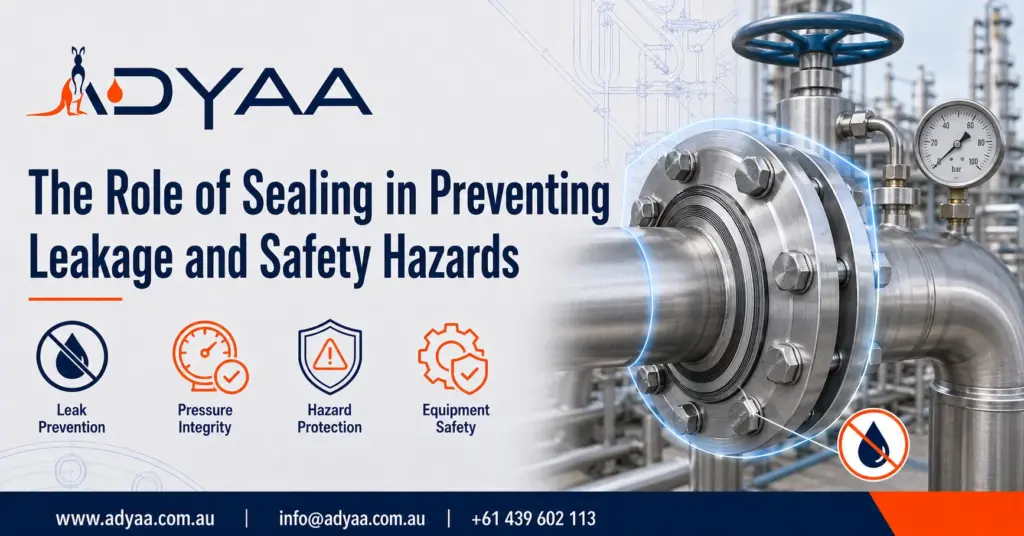
The Role of Sealing in Preventing Leakage and Safety Hazards A leak is rarely just a “drip.” In a chemical plant, a leak poses a significant risk of toxic exposure. In an oil refinery, there is a potential fire. In a high-pressure steam line, it is an explosion hazard. While pumps and reactors get the most attention during safety audits, the role of sealing in preventing leakage is arguably the most critical factor for maintaining facility integrity. It is the invisible shield that keeps your processes contained and your workforce safe. ADYAA understands that gaskets and seals are not just consumables; they are safety devices. In this guide, we explore how high-performance sealing mitigates catastrophic risks. Sealing Solutions for HSE Managers, Maintenance Leads, Reliability Engineers. The Real Cost of Leakage Leakage is often categorized into two types: visible leakage (drips and sprays) and fugitive emissions (invisible gas release). Both pose severe threats: Fire and Explosion: In the Oil & Gas sector, flammable hydrocarbons escaping from a failed flange gasket can be ignited by a single spark. Toxic Exposure: Leaking seals in chemical processing can release hazardous fumes (like chlorine or ammonia), endangering workers’ lungs and skin. Environmental Contamination: Seeping chemicals can contaminate groundwater, leading to massive EPA fines. Understanding the role of sealing in preventing leakage allows plant managers to address these risks before they become accidents. How Advanced Sealing Prevents Hazards Preventing these outcomes requires selecting the right seal for the specific hazard. Standard rubber O-rings often fail under extreme stress. Here is how specialized ADYAA sealing products fulfill the vital role of sealing in preventing leakage across different applications. 1. Controlling Extreme Pressure (The RTJ Solution) When pressures climb above 2,000 PSI, standard flat gaskets can blow out. The Solution: Ring Type Joint (RTJ) Gaskets. How it Works: Used heavily in the Oil & Gas industry, RTJs (like the Type R, RX, and BX) sit in a machined groove. The RX and BX styles are “pressure-energized,” meaning internal pressure pushes the gasket tighter against the flange. This mechanism highlights the active role of sealing in preventing leakage during dangerous pressure spikes. 2. Handling Extreme Temperatures In cryogenic applications (LNG) or superheated steam systems, elastomers become brittle and crack, leading to immediate failure. The Solution: Metal O-Rings and Lens Rings. How it Works: Made from heavy-duty alloys, Metal O-Rings and Lens Rings withstand temperatures that would melt rubber. They provide a reliable metal-to-metal seal and can maintain sealing performance under extreme temperatures and demanding operating conditions. 3. Chemical Resistance Many industrial fluids are corrosive enough to eat through standard seals. The Solution: Spring Energized Seals and Bonded Seals. How it Works: By using high-grade polymers (like PTFE) energized by a corrosion-resistant spring, these seals maintain contact with the sealing surface even under prolonged exposure to aggressive chemicals and demanding operating conditions. . This confirms the role of sealing in preventing leakage of hazardous chemicals that could otherwise cause premature degradation of unsuitable sealing materials. Why Seals Fail (And How to Stop It) Even the best gasket will leak if applied incorrectly. The three most common causes of sealing failure are: Incorrect Material Selection: Using a standard NBR O-ring in a high-temperature acid line. Improper Installation: Uneven bolt torque on a flange can crush a gasket or leave gaps. Reusing Disposable Seals: Many metallic gaskets (like RTJs) deform to create a seal and cannot be reused. Protect Your Workforce with ADYAA Safety is not a place to cut corners. Whether you require Weld Ring Gaskets for a permanent seal or Backup Rings for hydraulics, ADYAA has the engineering expertise to specify the correct component. We supply sealing products designed to Australian and International standards. By prioritizing the role of sealing in preventing leakage, you ensure your plant stays compliant, efficient, and accident-free. Is your facility fully protected? Browse Our Range of RTJ Gaskets & Metal Seals Contact ADYAA for a Sealing Safety Assessment. The Role of Sealing in Preventing Leakage and Safety Hazards Focus How Vision & Imaging Sensors Transform Automated Inspection Systems In the high-speed world of modern manufacturing, zero-defect production is no… Read More → How Vision & Imaging Sensors Transform Automated Inspection Systems How Vision & Imaging Sensors Transform Automated Inspection Systems In the high-speed world of modern manufacturing, zero-defect production is no… Read More → Onsite Instrumentation Calibration: Benefits & Best Practices Onsite Instrumentation Calibration: Benefits & Best Practices A pressure transmitter reading slightly higher than the actual pressure or a temperature… Read More →
Gaskets vs O-Rings: Which Sealing Solution Is Right for You?
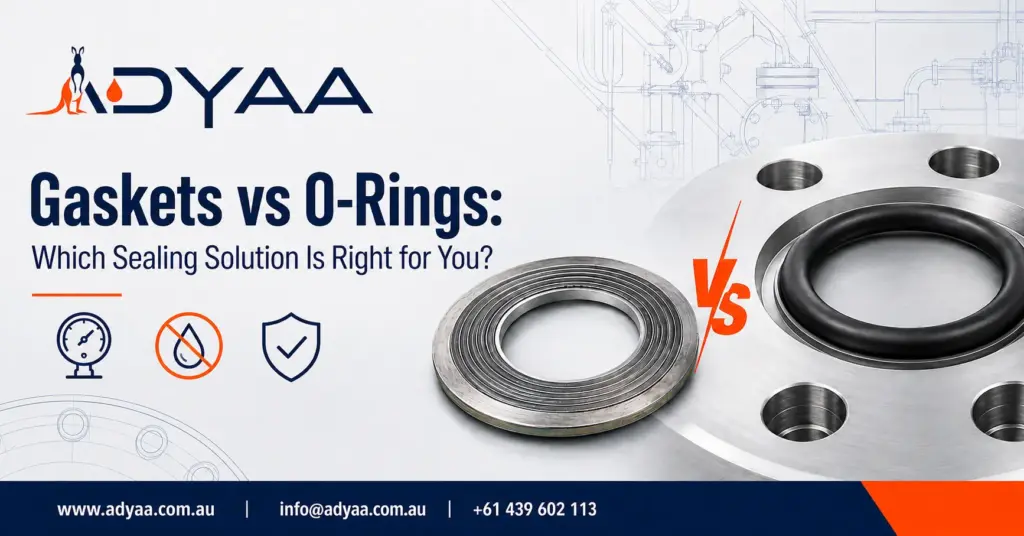
Gaskets vs O-Rings: Which Sealing Solution Is Right for You? In any fluid handling system, the weakest point is always the connection. Whether you are bolting two pipe flanges together or sealing a moving piston, you need a barrier that prevents leaks. This brings us to the most common question in industrial sealing: what is the difference between Gaskets vs O-Rings? While both devices serve the same ultimate purpose—keeping fluids in and contaminants out they function differently and are designed for distinct environments. ADYAA, supply both high-performance gaskets and precision O-rings. In this guide, we break down the battle of Gaskets vs O-Rings to help you select the right solution for your application. Gaskets vs O-Rings for: Mechanical Engineers, Maintenance Technicians, Procurement Officers. 1. What Is a Gasket? (The Static Specialist) A gasket is a flat seal designed to fill the space between two mating surfaces, typically held together by bolts. Function: It creates a seal by being compressed between two stationary parts (like pipe flanges). Common Types: Spiral Wound Gaskets, Ring Type Joints (RTJ), and cut sheet gaskets. Best For: Static applications where the two surfaces do not move relative to each other. 2. What Is an O-Ring? (The Versatile Performer) An O-ring is a loop of elastomer (rubber) or metal with a round cross-section. It sits inside a designated groove and is compressed to create a seal. Function: It can seal against high pressure in both static (stationary) and dynamic (moving) applications. Common Types: NBR, Viton, EPDM, and Metal O-Rings. Best For: Hydraulic cylinders, pump shafts, and precise static grooves. The Key Differences: Gaskets vs O-Rings When deciding between Gaskets vs O-Rings, the choice usually comes down to three factors: Motion, Pressure, and Flange Design. A. Static vs. Dynamic Motion This is the biggest differentiator. Gaskets are almost exclusively used for static seals. If the two surfaces move or vibrate significantly, a standard gasket may tear or lose compression. O-Rings excel in dynamic seals. If you have a piston moving inside a cylinder or a rotating shaft, an O-ring (or dynamic seal) is required because it can handle the friction and motion. B. Pressure Handling In the comparison of Gaskets vs O-Rings, gaskets often win in heavy industrial piping. Gaskets (specifically RTJs): Designed for extreme pressure (up to 20,000 PSI). The harder you bolt the flange, the tighter the seal. O-Rings: Can handle high pressure, but they require backup rings to prevent “extrusion” (where the rubber is blown out of the gap). C. Surface Requirements Gaskets are forgiving. They can seal rougher, uneven flange surfaces because the gasket material deforms to fill the imperfections. O-Rings require precision. The groove must be machined to exact tolerances. If the surface is rough, the O-ring will suffer from abrasion and leak. Selection Guide: Which Should You Choose? To settle the Gaskets vs O-Rings debate for your specific project, ask these questions: Is there movement? Yes (Shafts, Pistons) – Choose an O-Ring. No (Pipe Flanges, Valve Bonnets) – Choose a Gasket. What is the connection type? Flat Flanges – Gasket (Spiral Wound or RTJ). Grooved Housing – O-Ring. What is the Temperature? Extreme Heat (>500°C)? $rightarrow$ You need a Metal RTJ Gasket or a Metal O-Ring (Elastomers will melt). Conclusion Ultimately, the choice of Gaskets vs O-Rings isn’t about which is “better”—it is about which fits the geometry of your equipment. If you are sealing a heavy-duty pipe flange in an oil refinery, you need an ADYAA Ring Type Joint. If you are sealing a hydraulic actuator, you need an ADYAA O-Ring. We stock both, ensuring you never have to compromise on seal quality. Need help specifying the right seal? Explore Our Gaskets & O-Rings Collection. Contact our technical team for advice. Gaskets vs O-Rings: Which Sealing Solution Is Right for You? Gaskets vs O-Rings: Which Sealing Solution Is Right for You? In any fluid handling system, the weakest point is always… Read More → Flow Measurement Solutions for Industrial Processes Flow Measurement Solutions for Industrial Processes Accurate flow measurement is essential for maintaining efficient industrial operations. Whether monitoring water, chemicals,… Read More → Industrial HVAC vs Commercial HVAC: What is the Difference? Industrial HVAC vs Commercial HVAC: Why Equipment Choice Matters If you walk onto the roof of a shopping mall and… Read More →
High Pressure Sealing Solutions Guide
A Complete Guide to High Pressure Sealing Solutions High pressure sealing solutions are specialized industrial gaskets engineered to contain volatile fluids and gases under extreme operational stress. Standard rubber seals fail under high pressure due to extrusion and thermal degradation. To prevent catastrophic blowouts and toxic emissions, heavy industries must utilize advanced metallic and semi-metallic seals—like Spiral Wound, Ring Type Joints (RTJ), and Kammprofile gaskets—paired with high-performance fillers like flexible graphite or PTFE. Here is a comprehensive engineering guide to selecting the exact right seal for your critical infrastructure. Quick Comparison: High-Pressure Gasket Types Gasket Type Primary Structure Best For Maximum Pressure (Approx.) Spiral Wound Alternating metal wire & soft filler Steam lines, thermal cycling Up to Class 2500 Ring Type Joint (RTJ) Solid metal ring (Oval/Octagonal) Offshore drilling, extreme pressure Class 1500 to API 10,000+ Kammprofile Serrated metal core with soft facing Uneven flanges, high seating stress Up to Class 2500 Understanding High-Pressure Seal Failures Before specifying a high-performance seal, facility managers must understand exactly how and why extreme pressure destroys standard elastomer gaskets. The Mechanics of Extrusion Under massive pressure, soft gasket materials behave like highly viscous liquids. The internal pipeline pressure literally squeezes the gasket out of the flange gap until the seal is completely lost. High-pressure solutions prevent this by using a rigid metal core or containment ring to trap the sealing material in place. Thermal Degradation High pressure is almost always accompanied by high heat. Standard rubber or silicone will bake, harden, crack, and lose its ability to compress. Advanced sealing solutions rely on materials that do not degrade thermally, ensuring long-term pipeline integrity. Core High-Pressure Sealing Technologies To combat extrusion and blowout, modern industrial seals rely on clever metallic designs combined with resilient filler materials. 1. Spiral Wound Gaskets This is the versatile workhorse of high-pressure industrial piping. How It Works Alternating layers of V-shaped metallic wire and a soft filler material (like graphite) are wound together under tension. The metal provides structural blowout resistance, while the soft filler molds into the flange imperfections. Best Industrial Applications High-temperature heat exchangers. Live steam lines. Pipelines experiencing frequent thermal cycling and pressure spikes. 2. Ring Type Joints (RTJ) When pressures exceed Class 900, traditional flat gaskets are no longer safe, and RTJs become mandatory. How It Works RTJs are solid metal rings that rest inside specially machined grooves on the flange faces. As the heavy flange bolts are tightened, the metal ring physically deforms (coining) into the flange groove, creating a permanent, impenetrable metal-to-metal seal. Best Industrial Applications Offshore oil and gas drilling platforms. Extreme-pressure chemical reactors. High-pressure steam headers. 3. Kammprofile (Camprofile) Gaskets These gaskets offer the extreme blowout resistance of a solid metal gasket with the conformability of a soft gasket. How It Works A solid metal core is machined with concentric serrations (grooves) on both sides. A thin layer of soft material is applied over the serrations. When compressed, the metal core bites into the flange, while the soft facing fills the micro-voids. Best Industrial Applications Applications requiring high seating stress. Older pipelines where the flange faces might be slightly damaged or uneven. Toxic chemical lines require absolute zero-emission containment. Selecting the Right Filler Material While the metal structure provides the strength to resist pressure, the filler material provides the actual microscopic seal. You must match the filler to your plant’s specific media: Flexible Graphite: The absolute best choice for high heat. It easily survives extreme temperatures and seals perfectly against steam and hydrocarbons. PTFE (Teflon): The premier choice for aggressive chemical plants. It resists almost all known industrial acids and caustics but is limited to lower temperatures. Mica: Used in extreme exhaust and burner applications where temperatures exceed the thermal limits of graphite. Secure Your Industrial Infrastructure Don’t risk your plant’s safety on inadequate gaskets. ADYAA Engineering specializes in specifying and supplying advanced high pressure sealing solutions for the toughest industrial environments. From spiral wound to custom-machined RTJs, we have the technology to secure your critical infrastructure. Explore our sealing solutions. Industrial IoT in Manufacturing Explained Industrial IoT in Manufacturing Explained Industrial IoT in manufacturing (IIoT) is the integration of smart, internet-connected sensors and cloud-based analytics… Read More → High Pressure Sealing Solutions Guide A Complete Guide to High Pressure Sealing Solutions High pressure sealing solutions are specialized industrial gaskets engineered to contain volatile… Read More → Guide to Hydrostatic Valve Testing A Complete Guide to Hydrostatic Valve Testing Hydrostatic valve testing is a mandatory, high-pressure diagnostic procedure used to verify the… Read More →
Pipeline Sealing Solutions to Reduce Product Loss: A Prevention Guide
Pipeline Sealing Solutions to Reduce Product Loss: A Prevention Guide A pipeline network is only as strong as its weakest joint. While miles of steel pipe can last for decades, the thousands of connection points—flanges, valves, and fittings—are constant sources of vulnerability. A dripping flange might seem like a minor nuisance, but in the oil and gas or chemical industries, it represents a massive financial drain. Beyond the direct cost of the lost fluid, there are environmental fines, safety hazards, and expensive cleanup operations. Implementing effective Pipeline Sealing Solutions is not just about tightening bolts; it is about engineering a leak-free system that withstands vibration, thermal expansion, and aggressive chemicals. The True Cost of Leaking Pipes Why should operators invest in premium sealing technology? The impact of a leak goes far beyond the puddle on the floor. Direct Product Loss: A single leak at 1 drop per second loses over 1,500 litres of product per year. Fugitive Emissions: Volatile Organic Compounds (VOCs) escaping from flanges contribute to air pollution and attract heavy regulatory penalties. Asset Damage: Corrosive fluids leaking onto external bolts and nuts can rust the flange faces, requiring expensive machining or replacement. Critical Pipeline Sealing Solutions To stop leaks before they start, you need to match the seal technology to the specific failure mode of the joint. Here are the three primary categories of protection. 1. High-Performance Flange Gaskets The gasket is the primary barrier. If you are still using basic compressed fiber sheets for critical lines, you are inviting failure. Spiral Wound Gaskets (SWG): The industry standard for high-pressure lines. The metal winding provides structural strength, while the graphite filler seals the imperfections. Kammprofile Gaskets: Ideal for older assets. The serrated metal core concentrates sealing stress, allowing tight seals even on pitted or damaged flange faces. 2. Flange Isolation Kits (FIK) Sometimes the pipeline destroys itself through electrolysis. If two dissimilar metals are connected (e.g., stainless steel valve to carbon steel pipe), galvanic corrosion eats away the metal. The Solution: Isolation kits use high-strength dielectric sleeves and washers to electrically separate the flanges. This stops the corrosion current, preserving both the pipe integrity and the seal. 3. Emergency Leak Repair Clamps Even with the best preventative maintenance, accidents happen. Having a contingency plan is part of a complete sealing strategy. Split Sleeves: These can be bolted over a live leak to contain pressure without shutting down the line. They are essential “insurance policies” to keep on the shelf for critical trunk lines. How to Select the Right Seal Choosing the correct Pipeline Sealing Solutions requires evaluating three operational factors. Temperature Cycling Pipelines often expand and contract as day turns to night or process fluids heat up. The Risk: This movement causes flanges to loosen (bolt relaxation). The Fix: Use gaskets with high “recovery” properties (like Spiral Wound) that spring back to maintain contact when the flange face pulls away. Chemical Compatibility A rubber seal that works perfectly for water will dissolve instantly in contact with toluene or acid. The Risk: Chemical attack causes elastomers to swell, blister, or harden. The Fix: Always consult a chemical resistance chart. For aggressive chemicals, upgrade to PTFE (Teflon) or flexible graphite fillers. System Pressure Standard rubber gaskets blow out easily under high pressure. The Risk: Internal pressure pushes the soft gasket out of the flange gap. The Fix: For Class 300 flanges and above, metallic gaskets are mandatory to resist blowout forces. Frequently Asked Questions Can I retighten a leaking gasket? Generally, no. Once a gasket has been compressed and failed, “hot bolting” (tightening while live) is dangerous and rarely fixes the seal permanently. It is safer to replace it. What is the biggest cause of flange leaks? Improper installation. Uneven bolt torque, failure to use a torque wrench, or dirty flange faces cause more leaks than defective gaskets. How do isolation kits help sealing? They prevent the metal flange face from corroding. A smooth, rust-free surface is much easier to seal than a pitted, corroded one. Bottom Line Product loss is not an inevitable part of pipeline operations; it is a symptom of a poor sealing strategy. By upgrading to engineered Pipeline Sealing Solutions—such as Kammprofile gaskets or isolation kits—you stop the “profit bleed” at the source. It is an investment in safety, compliance, and operational efficiency. Are your pipelines losing money? Stop the leaks today. Let our engineering team audit your flange management strategy. Contact ADYAA Sealing Team. Get a quote for gaskets and isolation kits. Industrial HVAC vs Commercial HVAC: What is the Difference? Industrial HVAC vs Commercial HVAC: Why Equipment Choice Matters If you walk onto the roof of a shopping mall and… Read More → How Industrial Automation Sensors Improve Manufacturing Efficiency How Industrial Automation Sensors Improve Efficiency in Manufacturing Efficiency is the primary metric of success. The difference between a profitable… Read More → Gems 3100/3200 Pressure Transmitters : Complete Guide Gems 3100/3200 Pressure Transmitters: Complete Guide Accurate pressure monitoring is essential across industrial environments where process visibility, operational consistency and… Read More →