
Protecting Equipment with Pressure Relief Systems
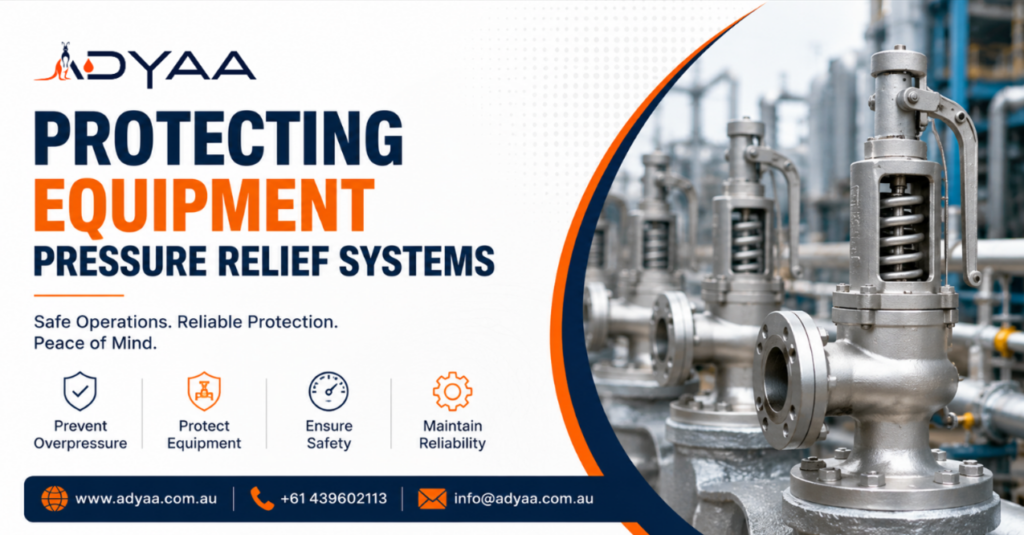
Protecting Equipment with Pressure Relief Systems: A Plant Manager’s Guide Industrial assets are expensive. A single reactor or distillation column represents millions of dollars in capital investment, not to mention the revenue it generates every hour it is online. Yet, these massive steel giants have a weakness: they are incredibly sensitive to internal pressure limits. If a control loop fails or a cooling system stalls, internal pressure can rise within seconds. Without a reliable escape path, the vessel walls will yield, leading to catastrophic equipment damage, environmental release, or safety hazards. Protecting Equipment with Pressure Relief Systems is not just about meeting a compliance checklist; it is the fundamental insurance policy for your plant’s physical assets. The Hidden Mechanisms of Failure To understand how to protect your machinery, you first need to understand the enemy. Overpressure events rarely happen without warning, but they often happen too fast for human intervention. Common culprits include: Blocked Discharge: A valve is accidentally closed downstream while a pump continues to run, dead-heading the flow and spiking pressure. External Fire: A fire near a storage tank causes the liquid inside to boil, expanding rapidly into gas and overwhelming the vessel’s design limits. Thermal Expansion: A pipeline full of liquid is isolated and heated by the sun, causing the fluid to expand and rupture the pipe. In all these scenarios, the vessel integrity depends entirely on the mechanical response of your relief system. The Hierarchy of Defense Effective protection isn’t about slapping a valve on a tank. It requires a layered engineering strategy. When Protecting Equipment with Pressure Relief Systems, we typically look at two distinct lines of defence: 1. The Reclosing Barrier (Safety Valves) The Safety Relief Valve (SRV) is the primary defender. Its job is to open at a set pressure, release just enough fluid to restore safety, and then close again. This protects the equipment from rupturing while simultaneously attempting to save the remaining product in the tank. It is the “recoverable” safety measure. 2. The Ultimate Fail-Safe (Rupture Discs) Some threats are too fast or too corrosive for a standard valve. A rupture disc is a non-reclosing device that bursts open instantly. It is often used to isolate expensive safety valves from corrosive chemicals or to provide a massive, unrestricted vent path during an explosion. Engineering for Reliability, Not Just Compliance Many facilities make the mistake of sizing a relief valve once, installing it, and forgetting it for five years. However, Protecting Equipment with Pressure Relief Systems is a dynamic process that evolves with your plant. Precision Sizing is Critical A common misconception is that “bigger is safer.” This is false. Oversized Valves: If a valve is too large for the required flow, it will open and close rapidly (chatter). This violent hammering can damage the valve seat and the vessel flange itself. Undersized Valves: These cannot vent pressure fast enough to keep up with the generation rate (e.g., during a fire), leading to vessel failure. Proper protection requires rigorous calculations (often using API 520 standards) to ensure the valve matches the specific hydraulic reality of the process. The Role of Back Pressure You must also consider where the fluid goes. If you vent into a header system shared by other units, the pressure in that header pushes back against your valve. If you don’t account for this “back pressure” by using balanced bellows or pilot-operated valves, your protection system may not open when it’s supposed to. The Shift to Data-Driven Maintenance Old-school maintenance involved pulling every valve every year for testing. This is costly and introduces unnecessary risk (damage during handling). Modern asset protection relies on Risk-Based Inspection (RBI). By analysing the history and service conditions of each valve, you can determine which equipment is high-risk and needs frequent attention, and which can safely operate for longer intervals. This approach ensures your resources are focused exactly where the equipment needs them most. The Bottom Line Your pressure vessels are the heart of your operation. A compromise in their integrity is a compromise in your business’s future. Protecting Equipment with Pressure Relief Systems requires more than just hardware; it demands correct engineering, proper material selection, and a maintenance strategy based on data, not guesswork. Ensuring your valves and discs are correctly sized and maintained is the only way to guarantee that when the pressure rises, your assets remain safe. Is your facility protected against the unexpected? Let our engineering team audit your current relief sizing and maintenance strategy to ensure your assets are secure. Contact ADYAA Engineering Speak to a specialist today about optimizing your pressure safety strategy. Industrial HVAC vs Commercial HVAC: What is the Difference? Industrial HVAC vs Commercial HVAC: Why Equipment Choice Matters If you walk onto the roof of a shopping mall and… Read More → How Industrial Automation Sensors Improve Manufacturing Efficiency How Industrial Automation Sensors Improve Efficiency in Manufacturing Efficiency is the primary metric of success. The difference between a profitable… Read More → Gems 3100/3200 Pressure Transmitters : Complete Guide Gems 3100/3200 Pressure Transmitters: Complete Guide Accurate pressure monitoring is essential across industrial environments where process visibility, operational consistency and… Read More →