
Pressure Transmitter vs Pressure Sensor: What’s the Difference?[
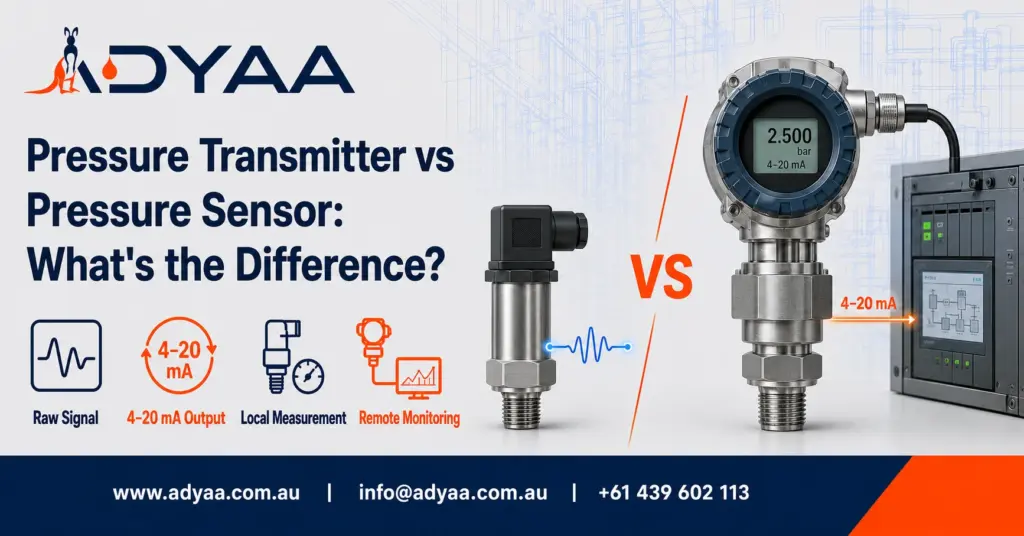
Pressure Transmitter vs Pressure Sensor: What’s the Difference? Pressure measurement is critical in industrial automation, manufacturing and process control. While the terms pressure transmitter and pressure sensor are often used interchangeably, they are not the same. Understanding the differences helps engineers, maintenance teams and procurement professionals choose the right device for accurate and reliable pressure monitoring. This guide explains how each device works, their key differences and where they are commonly used. What Is a Pressure Sensor? A pressure sensor is a device that detects pressure and converts it into an electrical signal. It measures the force exerted by gases or liquids and produces an output that represents the measured pressure. The raw signal generated by a pressure sensor is often processed by external electronics before it can be used by monitoring or control systems. Pressure sensors are the sensing element found inside many pressure measurement devices. Common Pressure Sensor Technologies Piezoresistive Sensors Capacitive Sensors Strain Gauge Sensors Ceramic Sensors Thin Film Sensors MEMS Pressure Sensors What Is a Pressure Transmitter? A pressure transmitter is a complete industrial instrument that includes a pressure sensor along with built-in signal conditioning and electronics. It measures pressure, processes the signal and transmits a standard industrial output such as: 4–20 mA 0–10 V HART Communication Modbus IO-Link Pressure transmitters are designed for direct integration with PLC, SCADA and Distributed Control Systems (DCS). Key Differences Between a Pressure Transmitter and a Pressure Sensor Although both devices measure pressure, they serve different purposes. Measurement Function A pressure sensor detects pressure and generates a raw electrical signal. A pressure transmitter measures pressure and converts it into a standardised output suitable for industrial control systems. Signal Output Pressure sensors typically produce low-level electrical signals that require additional processing. Pressure transmitters provide ready-to-use industrial communication signals. Electronics Pressure sensors contain only the sensing element. Pressure transmitters include built-in electronics for signal conditioning, amplification and communication. Installation Pressure sensors are commonly integrated into OEM equipment or custom systems. Pressure transmitters are designed for direct installation in industrial plants. Industrial Applications Pressure sensors are commonly used in electronic devices and embedded systems. Pressure transmitters are widely used in manufacturing, water treatment, chemical processing, mining and oil & gas industries. Pressure Transmitter vs Pressure Sensor Comparison Feature Pressure Sensor Pressure Transmitter Primary Function Detect Pressure Measure & Transmit Pressure Output Raw Electrical Signal 4–20 mA, HART, Modbus, IO-Link Signal Conditioning External Built-In Industrial Integration Limited Direct PLC/SCADA Integration Installation OEM Equipment Industrial Process Plants Typical Cost Lower Higher Best For Embedded Systems Continuous Industrial Monitoring Advantages of Pressure Sensors Pressure sensors are suitable for applications where additional electronics already exist. Compact Design Ideal for space-constrained equipment. Lower Cost Suitable for high-volume OEM applications. Fast Response Quickly detect pressure changes. Flexible Integration Can be incorporated into custom electronic systems. Low Power Consumption Suitable for battery-powered devices. Wide Range of Technologies Available in various sensing technologies for different applications. Advantages of Pressure Transmitters Pressure transmitters are designed for industrial environments. Ready for Automation Connect directly to PLC, SCADA and DCS systems. High Measurement Accuracy Provide stable and reliable pressure readings. Robust Construction Designed for harsh industrial environments. Long Cable Runs Standard output signals minimise electrical noise over long distances. Easy Installation Simple integration into existing industrial processes. Advanced Diagnostics Many models include self-monitoring and diagnostic capabilities. Where Are They Used? Manufacturing Monitor hydraulic, pneumatic and process systems. Oil & Gas Measure pressure in pipelines, separators and processing equipment. Chemical Processing Control pressure in reactors, tanks and pipelines. Water & Wastewater Monitor pumps, filtration systems and distribution networks. Food & Beverage Maintain consistent process pressure during production. Pharmaceutical Support precise manufacturing processes. Mining Monitor slurry pipelines and hydraulic systems. Power Generation Measure steam, boiler and cooling system pressures. Selection Checklist Before choosing a pressure measurement device, consider: ✔ Measurement accuracy ✔ Pressure range ✔ Process media ✔ Operating temperature ✔ Pressure connection ✔ Output signal ✔ Communication protocol ✔ Environmental conditions ✔ Industry standards ✔ Future maintenance requirements Selecting the correct device improves reliability, efficiency and long-term performance. Common Mistakes When Choosing Pressure Measurement Devices Avoid these common mistakes: Confusing sensors with transmitters Choosing the wrong pressure range Ignoring output signal compatibility Incorrect material selection Overlooking environmental conditions Poor installation practices Delaying calibration and maintenance A proper application assessment helps prevent measurement errors and unnecessary downtime. Why Choosing the Right Device Matters Selecting the correct pressure measurement solution helps improve process reliability, measurement accuracy and operational efficiency. While pressure sensors are ideal for embedded and OEM applications, pressure transmitters provide complete industrial measurement solutions that integrate seamlessly with automation systems. Understanding the application requirements ensures the most appropriate technology is selected. Why Choose ADYAA? ADYAA supplies industrial pressure measurement solutions for businesses across Australia. Comprehensive Pressure Instrumentation Pressure Transmitters, Pressure Gauges, Pressure Switches and Pressure Accessories. Technical Expertise Support in selecting the right pressure measurement technology. Reliable Industrial Products Solutions designed for demanding industrial environments. Automation Compatible Products ready for PLC, SCADA and DCS integration. Australia-wide Support Technical assistance for customers across Australia. Long-Term Performance Helping industries improve process reliability through accurate pressure measurement. Frequently Asked Questions What is the difference between a pressure transmitter and a pressure sensor? A pressure sensor detects pressure and produces a raw electrical signal, while a pressure transmitter processes that signal and provides a standard industrial output for control systems. Which is better for industrial automation? Pressure transmitters are generally preferred because they integrate directly with PLC, SCADA and DCS platforms. Can a pressure transmitter work without a pressure sensor? No. Every pressure transmitter contains a pressure sensor as its primary sensing element. Where are pressure sensors commonly used? Pressure sensors are often used in OEM equipment, automotive systems, medical devices and embedded electronics. Do pressure transmitters require calibration? Routine calibration and inspection help maintain measurement accuracy and long-term reliability. How do I choose between a pressure sensor and a pressure transmitter? Choose a pressure sensor for custom electronic designs and embedded applications. Select a pressure transmitter when
Gems 3100/3200 Pressure Transmitters : Complete Guide
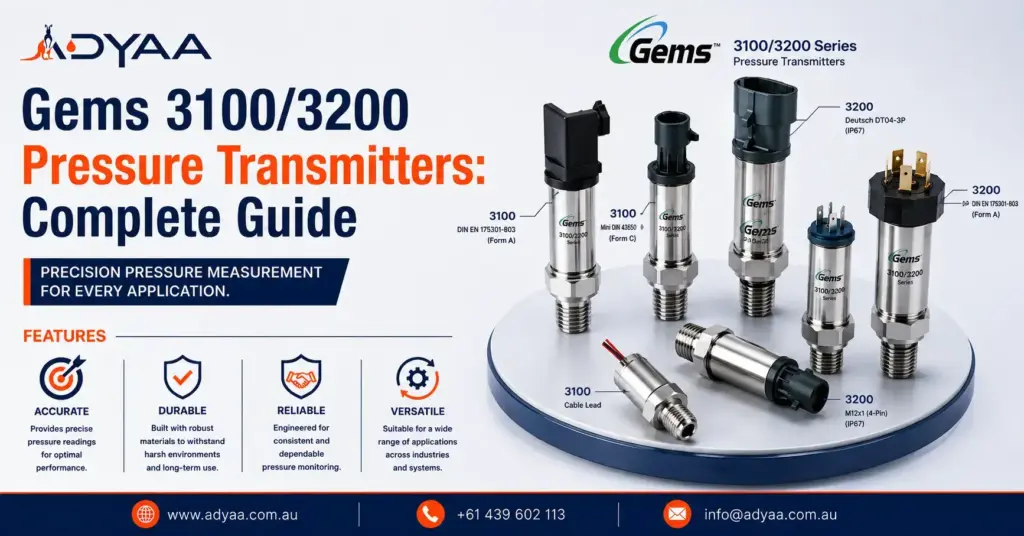
Gems 3100/3200 Pressure Transmitters: Complete Guide Accurate pressure monitoring is essential across industrial environments where process visibility, operational consistency and system performance matter. Selecting the right Pressure Transmitters can support reliable measurement, better integration and improved operational awareness. Whether you are evaluating a new installation or comparing an industrial pressure sensing solution, understanding application requirements is the first step. This guide explains what Gems 3100/3200 Pressure Transmitters are, how they work, selection considerations and practical applications across industrial environments. What Are Gems 3100/3200 Pressure Transmitters ? Gems 3100/3200 Pressure Transmitters are industrial devices designed to convert pressure into electrical output signals that can be interpreted by monitoring and control systems. Pressure Transmitters are widely used where continuous measurement and process visibility are important. Typical environments include: Industrial process applications Water and fluid systems Manufacturing equipment Hydraulic systems Automation environments OEM machinery Their purpose is simple: Measure pressure → convert into signal → support operational decisions. Why Pressure Transmitters Selection Matters Selecting a pressure transmitter involves more than choosing a pressure range. A well-selected industrial pressure Transmitters may support: Better process visibility Reliable pressure monitoring Easier system integration Improved operational awareness More consistent measurements Selecting equipment without considering the application may create: Unstable readings Increased maintenance Reduced measurement confidence Process inefficiencies For example: A production line operating under changing conditions may require a different pressure-sensing approach than a stable water application. 5 Factors to Consider Before Selecting Gems 3100/3200 Pressure Transmitters 1. Understand Operating Pressure Conditions Review: Normal operating pressure Peak conditions Temporary fluctuations Selecting the appropriate range supports measurement consistency. 2. Evaluate Process Compatibility Industrial processes vary. Consider: Water applications Process liquids Hydraulic fluids Industrial operating environments Review process requirements before selecting instrumentation. 3. Confirm Integration Requirements Pressure Transmitters should align with existing infrastructure. Typical environments include: PLC systems SCADA platforms Control systems Industrial monitoring systems System compatibility should always be evaluated before implementation. 4. Assess Environmental Conditions Environmental conditions influence performance. Evaluate: Temperature exposure Installation environment Moisture conditions Mechanical vibration Example: Outdoor industrial environments may have different requirements compared with controlled indoor installations. 5. Plan for Long-Term Operation Selection should support long-term use. Review: Accessibility Maintenance requirements Inspection schedules Operational continuity Reliable measurement starts with selecting solutions suitable for the application lifecycle. Common Applications of Gems 3100/3200 Pressure Transmitters Water Management Supports pressure visibility across fluid systems. Industrial Equipment Helps maintain process awareness. Hydraulic Systems Supports pressure monitoring under changing operating conditions. Manufacturing Applications Improves measurement visibility across production environments. Example: Selecting Pressure Transmitters for a Manufacturing Process Imagine a production environment operating multiple pressure zones. The engineering team reviews: ✔ Pressure requirements ✔ Environmental conditions ✔ Integration requirements ✔ Maintenance expectations Instead of selecting based only on specifications, they evaluate operating requirements first. This approach often supports better long-term outcomes. Best Practices for Pressure Monitoring To improve measurement performance: Select the correct operating range Confirm process compatibility Install according to requirements Perform periodic inspection Review operating conditions regularly Reliable monitoring combines appropriate selection with good operating practices. Frequently Asked Questions What are Gems 3100/3200 Pressure Transmitters used for? They are used to measure pressure and provide electrical signals for industrial monitoring and control applications. How do I select the correct pressure transducer? Review operating pressure, application requirements, environmental conditions and system compatibility. Can pressure transducers be used in water applications? Pressure Transmitters are commonly applied in industrial water environments depending on operating conditions. What industries commonly use pressure Transmitters ? Manufacturing, industrial automation, water systems and hydraulic applications commonly use pressure Transmitters . How often should pressure Transmitters be inspected? Inspection intervals vary depending on operating conditions and maintenance practices. Final Thoughts Selecting the correct pressure sensing solution requires more than reviewing technical specifications. Gems 3100/3200 Pressure Transmitters may be considered where pressure visibility, operational consistency, and industrial integration are important. Before final selection, evaluate operating requirements, installation conditions, and system compatibility to support long-term performance. Explore product details Electromagnetic Flow Meter for Distilled Water Applications – Copy Gems 3100/3200 Pressure Transmitters: Complete Guide Accurate pressure monitoring is essential across industrial environments where process visibility, operational consistency and… Read More → Dry Type Water Meters for Accurate Water Measurement Dry Type Water Meters: Why They Remain a Preferred Choice for Accurate Water Measurement Accurate water measurement is the foundation… Read More → Electromagnetic Flow Meter for Distilled Water Applications Electromagnetic Flow Meter for Distilled Water Applications Can an Electromagnetic Flow Meter Be Used for Distilled Water? Electromagnetic (Mag) flow… Read More →
Gems 3510 Pressure Transmitter: Complete Selection Guide
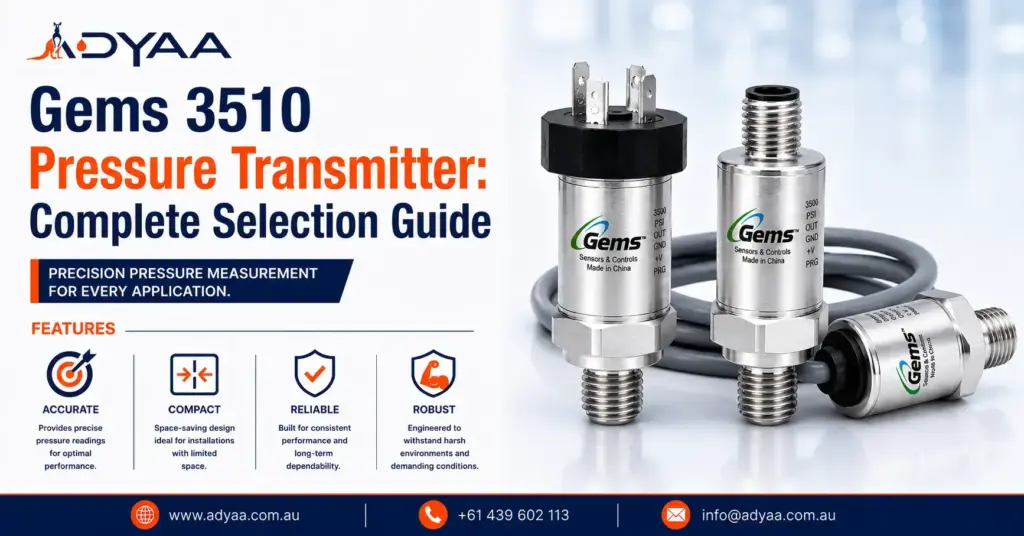
Gems 3510 Pressure Transmitter: Complete Selection Guide Accurate pressure monitoring plays an important role in industrial performance, process visibility and operational consistency. Selecting the right Pressure Transmitter can help improve measurement reliability, support system integration and contribute to more efficient process control. Whether you are evaluating an industrial pressure transmitter, upgrading an existing setup or comparing a pressure measurement solution, understanding selection criteria is essential. This guide explains how to evaluate the Gems 3510 Pressure Transmitter, where it may be applied and what factors to consider before making a decision. What Is a Gems 3510 Pressure Transmitter? The Gems 3510 Pressure Transmitter is designed to convert measured pressure into an output signal that can be used by industrial monitoring and control systems. Pressure transmitters are widely used to support operational monitoring and maintain process visibility across multiple industries. Typical application environments include: Industrial process systems Water and fluid applications Manufacturing environments Hydraulic systems Automation systems OEM equipment As a process pressure transmitter, its purpose is to convert process pressure into usable measurement data. Why Pressure Transmitter Selection Matters Choosing the right transmitter involves more than selecting a specification range. A properly selected pressure monitoring system may support: Improved process visibility More consistent measurements Better operational awareness Easier maintenance planning Reliable system integration Incorrect selection may lead to: Measurement instability Frequent maintenance intervention Reduced operational confidence Increased troubleshooting time For example: A water circulation process may require different pressure measurement conditions compared with a hydraulic production environment. Understanding the application should always come before selecting equipment. 5 Factors to Consider Before Selecting a Gems 3510 Pressure Transmitter 1. Understand the Operating Pressure Range Start by identifying: Normal operating pressure Maximum pressure Temporary surge conditions Selecting an unsuitable range may influence performance. Example: Operating within the normal measurement range instead of near limits may help maintain stable readings. 2. Evaluate Process Media Compatibility Industrial environments operate under different conditions. Consider: Water applications Industrial liquids Hydraulic fluids Process environments Questions to review: What media will be measured? Are environmental conditions stable? Is material compatibility suitable? Selection based on actual operating requirements generally supports better long-term outcomes. 3. Confirm System Integration Requirements Before installation, verify compatibility with: PLC systems SCADA environments Industrial control systems Monitoring platforms An industrial instrumentation setup performs best when devices communicate effectively across the system. 4. Review Environmental Conditions Pressure transmitters often operate in demanding industrial environments. Evaluate: Temperature exposure Moisture conditions Mechanical vibration Installation location Example: Outdoor applications may have different requirements compared with indoor control systems. 5. Consider Lifecycle and Maintenance Selection should support long-term operation. Review: Installation access Service requirements Inspection schedules Operational continuity Selecting a transmitter that supports ongoing maintenance can simplify long-term management. Common Applications of Gems 3510 Pressure Transmitter The Gems 3510 Pressure Transmitter may support several industrial environments. Water Management Systems Pressure monitoring may help improve operational visibility across fluid applications. Manufacturing Equipment Supports measurement awareness across industrial processes. Hydraulic Applications Provides pressure visibility under changing operating conditions. Industrial Automation Supports broader monitoring and operational control environments. Example: Selecting a Pressure Measurement Solution Imagine an industrial facility operating a closed-loop water process. The engineering team evaluates: ✔ Pressure range ✔ Environmental conditions ✔ Process requirements ✔ Integration compatibility Instead of selecting based only on specifications, they evaluate actual operating conditions. This approach may contribute to more reliable measurement outcomes. Best Practices for Better Pressure Measurement To improve long-term measurement performance: Select the correct operating range Verify process compatibility Follow installation recommendations Schedule periodic inspection Review operating conditions regularly The right pressure transmitter applications strategy combines correct selection with suitable operating practices. Frequently Asked Questions What is a Gems 3510 Pressure Transmitter used for? The Gems 3510 Pressure Transmitter is used to measure pressure and provide output signals for monitoring and industrial control environments. How do I choose the correct pressure transmitter? Evaluate operating pressure, environmental conditions, media compatibility and system integration requirements. Can pressure transmitters be used in water applications? Pressure transmitters are commonly applied in industrial water systems depending on operating requirements. What industries commonly use pressure transmitters? Pressure transmitters are frequently used in manufacturing, automation, hydraulic systems and water-related processes. How often should pressure transmitters be inspected? Inspection intervals depend on application conditions, maintenance schedules and operational requirements. Final Thoughts Selecting the right pressure transmitter requires understanding more than technical specifications. The Gems 3510 Pressure Transmitter may be considered where reliable pressure monitoring, process visibility and integration flexibility are important. Before implementation, review application requirements, environmental conditions and compatibility to support long-term operational performance. Explore product details Electromagnetic Flow Meter for Distilled Water Applications – Copy Gems 3100/3200 Pressure Transmitters: Complete Guide Accurate pressure monitoring is essential across industrial environments where process visibility, operational consistency and… Read More → Dry Type Water Meters for Accurate Water Measurement – Copy Gems 3510 Pressure Transmitter: Complete Selection Guide Accurate pressure monitoring plays an important role in industrial performance, process visibility and… Read More → Dry Type Water Meters for Accurate Water Measurement Dry Type Water Meters: Why They Remain a Preferred Choice for Accurate Water Measurement Accurate water measurement is the foundation… Read More →
How to Select the Right Pressure Transmitter
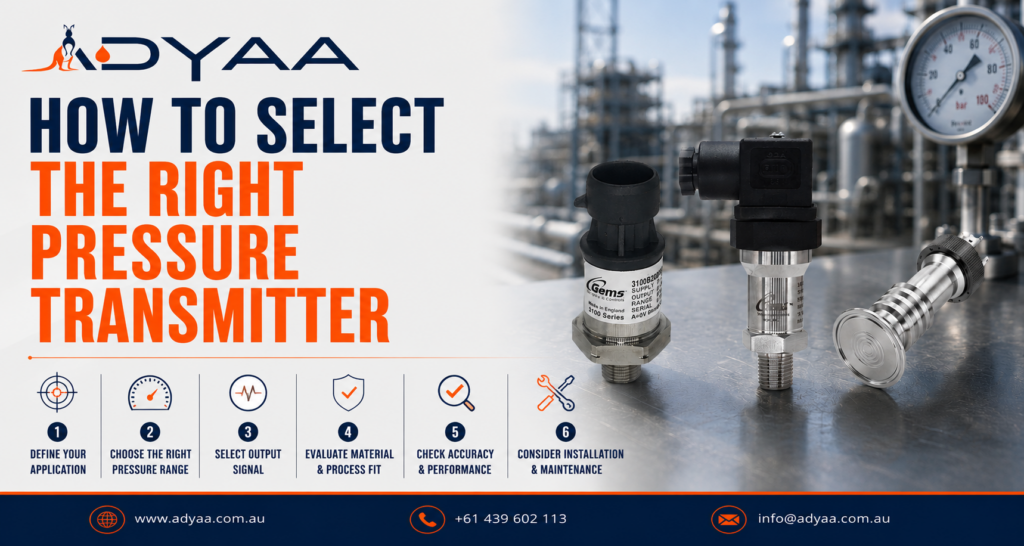
How to Select the Right Pressure Transmitter Pressure transmitters play a critical role in industrial automation, process control, water treatment, mining, manufacturing, and hydraulic systems. Selecting the correct pressure transmitter ensures accurate monitoring, improved equipment protection, and long-term operational reliability. Choosing the wrong sensor can result in inaccurate measurements, premature failures, increased maintenance costs, and process downtime. Understanding the key selection criteria helps engineers and maintenance teams achieve optimal performance from their pressure measurement systems. How to Select the Right Pressure Transmitter Understand the Required Pressure Range The first step in selecting a pressure transmitter is determining the operating pressure range of the application. A transmitter should typically operate within 30% to 80% of its full-scale range during normal conditions. Selecting an excessively large pressure range can reduce measurement accuracy, while choosing an undersized range can expose the sensor to overload conditions. Examples include: Water distribution systems: 0–10 bar Pump monitoring: 0–16 bar Hydraulic systems: 250–1000 bar Industrial compressors: 0–40 bar Always consider pressure spikes and transient conditions when selecting the final range. Choose the Correct Pressure Type Pressure transmitters are available in several measurement configurations: Gauge Pressure Measures pressure relative to atmospheric pressure and is commonly used in industrial processes. Absolute Pressure Measures pressure relative to a perfect vacuum and is often used in vacuum systems and scientific applications. Sealed Gauge Pressure References a fixed atmospheric pressure and is suitable for outdoor installations where environmental conditions vary. Selecting the correct pressure reference is essential for accurate process control. Consider Output Signal Requirements The transmitter output must be compatible with the control system or PLC. Common output signals include: 4–20 mA 0–5 V 0–10 V 1–5 V 1–10 V 0.5–4.5 V Ratiometric The 4–20 mA output remains the most widely used option due to its noise immunity and long-distance transmission capability. Evaluate Process Media Compatibility The wetted materials of the transmitter must be compatible with the process fluid. For demanding industrial environments, 316 Stainless Steel is commonly preferred due to its resistance to: Corrosion Chemical attack Moisture Process contamination Industries such as water treatment, food processing, chemical manufacturing, and mining often require robust stainless-steel construction. Check Environmental Conditions Industrial environments can expose pressure transmitters to: Vibration Hydraulic shock Temperature fluctuations Dust and moisture Chemical exposure Selecting a transmitter with suitable environmental protection improves reliability and service life. Applications involving hydraulic power units or heavy machinery may require sensors specifically designed to withstand pressure spikes and pulsation. Accuracy and Long-Term Stability Accuracy requirements vary between applications. General industrial processes typically use transmitters with accuracies between: ±0.5% Full Scale ±0.25% Full Scale Critical monitoring applications may require higher precision. Long-term stability is equally important as it reduces recalibration frequency and maintenance costs over the life of the equipment. Common Applications for Pressure Transmitters Pressure transmitters are widely used across industries including: Water Treatment Plants Mining Operations Hydraulic Systems Food and Beverage Processing Chemical Manufacturing Oil and Gas Facilities Industrial Automation Systems Pump and Compressor Monitoring Each application requires careful consideration of pressure range, output signal, material compatibility, and environmental conditions. Conclusion Selecting the right pressure transmitter involves more than simply matching a pressure range. Engineers should evaluate pressure type, output signal, process media compatibility, environmental conditions, and accuracy requirements to ensure reliable long-term performance. A properly selected pressure transmitter improves process efficiency, reduces maintenance costs, enhances equipment protection, and supports accurate industrial monitoring across a wide range of applications. Rupture Disc Operating Ratio Explained (Avoid Premature Failure) – Copy Rupture Disc Operating Ratio Explained (Avoid Premature Failure) Pressure transmitters play a critical role in industrial automation, process control, water… Read More → Rupture Disc Operating Ratio Explained (Avoid Premature Failure) Rupture Disc Operating Ratio Explained (Avoid Premature Failure) If your pressure relief devices are blowing during normal plant operations, you… Read More → Rupture Disc Selection Guide: 5 Critical Steps Rupture Disc Selection Guide: 5 Critical Steps Industrial plants cannot afford guesswork when it comes to overpressure protection. Picking a… Read More →
Pressure Transmitter Accuracy Explained: Reference vs. Real World
Decoding the Datasheet: The Truth About Pressure Transmitter Accuracy In the world of Industrial Pressure Sensors, “Accuracy” is the most expensive word on the datasheet. You see a shiny number like “±0.075%” printed in bold, and it’s natural to assume that’s exactly the error margin you’ll see on your control screen. But once you install that transmitter in the field—where it’s vibrating on a pump or baking in the Australian sun—the reality can be very different. This confusion leads to two common (and costly) mistakes: Over-specifying: Buying a Ferrari-level sensor for a go-kart application (wasting money). Under-specifying: Buying a cheap sensor that drifts constantly, ruining your process control. ADYAA, we believe the best customer is an educated one. So, let’s peel back the layers of the datasheet and explain what those accuracy specs actually mean for your plant. 1. The “Lab Number”: What Reference Accuracy Really Means The first number you see on a datasheet (e.g., ±0.075% of Span) is called Reference Accuracy. Think of this as the “Showroom Condition.” It tells you how the sensor performs in a perfect, air-conditioned laboratory with stable pressure and zero vibration. It is calculated using three specific test criteria, known as the “Big Three”: A. Linearity (The Straight Line) If you graph pressure vs. output signal, it should be a perfectly straight diagonal line. Linearity measures how much the sensor “wobbles” off that perfect path. If the linearity is bad, your DCS might say the tank is 50% full when it’s actually 51%. B. Hysteresis (The Memory Effect) Sensors have “muscle memory.” Going Up: You pressurize to 10 bar, and it reads 10.01 bar. Coming Down: You depressurize back to 10 bar, and it reads 9.99 bar. That difference is Hysteresis. It happens because the metal sensing diaphragm doesn’t snap back perfectly instantly. C. Repeatability (The Most Important Spec) If you hit the sensor with exactly 5 bar of pressure ten times in a row, does it give you the exact same number ten times? Repeatability is king. Even if a sensor is slightly off, if it’s repeatable, you can calibrate it to be perfect. If it’s not repeatable, it’s untrustworthy. The Reality Check: Reference Accuracy only tells you how good the sensor can be. It doesn’t tell you how good it will be in your plant. 2. The Real World: Why Accuracy Drops in the Field Your plant isn’t a laboratory. It’s hot, noisy, and dirty. These environmental factors introduce new errors that are not included in that headline “0.075%” number. Temperature Effect (The Sun Factor) Liquids expand when they get hot. Inside a Pressure Transmitter, there is a tiny amount of oil that transfers pressure to the sensor. The Problem: If your transmitter sits in the 40°C afternoon sun and then cools down to 10°C at night, that internal oil expands and contracts. This causes the “Zero” point to drift. The Fix: High-quality sensors use “Active Temperature Compensation” to mathematically correct this error in real-time. Cheap sensors do not. Static Pressure Effect This is a big one for Differential Pressure (DP) flow measurement. If you are measuring a tiny pressure drop across an orifice plate, but the pipe itself is pressurized to 50 bar, that massive static pressure squeezes the sensor body. This physical stress shifts the reading. 3. The Mistake: ignoring “Turndown Ratio” This is the most common reason we see “accurate” sensors giving bad data. Turndown Ratio is how much of the sensor’s range you are actually using. Accuracy is usually a percentage of the Maximum Range, not your calibrated set point. Scenario: You buy a sensor rated for 0-100 bar. The Mistake: You only use it to measure 0-5 bar. The Result: That tiny error margin at 100 bar becomes a huge error margin when you are only looking at 5 bar. Engineer’s Tip: Always buy a sensor range that is closest to your actual operating pressure. Don’t buy a 100 bar sensor to measure 5 bar “just in case.” 4. The “Real” Number: Total Probable Error (TPE) If you want to know the honest accuracy of a device, you need to calculate the Total Probable Error (TPE). This isn’t usually printed on the datasheet, but it’s the number that matters. It combines the Lab Accuracy with the Temperature and Static Pressure effects. Standard Sensor: Might claim 0.075% accuracy, but the real TPE is 0.25%. High-End Sensor: Might claim 0.04% accuracy, and the real TPE is 0.10%. Why does this matter? If you are calculating the efficiency of a million-dollar boiler, that difference is massive. 5. Which Sensor Tier Do You Actually Need? At ADYAA, we help you save money by matching the right tier to the right job. You don’t need a Porsche to drive to the grocery store. Tier 1: Standard Industrial (±0.25% – ±0.5%) Use for: Monitoring pumps, water tank levels, compressed air lines. Why: You just need to know if the pressure is stable. Close enough is good enough. Tier 2: Precision Process (±0.075%) Use for: Chemical reactors, steam flow, critical control loops. Why: A small error here could ruin a batch or waste energy. Tier 3: High Performance (±0.04% or better) Use for: Custody transfer (selling oil/gas), leak testing, calibration labs. Why: When every drop of product equals money, you pay for the best. Final Thoughts Don’t let the specs intimidate you. Understanding Pressure Transmitter Accuracy is simply about matching the tool to the environment. ADYAA can help you calculate the Total Probable Error for your specific application, ensuring you get a sensor that is accurate enough to keep you safe, without blowing your maintenance budget. Need help selecting the right pressure transmitter? 👉 Explore the ADYAA Pressure Range 📞 Contact us for a TPE Calculation. Industrial HVAC vs Commercial HVAC: What is the Difference? Industrial HVAC vs Commercial HVAC: Why Equipment Choice Matters If you walk onto the roof of a shopping mall and… Read More → How Industrial Automation Sensors Improve Manufacturing Efficiency How Industrial Automation Sensors Improve Efficiency in