
On-Site vs Lab Calibration: Which is Best for Your Facility?
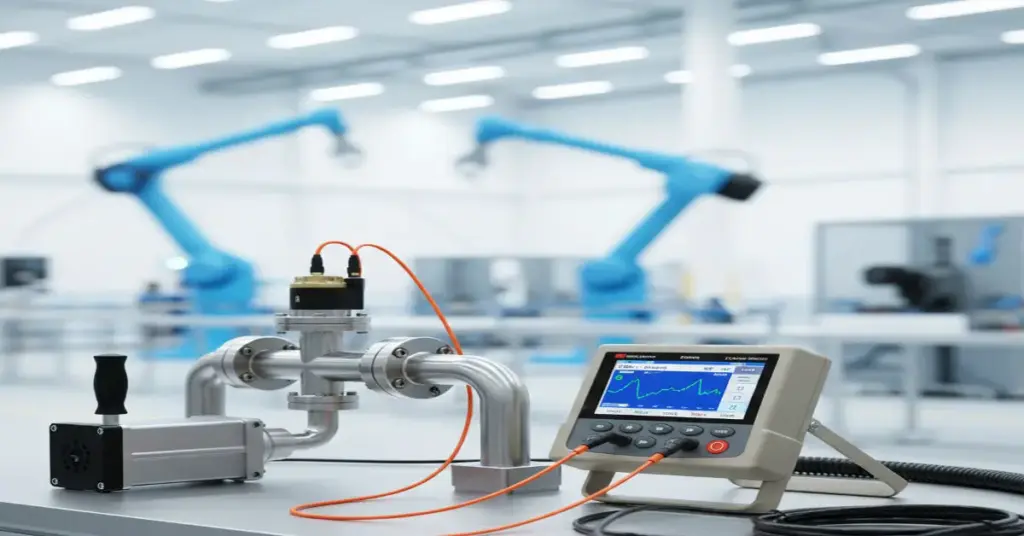
On-Site vs Lab Calibration: Which is Best for Your Facility? Every maintenance manager faces the same dilemma eventually. You have a critical audit coming up, or perhaps your process data looks slightly “off.” You know your instruments need attention, but now you have to make a choice. Do you shut down the line, unmount the sensors, and ship them away for a week? Or do you pay to have a technician bring their equipment to you? This is the classic debate of On-Site vs Lab Calibration. ADYAA offers both services because we know that no two facilities are the same. However, making the wrong choice can either cost you unnecessary downtime or compromise your accuracy results. As calibration specialists, we are here to help you decide which route is right for your specific assets. The Gold Standard: What is Lab Calibration? Laboratory calibration is the traditional method where you remove your instrument—be it a pressure gauge, temperature transmitter, or flow meter—and ship it to a controlled environment like ADYAA’s certified lab. Why Choose the Lab? Ultimate Precision: Our lab is environmentally controlled. Temperature, humidity, and vibration are strictly managed. This eliminates external variables that could skew the reading of highly sensitive master equipment. Full Range Testing: Some equipment requires massive reference standards (like large flow rigs or high-temperature furnaces) that simply cannot be put in a van. Deep Diagnostics: If a unit fails, we have the tools on the bench to dismantle, clean, and repair it immediately—something that is hard to do on a factory floor. Best For: Primary reference standards, highly critical quality control instruments, and lightweight portable devices. The Agile Alternative: What is On-Site Calibration? On-site calibration brings the technician and their portable reference standards directly to your plant. Why Choose On-Site? Zero Shipping Risks: Delicate instruments can be damaged during shipping. On-site eliminates this risk entirely. Minimal Downtime: This is the biggest advantage. A sensor might be out of service for 30 minutes instead of 5 days. Contextual Testing: We test the instrument in its actual operating environment. Sometimes, “drift” isn’t caused by the sensor, but by the installation (e.g., a loose cable or vibration). Our technicians can spot these environmental issues immediately. Best For: Heavy integrated machinery, continuous process lines (Oil & Gas, Food & Beverage), and facilities with hundreds of gauges to check at once. The Showdown: On-Site vs Lab Calibration To make the decision clearer, let’s look at how On-Site vs Lab Calibration compares across three critical factors: 1. Accuracy and Uncertainties In a lab, we can achieve the lowest possible measurement uncertainties (the “margin of error”). On-site, while still fully compliant and traceable to national standards, the environment is less stable. If you need to calibrate a master gauge used to check other gauges, send it to the lab. If you are calibrating a standard process switch, on-site is more than accurate enough. 2. Cost Implications Lab: You pay for shipping and the calibration fee. On-Site: You pay for the technician’s travel and time. The Verdict: If you only have one or two items, the lab is cheaper. If you have 50 pressure transmitters, On-Site vs Lab Calibration swings heavily in favor of on-site, as the bulk volume justifies the travel cost. 3. Production Impact If removing a flow meter requires draining a pipe and stopping production for a week, the cost of lost business dwarfs the cost of the calibration service. In this scenario, on-site is the only logical choice. Connecting the Dots: Calibration and System Health Calibration doesn’t exist in a vacuum. It is the health check that protects your entire ecosystem. Protecting Seals: As we discussed in our guide on Industrial Sealing, over-pressurization is a leading cause of gasket blowouts. Accurate pressure sensors ensure your system stays within safe limits, protecting your RTJ Gaskets and flanges. Validating Automation: Your Industrial Automation Sensors Are Only as Good as Their Calibration. A vision sensor or laser distance meter that drifts by 1mm can result in thousands of rejected products. Regular calibration closes the loop on quality control. Making the Final Call So, when weighing up On-Site vs Lab Calibration, ask yourself three questions: Can this item be easily removed? Is this the most critical reference standard in my plant? Can I afford for this device to be gone for 3-5 days? If you answered “No” to the last question, you need ADYAA’s on-site team. ADYAA provides NATA-traceable reports regardless of where the work is done. Whether you need the surgical precision of our lab or the rapid response of our field team, we ensure your sensors tell the truth. Unsure which service fits your schedule? Compare Our Calibration Services & Get a Quote Chat with a specialist today to plan your next shutdown. Why Dew Point Sensors Are Critical in Industrial Air and Gas Systems Why Dew Point Sensors Are Critical in Industrial Air and Gas Systems In the world of industrial automation and pneumatic… Read More → Understanding Thermowells and Their Role in Process Instrumentation Understanding Thermowells and Their Role in Process Instrumentation In the vast ecosystem of process control, temperature is often the most… Read More → 5 Signs Your Equipment Needs Calibration Now 5 Signs Your Equipment Needs Calibration Now In a perfect world, you would calibrate your instruments exactly according to the… Read More →