
What Additional Substances Are Used for Effective Gasket Sealing?
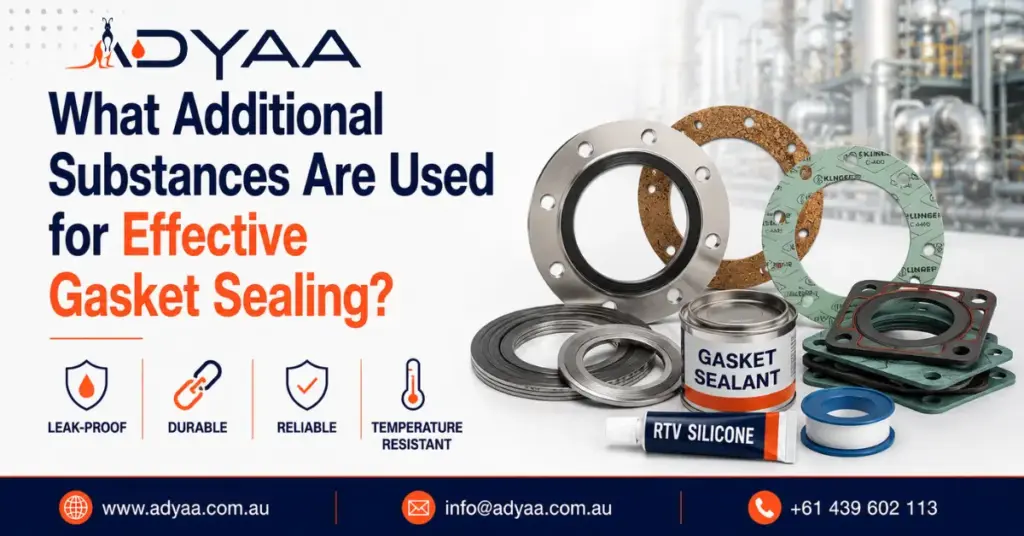
What Additional Substances Are Used for Effective Gasket Sealing? A gasket is designed to seal two mating surfaces and prevent leakage under pressure, temperature and varying process conditions. In many applications, the gasket alone performs exactly as intended. However, certain operating environments demand additional support to maintain a reliable seal over time. The important question isn’t “Which sealant should I use?”—it’s “Does this application actually need one?” Using the wrong sealing compound, applying excessive sealant or relying on additional materials to compensate for poor installation can create more problems than it solves. Understanding where these products fit into gasket sealing helps improve equipment reliability, reduce maintenance and minimise unexpected downtime. When Should Additional Sealing Substances Be Used? Additional sealing products are usually considered when operating conditions place extra stress on the gasket or sealing surface. Common situations include: High operating temperatures High-pressure systems Slightly worn or imperfect flange surfaces Aggressive chemicals Steam applications Frequent equipment maintenance Corrosive environments For example, a chemical processing plant handling aggressive media may require a chemically compatible sealing compound, while a steam pipeline operating at elevated temperatures may benefit from graphite-based lubricants on fasteners to maintain consistent bolt preload. The choice always depends on the process—not simply on the gasket. Common Substances That Support Gasket Sealing Gasket Sealants Gasket sealants are applied as a thin coating to improve contact between the gasket and flange surfaces. They help compensate for minor surface imperfections but should never replace proper flange preparation or correct gasket selection. They are commonly used in: Pumps Gearboxes Compressors Process pipe flanges Applying more sealant does not create a better seal. In many cases, excessive sealant can squeeze into the process line and contaminate equipment. PTFE Tape PTFE tape is one of the most recognised sealing materials, but it is frequently misunderstood. It is intended for threaded pipe connections—not flat gasket faces. Typical applications include: Instrumentation fittings Threaded valves Pipe threads Pneumatic connections Using PTFE tape on flange gasket surfaces is generally not recommended because the gasket is already designed to provide the sealing function. Anti-Seize Compounds Anti-seize compounds are applied to bolts, studs and fasteners rather than the gasket itself. Their purpose is to: Prevent thread galling Reduce corrosion Improve bolt tightening consistency Simplify future maintenance Uniform bolt loading is one of the most important factors in achieving reliable industrial gasket sealing. Graphite Lubricants Graphite lubricants are commonly selected for high-temperature applications where conventional lubricants may degrade or lose their effectiveness. They are widely used in: Boilers Steam systems Thermal processing equipment High-temperature pipework These lubricants help maintain consistent fastening performance during repeated maintenance cycles. Application-Specific Sealing Compounds Certain industries require specialised sealing products designed for specific operating conditions. Examples include: Food-grade sealing compounds Chemical-resistant sealants Oil and gas sealing compounds Pharmaceutical-approved sealing materials Selecting the correct product requires considering the process media, operating temperature, pressure and gasket material. When Additional Sealants Should NOT Be Used One of the biggest misconceptions in industrial maintenance is that adding more sealant automatically improves sealing performance. In reality, additional sealing compounds may be unnecessary when: Flange faces are clean and undamaged. The correct gasket material has been selected. Bolts are tightened correctly. The manufacturer’s installation recommendations are followed. Modern industrial gaskets, including PTFE, graphite and spiral wound gaskets, are often designed to perform without additional sealants. Common Mistakes That Cause Gasket Failure Many sealing failures occur during installation rather than because of the gasket itself. Some of the most common mistakes include: Applying excessive gasket sealant Mixing incompatible sealing compounds Using PTFE tape on flange faces Reusing compressed gaskets Ignoring damaged flange surfaces Uneven bolt tightening Selecting the wrong gasket material Following recognised installation practices, such as ASME PCC-1 bolt tightening guidelines where applicable, can significantly improve sealing reliability. Choosing the Right Sealing Solution Before selecting any additional sealing substance, ask these questions: What fluid is being sealed? Is the media chemically aggressive? What are the operating temperature and pressure? What gasket material is being used? Is the flange surface in good condition? Will the equipment be dismantled regularly? These answers often determine whether the gasket alone is sufficient or whether supporting sealing materials are beneficial. Sealing Material Best Used For Avoid When Gasket Sealant Minor flange imperfections Good flange surfaces with modern gasket materials PTFE Tape Threaded connections Flat gasket joints Anti-Seize Compound Bolts and fasteners Gasket sealing surfaces Graphite Lubricant High-temperature bolting Low-temperature general applications Frequently Asked Questions Can gasket sealant replace a damaged gasket? No. Sealants are designed to support gasket performance, not compensate for damaged or incorrectly selected gaskets. Is PTFE tape suitable for flange connections? Generally no. PTFE tape is intended for threaded fittings rather than gasket sealing surfaces. Can too much gasket sealant cause leaks? Yes. Excess sealant may interfere with gasket compression or enter the process system. Which industries commonly use additional sealing substances? Chemical processing, oil & gas, food manufacturing, pharmaceutical production, power generation and water treatment frequently use specialised sealing products. How can gasket sealing performance be improved? Selecting the correct gasket material, preparing flange surfaces properly, tightening bolts evenly and using additional sealing products only when required provides the most reliable results. Final Thoughts Reliable gasket sealing is rarely achieved by adding more sealing compounds. It begins with selecting the correct gasket material, understanding the operating conditions and following good installation practices. Additional substances such as gasket sealants, PTFE tape, anti-seize compounds and graphite lubricants each have a specific purpose. When selected correctly, they help improve sealing performance and reduce maintenance. When used incorrectly, they can create unnecessary reliability issues. Rather than treating every application the same, evaluate the process conditions, media compatibility and equipment design before deciding whether additional sealing materials are required. Industrial facilities handling demanding process conditions often benefit from using high-quality industrial gaskets, compatible sealing solutions and correctly selected instrumentation to improve long-term equipment reliability. ADYAA supports industries across Australia with a comprehensive range of industrial sealing products, helping maintenance teams and engineers choose solutions that match their application rather
What Is Industrial Sealing and Why Is It Important?
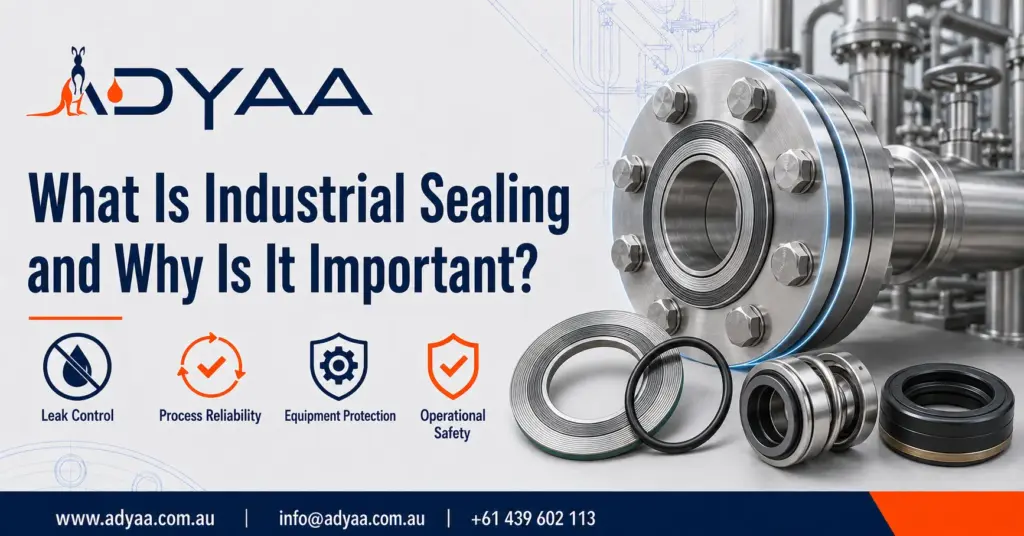
What Is Industrial Sealing and Why Is It Important? In a massive refinery or a high-pressure mining plant, the most critical component often isn’t the largest pump or the tallest reactor—it’s the smallest seal. Industrial sealing is the unsung hero of process integrity. Whether it is a Ring Type Joint (RTJ) gasket in an oil pipeline or a simple O-ring in a hydraulic cylinder, seals are the barrier between a safe, efficient operation and a catastrophic failure. We specialize in high-performance sealing solutions for Australia’s toughest environments. In this guide, we break down what industrial sealing actually is, why it is critical for your bottom line, and the different types you need to know about. Industrial Sealing Solutions for Maintenance Managers, Process Engineers and Procurement Officers in Oil & Gas/Mining. What Is Industrial Sealing? At its core, industrial sealing is the technology used to block the passage of fluids (liquids or gases) through the gap between two joined surfaces. It serves two primary functions: Containment: Keeping the internal media (oil, steam, acid) inside the system. Exclusion: Keeping external contaminants (dust, dirt, moisture) outside the system. While this sounds simple, the challenge lies in the conditions. Industrial seals must maintain this barrier while enduring extreme temperatures (from cryogenic -196°C to scorching +1000°C), massive pressures (up to 20,000 PSI), and aggressive chemical corrosion. Why Is Industrial Sealing Important? You might view seals as cheap consumables, but their failure can cost millions. Here is why investing in quality sealing (like ADYAA’s RX Rings or Spiral Wound Gaskets) is non-negotiable. 1. Safety and Hazard Prevention The most immediate importance of sealing is human safety. In industries like Oil & Gas, a leaking flange isn’t just a mess; it’s a fire hazard or a toxic cloud. Proper sealing ensures that volatile organic compounds (VOCs) and dangerous chemicals stay contained, protecting your workforce from exposure and explosions. 2. Operational Efficiency A system that leaks pressure is a system that bleeds money. Pneumatic systems: Leaking air forces compressors to work harder, driving up electricity bills. Hydraulic systems: Fluid loss results in sluggish machinery and reduced force. High-quality seals ensure your equipment runs at peak parameter settings without wasting energy. 3. Environmental Compliance Australia has strict environmental regulations regarding emissions and ground contamination. A reliable sealing system helps you meet EPA standards by preventing “fugitive emissions”—the slow, invisible leaks of gas from valves and flanges that can lead to heavy fines. 4. Equipment Longevity Seals act as the first line of defense for your expensive assets. For example, a Spring-Energized Seal or a Polymer Bellow protects internal bearings and shafts from grit and corrosion. If the seal fails, contaminants can enter the equipment, accelerating wear and potentially causing premature component failure. Types of Industrial Sealing Solutions Not all seals are created equal. Depending on your application, you will generally rely on one of these categories: A. Static Seals (Gaskets) These are used between two stationary surfaces, such as pipe flanges. RTJ Gaskets (Ring Type Joints): Metal gaskets (Oval, Octagonal, RX, BX) designed for high-pressure/high-temperature applications. They form a metal-to-metal seal ideal for the Oil & Gas industry. Spiral Wound Gaskets: A mix of metal winding and soft filler (graphite/PTFE), offering excellent recovery for fluctuating temperatures. B. Dynamic Seals These seals are between parts that move relative to each other (like a piston rod or a rotating shaft). Spring-Energized Seals: Used when standard elastomers fail. A spring ensures constant contact while maintaining sealing force as the sealing interface changes. Packing: Soft braided material compressed around a shaft to prevent leakage in pumps and valves. C. O-Rings One of the most widely used seal types, O-rings are donut-shaped loops that sit in a groove and compress to prevent fluid leakage. Elastomeric: NBR, Viton® (FKM), or EPDM, selected for suitable operating conditions. Metal O-Rings: Used by ADYAA for extreme environments, such as aerospace and cryogenic applications, where conventional rubber seals may not withstand the operating conditions. Summary: Don’t Let a Leak Stop Your Plant A seal might cost $50, but it protects a $500,000 pump and ensures the safety of everyone on site. Whether you need standard Lens Rings for steam lines or custom CNC-machined sealing components, quality matters. ADYAA supplies a full range of gaskets, O-rings, and custom seals engineered for the Australian industry. Need help selecting the right material for your chemical plant? View Our Full Range of Sealing Solutions. Contact our engineers for a consultation. What Is Industrial Sealing and Why Is It Important? Pressure Instrumentation Suppliers: What to Look for Before You Buy Selecting a pressure instrument isn’t simply about finding the lowest… Read More → Pressure Instrumentation Suppliers: What to Look for Before You Buy. Pressure Instrumentation Suppliers: What to Look for Before You Buy Selecting a pressure instrument isn’t simply about finding the lowest… Read More → The Role of Sealing in Preventing Leakage and Safety Hazards Focus The Role of Sealing in Preventing Leakage and Safety Hazards A leak is rarely just a “drip.” In a chemical… Read More →
What Is Industrial Sealing? Importance, Types & Benefits
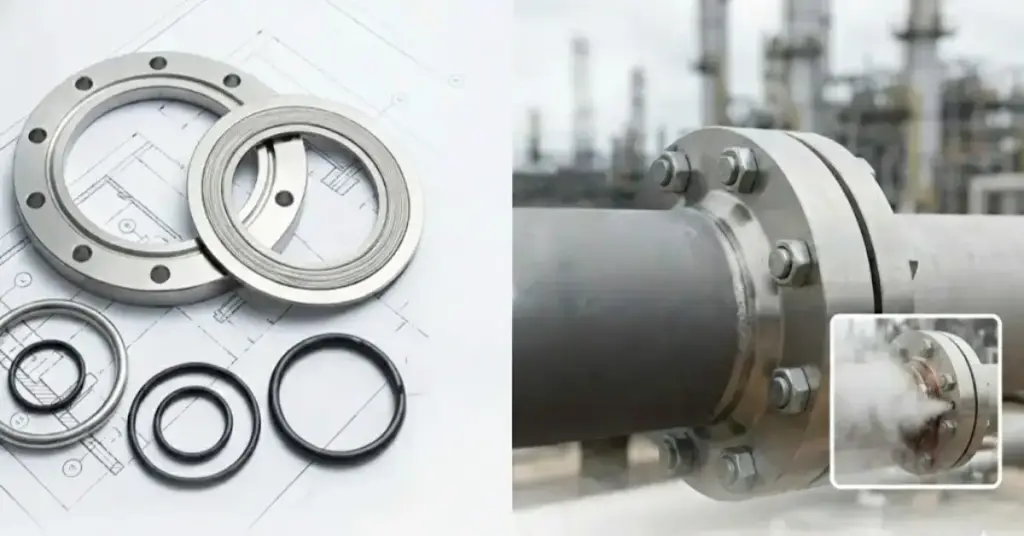
What Is Industrial Sealing and Why Is It Important? In a massive refinery or a high-pressure mining plant, the most critical component often isn’t the largest pump or the tallest reactor—it’s the smallest seal. Industrial sealing is the unsung hero of process integrity. Whether it is a Ring Type Joint (RTJ) gasket in an oil pipeline or a simple O-ring in a hydraulic cylinder, seals are the barrier between a safe, efficient operation and a catastrophic failure. We specialize in high-performance sealing solutions for Australia’s toughest environments. In this guide, we break down what industrial sealing actually is, why it is critical for your bottom line, and the different types you need to know about. Industrial Sealing Solutions for Maintenance Managers, Process Engineers and Procurement Officers in Oil & Gas/Mining. What Is Industrial Sealing? At its core, industrial sealing is the technology used to block the passage of fluids (liquids or gases) through the gap between two joined surfaces. It serves two primary functions: Containment: Keeping the internal media (oil, steam, acid) inside the system. Exclusion: Keeping external contaminants (dust, dirt, moisture) outside the system. While this sounds simple, the challenge lies in the conditions. Industrial seals must maintain this barrier while enduring extreme temperatures (from cryogenic -196°C to scorching +1000°C), massive pressures (up to 20,000 PSI), and aggressive chemical corrosion. Why Is Industrial Sealing Important? You might view seals as cheap consumables, but their failure can cost millions. Here is why investing in quality sealing (like ADYAA’s RX Rings or Spiral Wound Gaskets) is non-negotiable. 1. Safety and Hazard Prevention The most immediate importance of sealing is human safety. In industries like Oil & Gas, a leaking flange isn’t just a mess; it’s a fire hazard or a toxic cloud. Proper sealing ensures that volatile organic compounds (VOCs) and dangerous chemicals stay contained, protecting your workforce from exposure and explosions. 2. Operational Efficiency A system that leaks pressure is a system that bleeds money. Pneumatic systems: Leaking air forces compressors to work harder, driving up electricity bills. Hydraulic systems: Fluid loss results in sluggish machinery and reduced force. High-quality seals ensure your equipment runs at peak parameter settings without wasting energy. 3. Environmental Compliance Australia has strict environmental regulations regarding emissions and ground contamination. A reliable sealing system helps you meet EPA standards by preventing “fugitive emissions”—the slow, invisible leaks of gas from valves and flanges that can lead to heavy fines. 4. Equipment Longevity Seals act as the first line of defense for your expensive assets. For example, a Spring-Energized Seal or a Polymer Bellow protects internal bearings and shafts from grit and corrosion. If the seal fails, the contaminant enters, and the machine destroys itself from the inside out. Types of Industrial Sealing Solutions Not all seals are created equal. Depending on your application, you will generally rely on one of these categories: A. Static Seals (Gaskets) These are used between two stationary surfaces, such as pipe flanges. RTJ Gaskets (Ring Type Joints): Metal gaskets (Oval, Octagonal, RX, BX) designed for high-pressure/high-temperature applications. They form a metal-to-metal seal ideal for the Oil & Gas industry. Spiral Wound Gaskets: A mix of metal winding and soft filler (graphite/PTFE), offering excellent recovery for fluctuating temperatures. B. Dynamic Seals These seals are between parts that move relative to each other (like a piston rod or a rotating shaft). Spring-Energized Seals: Used when standard elastomers fail. A spring ensures constant contact even when the polymer seal wears down. Packing: Soft braided material compressed around a shaft to prevent leakage in pumps and valves. C. O-Rings The most common seal type. These donut-shaped loops sit in a groove and compress to block fluid. Elastomeric: NBR, Viton, or EPDM for standard uses. Metal O-Rings: Used by ADYAA for extreme environments (aerospace, cryogenics) where rubber would melt or shatter. Summary: Don’t Let a Leak Stop Your Plant A seal might cost $50, but it protects a $500,000 pump and ensures the safety of everyone on site. Whether you need standard Lens Rings for steam lines or custom CNC-machined sealing components, quality matters. ADYAA supplies a full range of gaskets, O-rings, and custom seals engineered for the Australian industry. Need help selecting the right material for your chemical plant? View Our Full Range of Sealing Solutions. Contact our engineers for a consultation. How Industrial Automation Sensors Improve Automation & Efficiency in Manufacturing How Industrial Automation Sensors Improve Automation & Efficiency in Manufacturing In modern manufacturing, efficiency, accuracy, and reliability are more important… Read More → How Vision & Imaging Sensors Transform Automated Inspection Systems How Vision & Imaging Sensors Transform Automated Inspection Systems Maintaining product quality while keeping up with high-speed production is crucial…. Read More → IoT and Automation in Industrial Operations: Boost Efficiency, Safety, and Reliability IoT and Automation in Industrial Operations: Boost Efficiency, Safety, and Reliability Discover how IoT and automation revolutionize industrial operations. Improve… Read More →