Flow Meters Perth: How to Choose the Right Meter
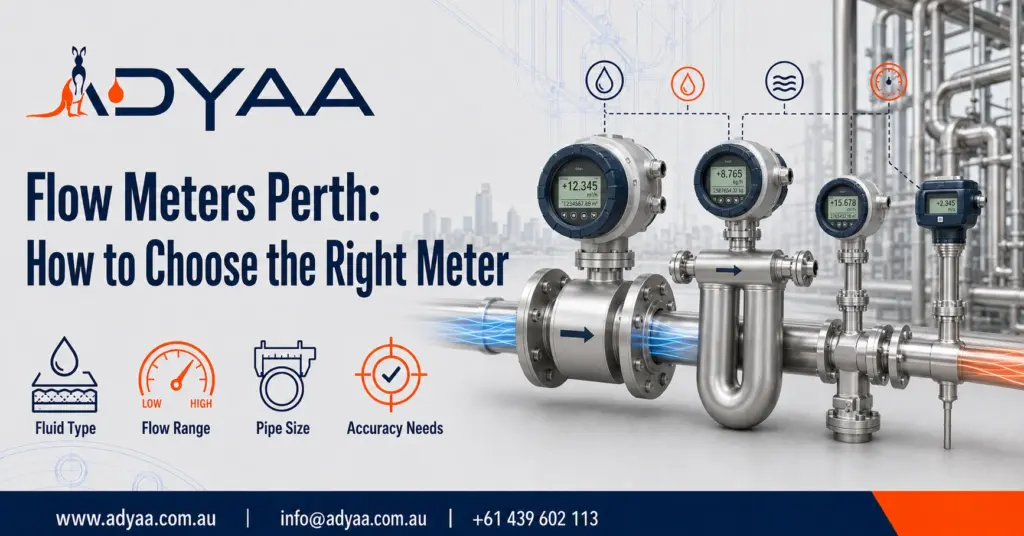
Flow Meters Perth: How to Choose the Right Meter Accurate flow measurement is essential for efficient industrial operations. Whether measuring water, chemicals, steam or gases, selecting the right flow meter helps improve process control, reduce waste and maintain product quality. Businesses looking for Flow Meters Perth have access to a wide range of technologies designed to meet different process requirements across industries. What Is a Flow Meter? A flow meter is an instrument used to measure the flow rate or total quantity of liquids, gases or steam moving through a pipeline. Flow meters provide real-time process data that helps operators monitor production, optimise resource usage and maintain consistent operational performance. From water treatment plants to food manufacturing facilities, flow meters play a critical role in industrial process control. Why Flow Meters Matter Reliable flow measurement supports both operational efficiency and process accuracy. Improve Process Efficiency Monitor flow continuously to optimise production and reduce waste. Increase Measurement Accuracy Accurate flow data supports better operational decisions. Reduce Operating Costs Identify process inefficiencies and unnecessary product losses. Support Automation Provide reliable data to PLC and SCADA systems for automated control. Improve Product Quality Maintain consistent flow rates throughout production. Enhance Resource Management Monitor water, chemicals, fuel and energy consumption more effectively. How Flow Meters Work Although flow meter technologies vary, the basic operating process is similar. The flow meter detects the movement of liquid, gas or steam. Internal sensors measure the flow characteristics. The instrument converts the measurement into an electrical signal. The data is transmitted to a monitoring or control system. Operators use the information to monitor and optimise the process. Continuous monitoring helps improve operational efficiency and process stability. Common Types of Flow Meters Different applications require different flow measurement technologies. Electromagnetic Flow Meters Ideal for measuring conductive liquids such as water, wastewater and chemicals with high accuracy. Coriolis Flow Meters Measure mass flow directly and provide excellent accuracy for liquids and gases. Ultrasonic Flow Meters Use ultrasonic waves to measure flow without restricting the process, making them suitable for clean liquids. Vortex Flow Meters Suitable for measuring steam, gases and liquids in industrial applications. Turbine Flow Meters Designed for clean liquid applications requiring fast and accurate flow measurement. Variable Area Flow Meters Provide a simple and reliable solution for monitoring low-flow industrial processes. Flow Meter Comparison Flow Meter Type Best For Common Industries Electromagnetic Conductive Liquids Water & Wastewater Coriolis High Accuracy Mass Flow Chemical, Food & Beverage Ultrasonic Clean Liquids Water Treatment Vortex Steam and Gas Power Generation Turbine Clean Liquids Manufacturing Variable Area Low Flow Applications General Industry Where Flow Meters Are Used Flow meters are used across a wide range of industrial sectors. Water & Wastewater Monitor water distribution, treatment processes and wastewater management. Oil & Gas Measure hydrocarbons, fuels and process fluids throughout production. Chemical Processing Control chemical dosing and process flow accurately. Food & Beverage Maintain consistent production and ingredient control. Pharmaceutical Support precise flow measurement during manufacturing. Mining Monitor slurry, water and chemical transfer systems. Power Generation Measure steam, cooling water and utility systems. Manufacturing Improve production efficiency through accurate process monitoring. Flow Meter Selection Checklist Before selecting a flow meter, consider: ✔ Type of process fluid ✔ Flow range ✔ Operating pressure ✔ Operating temperature ✔ Pipe size ✔ Measurement accuracy ✔ Installation location ✔ Output signal ✔ Communication protocol ✔ Maintenance requirements Choosing the correct technology helps maximise long-term performance and measurement reliability. Common Mistakes When Choosing Flow Meters Incorrect flow meter selection can affect process performance. Common mistakes include: Selecting the wrong flow technology Ignoring fluid characteristics Choosing an incorrect pipe size Overlooking pressure loss Incorrect installation position Ignoring future maintenance requirements Focusing only on purchase price Understanding your application before selecting a flow meter helps improve long-term performance. Why Accurate Flow Measurement Matters Accurate flow measurement helps industries control production, reduce product loss and improve operational efficiency. Reliable flow data also supports regulatory compliance, better energy management and more informed maintenance planning. Why Choose ADYAA? ADYAA supplies industrial flow measurement solutions for a wide range of applications across Australia. Comprehensive Product Range Electromagnetic, Coriolis, Ultrasonic, Vortex and other industrial flow meters. Technical Expertise Support in selecting the right flow meter based on your application. Quality Industrial Products Reliable flow measurement solutions from trusted manufacturers. Automation Ready Flow meters compatible with PLC, SCADA and industrial control systems. Australia-wide Support Serving customers across Perth and throughout Australia. Long-Term Reliability Helping industries improve process efficiency through accurate flow measurement. Frequently Asked Questions What is a flow meter? A flow meter measures the flow rate or quantity of liquids, gases or steam moving through a pipeline. Which flow meter is the most accurate? The best flow meter depends on the application. Coriolis flow meters are widely recognised for high-accuracy mass flow measurement, while electromagnetic flow meters are well suited for conductive liquids. Where are flow meters commonly used? Water treatment, manufacturing, mining, chemical processing, oil & gas, food & beverage and pharmaceutical industries. How do I choose the right flow meter? Consider the process fluid, flow range, operating conditions, required accuracy & installation environment. Can flow meters be integrated with automation systems? Yes. Industrial flow meters support integration with PLC, SCADA & DCS platforms. Do flow meters require calibration? Regular calibration and maintenance help maintain measurement accuracy and reliable long-term performance. Choosing the right Flow Meters Perth solution helps improve process efficiency, reduce operating costs and maintain accurate industrial measurements. The best flow meter depends on your process conditions, fluid characteristics and operational requirements. ADYAA supplies industrial flow meters and flow measurement solutions for businesses across Perth and Australia, helping industries select reliable technologies for accurate and efficient process monitoring. Looking for the right flow meter for your application? Our specialists can help you select the most suitable flow measurement solution based on your industry, process requirements and operating conditions Flow Meters Perth: How to Choose the Right Meter Industrial Instrumentation Australia: Complete Guide Every industrial process depends on reliable measurements. Whether it’s
Industrial Instrumentation Australia: Complete Guide
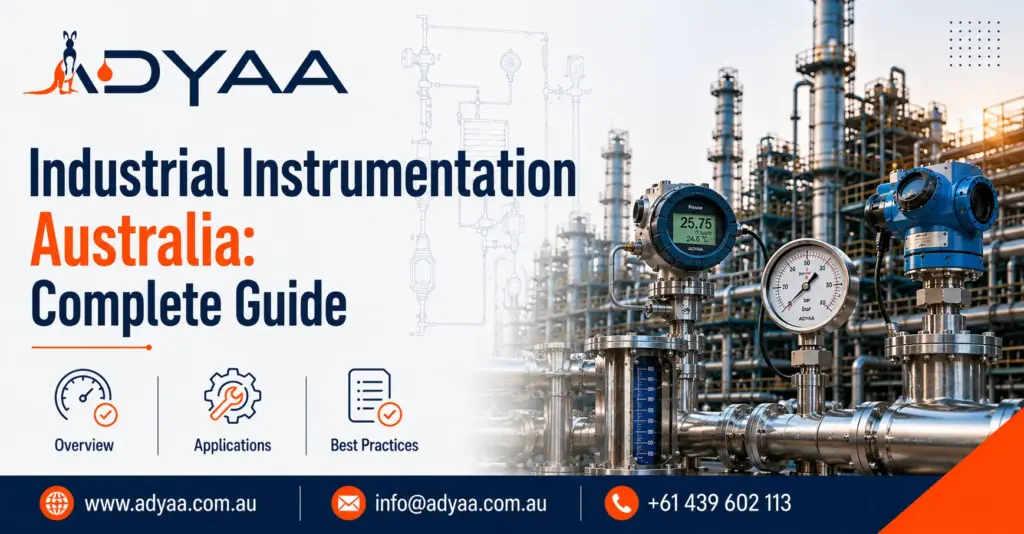
Industrial Instrumentation Australia: Complete Guide Every industrial process depends on reliable measurements. Whether it’s monitoring pressure inside a pipeline, measuring liquid levels in a storage tank or controlling temperature during production, industrial instrumentation provides the information needed to keep operations running efficiently. Across Australia, industries rely on Industrial Instrumentation Australia solutions to improve process control, minimise downtime, increase equipment reliability and support safer working environments. What Is Industrial Instrumentation? Industrial instrumentation refers to the instruments used to measure, monitor and control process variables such as pressure, temperature, flow and level. These instruments continuously collect operational data and send it to operators or automation systems such as PLCs, SCADA and DCS platforms, allowing businesses to monitor processes in real time and make informed operational decisions. From a small manufacturing facility to a large refinery, accurate instrumentation is the foundation of efficient process control. Why Industrial Instrumentation Matters Reliable instrumentation delivers much more than accurate measurements. Improve Process Accuracy Maintain consistent product quality by continuously monitoring critical process variables. Increase Operational Efficiency Real-time process data enables faster decisions and smoother production. Reduce Downtime Detect abnormal operating conditions before they become costly failures. Improve Workplace Safety Monitor pressure, temperature and flow to help reduce operational risks. Support Automation Provide accurate data for PLC, SCADA and distributed control systems. Extend Equipment Life Reliable monitoring helps prevent unnecessary wear on industrial equipment. How Industrial Instrumentation Works Although different instruments perform different tasks, most follow a similar process. A sensor detects a physical process such as pressure, temperature, flow or level. The instrument converts the measurement into a usable electrical signal. The signal is transmitted to a PLC, SCADA or control system. Operators monitor the process in real time. The control system adjusts the process automatically when required. This continuous monitoring improves process stability and operational efficiency. Types of Industrial Instrumentation Different applications require different measurement technologies. Pressure Instrumentation Pressure gauges, pressure transmitters and pressure switches monitor pressure in pipelines, vessels and process equipment. Temperature Instrumentation RTDs, thermocouples, temperature transmitters and thermometers measure process temperatures accurately. Flow Instrumentation Electromagnetic, Coriolis, ultrasonic and vortex flowmeters measure liquid, gas and steam flow. Level Instrumentation Radar, ultrasonic, capacitance and guided wave radar transmitters monitor tank and vessel levels. Analytical Instrumentation pH meters, conductivity meters and dissolved oxygen sensors monitor product quality and process conditions. Calibration Equipment Calibration equipment verifies instrument accuracy and supports reliable long-term performance. Common Industrial Instruments at a Glance Instrument Measures Common Applications Pressure Transmitter Pressure Oil & Gas, Manufacturing Temperature Transmitter Temperature Food Processing, Pharmaceutical Electromagnetic Flowmeter Liquid Flow Water & Wastewater Radar Level Transmitter Tank Level Chemical Processing Conductivity Meter Conductivity Water Treatment Pressure Gauge Pressure General Industrial Applications Where Industrial Instrumentation Is Used Every industry has unique measurement requirements. Manufacturing Manufacturers use instrumentation to improve production efficiency, reduce waste and maintain consistent product quality. Oil & Gas Pressure, flow and temperature instruments support safe exploration, transportation and refining processes. Mining Instrumentation monitors heavy equipment and mineral processing operations under demanding conditions. Chemical Processing Accurate measurement helps maintain product consistency while supporting efficient process control. Food & Beverage Temperature, flow and level instruments help maintain production quality throughout manufacturing. Water & Wastewater Flowmeters, level transmitters and analytical instruments support water treatment and distribution. Power Generation Instrumentation continuously monitors boilers, turbines and utility systems. Pharmaceutical High-accuracy instruments support controlled manufacturing environments and product consistency. Industrial Instrument Selection Checklist Before selecting an industrial instrument, consider the following: ✔ Process variable to be measured ✔ Operating pressure and temperature ✔ Required measurement accuracy ✔ Process connection ✔ Material compatibility ✔ Output signal requirements ✔ Communication protocol ✔ Hazardous area certification ✔ Installation environment ✔ Future maintenance and calibration Choosing the right instrument from the beginning reduces operating costs and improves long-term reliability. Common Mistakes When Selecting Industrial Instrumentation Selecting the wrong instrument can affect both productivity and equipment reliability. Common mistakes include: Choosing the wrong measuring range Ignoring environmental conditions Selecting incompatible wetted materials Overlooking communication protocols Installing instruments incorrectly Skipping routine calibration Prioritising price over application suitability Working with experienced instrumentation specialists helps avoid these issues. Why Measurement Accuracy Matters Even small measurement errors can affect production quality, energy consumption and maintenance costs. Accurate industrial instrumentation provides reliable process data that supports better operational decisions, improved efficiency and more consistent production outcomes. Why Choose ADYAA? ADYAA supplies industrial instrumentation solutions that support reliable process measurement across Australian industries. Comprehensive Product Portfolio Pressure, temperature, flow, level, analytical and calibration solutions from trusted manufacturers. Technical Expertise Support in selecting instrumentation suited to your process requirements. Reliable Industrial Solutions Products designed for demanding industrial environments. Automation Compatibility Solutions compatible with PLC, SCADA and process automation systems. Australia-wide Support Reliable service for customers across Australia. Focus on Long-Term Performance Helping industries improve efficiency, measurement accuracy and operational reliability. Frequently Asked Questions What is industrial instrumentation? Industrial instrumentation includes instruments used to measure, monitor and control industrial processes. What industries use industrial instrumentation? Manufacturing, mining, oil & gas, chemical processing, food & beverage, pharmaceutical, power generation and water treatment. What are the main types of industrial instrumentation? Pressure, temperature, flow, level and analytical instruments are the most widely used. Why is calibration important? Calibration verifies measurement accuracy and helps maintain reliable process performance. How does industrial instrumentation support automation? It provides real-time process data to PLC, SCADA and DCS systems for monitoring and automated control. How do I choose the right industrial instrument? Selection depends on the process variable, operating conditions, accuracy requirements, installation environment and communication needs. Whether you’re expanding a production facility, upgrading existing equipment or implementing a new process, selecting the right Industrial Instrumentation Australia solutions helps improve operational efficiency, process visibility and long-term equipment reliability. ADYAA supplies a comprehensive range of industrial instrumentation products and works with customers to identify solutions that match their operational and technical requirements. Need help selecting the right industrial instrumentation? Our specialists can help you choose the right pressure, temperature, flow, level and analytical instruments for your application. Industrial Instrumentation Australia:
Flow Measurement Solutions for Industrial Processes
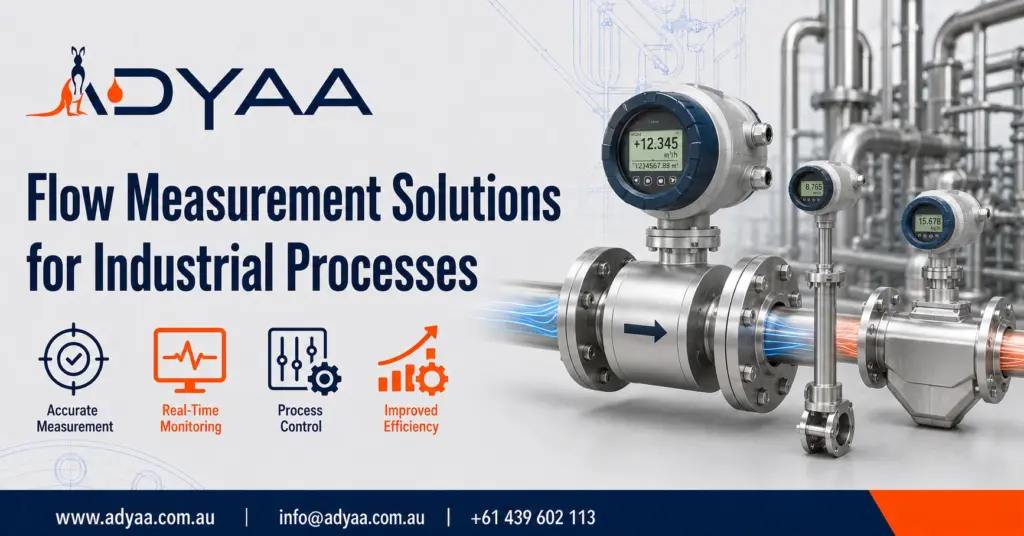
Flow Measurement Solutions for Industrial Processes Accurate flow measurement is essential for maintaining efficient industrial operations. Whether monitoring water, chemicals, steam, fuel or gases, reliable Flow Measurement Solutions help businesses improve process control, optimise resource consumption and maintain product quality. From manufacturing facilities to water treatment plants, selecting the right flow measurement technology supports better operational decisions while reducing waste and unnecessary downtime. What Are Flow Measurement Solutions? Flow measurement solutions include the instruments and technologies used to measure the movement of liquids, gases and steam within industrial processes. These solutions provide continuous flow data that helps operators monitor production, manage resources and improve overall process performance. Modern flow measurement systems can also integrate with PLC, SCADA and distributed control systems, providing real-time information for automated process control. Why Flow Measurement Matters? Reliable flow measurement supports safer and more efficient industrial operations. Improve Process Efficiency Monitor flow continuously to optimise production and reduce waste. Increase Measurement Accuracy Accurate flow data supports consistent process performance. Reduce Operating Costs Identify product losses and inefficient process conditions. Improve Product Quality Maintain consistent flow throughout manufacturing processes. Support Automation Provide reliable data for PLC, SCADA and industrial control systems. Better Resource Management Monitor water, chemicals, fuel and energy usage more effectively. How Flow Measurement Works Although different technologies are used, the measurement process follows a similar sequence. The flow meter detects the movement of liquid, gas or steam. Sensors measure the flow characteristics. The instrument converts the measurement into an electrical signal. The data is transmitted to a monitoring or control system. Operators use the information to monitor and optimise the process. Continuous monitoring helps improve efficiency and process stability. Common Flow Measurement Technologies Different industrial applications require different measurement principles. Electromagnetic Flow Meters Ideal for conductive liquids such as water, wastewater and chemicals. Coriolis Flow Meters Provide highly accurate mass flow measurement for liquids and gases. Ultrasonic Flow Meters Measure flow using ultrasonic signals without restricting the process. Vortex Flow Meters Suitable for measuring steam, gases and industrial liquids. Turbine Flow Meters Offer reliable measurement for clean liquid applications. Variable Area Flow Meters Simple and cost-effective solutions for low-flow industrial processes. Flow Measurement Technology Comparison Technology Best For Common Industries Electromagnetic Conductive Liquids Water & Wastewater Coriolis High Accuracy Mass Flow Chemical, Food & Beverage Ultrasonic Clean Liquids Water Treatment Vortex Steam and Gas Power Generation Turbine Clean Liquids Manufacturing Variable Area Low Flow Applications General Industry Where Flow Measurement Solutions Are Used Flow measurement supports a wide range of industries. Water & Wastewater Monitor water distribution, treatment and wastewater processes. Oil & Gas Measure hydrocarbons, fuels and process fluids. Chemical Processing Control dosing systems and chemical transfer processes. Food & Beverage Maintain accurate ingredient and product flow. Pharmaceutical Support precise manufacturing and quality control. Mining Monitor slurry, chemicals and water movement. Power Generation Measure steam, cooling water and utility systems. Manufacturing Improve production efficiency through continuous monitoring. Flow Measurement Selection Checklist Before selecting a flow measurement solution, consider: ✔ Type of fluid ✔ Flow range ✔ Operating pressure ✔ Operating temperature ✔ Pipe size ✔ Measurement accuracy ✔ Installation location ✔ Communication protocol ✔ Output signal ✔ Maintenance requirements Selecting the right technology improves reliability and long-term performance. Common Mistakes When Choosing Flow Measurement Solutions Common selection mistakes include: Choosing the wrong flow meter technology Ignoring fluid characteristics Incorrect sizing Poor installation practices Ignoring pressure loss Overlooking maintenance requirements Focusing only on initial cost A proper application assessment helps avoid these issues. Why Accurate Flow Measurement Matters Accurate flow measurement helps industries improve operational efficiency, reduce waste and optimise production processes. Reliable measurement data also supports preventive maintenance, better energy management and more informed operational decisions. Why Choose ADYAA? ADYAA supplies reliable flow measurement solutions for industrial applications across Australia. Comprehensive Flow Measurement Portfolio Electromagnetic, Coriolis, Ultrasonic, Vortex and Turbine Flow Meters. Technical Expertise Support in selecting the right flow measurement technology. Quality Industrial Products Reliable solutions from globally recognised manufacturers. Automation Ready Compatible with PLC, SCADA and process control systems. Australia-wide Support Technical assistance for industries across Australia. Long-Term Reliability Helping businesses improve efficiency through accurate flow measurement. Frequently Asked Questions What are Flow Measurement Solutions? Flow measurement solutions include instruments used to measure the flow of liquids, gases and steam in industrial processes. Which flow meter is best? The best solution depends on the application, process fluid, operating conditions and required measurement accuracy. Where are flow measurement systems used? They are widely used in water treatment, manufacturing, mining, oil & gas, food processing, chemical plants and power generation. Can flow meters integrate with automation systems? Yes. Most modern flow meters support integration with PLC, SCADA and DCS systems. Do flow meters require calibration? Routine calibration helps maintain measurement accuracy and long-term performance. How do I choose the right flow measurement solution? Consider the process fluid, operating conditions, accuracy requirements, installation environment and communication needs. Reliable Flow Measurement Solutions help industries improve process control, reduce operating costs and maintain accurate production data. Choosing the right flow measurement technology ensures efficient operations while supporting long-term equipment performance. ADYAA supplies industrial flow measurement solutions across Australia, helping businesses select technologies that match their applications and operational requirements. Looking for the right Flow Measurement Solution? Our specialists can help you choose the most suitable flow measurement technology for your industry and application. Talk to a Flow Measurement Expert Gems 3100/3200 Pressure Transmitters : Complete Guide – Copy Flow Measurement Solutions for Industrial Processes Accurate flow measurement is essential for maintaining efficient industrial operations. Whether monitoring water, chemicals,… Read More → Industrial HVAC vs Commercial HVAC: What is the Difference? Industrial HVAC vs Commercial HVAC: Why Equipment Choice Matters If you walk onto the roof of a shopping mall and… Read More → How Industrial Automation Sensors Improve Manufacturing Efficiency How Industrial Automation Sensors Improve Efficiency in Manufacturing Efficiency is the primary metric of success. The difference between a profitable… Read More →
What Is Industrial Instrumentation? A Guide To Smarter Process Control
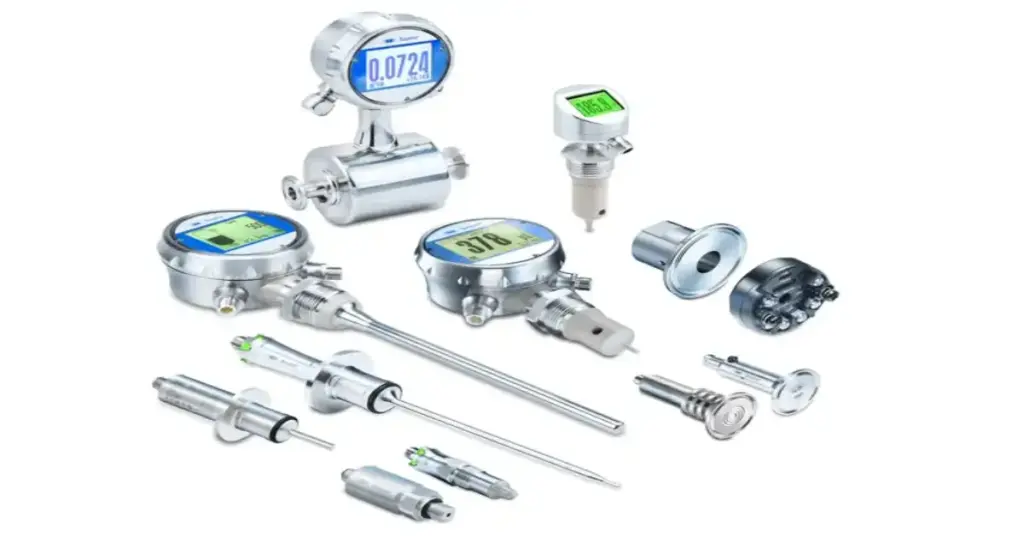
What Is Industrial Instrumentation? A Guide To Smarter Process Control Industrial instrumentation is the science of measurement and control. It encompasses the vast array of devices, sensors, and systems used to monitor, measure, and regulate physical variables like pressure, temperature, level, and flow within industrial processes. Think of it as the central nervous system for a factory or plant; it provides the critical real-time data needed to make informed decisions, ensuring everything operates safely, efficiently, and consistently. Without accurate instrumentation, processes would be blind, unreliable, and potentially dangerous. Key Aspects of Instrumentation: The Big Four Measurements Four fundamental variables, expertly managed by instrumentation, are at the heart of most processes. Pressure: The force applied by a gas or liquid on a surface. It’s crucial for containing energy within systems. Example: A pressure gauge on a compressed air tank ensures it doesn’t exceed its maximum safe working pressure, preventing a catastrophic rupture. Level: The height of a substance (liquid or solid) in a vessel, tank, or silo. It’s essential for inventory management and preventing overfills. Example: A level gauge on a fuel storage tank tells operators how much product is available, ensuring a facility doesn’t run out unexpectedly during a critical operation. Flow: The rate at which a fluid or gas moves through a pipe. It is key to managing material consumption and production rates. Example: A flow meter on a chemical injection skid precisely measures the exact amount of additive being mixed into a main product, guaranteeing the final mixture’s quality and consistency. Temperature: The degree of hotness or coldness in a system. It is vital for reaction control, safety, and product quality. Example: A temperature gauge in a brewery’s mash tun ensures the grains are held at the perfect temperature to activate enzymes, which is essential for converting starches into fermentable sugars. Benefits of Instrumentation: More Than Just Numbers Investing in high-quality instrumentation delivers tangible returns across your entire operation. Safety: This is the top priority. Instruments act as the first line of defense, preventing disasters like equipment over-pressurization, tank overfills, or overheating. Efficiency & Cost Savings: By providing precise data, instrumentation helps optimize resource use. You use exactly the amount of energy, water, or raw materials needed, reducing waste and lowering operational costs. Quality Control: Consistent processes create consistent products. Instrumentation ensures every batch meets the same specifications, protecting your brand’s reputation. Downtime: Predictive maintenance is powered by instrumentation. Small changes in vibration, temperature, or pressure can signal an impending failure, allowing you to schedule repairs before a costly, unplanned shutdown occurs. Why is precise instrumentation non-negotiable? The old adage is true: “You can’t control what you don’t measure.” Guessing leads to inefficiency, product waste, and risk. Instrumentation replaces guesswork with hard data, providing the visibility required to automate complex processes, protect multi-million dollar assets, and make strategic decisions that boost profitability. Examples of Instruments in Action: Oil & Gas: A pressure gauge on a wellhead monitor ensures extraction pressures are safe and optimal. Water Treatment: A pH sensor (a type of analytical instrument) constantly measures water acidity to ensure the correct dosage of treatment chemicals. Power Generation: A vibration monitor on a turbine shaft detects unusual oscillations, signaling the need for maintenance before a breakdown happens. Food & Beverage: A sanitary temperature indicator in a pasteurization line verifies that someone has heated milk to the required temperature to ensure it is safe for consumption. The Bottom Line Instrumentation is not an overhead cost; it is a foundational investment in the safety, intelligence, and profitability of your industrial operations. Choosing robust, accurate, and reliable instruments from a provider like ADYAA ensures your process control is in expert hands, giving you peace of mind and a clear competitive advantage. How Industrial Automation Sensors Improve Automation & Efficiency in Manufacturing How Vision & Imaging Sensors Transform Automated Inspection Systems IoT and Automation in Industrial Operations: Boost Efficiency, Safety, and Reliability Gaskets vs O-Rings: Which Sealing Solution Is Right for You? Load More