When to Replace Rupture Discs in Pressure Equipment: A Maintenance Guide
When to Replace Rupture Discs in Pressure Equipment: A Maintenance Guide In the world of pressure safety, the rupture disc...
Read More →
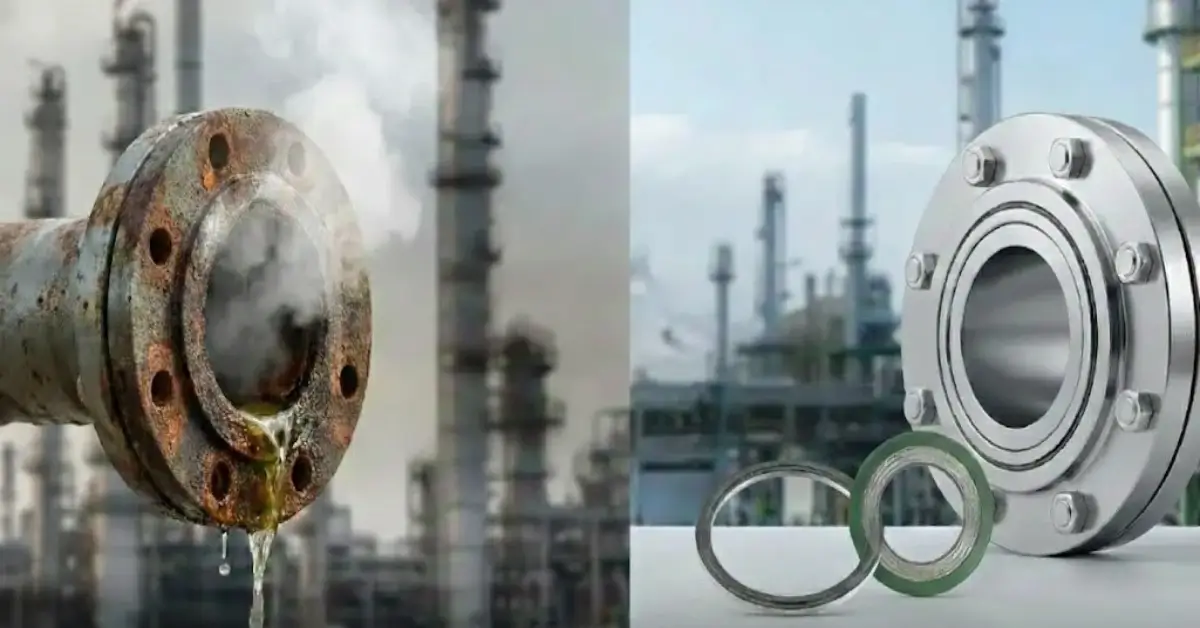
A leak is rarely just a “drip.” In a chemical plant, a leak poses a significant risk of toxic exposure. In an oil refinery, there is a potential fire. In a high-pressure steam line, it is an explosion hazard.
While pumps and reactors get the most attention during safety audits, the role of sealing in preventing leakage is arguably the most critical factor for maintaining facility integrity. It is the invisible shield that keeps your processes contained and your workforce safe.
ADYAA understands that gaskets and seals are not just consumables; they are safety devices. In this guide, we explore how high-performance sealing mitigates catastrophic risks.
Sealing Solutions for HSE Managers, Maintenance Leads, Reliability Engineers.
Leakage is often categorized into two types: visible leakage (drips and sprays) and fugitive emissions (invisible gas release). Both pose severe threats:
Understanding the role of sealing in preventing leakage allows plant managers to address these risks before they become accidents.
Preventing these outcomes requires selecting the right seal for the specific hazard. Standard rubber O-rings often fail under extreme stress. Here is how specialized ADYAA sealing products fulfill the vital role of sealing in preventing leakage across different applications.
When pressures climb above 2,000 PSI, standard flat gaskets can blow out.
In cryogenic applications (LNG) or superheated steam systems, elastomers become brittle and crack, leading to immediate failure.
Many industrial fluids are corrosive enough to eat through standard seals.
Even the best gasket will leak if applied incorrectly. The three most common causes of sealing failure are:
Safety is not a place to cut corners. Whether you require Weld Ring Gaskets for a permanent seal or Backup Rings for hydraulics, ADYAA has the engineering expertise to specify the correct component.
We supply sealing products designed to Australian and International standards. By prioritizing the role of sealing in preventing leakage, you ensure your plant stays compliant, efficient, and accident-free.
Is your facility fully protected?
Browse Our Range of RTJ Gaskets & Metal Seals
Contact ADYAA for a Sealing Safety Assessment.