When to Replace Rupture Discs in Pressure Equipment: A Maintenance Guide
When to Replace Rupture Discs in Pressure Equipment: A Maintenance Guide In the world of pressure safety, the rupture disc...
Read More →


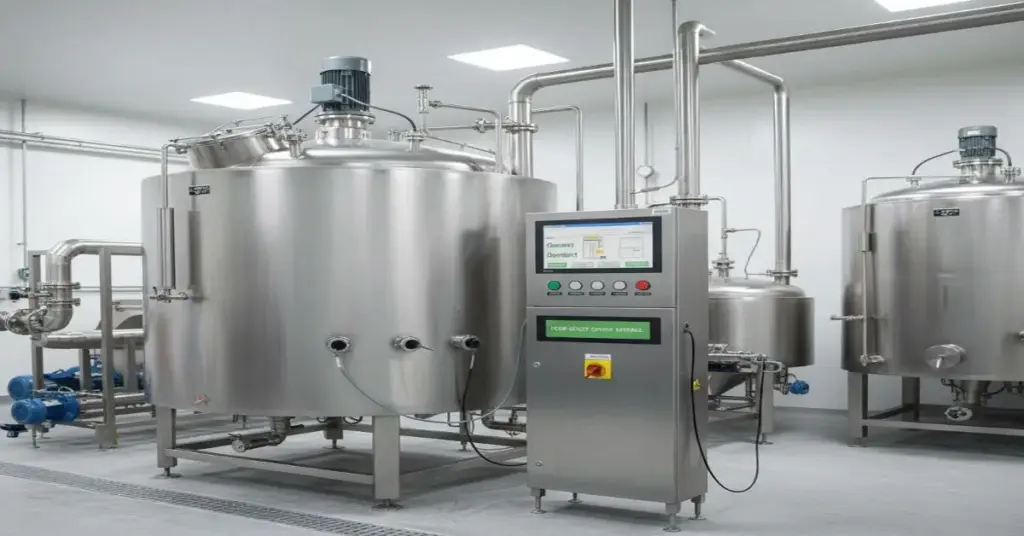
For a Food Safety Manager, there is one word that causes more stress than any other: Recall.
We have all seen the headlines. Dairy goes sour too early, or a specific processing line is found to be the source of a listeria outbreak. The cost isn’t just financial—it’s the damage to your brand’s reputation that can take years to fix.
In the food processing industry, the difference between a premium product and a public health risk often comes down to just one variable: Temperature.
Effective Temperature Control in Food processing isn’t just about “heating it up” or “cooling it down.” It’s about maintaining a precise, documented thermal window every single second.
ADYAA supplies the hygienic instrumentation that keeps food plants compliant. In this guide, we are diving into why precision matters, the hidden risks of sensor drift, and how to bulletproof your HACCP (Hazard Analysis Critical Control Point) plan.
Let’s start with the biology. You know the rule, but is your equipment actually following it?
Pathogenic bacteria (like Salmonella and Listeria) thrive in what food safety standards call the Temperature Danger Zone: between 5°C and 60°C.
In this specific window, bacteria can double in number every 20 minutes.
The Reality: A sensor that is off by even 1.0°C isn’t just a minor error. In the Danger Zone, it’s a biological ticking time bomb.
While safety keeps the auditors happy, Temperature Control in Food is also your secret weapon for profit and quality.
If you run a production line, you know that temperature fluctuations destroy consistency:
Key Takeaway: Precision sensors don’t just keep you safe; they ensure every batch tastes exactly the same.
Under your HACCP (Hazard Analysis Critical Control Point) plan, temperature sensors are the gatekeepers. Here is where we typically install ADYAA sensors in a plant:
Before you even start cooking, the ingredients must be safe.
This is the most critical moment. Whether it’s a HTST pasteuriser or a steam retort.
Once cooked, you must rush the food through the Danger Zone to stop spore germination.
Here is a common scenario in food plants:
Over time, this harsh environment causes Sensor Drift. The control screen says 72°C, but the product is actually 70°C.
Why does this happen? Standard industrial sensors aren’t built for food plants. Moisture from washdowns enters the sensor head, or thermal shock from CIP cycles compromises the internal wires.
The ADYAA Solution: We supply Sanitary Temperature Sensors specifically designed for Hygienic Applications.
Don’t just buy a generic sensor from a catalog. Use the right tool for the job.
In the food industry, you are only as good as your last batch.
Temperature Control in Food processing isn’t just a box to tick for the auditor; it is the foundation of your customer’s trust. Don’t leave it to chance with aging, drifting, or incorrect instrumentation.
At ADYAA, we understand the high stakes of food processing. From hygienic RTDs to robust monitoring systems, we help you keep your cool when the heat is on.
Is your HACCP plan fully protected?