When to Replace Rupture Discs in Pressure Equipment: A Maintenance Guide
When to Replace Rupture Discs in Pressure Equipment: A Maintenance Guide In the world of pressure safety, the rupture disc...
Read More →


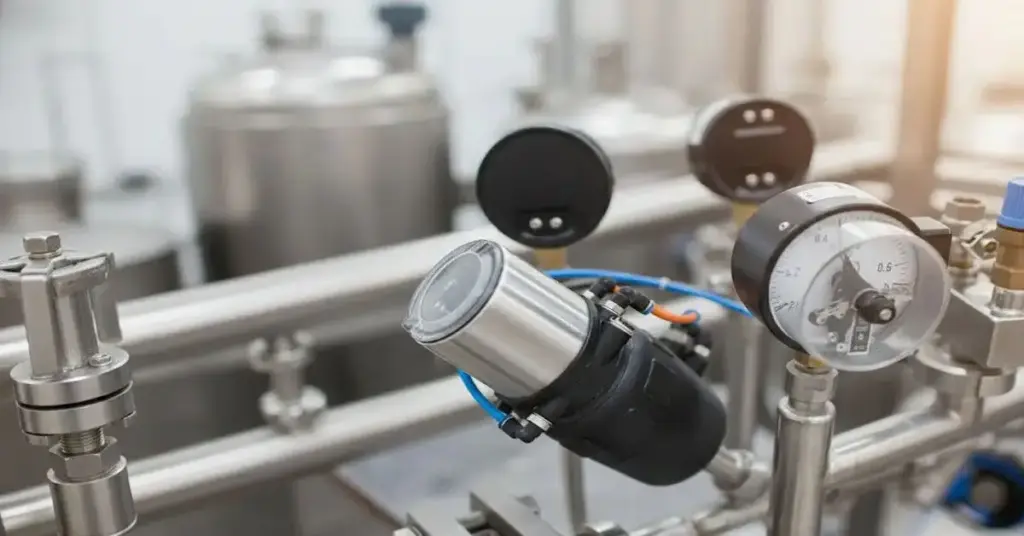
There is nothing more frustrating than a process shutdown caused by a $200 part.
In modern manufacturing, Pressure Sensors are the “nervous system” of your plant. They monitor everything from hydraulic lines to steam boilers. When they work, you don’t even notice them. But when you experience a Pressure Sensor Failure, the consequences can range from a minor nuisance to a catastrophic safety hazard.
ADYAA analyzes hundreds of failed sensors every year. The surprising truth? Most failures aren’t due to manufacturing defects—they are due to installation errors or environmental stressors.
If you are tired of replacing the same sensor every few months, check this list. Here are the 5 most common reasons your sensors are dying young.
Every sensor has a “Proof Pressure” rating (usually 1.5x or 2x the range). If you exceed this, the metal sensing diaphragm permanently deforms. It won’t snap back to its original shape, causing the “Zero” point to shift significantly.
Issue: It’s rarely a steady rise in pressure. It’s usually a micro-second Pressure Spike caused by a valve snapping shut or a pump kicking on. Your SCADA system might not even catch it, but the sensor feels it.
The Fix: If you suspect Overpressure Damage, install a Snubber (a simple restrictor) to dampen these spikes before they hit the sensitive diaphragm.
Similar to overpressure, but more violent. Water Hammer occurs in liquid systems when a moving fluid is forced to stop or change direction suddenly (like a quick-closing solenoid valve).
The momentum of the water creates a shockwave that travels through the pipe at the speed of sound. When this shockwave hits your pressure sensor, it hits with thousands of PSI of force, instantly destroying the internal mechanism.
The Fix: Move the sensor further away from valves or pumps, or use a Pressure Transducer with a higher proof rating and a built-in snubber.
“Stainless Steel” is not invincible.
Many standard industrial sensors use 316L Stainless Steel for the wetted parts (the part that touches your liquid). While 316L is great for water and oil, it will fail rapidly if exposed to certain acids, chlorides, or caustic cleaning solutions.
Chemical Corrosion can be sneaky. It might look fine on the outside, but over months, the fluid eats away at the thin sensing diaphragm until it becomes paper-thin. Eventually, it pinches a hole, leaking process fluid directly into the sensor electronics.
The Fix: Always check a Chemical Compatibility Chart. For harsh chemicals, switch to sensors with Hastelloy C or Gold-Plated diaphragms.
Electronics and water don’t mix. Yet, we often see sensors installed in washdown areas with improper cable glands or loose connectors.
Moisture Ingress usually happens in two ways:
Once water touches the circuit board, you will see erratic readings, Sensor Drift, or a completely dead signal.
The Fix: Ensure your sensor has the correct IP Rating (IP67 or IP68) for the environment, and always use a “drip loop” in your cabling so water runs away from the device.
Have you ever seen a sensor reading that “jumps” or looks “fuzzy”? You likely have an electrical noise problem.
In a plant full of VFDs (Variable Frequency Drives), large motors, and radios, there is a lot of invisible electromagnetic “noise” in the air. If your sensor cabling isn’t shielded properly, the wires act like an antenna, picking up this EMI/RFI Interference.
This doesn’t physically break the sensor, but it causes Signal Noise that makes the data useless for control.
The Fix: Always use Shielded Twisted Pair cabling for your 4-20mA signals, and ground the shield at one end only (usually at the control panel) to prevent ground loops.
A Pressure Sensor Failure is rarely just bad luck. It is almost always a symptom of a larger system issue—whether it’s pressure spikes, chemical attack, or bad wiring.
By identifying the root cause, you can stop swapping out parts and start implementing permanent fixes.
We help you solve the problem. From high-overpressure sensors to chemical-resistant seals, we have the Australian-engineered solutions to keep your plant running.
Need help diagnosing a failed sensor?