
ABB Electromagnetic Flowmeter Selection
ABB Electromagnetic Flowmeter Selection Guide Choosing the Right ABB Electromagnetic Flowmeter Choosing a flowmeter is not just about matching the instrument to the pipe diameter. The liquid, operating conditions, installation, and measurement requirements all affect which model will suit the application. For example, a meter used to monitor water distribution may have different requirements from one measuring a corrosive process liquid inside a manufacturing plant. ABB electromagnetic flowmeters are available for different industrial and water applications. The important part is identifying the right configuration before placing an order. Here are the main points to check when selecting a flowmeter for an Australian industrial application. 1. Start With the Liquid Being Measured The first question is simple: What liquid will pass through the flowmeter? Electromagnetic flowmeters work with electrically conductive liquids. They measure flow using the voltage generated as the liquid moves through a magnetic field. They can be suitable for applications involving: Potable and process water Wastewater and effluent Conductive chemical solutions Industrial process liquids Slurries, where the specific meter and application are suitable However, not every liquid is suitable. Very low conductivity can prevent reliable measurement, and the minimum conductivity requirement depends on the selected instrument. Before choosing a model, confirm the liquid’s conductivity, chemical composition, and whether it contains suspended solids or entrained gas. 2. Select the Correct Flowmeter Family ABB’s electromagnetic flowmeter portfolio includes solutions for water and wastewater as well as industrial process applications. The application should guide the selection rather than the model name alone. Application requirement ABB range to investigate Standard water and wastewater measurement ProcessMaster Water FEW620 Water and wastewater applications needing enhanced functions ProcessMaster Water FEW630 General industrial process measurement ProcessMaster Industry FEP620 Demanding industrial applications requiring enhanced functions ProcessMaster Industry FEP630 Water transportation and distribution AquaMaster range These are starting points, not final recommendations. Confirm the exact model, sensor, transmitter, and available options against the operating conditions and current product documentation. You can review the available options on the ADYAA electromagnetic flowmeters page. 3. Check the Pipe Size and Flow Range A flowmeter should be selected for the actual flow conditions, not just the existing pipe size. A pipe’s nominal diameter does not tell you whether the flow will remain within the meter’s suitable operating range. Both minimum and maximum flow rates matter. Collect these details before requesting a quotation: Existing pipeline diameter Minimum, normal, and maximum flow rates Expected flow variation during operation Whether the flow is continuous or intermittent Required measurement units and output signals Why does this matter? If the flowmeter is poorly matched to the application, low-flow readings may not meet the required measurement performance. Operating near the upper limit can also create problems if the process flow increases. Do not reduce or increase the meter size based on a general rule alone. Use the manufacturer’s sizing guidance and check the expected flow velocity and measurement range. 4. Choose the Right Liner and Electrode Materials The materials in contact with the liquid are important, particularly when measuring chemicals, abrasive liquids, or wastewater. Two areas deserve attention: the liner inside the measuring tube and the electrodes that detect the measurement signal. Liner material The liner separates the conductive liquid from the meter’s measuring tube. Its suitability depends on the liquid’s chemical properties, temperature, pressure, and potential abrasion. Electrode material The electrodes contact the process liquid. Their compatibility with the liquid can affect service life and measurement reliability. When checking materials, provide the supplier with: The liquid’s exact name and concentration Normal and maximum operating temperature Operating and design pressure Any cleaning chemicals used in the process Details of abrasive solids or suspended particles Avoid selecting materials based only on a broad label such as “water” or “chemical.” Two liquids in the same category can behave very differently. 5. Confirm Pressure and Temperature Limits Every installation has operating limits. The selected flowmeter must suit the normal conditions as well as credible operating extremes. Check the following before finalising a model: Minimum and maximum liquid temperature Normal and maximum operating pressure Pressure fluctuations or water hammer Process connection and flange standard Required pressure rating For example, the published specifications for ABB’s FEP620 and FEW620 differ in areas such as liner options and temperature limits. These ranges should not be treated as interchangeable. Always use the datasheet for the exact model and configuration. If the process conditions are close to a stated limit, ask for technical confirmation before ordering. 6. Consider the Installation Conditions Even a correctly selected flowmeter can perform poorly if it is installed incorrectly. Review the pipeline layout and the conditions around the proposed installation point. Check these practical details: Is the pipe expected to remain full during measurement? Is there sufficient straight pipe length for the selected configuration? Can the meter be installed in the required orientation? Is proper grounding or bonding available? Will the location be exposed to flooding, outdoor weather, or washdown? Is the display accessible for inspection and maintenance? Electromagnetic flowmeters do not have moving parts in the measuring tube, but they still need correct installation and suitable process conditions. Follow the model-specific installation manual for grounding, pipe layout, and mounting requirements. 7. Decide What Signals and Diagnostics You Need The flowmeter should also work with the plant’s control and monitoring system. A basic installation may need a standard analogue output, while a more connected plant may require digital communications, additional diagnostics or integration with existing automation equipment. Confirm whether the application requires: 4–20 mA output HART or another supported communication protocol Totalised flow readings Empty-pipe or electrode diagnostics Local display or remote monitoring Verification and maintenance functions Do not assume every feature is included in every model. Available communications and diagnostics depend on the selected transmitter and configuration. 8. Accuracy: Look Beyond One Number Accuracy is important, but the figure in a product specification should not be considered in isolation. Check how the stated performance applies to your required flow range, the selected meter configuration, and the operating conditions. Also consider installation
Flow Meters Perth: How to Choose the Right Meter
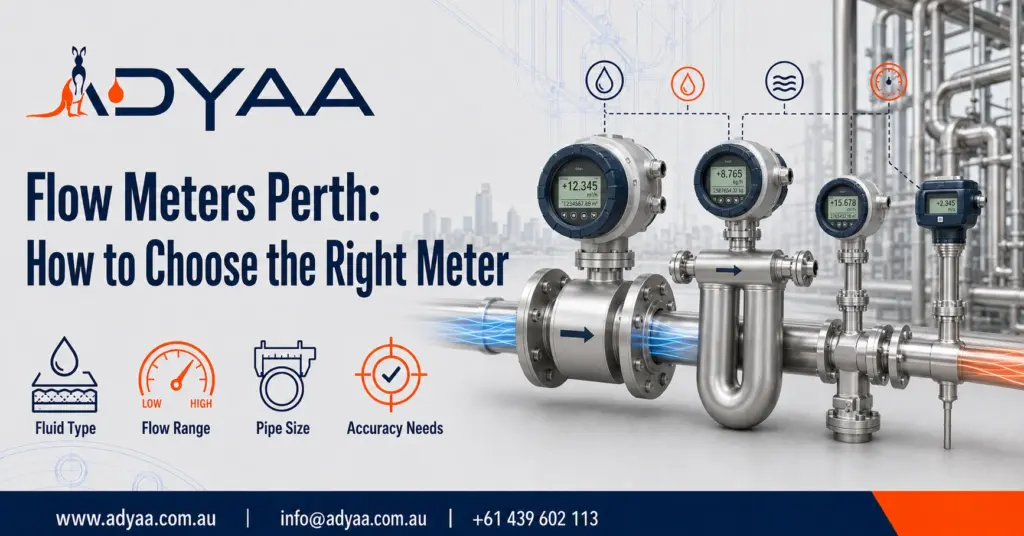
Flow Meters Perth: How to Choose the Right Meter Accurate flow measurement is essential for efficient industrial operations. Whether measuring water, chemicals, steam or gases, selecting the right flow meter helps improve process control, reduce waste and maintain product quality. Businesses looking for Flow Meters Perth have access to a wide range of technologies designed to meet different process requirements across industries. What Is a Flow Meter? A flow meter is an instrument used to measure the flow rate or total quantity of liquids, gases or steam moving through a pipeline. Flow meters provide real-time process data that helps operators monitor production, optimise resource usage and maintain consistent operational performance. From water treatment plants to food manufacturing facilities, flow meters play a critical role in industrial process control. Why Flow Meters Matter Reliable flow measurement supports both operational efficiency and process accuracy. Improve Process Efficiency Monitor flow continuously to optimise production and reduce waste. Increase Measurement Accuracy Accurate flow data supports better operational decisions. Reduce Operating Costs Identify process inefficiencies and unnecessary product losses. Support Automation Provide reliable data to PLC and SCADA systems for automated control. Improve Product Quality Maintain consistent flow rates throughout production. Enhance Resource Management Monitor water, chemicals, fuel and energy consumption more effectively. How Flow Meters Work Although flow meter technologies vary, the basic operating process is similar. The flow meter detects the movement of liquid, gas or steam. Internal sensors measure the flow characteristics. The instrument converts the measurement into an electrical signal. The data is transmitted to a monitoring or control system. Operators use the information to monitor and optimise the process. Continuous monitoring helps improve operational efficiency and process stability. Common Types of Flow Meters Different applications require different flow measurement technologies. Electromagnetic Flow Meters Ideal for measuring conductive liquids such as water, wastewater and chemicals with high accuracy. Coriolis Flow Meters Measure mass flow directly and provide excellent accuracy for liquids and gases. Ultrasonic Flow Meters Use ultrasonic waves to measure flow without restricting the process, making them suitable for clean liquids. Vortex Flow Meters Suitable for measuring steam, gases and liquids in industrial applications. Turbine Flow Meters Designed for clean liquid applications requiring fast and accurate flow measurement. Variable Area Flow Meters Provide a simple and reliable solution for monitoring low-flow industrial processes. Flow Meter Comparison Flow Meter Type Best For Common Industries Electromagnetic Conductive Liquids Water & Wastewater Coriolis High Accuracy Mass Flow Chemical, Food & Beverage Ultrasonic Clean Liquids Water Treatment Vortex Steam and Gas Power Generation Turbine Clean Liquids Manufacturing Variable Area Low Flow Applications General Industry Where Flow Meters Are Used Flow meters are used across a wide range of industrial sectors. Water & Wastewater Monitor water distribution, treatment processes and wastewater management. Oil & Gas Measure hydrocarbons, fuels and process fluids throughout production. Chemical Processing Control chemical dosing and process flow accurately. Food & Beverage Maintain consistent production and ingredient control. Pharmaceutical Support precise flow measurement during manufacturing. Mining Monitor slurry, water and chemical transfer systems. Power Generation Measure steam, cooling water and utility systems. Manufacturing Improve production efficiency through accurate process monitoring. Flow Meter Selection Checklist Before selecting a flow meter, consider: ✔ Type of process fluid ✔ Flow range ✔ Operating pressure ✔ Operating temperature ✔ Pipe size ✔ Measurement accuracy ✔ Installation location ✔ Output signal ✔ Communication protocol ✔ Maintenance requirements Choosing the correct technology helps maximise long-term performance and measurement reliability. Common Mistakes When Choosing Flow Meters Incorrect flow meter selection can affect process performance. Common mistakes include: Selecting the wrong flow technology Ignoring fluid characteristics Choosing an incorrect pipe size Overlooking pressure loss Incorrect installation position Ignoring future maintenance requirements Focusing only on purchase price Understanding your application before selecting a flow meter helps improve long-term performance. Why Accurate Flow Measurement Matters Accurate flow measurement helps industries control production, reduce product loss and improve operational efficiency. Reliable flow data also supports regulatory compliance, better energy management and more informed maintenance planning. Why Choose ADYAA? ADYAA supplies industrial flow measurement solutions for a wide range of applications across Australia. Comprehensive Product Range Electromagnetic, Coriolis, Ultrasonic, Vortex and other industrial flow meters. Technical Expertise Support in selecting the right flow meter based on your application. Quality Industrial Products Reliable flow measurement solutions from trusted manufacturers. Automation Ready Flow meters compatible with PLC, SCADA and industrial control systems. Australia-wide Support Serving customers across Perth and throughout Australia. Long-Term Reliability Helping industries improve process efficiency through accurate flow measurement. Frequently Asked Questions What is a flow meter? A flow meter measures the flow rate or quantity of liquids, gases or steam moving through a pipeline. Which flow meter is the most accurate? The best flow meter depends on the application. Coriolis flow meters are widely recognised for high-accuracy mass flow measurement, while electromagnetic flow meters are well suited for conductive liquids. Where are flow meters commonly used? Water treatment, manufacturing, mining, chemical processing, oil & gas, food & beverage and pharmaceutical industries. How do I choose the right flow meter? Consider the process fluid, flow range, operating conditions, required accuracy & installation environment. Can flow meters be integrated with automation systems? Yes. Industrial flow meters support integration with PLC, SCADA & DCS platforms. Do flow meters require calibration? Regular calibration and maintenance help maintain measurement accuracy and reliable long-term performance. Choosing the right Flow Meters Perth solution helps improve process efficiency, reduce operating costs and maintain accurate industrial measurements. The best flow meter depends on your process conditions, fluid characteristics and operational requirements. ADYAA supplies industrial flow meters and flow measurement solutions for businesses across Perth and Australia, helping industries select reliable technologies for accurate and efficient process monitoring. Looking for the right flow meter for your application? Our specialists can help you select the most suitable flow measurement solution based on your industry, process requirements and operating conditions Flow Meters Perth: How to Choose the Right Meter Industrial Instrumentation Australia: Complete Guide Every industrial process depends on reliable measurements. Whether it’s
Industrial Instrumentation Australia: Complete Guide
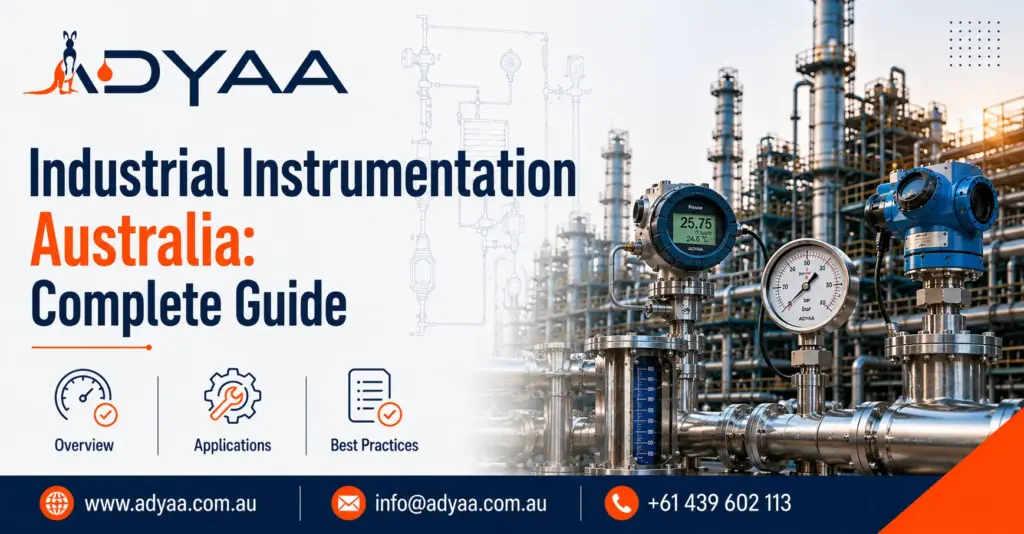
Industrial Instrumentation Australia: Complete Guide Every industrial process depends on reliable measurements. Whether it’s monitoring pressure inside a pipeline, measuring liquid levels in a storage tank or controlling temperature during production, industrial instrumentation provides the information needed to keep operations running efficiently. Across Australia, industries rely on Industrial Instrumentation Australia solutions to improve process control, minimise downtime, increase equipment reliability and support safer working environments. What Is Industrial Instrumentation? Industrial instrumentation refers to the instruments used to measure, monitor and control process variables such as pressure, temperature, flow and level. These instruments continuously collect operational data and send it to operators or automation systems such as PLCs, SCADA and DCS platforms, allowing businesses to monitor processes in real time and make informed operational decisions. From a small manufacturing facility to a large refinery, accurate instrumentation is the foundation of efficient process control. Why Industrial Instrumentation Matters Reliable instrumentation delivers much more than accurate measurements. Improve Process Accuracy Maintain consistent product quality by continuously monitoring critical process variables. Increase Operational Efficiency Real-time process data enables faster decisions and smoother production. Reduce Downtime Detect abnormal operating conditions before they become costly failures. Improve Workplace Safety Monitor pressure, temperature and flow to help reduce operational risks. Support Automation Provide accurate data for PLC, SCADA and distributed control systems. Extend Equipment Life Reliable monitoring helps prevent unnecessary wear on industrial equipment. How Industrial Instrumentation Works Although different instruments perform different tasks, most follow a similar process. A sensor detects a physical process such as pressure, temperature, flow or level. The instrument converts the measurement into a usable electrical signal. The signal is transmitted to a PLC, SCADA or control system. Operators monitor the process in real time. The control system adjusts the process automatically when required. This continuous monitoring improves process stability and operational efficiency. Types of Industrial Instrumentation Different applications require different measurement technologies. Pressure Instrumentation Pressure gauges, pressure transmitters and pressure switches monitor pressure in pipelines, vessels and process equipment. Temperature Instrumentation RTDs, thermocouples, temperature transmitters and thermometers measure process temperatures accurately. Flow Instrumentation Electromagnetic, Coriolis, ultrasonic and vortex flowmeters measure liquid, gas and steam flow. Level Instrumentation Radar, ultrasonic, capacitance and guided wave radar transmitters monitor tank and vessel levels. Analytical Instrumentation pH meters, conductivity meters and dissolved oxygen sensors monitor product quality and process conditions. Calibration Equipment Calibration equipment verifies instrument accuracy and supports reliable long-term performance. Common Industrial Instruments at a Glance Instrument Measures Common Applications Pressure Transmitter Pressure Oil & Gas, Manufacturing Temperature Transmitter Temperature Food Processing, Pharmaceutical Electromagnetic Flowmeter Liquid Flow Water & Wastewater Radar Level Transmitter Tank Level Chemical Processing Conductivity Meter Conductivity Water Treatment Pressure Gauge Pressure General Industrial Applications Where Industrial Instrumentation Is Used Every industry has unique measurement requirements. Manufacturing Manufacturers use instrumentation to improve production efficiency, reduce waste and maintain consistent product quality. Oil & Gas Pressure, flow and temperature instruments support safe exploration, transportation and refining processes. Mining Instrumentation monitors heavy equipment and mineral processing operations under demanding conditions. Chemical Processing Accurate measurement helps maintain product consistency while supporting efficient process control. Food & Beverage Temperature, flow and level instruments help maintain production quality throughout manufacturing. Water & Wastewater Flowmeters, level transmitters and analytical instruments support water treatment and distribution. Power Generation Instrumentation continuously monitors boilers, turbines and utility systems. Pharmaceutical High-accuracy instruments support controlled manufacturing environments and product consistency. Industrial Instrument Selection Checklist Before selecting an industrial instrument, consider the following: ✔ Process variable to be measured ✔ Operating pressure and temperature ✔ Required measurement accuracy ✔ Process connection ✔ Material compatibility ✔ Output signal requirements ✔ Communication protocol ✔ Hazardous area certification ✔ Installation environment ✔ Future maintenance and calibration Choosing the right instrument from the beginning reduces operating costs and improves long-term reliability. Common Mistakes When Selecting Industrial Instrumentation Selecting the wrong instrument can affect both productivity and equipment reliability. Common mistakes include: Choosing the wrong measuring range Ignoring environmental conditions Selecting incompatible wetted materials Overlooking communication protocols Installing instruments incorrectly Skipping routine calibration Prioritising price over application suitability Working with experienced instrumentation specialists helps avoid these issues. Why Measurement Accuracy Matters Even small measurement errors can affect production quality, energy consumption and maintenance costs. Accurate industrial instrumentation provides reliable process data that supports better operational decisions, improved efficiency and more consistent production outcomes. Why Choose ADYAA? ADYAA supplies industrial instrumentation solutions that support reliable process measurement across Australian industries. Comprehensive Product Portfolio Pressure, temperature, flow, level, analytical and calibration solutions from trusted manufacturers. Technical Expertise Support in selecting instrumentation suited to your process requirements. Reliable Industrial Solutions Products designed for demanding industrial environments. Automation Compatibility Solutions compatible with PLC, SCADA and process automation systems. Australia-wide Support Reliable service for customers across Australia. Focus on Long-Term Performance Helping industries improve efficiency, measurement accuracy and operational reliability. Frequently Asked Questions What is industrial instrumentation? Industrial instrumentation includes instruments used to measure, monitor and control industrial processes. What industries use industrial instrumentation? Manufacturing, mining, oil & gas, chemical processing, food & beverage, pharmaceutical, power generation and water treatment. What are the main types of industrial instrumentation? Pressure, temperature, flow, level and analytical instruments are the most widely used. Why is calibration important? Calibration verifies measurement accuracy and helps maintain reliable process performance. How does industrial instrumentation support automation? It provides real-time process data to PLC, SCADA and DCS systems for monitoring and automated control. How do I choose the right industrial instrument? Selection depends on the process variable, operating conditions, accuracy requirements, installation environment and communication needs. Whether you’re expanding a production facility, upgrading existing equipment or implementing a new process, selecting the right Industrial Instrumentation Australia solutions helps improve operational efficiency, process visibility and long-term equipment reliability. ADYAA supplies a comprehensive range of industrial instrumentation products and works with customers to identify solutions that match their operational and technical requirements. Need help selecting the right industrial instrumentation? Our specialists can help you choose the right pressure, temperature, flow, level and analytical instruments for your application. Industrial Instrumentation Australia:
Flow Measurement Solutions for Industrial Processes
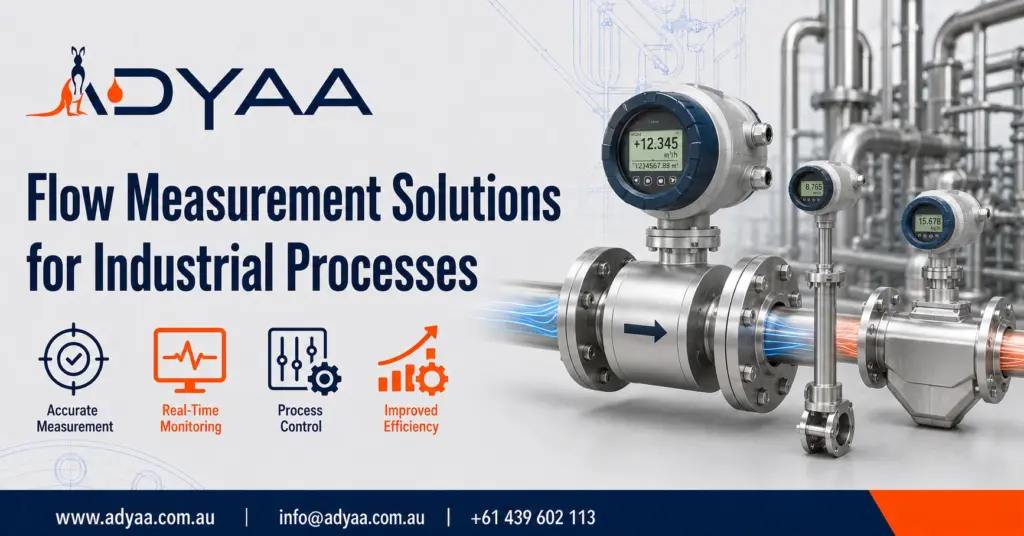
Flow Measurement Solutions for Industrial Processes Accurate flow measurement is essential for maintaining efficient industrial operations. Whether monitoring water, chemicals, steam, fuel or gases, reliable Flow Measurement Solutions help businesses improve process control, optimise resource consumption and maintain product quality. From manufacturing facilities to water treatment plants, selecting the right flow measurement technology supports better operational decisions while reducing waste and unnecessary downtime. What Are Flow Measurement Solutions? Flow measurement solutions include the instruments and technologies used to measure the movement of liquids, gases and steam within industrial processes. These solutions provide continuous flow data that helps operators monitor production, manage resources and improve overall process performance. Modern flow measurement systems can also integrate with PLC, SCADA and distributed control systems, providing real-time information for automated process control. Why Flow Measurement Matters? Reliable flow measurement supports safer and more efficient industrial operations. Improve Process Efficiency Monitor flow continuously to optimise production and reduce waste. Increase Measurement Accuracy Accurate flow data supports consistent process performance. Reduce Operating Costs Identify product losses and inefficient process conditions. Improve Product Quality Maintain consistent flow throughout manufacturing processes. Support Automation Provide reliable data for PLC, SCADA and industrial control systems. Better Resource Management Monitor water, chemicals, fuel and energy usage more effectively. How Flow Measurement Works Although different technologies are used, the measurement process follows a similar sequence. The flow meter detects the movement of liquid, gas or steam. Sensors measure the flow characteristics. The instrument converts the measurement into an electrical signal. The data is transmitted to a monitoring or control system. Operators use the information to monitor and optimise the process. Continuous monitoring helps improve efficiency and process stability. Common Flow Measurement Technologies Different industrial applications require different measurement principles. Electromagnetic Flow Meters Ideal for conductive liquids such as water, wastewater and chemicals. Coriolis Flow Meters Provide highly accurate mass flow measurement for liquids and gases. Ultrasonic Flow Meters Measure flow using ultrasonic signals without restricting the process. Vortex Flow Meters Suitable for measuring steam, gases and industrial liquids. Turbine Flow Meters Offer reliable measurement for clean liquid applications. Variable Area Flow Meters Simple and cost-effective solutions for low-flow industrial processes. Flow Measurement Technology Comparison Technology Best For Common Industries Electromagnetic Conductive Liquids Water & Wastewater Coriolis High Accuracy Mass Flow Chemical, Food & Beverage Ultrasonic Clean Liquids Water Treatment Vortex Steam and Gas Power Generation Turbine Clean Liquids Manufacturing Variable Area Low Flow Applications General Industry Where Flow Measurement Solutions Are Used Flow measurement supports a wide range of industries. Water & Wastewater Monitor water distribution, treatment and wastewater processes. Oil & Gas Measure hydrocarbons, fuels and process fluids. Chemical Processing Control dosing systems and chemical transfer processes. Food & Beverage Maintain accurate ingredient and product flow. Pharmaceutical Support precise manufacturing and quality control. Mining Monitor slurry, chemicals and water movement. Power Generation Measure steam, cooling water and utility systems. Manufacturing Improve production efficiency through continuous monitoring. Flow Measurement Selection Checklist Before selecting a flow measurement solution, consider: ✔ Type of fluid ✔ Flow range ✔ Operating pressure ✔ Operating temperature ✔ Pipe size ✔ Measurement accuracy ✔ Installation location ✔ Communication protocol ✔ Output signal ✔ Maintenance requirements Selecting the right technology improves reliability and long-term performance. Common Mistakes When Choosing Flow Measurement Solutions Common selection mistakes include: Choosing the wrong flow meter technology Ignoring fluid characteristics Incorrect sizing Poor installation practices Ignoring pressure loss Overlooking maintenance requirements Focusing only on initial cost A proper application assessment helps avoid these issues. Why Accurate Flow Measurement Matters Accurate flow measurement helps industries improve operational efficiency, reduce waste and optimise production processes. Reliable measurement data also supports preventive maintenance, better energy management and more informed operational decisions. Why Choose ADYAA? ADYAA supplies reliable flow measurement solutions for industrial applications across Australia. Comprehensive Flow Measurement Portfolio Electromagnetic, Coriolis, Ultrasonic, Vortex and Turbine Flow Meters. Technical Expertise Support in selecting the right flow measurement technology. Quality Industrial Products Reliable solutions from globally recognised manufacturers. Automation Ready Compatible with PLC, SCADA and process control systems. Australia-wide Support Technical assistance for industries across Australia. Long-Term Reliability Helping businesses improve efficiency through accurate flow measurement. Frequently Asked Questions What are Flow Measurement Solutions? Flow measurement solutions include instruments used to measure the flow of liquids, gases and steam in industrial processes. Which flow meter is best? The best solution depends on the application, process fluid, operating conditions and required measurement accuracy. Where are flow measurement systems used? They are widely used in water treatment, manufacturing, mining, oil & gas, food processing, chemical plants and power generation. Can flow meters integrate with automation systems? Yes. Most modern flow meters support integration with PLC, SCADA and DCS systems. Do flow meters require calibration? Routine calibration helps maintain measurement accuracy and long-term performance. How do I choose the right flow measurement solution? Consider the process fluid, operating conditions, accuracy requirements, installation environment and communication needs. Reliable Flow Measurement Solutions help industries improve process control, reduce operating costs and maintain accurate production data. Choosing the right flow measurement technology ensures efficient operations while supporting long-term equipment performance. ADYAA supplies industrial flow measurement solutions across Australia, helping businesses select technologies that match their applications and operational requirements. Looking for the right Flow Measurement Solution? Our specialists can help you choose the most suitable flow measurement technology for your industry and application. Talk to a Flow Measurement Expert Gems 3100/3200 Pressure Transmitters : Complete Guide – Copy Flow Measurement Solutions for Industrial Processes Accurate flow measurement is essential for maintaining efficient industrial operations. Whether monitoring water, chemicals,… Read More → Industrial HVAC vs Commercial HVAC: What is the Difference? Industrial HVAC vs Commercial HVAC: Why Equipment Choice Matters If you walk onto the roof of a shopping mall and… Read More → How Industrial Automation Sensors Improve Manufacturing Efficiency How Industrial Automation Sensors Improve Efficiency in Manufacturing Efficiency is the primary metric of success. The difference between a profitable… Read More →