
Industrial Instrumentation Services Explained

Industrial Instrumentation Services Explained Industrial instruments deliver accurate process data only when they are installed, calibrated and maintained correctly. Industrial Instrumentation Services help businesses maximise equipment performance, improve measurement accuracy and reduce unplanned downtime throughout the lifecycle of their instrumentation systems. Whether commissioning a new production line or maintaining an existing facility, professional instrumentation services support safer operations and more reliable process control. What Are Industrial Instrumentation Services? Industrial Instrumentation Services include the installation, calibration, inspection, maintenance and troubleshooting of instruments used to measure pressure, temperature, flow, level and analytical parameters. These services help ensure that instruments operate accurately, communicate effectively with control systems and continue to perform reliably under industrial operating conditions. They are an essential part of maintaining efficient production processes across a wide range of industries. Why Industrial Instrumentation Services Matter Reliable instrumentation depends on more than selecting the right products. Improve Measurement Accuracy Regular servicing helps instruments maintain reliable and consistent measurements. Reduce Downtime Identify potential problems before they affect production. Extend Equipment Life Routine maintenance reduces unnecessary wear and improves long-term reliability. Support Compliance Maintain instruments in accordance with maintenance programmes and industry requirements. Improve Process Efficiency Accurate measurements support better process control and operational performance. Increase Plant Reliability Well-maintained instrumentation helps reduce unexpected equipment failures. How Industrial Instrumentation Services Work Professional instrumentation services follow a structured process. Review the application and existing instrumentation. Inspect instrument condition and installation. Perform calibration or functional testing where required. Adjust, repair or replace components if necessary. Verify performance and document the results. This approach helps maintain reliable measurements and minimise production interruptions. Common Industrial Instrumentation Services Industrial facilities typically require a combination of services throughout the equipment lifecycle. Instrument Installation Correct installation ensures instruments perform as designed from the start. Instrument Calibration Verify measurement accuracy against recognised reference standards. Preventive Maintenance Routine servicing helps identify issues before they cause failures. Troubleshooting Diagnose communication, measurement or performance problems efficiently. Instrument Replacement & Upgrades Replace ageing equipment or upgrade to newer technologies. Commissioning & Start-Up Support Verify correct operation before equipment enters full production. Instrumentation Services Comparison Service Purpose Benefit Installation Correct instrument setup Reliable operation Calibration Verify measurement accuracy Improved process control Preventive Maintenance Reduce failures Less downtime Troubleshooting Identify faults Faster problem resolution Commissioning Validate new systems Smooth project start-up Upgrades Improve technology Better efficiency Where Industrial Instrumentation Services Are Used Professional instrumentation services support many industries. Manufacturing Maintain production efficiency through reliable process measurements. Oil & Gas Support pressure, flow and temperature monitoring across production facilities. Mining Maintain instrumentation operating in harsh environments. Chemical Processing Ensure accurate monitoring of critical process variables. Food & Beverage Support product consistency through reliable instrumentation. Water & Wastewater Maintain accurate monitoring across treatment facilities. Power Generation Improve reliability of boilers, turbines and utility systems. Pharmaceutical Support controlled manufacturing processes with accurate instrumentation. Industrial Instrumentation Service Checklist When planning instrumentation services, consider: ✔ Instrument condition ✔ Calibration status ✔ Operating environment ✔ Maintenance history ✔ Communication performance ✔ Process criticality ✔ Spare parts availability ✔ Documentation ✔ Compliance requirements ✔ Future upgrade opportunities A planned maintenance strategy improves equipment reliability and operational efficiency. Common Instrumentation Maintenance Mistakes Many avoidable issues result from inadequate maintenance practices. Common mistakes include: Skipping routine calibration Ignoring early warning signs Poor installation practices Delaying preventive maintenance Using unsuitable replacement parts Failing to document maintenance activities Waiting until equipment fails before servicing Regular servicing helps prevent these problems. Why Preventive Instrumentation Services Matter Waiting for an instrument to fail often results in costly downtime, inaccurate measurements and emergency repairs. Preventive instrumentation services help businesses identify problems early, improve process reliability and reduce long-term operating costs. A proactive maintenance approach also supports safer operations and more consistent production performance. Why Choose ADYAA? ADYAA supports Australian industries with industrial instrumentation products and technical expertise to help improve process performance. Comprehensive Instrumentation Solutions Pressure, temperature, flow, level and analytical instrumentation. Technical Product Support Assistance in selecting suitable instrumentation for industrial applications. Reliable Industrial Products Solutions from trusted global manufacturers. Automation Compatible Products designed for integration with PLC, SCADA and DCS systems. Australia-wide Support Supporting industries across Australia with dependable instrumentation solutions. Long-Term Performance Helping businesses improve operational efficiency through reliable measurement solutions. Frequently Asked Questions What are Industrial Instrumentation Services? They include installation, calibration, maintenance, troubleshooting and commissioning of industrial instruments. Why is calibration important? Calibration helps maintain measurement accuracy and reliable process performance. How often should industrial instruments be serviced? Service intervals depend on the application, operating conditions and maintenance programme. Which industries require instrumentation services? Manufacturing, mining, oil & gas, chemical processing, food & beverage, pharmaceutical, water treatment and power generation. Can instrumentation services reduce downtime? Yes. Preventive maintenance helps identify issues before they lead to equipment failures. How do I know when an instrument needs servicing? Signs include unstable readings, communication errors, reduced accuracy or scheduled calibration intervals. Reliable Industrial Instrumentation Services help industries maintain accurate measurements, improve operational efficiency and reduce unexpected downtime. Regular installation, calibration and maintenance ensure that instrumentation continues to deliver dependable performance throughout its service life. ADYAA provides industrial instrumentation solutions and technical expertise, helping businesses across Australia improve measurement reliability and process efficiency. Need help with your instrumentation requirements? Our specialists can help you select the right instrumentation solutions and provide guidance for reliable long-term process performance. Industrial Instrumentation Services Explained Industrial Instrumentation Australia: Complete Guide Every industrial process depends on reliable measurements. Whether it’s monitoring pressure inside a pipeline, measuring… Read More → Industrial Instrumentation Australia: Complete Guide Industrial Instrumentation Australia: Complete Guide Every industrial process depends on reliable measurements. Whether it’s monitoring pressure inside a pipeline, measuring… Read More → Oil Water Interface Level Sensor: Working Principle & Applications Oil Water Interface Level Sensor: Working Principle & Applications Many industrial processes involve separating oil from water. Measuring only the… Read More → Talk to a instrumentation expert
Onsite Instrumentation Calibration: Benefits & Best Practices
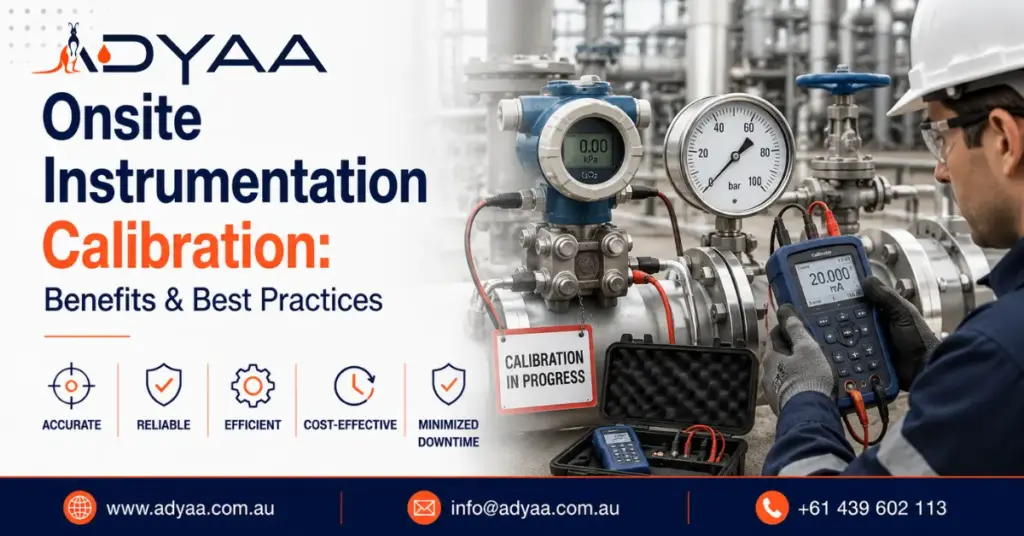
Onsite Instrumentation Calibration: Benefits & Best Practices A pressure transmitter reading slightly higher than the actual pressure or a temperature sensor drifting by just a few degrees may seem insignificant. Over time, these small measurement errors can affect product quality, increase energy consumption and even lead to unexpected equipment shutdowns. This is why Onsite Instrumentation Calibration plays an important role in industrial operations. Instead of removing instruments and sending them to a laboratory, calibration is carried out at the facility, allowing equipment to be verified, adjusted and returned to service with minimal interruption. For industries where continuous operation matters, onsite calibration helps maintain reliable measurements while reducing production downtime. What Is Onsite Instrumentation Calibration? Onsite Instrumentation Calibration is the process of testing, verifying and adjusting industrial instruments at the installation site using certified calibration equipment. It confirms that an instrument continues to measure within its specified accuracy and performs as expected under actual operating conditions. Commonly calibrated instruments include: Pressure Transmitters Pressure Gauges Temperature Transmitters RTDs and Thermocouples Flowmeters Level Transmitters Analytical Instruments Regular Instrumentation Calibration helps maintain process consistency and confidence in measurement data. When Is Onsite Calibration the Better Choice? While laboratory calibration is suitable for many instruments, onsite calibration is often preferred when removing equipment would interrupt production or require significant maintenance. It is particularly valuable when: Production cannot be stopped for long periods. Instruments are installed in difficult-to-access locations. Large process plants require multiple instruments to be calibrated. Verification is needed immediately after installation or maintenance. Shutdown time needs to be minimised. For example, calibrating several Pressure Transmitters during a planned maintenance shutdown is often more practical than removing each instrument and sending it to a calibration laboratory. Why Regular Calibration Matters Accurate measurements support better operational decisions. Routine Onsite Instrumentation Calibration helps: Improve measurement accuracy Reduce unexpected process variations Support product quality Increase equipment reliability Minimise unplanned downtime Maintain process consistency In industries with strict quality requirements, regular calibration also helps maintain confidence in production data and inspection records. Common Mistakes That Affect Calibration Results Calibration is only effective when it follows the correct procedure. Some common mistakes include: Extending calibration intervals without reviewing instrument performance Using uncertified calibration equipment Ignoring environmental conditions during testing Skipping calibration records Reinstalling instruments incorrectly after maintenance These issues can reduce measurement reliability even if the instrument appears to be functioning normally. Onsite Calibration vs Laboratory Calibration Onsite Instrumentation Calibration Laboratory Calibration Performed at the facility Performed in a calibration laboratory Reduces production downtime Requires instrument removal Faster return to operation Longer turnaround time Suitable for installed process instruments Suitable for standalone instruments requiring detailed testing The right approach depends on the application, operational requirements and maintenance strategy. Industries That Benefit from Onsite Instrumentation Calibration Water & Wastewater Maintain accurate monitoring of flow, pressure and level throughout treatment processes. Chemical Processing Support reliable process control and consistent product quality. Food & Beverage Maintain measurement accuracy across hygienic production systems. Pharmaceutical Manufacturing Help ensure precise measurements during regulated production processes. Oil & Gas Improve the reliability of pressure, flow and temperature measurements in critical operations. Power Generation Support accurate monitoring across boilers, turbines and utility systems. Manufacturing Improve process efficiency through dependable measurement performance. General Process Industries Reduce downtime while maintaining confidence in measurement accuracy. Frequently Asked Questions How often should industrial instruments be calibrated? Calibration frequency depends on the instrument type, operating conditions, manufacturer recommendations and quality requirements. Which instruments can be calibrated onsite? Pressure Transmitters, Pressure Gauges, Temperature Transmitters, Flowmeters, Level Transmitters and many Analytical Instruments can often be calibrated onsite. Does onsite calibration reduce downtime? Yes. Since instruments remain at the facility, production interruptions are generally much shorter than laboratory calibration. Why is calibration important even if an instrument appears to be working? Instruments can gradually drift over time. Calibration verifies that measurements remain within acceptable accuracy limits. Can calibration improve product quality? Yes. Accurate measurement supports better process control, consistent production and reduced process variation. Final Thoughts Onsite Instrumentation Calibration helps maintain reliable measurements, minimise downtime and improve process efficiency across industrial operations. Regular calibration ensures your instruments continue to perform accurately, supporting better operational decisions and consistent product quality. If you’re planning to calibrate Pressure Transmitters, Pressure Gauges, Temperature Transmitters, Flowmeters, Level Instruments or other Industrial Instrumentation, ADYAA provides reliable calibration solutions and industrial instrumentation to help keep your processes running with confidence across Australia. Onsite Instrumentation Calibration: Benefits & Best Practices How Industrial Automation Sensors Improve Efficiency in Manufacturing Efficiency is the primary metric of success. The difference between a profitable… Read More → Forward Acting vs Reverse Acting Rupture Disc Explained Forward Acting vs Reverse Acting Rupture Disc: Which One Should You Choose? Selecting the wrong Rupture Disc can affect equipment… Read More → How Industrial Automation Sensors Improve Efficiency in Manufacturing How Industrial Automation Sensors Improve Efficiency in Manufacturing Efficiency is the primary metric of success. The difference between a profitable… Read More →