
On-Site vs Lab Calibration: Which is Best for Your Facility?
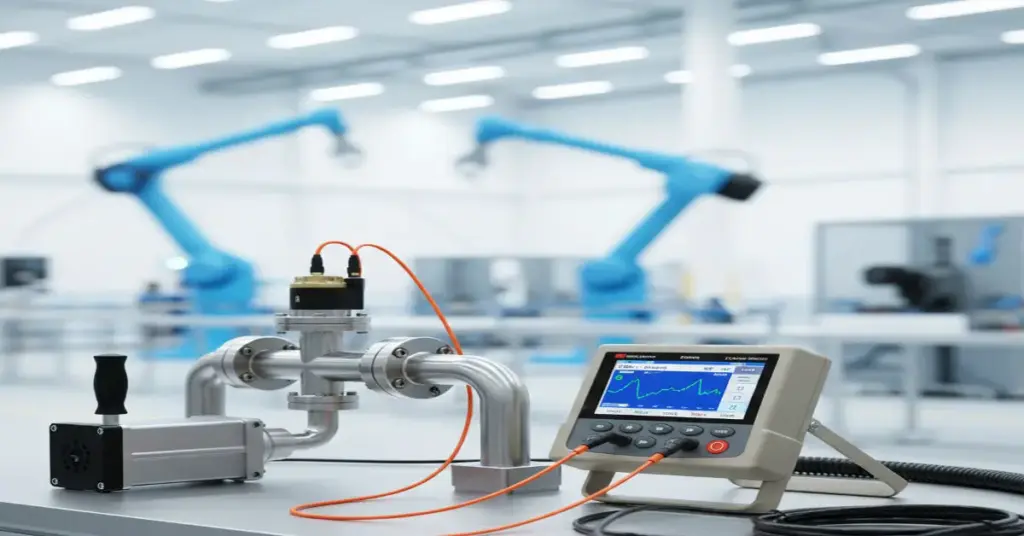
On-Site vs Lab Calibration: Which is Best for Your Facility? Every maintenance manager faces the same dilemma eventually. You have a critical audit coming up, or perhaps your process data looks slightly “off.” You know your instruments need attention, but now you have to make a choice. Do you shut down the line, unmount the sensors, and ship them away for a week? Or do you pay to have a technician bring their equipment to you? This is the classic debate of On-Site vs Lab Calibration. ADYAA offers both services because we know that no two facilities are the same. However, making the wrong choice can either cost you unnecessary downtime or compromise your accuracy results. As calibration specialists, we are here to help you decide which route is right for your specific assets. The Gold Standard: What is Lab Calibration? Laboratory calibration is the traditional method where you remove your instrument—be it a pressure gauge, temperature transmitter, or flow meter—and ship it to a controlled environment like ADYAA’s certified lab. Why Choose the Lab? Ultimate Precision: Our lab is environmentally controlled. Temperature, humidity, and vibration are strictly managed. This eliminates external variables that could skew the reading of highly sensitive master equipment. Full Range Testing: Some equipment requires massive reference standards (like large flow rigs or high-temperature furnaces) that simply cannot be put in a van. Deep Diagnostics: If a unit fails, we have the tools on the bench to dismantle, clean, and repair it immediately—something that is hard to do on a factory floor. Best For: Primary reference standards, highly critical quality control instruments, and lightweight portable devices. The Agile Alternative: What is On-Site Calibration? On-site calibration brings the technician and their portable reference standards directly to your plant. Why Choose On-Site? Zero Shipping Risks: Delicate instruments can be damaged during shipping. On-site eliminates this risk entirely. Minimal Downtime: This is the biggest advantage. A sensor might be out of service for 30 minutes instead of 5 days. Contextual Testing: We test the instrument in its actual operating environment. Sometimes, “drift” isn’t caused by the sensor, but by the installation (e.g., a loose cable or vibration). Our technicians can spot these environmental issues immediately. Best For: Heavy integrated machinery, continuous process lines (Oil & Gas, Food & Beverage), and facilities with hundreds of gauges to check at once. The Showdown: On-Site vs Lab Calibration To make the decision clearer, let’s look at how On-Site vs Lab Calibration compares across three critical factors: 1. Accuracy and Uncertainties In a lab, we can achieve the lowest possible measurement uncertainties (the “margin of error”). On-site, while still fully compliant and traceable to national standards, the environment is less stable. If you need to calibrate a master gauge used to check other gauges, send it to the lab. If you are calibrating a standard process switch, on-site is more than accurate enough. 2. Cost Implications Lab: You pay for shipping and the calibration fee. On-Site: You pay for the technician’s travel and time. The Verdict: If you only have one or two items, the lab is cheaper. If you have 50 pressure transmitters, On-Site vs Lab Calibration swings heavily in favor of on-site, as the bulk volume justifies the travel cost. 3. Production Impact If removing a flow meter requires draining a pipe and stopping production for a week, the cost of lost business dwarfs the cost of the calibration service. In this scenario, on-site is the only logical choice. Connecting the Dots: Calibration and System Health Calibration doesn’t exist in a vacuum. It is the health check that protects your entire ecosystem. Protecting Seals: As we discussed in our guide on Industrial Sealing, over-pressurization is a leading cause of gasket blowouts. Accurate pressure sensors ensure your system stays within safe limits, protecting your RTJ Gaskets and flanges. Validating Automation: Your Industrial Automation Sensors Are Only as Good as Their Calibration. A vision sensor or laser distance meter that drifts by 1mm can result in thousands of rejected products. Regular calibration closes the loop on quality control. Making the Final Call So, when weighing up On-Site vs Lab Calibration, ask yourself three questions: Can this item be easily removed? Is this the most critical reference standard in my plant? Can I afford for this device to be gone for 3-5 days? If you answered “No” to the last question, you need ADYAA’s on-site team. ADYAA provides NATA-traceable reports regardless of where the work is done. Whether you need the surgical precision of our lab or the rapid response of our field team, we ensure your sensors tell the truth. Unsure which service fits your schedule? Compare Our Calibration Services & Get a Quote Chat with a specialist today to plan your next shutdown. Why Dew Point Sensors Are Critical in Industrial Air and Gas Systems Why Dew Point Sensors Are Critical in Industrial Air and Gas Systems In the world of industrial automation and pneumatic… Read More → Understanding Thermowells and Their Role in Process Instrumentation Understanding Thermowells and Their Role in Process Instrumentation In the vast ecosystem of process control, temperature is often the most… Read More → 5 Signs Your Equipment Needs Calibration Now 5 Signs Your Equipment Needs Calibration Now In a perfect world, you would calibrate your instruments exactly according to the… Read More →
How Vision & Imaging Sensors Transform Automated Inspection Systems

How Vision & Imaging Sensors Transform Automated Inspection Systems Maintaining product quality while keeping up with high-speed production is crucial. Vision and imaging sensors are now key components of automated inspection systems, providing fast, reliable, and precise visual analysis that replaces slower, error-prone manual checks. ADYAA, offers advanced vision and imaging sensors that help manufacturers enhance quality, reduce defects, and increase overall production efficiency. What Are Vision & Imaging Sensors? Vision and imaging sensors are compact devices that integrate a camera, illumination, optics, and embedded image-processing software into a single industrial-grade unit. These sensors capture images of products or processes and analyze visual features such as shape, size, color, and defects in real time. Key capabilities include: Multiple Feature Checks: Inspect many characteristics from a single image, including presence, orientation, and print quality. Contour & Color Processing: Detect edges, shapes, and subtle color differences for accurate inspection. Part Localization: Identify and align objects precisely, even if they are not perfectly positioned. Integrated Illumination and Processing: Operate independently without needing an external computer. Vision sensors at ADYAA are designed for industrial environments and can handle high-speed production and complex inspection tasks across multiple industries. How Vision & Imaging Sensors Improve Automated Inspection Vision sensors enhance automated inspection by making processes faster, more accurate, and consistent: High-Speed Evaluation: Inspect thousands of products per minute to keep production lines moving efficiently. Consistent Quality Control: Provide objective and repeatable inspection results, reducing human errors. Early Defect Detection: Identify defects before products leave the line, reducing waste and rework. Data for Process Improvement: Collect visual data for traceability, trend analysis, and process optimization. Seamless Integration: Work with PLCs and robotics for coordinated automation and inspection tasks. Applications of Vision & Imaging Sensors Vision and imaging sensors are widely used to ensure quality and efficiency in multiple industries: Presence & Completeness Checks: Confirm that all components are assembled correctly. Dimensional Measurement: Verify that parts meet required specifications. Reading Codes & Text: Perform barcode scanning and OCR for traceability. Surface Defect Detection: Detects scratches, dents, or surface flaws. These applications demonstrate the importance of vision sensors in automotive, electronics, packaging, food processing, and pharmaceutical manufacturing. Conclusion Vision and imaging sensors are transforming automated inspection systems by delivering fast, accurate, and consistent quality checks. Integrating vision sensors from ADYAA Made by Baumer allows manufacturers to reduce waste, improve product quality, and collect valuable data for continuous process improvement. Investing in advanced vision and imaging technology is key to creating smarter, more efficient, and reliable manufacturing operations. Take the Next Step Explore ADYAA’s Vision & Imaging Sensors Collection Contact ADYAA’s technical team for expert advice How Industrial Automation Sensors Improve Automation & Efficiency in Manufacturing How Industrial Automation Sensors Improve Automation & Efficiency in Manufacturing In modern manufacturing, efficiency, accuracy, and reliability are more important… Read More → How Vision & Imaging Sensors Transform Automated Inspection Systems How Vision & Imaging Sensors Transform Automated Inspection Systems Maintaining product quality while keeping up with high-speed production is crucial…. Read More → IoT and Automation in Industrial Operations: Boost Efficiency, Safety, and Reliability IoT and Automation in Industrial Operations: Boost Efficiency, Safety, and Reliability Discover how IoT and automation revolutionize industrial operations. Improve… Read More →
IoT and Automation in Industrial Operations: Boost Efficiency, Safety, and Reliability
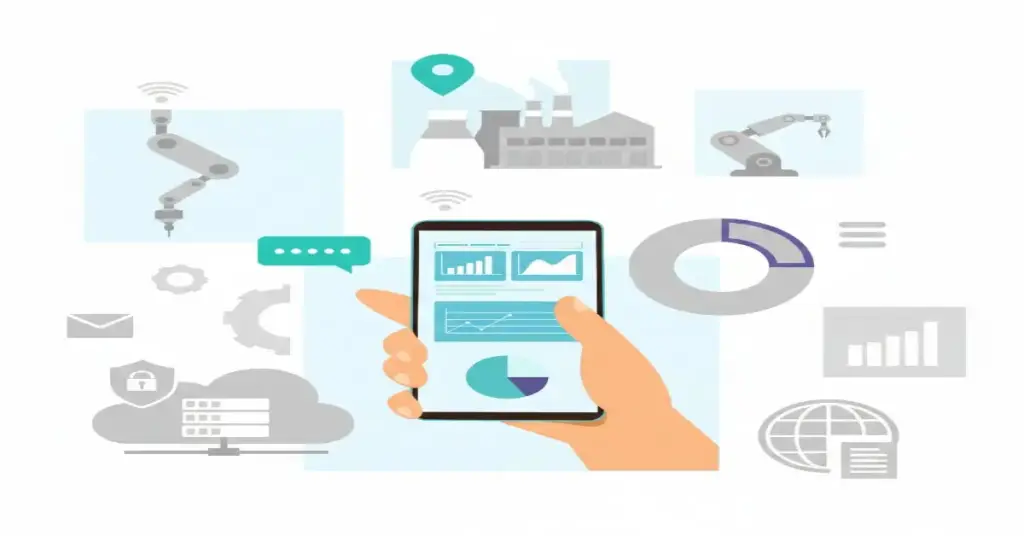
IoT and Automation in Industrial Operations: Boost Efficiency, Safety, and Reliability Discover how IoT and automation revolutionize industrial operations. Improve efficiency, enhance safety, and prevent downtime with predictive maintenance, remote monitoring, and smart automation solutions. Why IoT and Automation Matter Industrial operations are rarely simple. A missed maintenance alert, delayed data, or human error can cost thousands—or even millions. IoT and automation are no longer optional—they are critical for: Operational efficiency Safety and compliance Minimizing downtime Callout Box:ADYAA, Tip for Plant Managers: Digital systems act as invisible sentinels, monitoring operations 24/7 and reducing risks before they become costly problems. The Cost of Inefficiency Without IoT Inefficiency shows up in several ways: Unplanned Downtime: Machines fail unexpectedly. Safety Hazards: Human monitoring errors in hazardous environments. Energy and Material Waste: Manual processes consume more resources. Insight: Adopting ADYAA IoT and automation allows plant managers to proactively reduce risks and improve performance. Suggested Image: Industrial plant with IoT sensors – Alt: “Industrial IoT sensors monitoring machinery” How IoT and Automation Transform Industrial Operations Modern industrial operations demand precision, insight, and control. Here’s how smart technologies make a difference: Predictive Maintenance – Stop Downtime Before It Happens Manual maintenance schedules are reactive and costly. Solution: IoT sensors + AI analytics How it Works: Sensors track temperature, vibration, and performance in real-time. AI predicts failures before they occur. Benefit: Continuous production with minimal unplanned downtime. Suggested Icon/Image: Gear with sensor – Alt: “Predictive maintenance using IoT sensors” Process Automation – Consistency & Efficiency Manual operations introduce variability and errors. Solution: PLCs and automation software How it Works: Automated systems control machine sequences, fluid levels, and assembly lines with precision. Benefit: High-quality output and efficient resource use. Suggested Icon/Image: Robotic arm on production line – Alt: “Industrial automation controlling production line” Remote Monitoring – Control Operations Anywhere Many plants operate in hazardous or remote areas. Solution: IoT gateways + cloud dashboards How it Works: Real-time data is sent to dashboards, allowing engineers to monitor and adjust operations remotely. Benefit: Continuous operational control and safety, even off-site. Suggested Icon/Image: Cloud dashboard – Alt: “IoT remote monitoring dashboard” Data-Driven Decision Making – Insights That Drive Action Data is valuable only if it informs action. Solution: Industrial AI + analytics platforms How it Works: Aggregated sensor data identifies trends and anomalies, allowing managers to optimize production schedules and improve safety protocols. Benefit: Smarter decisions, less waste, safer operations. Suggested Icon/Image: Analytics graph – Alt: “Data-driven decision making in industrial operations” Why IoT and Automation Projects Fail (And How to Avoid It) Even advanced systems fail without proper management: Poor Integration: Disconnected devices lead to fragmented insights. Insufficient Training: Operators misinterpret dashboards. Neglecting Maintenance: Sensors and PLCs need periodic checks. Callout Box: Partner with experienced vendors who understand industrial processes and system integration. Secure Your Industrial Future Efficiency and safety cannot rely on human vigilance alone. IoT and automation provide: Predictive intelligence Precise control Actionable insights Investing in smart industrial systems ensures your plant stays future-ready, efficient, and risk-free. Explore ADYAA’s Industrial Sensors Collection Contact ADYAA’s technical team for expert advice How Industrial Automation Sensors Improve Automation & Efficiency in Manufacturing How Industrial Automation Sensors Improve Automation & Efficiency in Manufacturing In modern manufacturing, efficiency, accuracy, and reliability are more important… Read More → How Vision & Imaging Sensors Transform Automated Inspection Systems How Vision & Imaging Sensors Transform Automated Inspection Systems Maintaining product quality while keeping up with high-speed production is crucial…. Read More → IoT and Automation in Industrial Operations: Boost Efficiency, Safety, and Reliability IoT and Automation in Industrial Operations: Boost Efficiency, Safety, and Reliability Discover how IoT and automation revolutionize industrial operations. Improve… Read More →
Protecting Equipment with Pressure Relief Systems
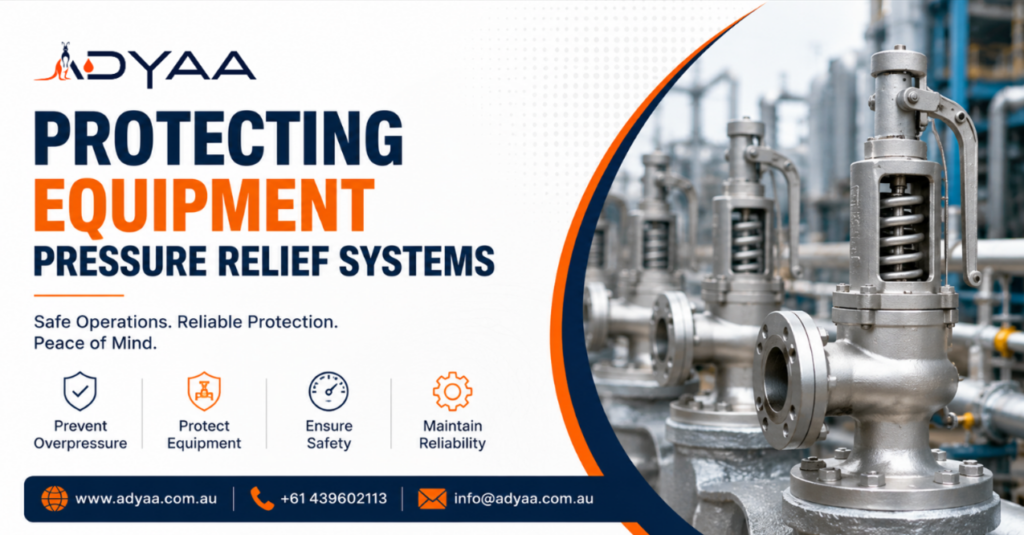
Protecting Equipment with Pressure Relief Systems: A Plant Manager’s Guide Industrial assets are expensive. A single reactor or distillation column represents millions of dollars in capital investment, not to mention the revenue it generates every hour it is online. Yet, these massive steel giants have a weakness: they are incredibly sensitive to internal pressure limits. If a control loop fails or a cooling system stalls, internal pressure can rise within seconds. Without a reliable escape path, the vessel walls will yield, leading to catastrophic equipment damage, environmental release, or safety hazards. Protecting Equipment with Pressure Relief Systems is not just about meeting a compliance checklist; it is the fundamental insurance policy for your plant’s physical assets. The Hidden Mechanisms of Failure To understand how to protect your machinery, you first need to understand the enemy. Overpressure events rarely happen without warning, but they often happen too fast for human intervention. Common culprits include: Blocked Discharge: A valve is accidentally closed downstream while a pump continues to run, dead-heading the flow and spiking pressure. External Fire: A fire near a storage tank causes the liquid inside to boil, expanding rapidly into gas and overwhelming the vessel’s design limits. Thermal Expansion: A pipeline full of liquid is isolated and heated by the sun, causing the fluid to expand and rupture the pipe. In all these scenarios, the vessel integrity depends entirely on the mechanical response of your relief system. The Hierarchy of Defense Effective protection isn’t about slapping a valve on a tank. It requires a layered engineering strategy. When Protecting Equipment with Pressure Relief Systems, we typically look at two distinct lines of defence: 1. The Reclosing Barrier (Safety Valves) The Safety Relief Valve (SRV) is the primary defender. Its job is to open at a set pressure, release just enough fluid to restore safety, and then close again. This protects the equipment from rupturing while simultaneously attempting to save the remaining product in the tank. It is the “recoverable” safety measure. 2. The Ultimate Fail-Safe (Rupture Discs) Some threats are too fast or too corrosive for a standard valve. A rupture disc is a non-reclosing device that bursts open instantly. It is often used to isolate expensive safety valves from corrosive chemicals or to provide a massive, unrestricted vent path during an explosion. Engineering for Reliability, Not Just Compliance Many facilities make the mistake of sizing a relief valve once, installing it, and forgetting it for five years. However, Protecting Equipment with Pressure Relief Systems is a dynamic process that evolves with your plant. Precision Sizing is Critical A common misconception is that “bigger is safer.” This is false. Oversized Valves: If a valve is too large for the required flow, it will open and close rapidly (chatter). This violent hammering can damage the valve seat and the vessel flange itself. Undersized Valves: These cannot vent pressure fast enough to keep up with the generation rate (e.g., during a fire), leading to vessel failure. Proper protection requires rigorous calculations (often using API 520 standards) to ensure the valve matches the specific hydraulic reality of the process. The Role of Back Pressure You must also consider where the fluid goes. If you vent into a header system shared by other units, the pressure in that header pushes back against your valve. If you don’t account for this “back pressure” by using balanced bellows or pilot-operated valves, your protection system may not open when it’s supposed to. The Shift to Data-Driven Maintenance Old-school maintenance involved pulling every valve every year for testing. This is costly and introduces unnecessary risk (damage during handling). Modern asset protection relies on Risk-Based Inspection (RBI). By analysing the history and service conditions of each valve, you can determine which equipment is high-risk and needs frequent attention, and which can safely operate for longer intervals. This approach ensures your resources are focused exactly where the equipment needs them most. The Bottom Line Your pressure vessels are the heart of your operation. A compromise in their integrity is a compromise in your business’s future. Protecting Equipment with Pressure Relief Systems requires more than just hardware; it demands correct engineering, proper material selection, and a maintenance strategy based on data, not guesswork. Ensuring your valves and discs are correctly sized and maintained is the only way to guarantee that when the pressure rises, your assets remain safe. Is your facility protected against the unexpected? Let our engineering team audit your current relief sizing and maintenance strategy to ensure your assets are secure. Contact ADYAA Engineering Speak to a specialist today about optimizing your pressure safety strategy. Industrial HVAC vs Commercial HVAC: What is the Difference? Industrial HVAC vs Commercial HVAC: Why Equipment Choice Matters If you walk onto the roof of a shopping mall and… Read More → How Industrial Automation Sensors Improve Manufacturing Efficiency How Industrial Automation Sensors Improve Efficiency in Manufacturing Efficiency is the primary metric of success. The difference between a profitable… Read More → Gems 3100/3200 Pressure Transmitters : Complete Guide Gems 3100/3200 Pressure Transmitters: Complete Guide Accurate pressure monitoring is essential across industrial environments where process visibility, operational consistency and… Read More →
Gaskets vs O-Rings: Which Sealing Solution Is Right for You?
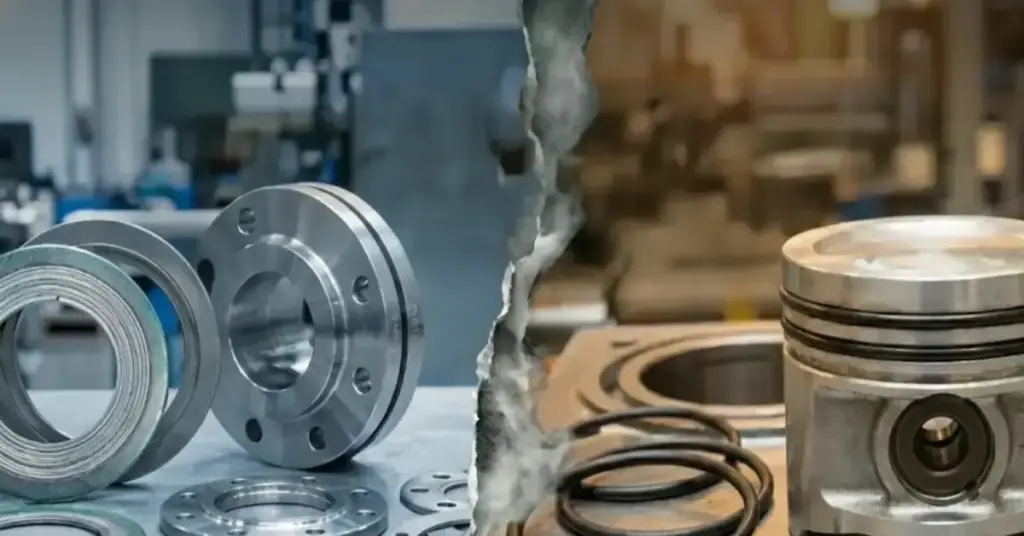
Gaskets vs O-Rings: Which Sealing Solution Is Right for You? In any fluid handling system, the weakest point is always the connection. Whether you are bolting two pipe flanges together or sealing a moving piston, you need a barrier that prevents leaks. This brings us to the most common question in industrial sealing: what is the difference between Gaskets vs O-Rings? While both devices serve the same ultimate purpose—keeping fluids in and contaminants out they function differently and are designed for distinct environments. ADYAA, supply both high-performance gaskets and precision O-rings. In this guide, we break down the battle of Gaskets vs O-Rings to help you select the right solution for your application. Gaskets vs O-Rings for: Mechanical Engineers, Maintenance Technicians, Procurement Officers. 1. What Is a Gasket? (The Static Specialist) A gasket is a flat seal designed to fill the space between two mating surfaces, typically held together by bolts. Function: It creates a seal by being compressed between two stationary parts (like pipe flanges). Common Types: Spiral Wound Gaskets, Ring Type Joints (RTJ), and cut sheet gaskets. Best For: Static applications where the two surfaces do not move relative to each other. 2. What Is an O-Ring? (The Versatile Performer) An O-ring is a loop of elastomer (rubber) or metal with a round cross-section. It sits inside a designated groove and is compressed to create a seal. Function: It can seal against high pressure in both static (stationary) and dynamic (moving) applications. Common Types: NBR, Viton, EPDM, and Metal O-Rings. Best For: Hydraulic cylinders, pump shafts, and precise static grooves. The Key Differences: Gaskets vs O-Rings When deciding between Gaskets vs O-Rings, the choice usually comes down to three factors: Motion, Pressure, and Flange Design. A. Static vs. Dynamic Motion This is the biggest differentiator. Gaskets are almost exclusively used for static seals. If the two surfaces move or vibrate significantly, a standard gasket may tear or lose compression. O-Rings excel in dynamic seals. If you have a piston moving inside a cylinder or a rotating shaft, an O-ring (or dynamic seal) is required because it can handle the friction and motion. B. Pressure Handling In the comparison of Gaskets vs O-Rings, gaskets often win in heavy industrial piping. Gaskets (specifically RTJs): Designed for extreme pressure (up to 20,000 PSI). The harder you bolt the flange, the tighter the seal. O-Rings: Can handle high pressure, but they require backup rings to prevent “extrusion” (where the rubber is blown out of the gap). C. Surface Requirements Gaskets are forgiving. They can seal rougher, uneven flange surfaces because the gasket material deforms to fill the imperfections. O-Rings require precision. The groove must be machined to exact tolerances. If the surface is rough, the O-ring will suffer from abrasion and leak. Selection Guide: Which Should You Choose? To settle the Gaskets vs O-Rings debate for your specific project, ask these questions: Is there movement? Yes (Shafts, Pistons) – Choose an O-Ring. No (Pipe Flanges, Valve Bonnets) – Choose a Gasket. What is the connection type? Flat Flanges – Gasket (Spiral Wound or RTJ). Grooved Housing – O-Ring. What is the Temperature? Extreme Heat (>500°C)? $rightarrow$ You need a Metal RTJ Gasket or a Metal O-Ring (Elastomers will melt). Conclusion Ultimately, the choice of Gaskets vs O-Rings isn’t about which is “better”—it is about which fits the geometry of your equipment. If you are sealing a heavy-duty pipe flange in an oil refinery, you need an ADYAA Ring Type Joint. If you are sealing a hydraulic actuator, you need an ADYAA O-Ring. We stock both, ensuring you never have to compromise on seal quality. Need help specifying the right seal? Explore Our Gaskets & O-Rings Collection Contact our technical team for advice. How Industrial Automation Sensors Improve Automation & Efficiency in Manufacturing How Industrial Automation Sensors Improve Automation & Efficiency in Manufacturing In modern manufacturing, efficiency, accuracy, and reliability are more important… Read More → How Vision & Imaging Sensors Transform Automated Inspection Systems How Vision & Imaging Sensors Transform Automated Inspection Systems Maintaining product quality while keeping up with high-speed production is crucial…. Read More → IoT and Automation in Industrial Operations: Boost Efficiency, Safety, and Reliability IoT and Automation in Industrial Operations: Boost Efficiency, Safety, and Reliability Discover how IoT and automation revolutionize industrial operations. Improve… Read More →
The Role of Sealing in Preventing Leakage & Safety Hazards

The Role of Sealing in Preventing Leakage and Safety Hazards A leak is rarely just a “drip.” In a chemical plant, a leak poses a significant risk of toxic exposure. In an oil refinery, there is a potential fire. In a high-pressure steam line, it is an explosion hazard. While pumps and reactors get the most attention during safety audits, the role of sealing in preventing leakage is arguably the most critical factor for maintaining facility integrity. It is the invisible shield that keeps your processes contained and your workforce safe. ADYAA understands that gaskets and seals are not just consumables; they are safety devices. In this guide, we explore how high-performance sealing mitigates catastrophic risks. Sealing Solutions for HSE Managers, Maintenance Leads, Reliability Engineers. The Real Cost of Leakage Leakage is often categorized into two types: visible leakage (drips and sprays) and fugitive emissions (invisible gas release). Both pose severe threats: Fire and Explosion: In the Oil & Gas sector, flammable hydrocarbons escaping from a failed flange gasket can be ignited by a single spark. Toxic Exposure: Leaking seals in chemical processing can release hazardous fumes (like chlorine or ammonia), endangering workers’ lungs and skin. Environmental Contamination: Seeping chemicals can contaminate groundwater, leading to massive EPA fines. Understanding the role of sealing in preventing leakage allows plant managers to address these risks before they become accidents. How Advanced Sealing Prevents Hazards Preventing these outcomes requires selecting the right seal for the specific hazard. Standard rubber O-rings often fail under extreme stress. Here is how specialized ADYAA sealing products fulfill the vital role of sealing in preventing leakage across different applications. 1. Controlling Extreme Pressure (The RTJ Solution) When pressures climb above 2,000 PSI, standard flat gaskets can blow out. The Solution: Ring Type Joint (RTJ) Gaskets. How it Works: Used heavily in the Oil & Gas industry, RTJs (like the Type R, RX, and BX) sit in a machined groove. The RX and BX styles are “pressure-energized,” meaning internal pressure pushes the gasket tighter against the flange. This mechanism highlights the active role of sealing in preventing leakage during dangerous pressure spikes. 2. Handling Extreme Temperatures In cryogenic applications (LNG) or superheated steam systems, elastomers become brittle and crack, leading to immediate failure. The Solution: Metal O-Rings and Lens Rings. How it Works: Made from heavy-duty alloys, Metal O-Rings and Lens Rings withstand temperatures that would melt rubber. They provide a high-pressure metal-to-metal seal, ensuring that even if the facility faces a fire, the seal remains intact. 3. Chemical Resistance Many industrial fluids are corrosive enough to eat through standard seals. The Solution: Spring Energized Seals and Bonded Seals. How it Works: By using high-grade polymers (like PTFE) energized by a corrosion-resistant spring, these seals maintain contact with the sealing surface even if the polymer degrades slightly. This confirms the role of sealing in preventing leakage of toxic chemicals that could otherwise dissolve standard gaskets. Why Seals Fail (And How to Stop It) Even the best gasket will leak if applied incorrectly. The three most common causes of sealing failure are: Incorrect Material Selection: Using a standard NBR O-ring in a high-temperature acid line. Improper Installation: Uneven bolt torque on a flange can crush a gasket or leave gaps. Reusing Disposable Seals: Many metallic gaskets (like RTJs) deform to create a seal and cannot be reused. Protect Your Workforce with ADYAA Safety is not a place to cut corners. Whether you require Weld Ring Gaskets for a permanent seal or Backup Rings for hydraulics, ADYAA has the engineering expertise to specify the correct component. We supply sealing products designed to Australian and International standards. By prioritizing the role of sealing in preventing leakage, you ensure your plant stays compliant, efficient, and accident-free. Is your facility fully protected? Browse Our Range of RTJ Gaskets & Metal Seals Contact ADYAA for a Sealing Safety Assessment. How Industrial Automation Sensors Improve Automation & Efficiency in Manufacturing How Industrial Automation Sensors Improve Automation & Efficiency in Manufacturing In modern manufacturing, efficiency, accuracy, and reliability are more important… Read More → How Vision & Imaging Sensors Transform Automated Inspection Systems How Vision & Imaging Sensors Transform Automated Inspection Systems Maintaining product quality while keeping up with high-speed production is crucial…. Read More → IoT and Automation in Industrial Operations: Boost Efficiency, Safety, and Reliability IoT and Automation in Industrial Operations: Boost Efficiency, Safety, and Reliability Discover how IoT and automation revolutionize industrial operations. Improve… Read More →