
Decoding the Datasheet: The Truth About Pressure Transmitter Accuracy
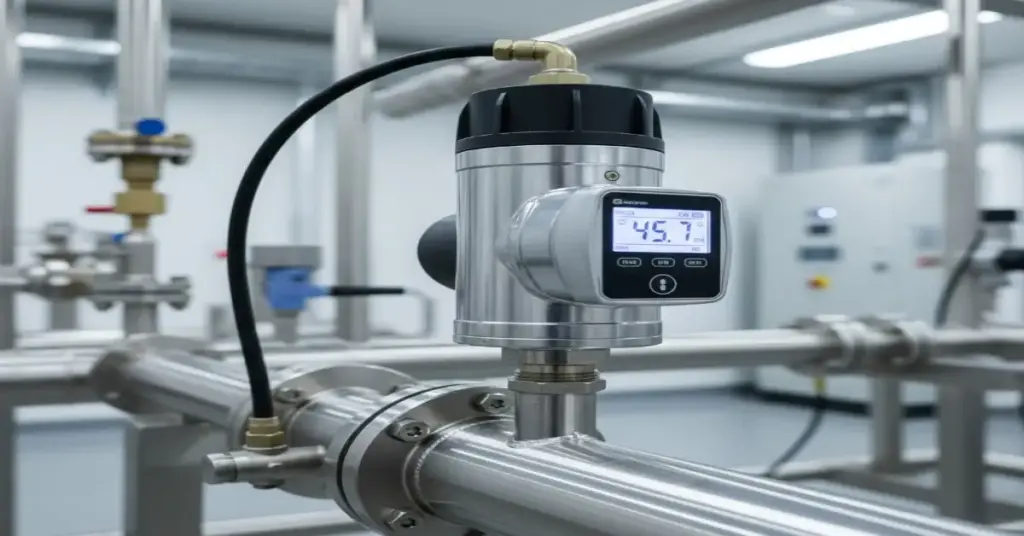
Decoding the Datasheet: The Truth About Pressure Transmitter Accuracy In the world of Industrial Pressure Sensors, “Accuracy” is the most expensive word on the datasheet. You see a shiny number like “±0.075%” printed in bold, and it’s natural to assume that’s exactly the error margin you’ll see on your control screen. But once you install that transmitter in the field—where it’s vibrating on a pump or baking in the Australian sun—the reality can be very different. This confusion leads to two common (and costly) mistakes: Over-specifying: Buying a Ferrari-level sensor for a go-kart application (wasting money). Under-specifying: Buying a cheap sensor that drifts constantly, ruining your process control. ADYAA, we believe the best customer is an educated one. So, let’s peel back the layers of the datasheet and explain what those accuracy specs actually mean for your plant. 1. The “Lab Number”: What Reference Accuracy Really Means The first number you see on a datasheet (e.g., ±0.075% of Span) is called Reference Accuracy. Think of this as the “Showroom Condition.” It tells you how the sensor performs in a perfect, air-conditioned laboratory with stable pressure and zero vibration. It is calculated using three specific test criteria, known as the “Big Three”: A. Linearity (The Straight Line) If you graph pressure vs. output signal, it should be a perfectly straight diagonal line. Linearity measures how much the sensor “wobbles” off that perfect path. If the linearity is bad, your DCS might say the tank is 50% full when it’s actually 51%. B. Hysteresis (The Memory Effect) Sensors have “muscle memory.” Going Up: You pressurize to 10 bar, and it reads 10.01 bar. Coming Down: You depressurize back to 10 bar, and it reads 9.99 bar. That difference is Hysteresis. It happens because the metal sensing diaphragm doesn’t snap back perfectly instantly. C. Repeatability (The Most Important Spec) If you hit the sensor with exactly 5 bar of pressure ten times in a row, does it give you the exact same number ten times? Repeatability is king. Even if a sensor is slightly off, if it’s repeatable, you can calibrate it to be perfect. If it’s not repeatable, it’s untrustworthy. The Reality Check: Reference Accuracy only tells you how good the sensor can be. It doesn’t tell you how good it will be in your plant. 2. The Real World: Why Accuracy Drops in the Field Your plant isn’t a laboratory. It’s hot, noisy, and dirty. These environmental factors introduce new errors that are not included in that headline “0.075%” number. Temperature Effect (The Sun Factor) Liquids expand when they get hot. Inside a Pressure Transmitter, there is a tiny amount of oil that transfers pressure to the sensor. The Problem: If your transmitter sits in the 40°C afternoon sun and then cools down to 10°C at night, that internal oil expands and contracts. This causes the “Zero” point to drift. The Fix: High-quality sensors use “Active Temperature Compensation” to mathematically correct this error in real-time. Cheap sensors do not. Static Pressure Effect This is a big one for Differential Pressure (DP) flow measurement. If you are measuring a tiny pressure drop across an orifice plate, but the pipe itself is pressurized to 50 bar, that massive static pressure squeezes the sensor body. This physical stress shifts the reading. 3. The https://www.google.com/search?q=%231 Mistake: ignoring “Turndown Ratio” This is the most common reason we see “accurate” sensors giving bad data. Turndown Ratio is how much of the sensor’s range you are actually using. Accuracy is usually a percentage of the Maximum Range, not your calibrated set point. Scenario: You buy a sensor rated for 0-100 bar. The Mistake: You only use it to measure 0-5 bar. The Result: That tiny error margin at 100 bar becomes a huge error margin when you are only looking at 5 bar. Engineer’s Tip: Always buy a sensor range that is closest to your actual operating pressure. Don’t buy a 100 bar sensor to measure 5 bar “just in case.” 4. The “Real” Number: Total Probable Error (TPE) If you want to know the honest accuracy of a device, you need to calculate the Total Probable Error (TPE). This isn’t usually printed on the datasheet, but it’s the number that matters. It combines the Lab Accuracy with the Temperature and Static Pressure effects. Standard Sensor: Might claim 0.075% accuracy, but the real TPE is 0.25%. High-End Sensor: Might claim 0.04% accuracy, and the real TPE is 0.10%. Why does this matter? If you are calculating the efficiency of a million-dollar boiler, that difference is massive. 5. Which Sensor Tier Do You Actually Need? At ADYAA, we help you save money by matching the right tier to the right job. You don’t need a Porsche to drive to the grocery store. Tier 1: Standard Industrial (±0.25% – ±0.5%) Use for: Monitoring pumps, water tank levels, compressed air lines. Why: You just need to know if the pressure is stable. Close enough is good enough. Tier 2: Precision Process (±0.075%) Use for: Chemical reactors, steam flow, critical control loops. Why: A small error here could ruin a batch or waste energy. Tier 3: High Performance (±0.04% or better) Use for: Custody transfer (selling oil/gas), leak testing, calibration labs. Why: When every drop of product equals money, you pay for the best. Final Thoughts Don’t let the specs intimidate you. Understanding Pressure Transmitter Accuracy is simply about matching the tool to the environment. ADYAA, supplies, we don’t just ship boxes. Our engineering team can help you calculate the Total Probable Error for your specific application, ensuring you get a sensor that is accurate enough to keep you safe, without blowing your maintenance budget. Need help selecting the right pressure transmitter? Explore the ADYAA Pressure Range Contact us for a TPE Calculation. How Industrial Automation Sensors Improve Automation & Efficiency in Manufacturing How Industrial Automation Sensors Improve Automation & Efficiency in Manufacturing In modern manufacturing, efficiency, accuracy, and reliability are more important… Read More → How Vision & Imaging Sensors
Understanding Australian Standards for Industrial Pressure Safety Systems
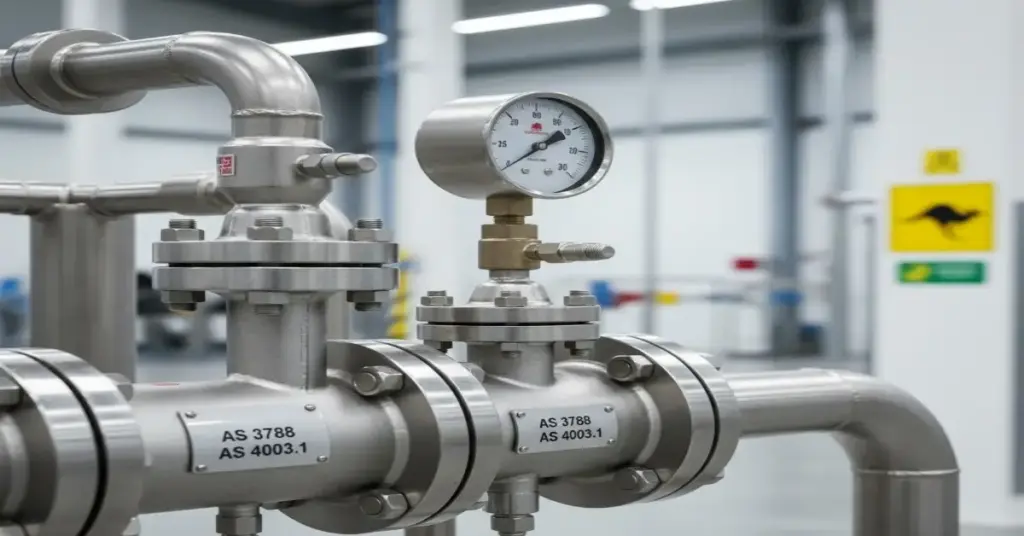
Understanding Australian Standards for Industrial Pressure Safety Systems In the Australian industrial sector, the phrase “She’ll be right” doesn’t apply to pressure vessels. If a boiler or compressed air receiver explodes, the consequences are catastrophic—not just for human safety, but for the legal liability of the company directors. In Australia, pressure safety is strictly governed by state regulators (like WorkSafe WA, SafeWork NSW) and a rigid framework of Australian Standards. For Plant Managers and Engineers, navigating these codes can feel like wading through treacle. You have AS 1210, AS 1271, AS 4343—what do they actually mean for your day-to-day operations? ADYAA , we ensure every relief system we supply meets these rigorous local requirements. In this guide, we are breaking down the key Australian Standards for Pressure Safety to help you stay compliant and keep your site safe. The “Bible” of Safety Valves: AS 1271 If you are buying a safety valve in Australia, this is the standard that matters most. AS 1271 (Safety valves, other valves, liquid level gauges, and other fittings for boilers and unfired pressure vessels) sets the rules for the design, construction, and testing of the device itself. What you need to know: Materials: It dictates what materials can be used (ensuring they don’t become brittle in Australian conditions). Testing: It requires rigorous seat tightness and capacity testing. Marking: A compliant valve must be clearly stamped with set pressure, capacity, and manufacturer details. The ADYAA Promise: We ensure our valves meet or exceed the requirements of AS 1271, so you never fail an inspection. 2. The Hazard Levels: AS 4343 Not all pressure vessels are created equal. A small air tank in a garage is different from a high-pressure reactor in a refinery. AS 4343 (Pressure equipment—Hazard levels) is the standard used to categorize your equipment based on risk. It assigns a Hazard Level (A, B, C, D, or E) based on: Pressure (How high is it?) Volume (How big is the tank?) Fluid Type (Is it gas, liquid, toxic, or flammable?) Why it matters to you: The Hazard Level determines how often you need to inspect your Industrial Pressure Safety Systems. Level A (High Hazard): Requires frequent internal inspections and independent design verification. Level E (Negligible Hazard): Requires minimal regulation. If you don’t know the Hazard Level of your vessel, you cannot legally maintain it. 3. The Maintenance Rulebook: AS 3788 Buying the valve is the easy part. Keeping it legal is the hard part. AS 3788 (Pressure equipment—In-service inspection) is the standard that tells you when and how to inspect your equipment after it is installed. It answers the common questions we get at ADYAA: “How often do I need to test my safety valve?” “Do I need to pull the valve off the line, or can I test it in place?” Common AS 3788 Guidelines: Visual Check: Usually every year. Proof Test: Safety valves typically need to be bench-tested (popped) or replaced every 2 to 4 years, depending on the service conditions. Ignoring this schedule is a direct violation of WorkSafe regulations. 4. The “ASME vs. AS” Confusion This is the https://www.google.com/search?q=%231 question we get from Australian engineers: “Can I use an ASME (American) certified valve in Australia?” The short answer: Yes, usually. The explanation: AS 1200 (Pressure equipment) allows for the use of “International Standards” (like ASME Section VIII or API 526) as long as they provide a safety level equivalent to Australian Standards. Since ASME is the global gold standard, almost all high-quality valves (including those from ADYAA) are built to ASME code. However, they must still be selected and installed in accordance with Australian regulations. Tip: Always keep the Manufacturer’s Data Report (MDR) and calibration certificates. In Australia, if you don’t have the paper, the valve doesn’t exist to an auditor. Conclusion: Compliance is Non-Negotiable Navigating Australian Standards for Pressure Safety isn’t just about avoiding a fine from the regulator; it’s about ensuring that everyone goes home to their families at the end of the shift. Whether you are upgrading a boiler in Perth or maintaining a pipeline in Queensland, you need equipment that fits the local regulatory framework. ADYAA supplies , we are an Australian company. We understand these codes because we live by them. We can help you select relief systems that are fully compliant with AS 1271 and ready for AS 3788 inspection cycles. Need help with compliance? View our Compliant Safety Valves Contact our Engineering Team for a Standards Review. How Industrial Automation Sensors Improve Automation & Efficiency in Manufacturing How Industrial Automation Sensors Improve Automation & Efficiency in Manufacturing In modern manufacturing, efficiency, accuracy, and reliability are more important… Read More → How Vision & Imaging Sensors Transform Automated Inspection Systems How Vision & Imaging Sensors Transform Automated Inspection Systems Maintaining product quality while keeping up with high-speed production is crucial…. Read More → IoT and Automation in Industrial Operations: Boost Efficiency, Safety, and Reliability IoT and Automation in Industrial Operations: Boost Efficiency, Safety, and Reliability Discover how IoT and automation revolutionize industrial operations. Improve… Read More →