When to Replace Rupture Discs in Pressure Equipment: A Maintenance Guide
When to Replace Rupture Discs in Pressure Equipment: A Maintenance Guide In the world of pressure safety, the rupture disc...
Read More →

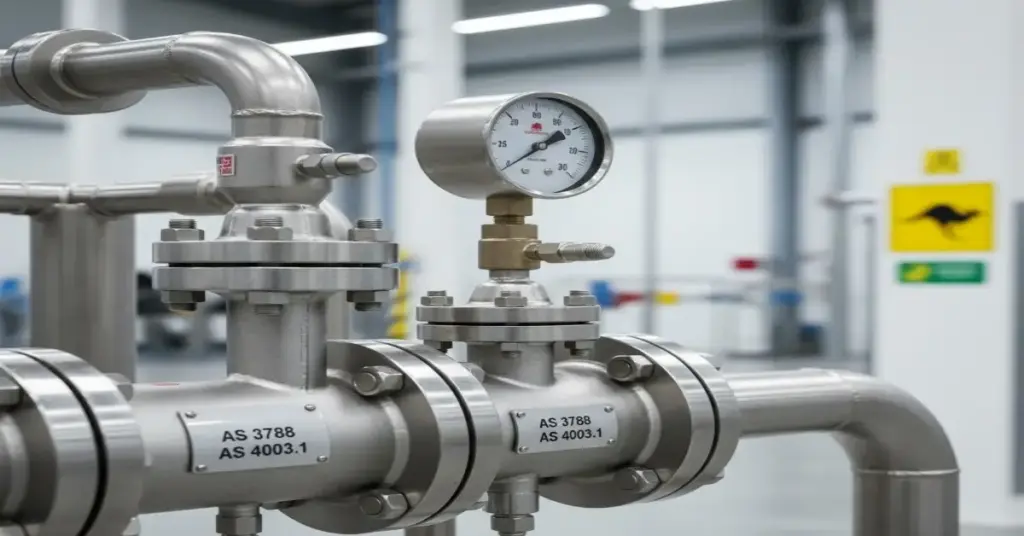
In the Australian industrial sector, the phrase “She’ll be right” doesn’t apply to pressure vessels.
If a boiler or compressed air receiver explodes, the consequences are catastrophic—not just for human safety, but for the legal liability of the company directors. In Australia, pressure safety is strictly governed by state regulators (like WorkSafe WA, SafeWork NSW) and a rigid framework of Australian Standards.
For Plant Managers and Engineers, navigating these codes can feel like wading through treacle. You have AS 1210, AS 1271, AS 4343—what do they actually mean for your day-to-day operations?
ADYAA , we ensure every relief system we supply meets these rigorous local requirements. In this guide, we are breaking down the key Australian Standards for Pressure Safety to help you stay compliant and keep your site safe.
If you are buying a safety valve in Australia, this is the standard that matters most.
AS 1271 (Safety valves, other valves, liquid level gauges, and other fittings for boilers and unfired pressure vessels) sets the rules for the design, construction, and testing of the device itself.
What you need to know:
The ADYAA Promise: We ensure our valves meet or exceed the requirements of AS 1271, so you never fail an inspection.
Not all pressure vessels are created equal. A small air tank in a garage is different from a high-pressure reactor in a refinery.
AS 4343 (Pressure equipment—Hazard levels) is the standard used to categorize your equipment based on risk. It assigns a Hazard Level (A, B, C, D, or E) based on:
Why it matters to you: The Hazard Level determines how often you need to inspect your Industrial Pressure Safety Systems.
If you don’t know the Hazard Level of your vessel, you cannot legally maintain it.
Buying the valve is the easy part. Keeping it legal is the hard part.
AS 3788 (Pressure equipment—In-service inspection) is the standard that tells you when and how to inspect your equipment after it is installed.
It answers the common questions we get at ADYAA:
Common AS 3788 Guidelines:
This is the https://www.google.com/search?q=%231 question we get from Australian engineers: “Can I use an ASME (American) certified valve in Australia?”
The short answer: Yes, usually.
The explanation: AS 1200 (Pressure equipment) allows for the use of “International Standards” (like ASME Section VIII or API 526) as long as they provide a safety level equivalent to Australian Standards.
Since ASME is the global gold standard, almost all high-quality valves (including those from ADYAA) are built to ASME code. However, they must still be selected and installed in accordance with Australian regulations.
Tip: Always keep the Manufacturer’s Data Report (MDR) and calibration certificates. In Australia, if you don’t have the paper, the valve doesn’t exist to an auditor.
Navigating Australian Standards for Pressure Safety isn’t just about avoiding a fine from the regulator; it’s about ensuring that everyone goes home to their families at the end of the shift.
Whether you are upgrading a boiler in Perth or maintaining a pipeline in Queensland, you need equipment that fits the local regulatory framework.
ADYAA supplies , we are an Australian company. We understand these codes because we live by them. We can help you select relief systems that are fully compliant with AS 1271 and ready for AS 3788 inspection cycles.
Need help with compliance?