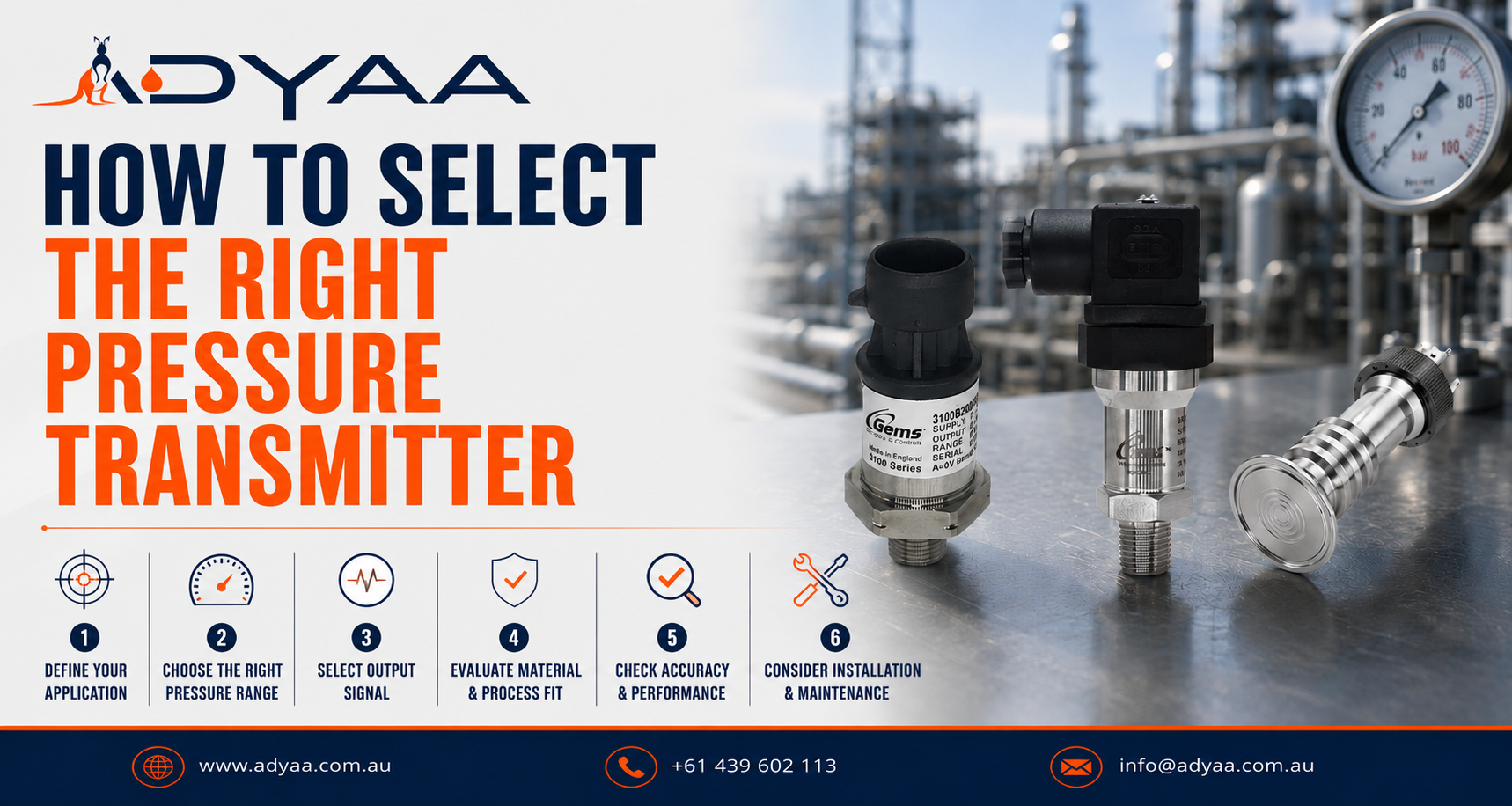
Pressure transmitters play a critical role in industrial automation, process control, water treatment, mining, manufacturing, and hydraulic systems. Selecting the correct pressure transmitter ensures accurate monitoring, improved equipment protection, and long-term operational reliability.
Choosing the wrong sensor can result in inaccurate measurements, premature failures, increased maintenance costs, and process downtime. Understanding the key selection criteria helps engineers and maintenance teams achieve optimal performance from their pressure measurement systems.
How to Select the Right Pressure Transmitter
Understand the Required Pressure Range
The first step in selecting a pressure transmitter is determining the operating pressure range of the application.
A transmitter should typically operate within 30% to 80% of its full-scale range during normal conditions. Selecting an excessively large pressure range can reduce measurement accuracy, while choosing an undersized range can expose the sensor to overload conditions.
Examples include:
- Water distribution systems: 0–10 bar
- Pump monitoring: 0–16 bar
- Hydraulic systems: 250–1000 bar
- Industrial compressors: 0–40 bar
Always consider pressure spikes and transient conditions when selecting the final range.
Choose the Correct Pressure Type
Pressure transmitters are available in several measurement configurations:
Gauge Pressure
Measures pressure relative to atmospheric pressure and is commonly used in industrial processes.
Absolute Pressure
Measures pressure relative to a perfect vacuum and is often used in vacuum systems and scientific applications.
Sealed Gauge Pressure
References a fixed atmospheric pressure and is suitable for outdoor installations where environmental conditions vary.
Selecting the correct pressure reference is essential for accurate process control.
Consider Output Signal Requirements
The transmitter output must be compatible with the control system or PLC.
Common output signals include:
- 4–20 mA
- 0–5 V
- 0–10 V
- 1–5 V
- 1–10 V
- 0.5–4.5 V Ratiometric
The 4–20 mA output remains the most widely used option due to its noise immunity and long-distance transmission capability.
Evaluate Process Media Compatibility
The wetted materials of the transmitter must be compatible with the process fluid.
For demanding industrial environments, 316 Stainless Steel is commonly preferred due to its resistance to:
- Corrosion
- Chemical attack
- Moisture
- Process contamination
Industries such as water treatment, food processing, chemical manufacturing, and mining often require robust stainless-steel construction.
Check Environmental Conditions
Industrial environments can expose pressure transmitters to:
- Vibration
- Hydraulic shock
- Temperature fluctuations
- Dust and moisture
- Chemical exposure
Selecting a transmitter with suitable environmental protection improves reliability and service life.
Applications involving hydraulic power units or heavy machinery may require sensors specifically designed to withstand pressure spikes and pulsation.
Accuracy and Long-Term Stability
Accuracy requirements vary between applications.
General industrial processes typically use transmitters with accuracies between:
- ±0.5% Full Scale
- ±0.25% Full Scale
Critical monitoring applications may require higher precision.
Long-term stability is equally important as it reduces recalibration frequency and maintenance costs over the life of the equipment.
Common Applications for Pressure Transmitters
Pressure transmitters are widely used across industries including:
- Water Treatment Plants
- Mining Operations
- Hydraulic Systems
- Food and Beverage Processing
- Chemical Manufacturing
- Oil and Gas Facilities
- Industrial Automation Systems
- Pump and Compressor Monitoring
Each application requires careful consideration of pressure range, output signal, material compatibility, and environmental conditions.
Conclusion
Selecting the right pressure transmitter involves more than simply matching a pressure range. Engineers should evaluate pressure type, output signal, process media compatibility, environmental conditions, and accuracy requirements to ensure reliable long-term performance.
A properly selected pressure transmitter improves process efficiency, reduces maintenance costs, enhances equipment protection, and supports accurate industrial monitoring across a wide range of applications.