In the high-stakes world of industrial processing, pressure is a constant threat. If a pipe gets blocked or a chemical reaction runs out of control, pressure can build up in seconds, turning a steel tank into a potential bomb.
To prevent this, most plants rely on safety valves. But valves have moving parts. They can seize, leak, or react too slowly to a sudden spike.
Enter the Rupture Disc (also known as a Bursting Disc).
It is the “airbag” of the process world—a simple, non-reclosing device that sacrifices itself to save your equipment. Once it activates, it’s gone, but your plant is safe.
ADYAA supplies and distributes Rupture Discs in Australia, providing critical safety devices to local mining, oil & gas, and manufacturing industries. In this full guide, we will break down exactly what a Rupture Disc is, how it works, and why it might be the most important piece of metal in your facility.
1. What is a Rupture Disc?
A Rupture Disc is a pressure relief device that consists of a thin, calibrated metal foil (the membrane) held between two metal holders.
It is designed to be the “weakest link” in your pressure vessel. When the pressure inside the system hits a specific limit (the Burst Pressure), the disc physically tears open, allowing fluid or gas to escape instantly and relieving the pressure.
Unlike a safety valve, which opens and then closes again, a Rupture Disc is a non-reclosing device. Once it bursts, it must be replaced.
2. How Do They Work?
The mechanism is pure physics.
- Normal Operation: The disc acts as a solid seal, keeping the process fluid inside the pipe.
- Pressure Rise: As pressure builds, the metal foil begins to stress.
- Burst Point: When the pressure differential across the disc exceeds its tensile strength (the set pressure), the metal fails.
- Relief: The disc opens fully (in milliseconds), creating an unrestricted path for the gas or liquid to vent out safely.
3. Key Characteristics & Types
Not all discs are the same. Engineers select a Rupture Disc based on specific characteristics:
A. Forward Acting (Tension Loaded)
- How it works: The pressure pushes against the concave (hollow) side of the dome. The metal stretches until it snaps, like blowing up a balloon until it pops.
- Best for: Lower operating pressures and static loads.
B. Reverse Acting (Compression Loaded)
- How it works: The pressure pushes against the convex (bulging) side of the dome. When the pressure hits the limit, the dome “snaps” through (inverts) and is sliced open by a knife blade or scored lines on the metal.
- Best for: High operating pressures (up to 95% of burst pressure) and cycling conditions.
C. Materials
Discs are made from exotic materials to resist corrosion and ensure precision. Common materials include Stainless Steel (316L), Inconel, Monel, Nickel, and Graphite.
4. Applications & Use Cases
Where do you actually install a Rupture Disc?
1. As a Primary Relief Device
Used on vessels where a valve is too expensive, too slow, or simply unnecessary.
- Example: A chemical reactor where a runaway reaction creates a pressure spike faster than a valve can open.
2. Upstream of a Safety Valve (The “Bodyguard”)
This is the most common industrial use. The disc is installed before a Safety Relief Valve.
- Why? It seals the expensive valve off from corrosive chemicals or sticky fluids that would gum up the valve internals. If the pressure spikes, the disc bursts, and then the valve opens.
3. Downstream of a Safety Valve
Installed on the outlet to prevent corrosive vapors from the header system entering the valve from the back.
5. Advantages of Using a Rupture Disc
Why choose a disc over a valve?
- Zero Leakage: It is a solid metal seal. Unlike valves, which can “simmer” or leak slightly, a disc is bubble-tight. Essential for toxic or expensive gases.
- Instant Response: There is no spring to compress or piston to move. It opens in milliseconds.
- Cost-Effective: A disc is significantly cheaper than a high-performance safety valve.
- Low Maintenance: It has no moving parts. No lubrication or adjustment is needed.
6. FAQ: People Also Ask
Here are the answers to the most common questions about Rupture Discs.
What happens if a disc ruptures?
When a disc ruptures, it creates an open path for the process fluid to escape. The system pressure drops rapidly. However, because the seal is broken, the process fluid will continue to vent until the system is shut down or isolated. You must stop production to replace the disc.
What is the life of a rupture disc?
A Rupture Disc does not last forever. Fatigue from pressure cycling (going up and down) eventually weakens the metal.
- Recommendation: Most manufacturers recommend replacing discs once a year during preventative maintenance, even if they haven’t burst.
- Harsh conditions: In corrosive or high-cycling environments, they may need replacement every 6 months.
Where is the rupture disc located?
They are typically located directly on the pressure vessel nozzle or in the piping immediately before a Safety Relief Valve. They are mounted inside a specialized Safety Head (holder) that is bolted between two pipe flanges.
What does a rupture disc look like?
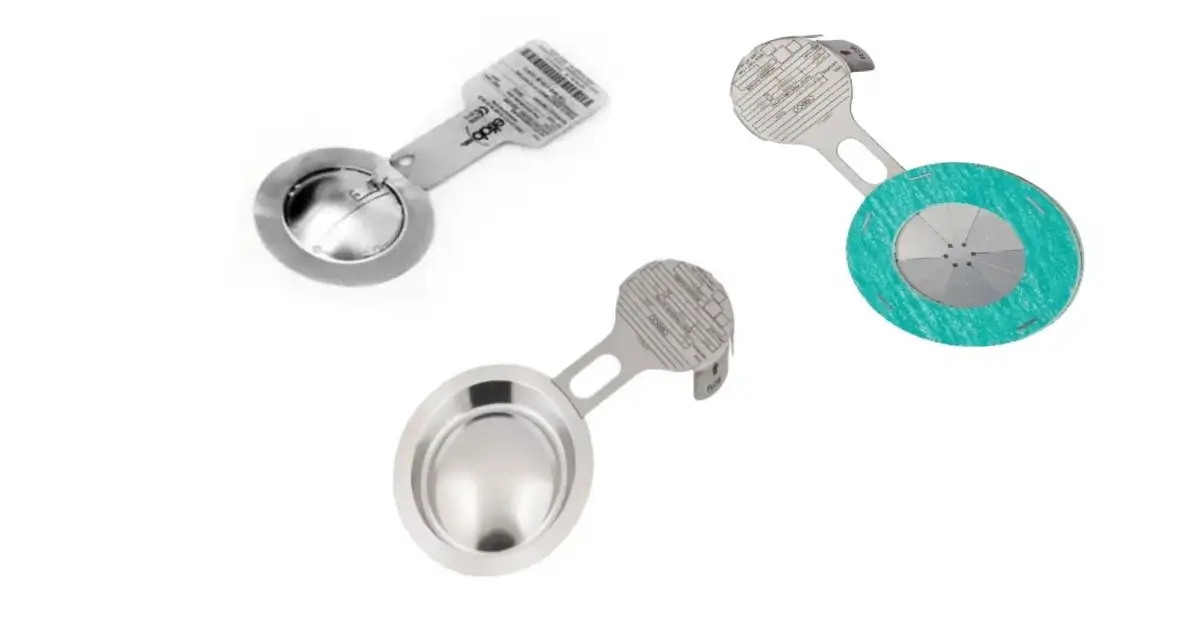
It looks like a round, slightly domed metal plate, usually with a metal tag handle sticking out. The tag contains vital info like the Burst Pressure, Temperature Rating, and Flow Direction arrow.
- Note: Never paint over the disc or the tag!
Conclusion: A Small Device with a Big Job
A Rupture Disc is often the last line of defense between safe operation and a major incident. It is simple, reliable, and absolutely critical.
Whether you need to protect a storage tank from vacuum collapse or shield a safety valve from corrosion, choosing the right disc requires expert sizing.
ADYAA supplies and distributes Rupture Discs in Australia, offering high-precision safety heads tailored to your plant’s unique hazards.
Ready to secure your pressure systems?