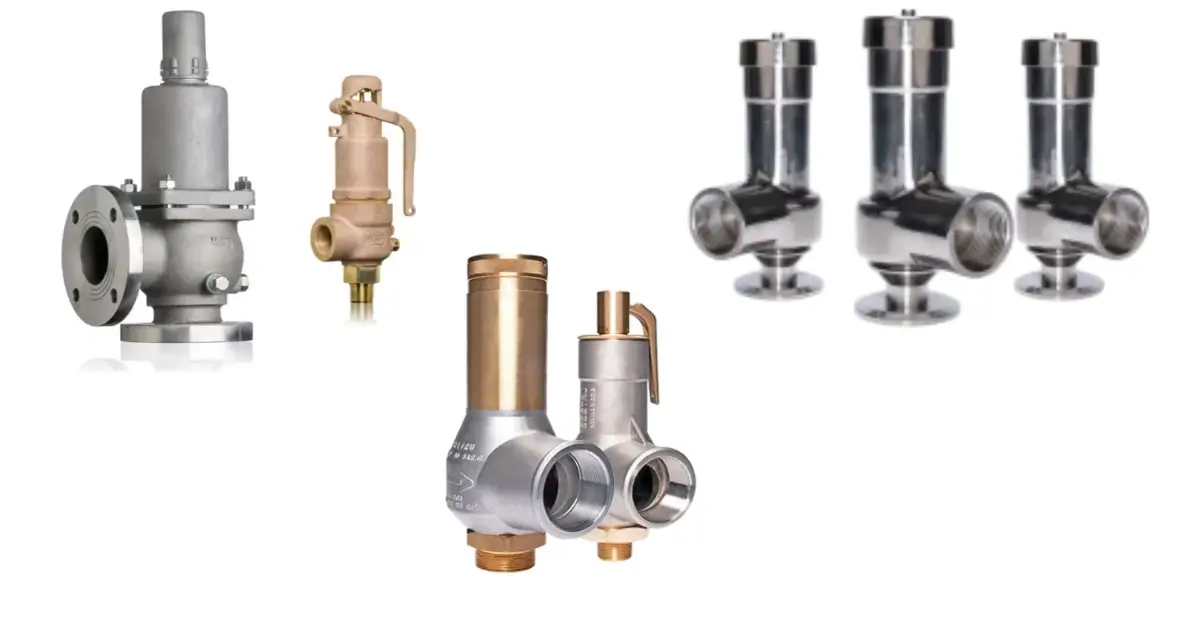
In the world of industrial process control, terms often get thrown around loosely. You’ll frequently hear engineers say “Relief Valve” when they mean “Safety Valve,” and vice versa.
But if you are the one signing off on a purchase order—or worse, the one responsible for plant safety during an audit—you know that Safety Relief Valve vs Pressure Relief Valve isn’t just a semantic argument. It is a critical engineering distinction.
Choosing the wrong device for your medium (Gas vs. Liquid) doesn’t just mean your system will be inefficient; it means it could be dangerous. A valve designed to “pop” open for steam might hammer itself to destruction if used on water.
ADYAA supplies comprehensive pressure relief systems to industries worldwide. In this guide, we are clearing up the confusion so you can specify the right valve for your line with confidence.
Safety Relief Valve and Pressure Relief Valve for Plant Engineers, Maintenance Managers, and Safety Officers.
1. What is a Safety Valve? (The “Pop” Action)
A Safety Valve is a safety device designed to open rapidly and fully the moment the pressure hits the set limit. Think of a balloon popping—it doesn’t release air slowly; it releases it all at once.
- Primary Use: Compressible fluids (Steam, Air, Gas).
- Mechanism: It relies on the kinetic energy of the expanding gas to lift the valve disc instantly to 100% open.
- Why use it? Gases expand rapidly. If a boiler is over-pressurizing, you need to vent a massive volume of gas immediately to prevent an explosion. A slow-opening valve would be too dangerous in this scenario.
2. What is a Pressure Relief Valve? (The “Gradual” Action)
A Pressure Relief Valve (PRV) is designed to open gradually, proportional to the increase in pressure. Think of turning on a kitchen tap—the more you turn it, the more water flows.
If the pressure is 10% over the limit, the valve opens 10%. If the pressure drops, the valve slowly closes.
Key Functions:
- Proportional Control: It modulates the opening to release only as much fluid as necessary to bring the pressure back down.
- Protection: It acts as a limit on the maximum pressure in a hydraulic or liquid circuit.
Primary Benefits:
- Prevents Water Hammer: Because it opens and closes gradually, it avoids the sudden shockwaves (hydraulic shock) that destroy pipes and pumps.
- System Stability: It maintains a steady pressure in the line without causing the massive pressure drops that a Safety Valve would cause.
- Liquid Compatibility: Specifically engineered for Non-Compressible fluids like Water, Oil, and Hydraulic Fluid.
3. Safety Relief Valve vs Pressure Relief Valve: The Comparison
To decide which one you need, you simply have to look at how the valve reacts to pressure.
The Core Difference: “Pop” vs. “Open”
- Safety Valve: Snaps open to 100% lift instantly. (Digital: On/Off).
- Relief Valve: Opens slowly as pressure builds. (Analog: Proportional).
Comparison Table: PSV vs. PRV
Save this cheat sheet for your next planning meeting.
Feature | Safety Valve | Pressure Relief Valve |
Action | Rapid “Pop” Opening (Snap Action) | Gradual Opening (Modulating) |
Primary Medium | Gas, Steam, Air (Compressible) | Water, Oil, Chemicals (Non-Compressible) |
Goal | Prevent Catastrophic Failure (Explosion) | Control Pressure / Protect Equipment |
Reset Pressure | Closes well below set pressure (Blowdown) | Closes near set pressure |
Common Use | Boilers, Steam Drums, Air Receivers | Hydraulic Lines, Pump Discharge, Lube Systems |
4. What is a “Safety Relief Valve”? (The Hybrid)
Here is where it gets tricky. You will often see the term Safety Relief Valve (SRV).
An SRV is a versatile specialized valve that can function as either a Safety Valve or a Relief Valve, depending on the application.
- On Gas/Steam: It “pops” open.
- On Liquid: It opens in proportion to the pressure rise.
ADYAA Insight: Many modern plants standardize on Safety Relief Valves to reduce inventory complexity, but you must ensure the trim and seal materials are compatible with your specific process fluid.
5. Beyond the Valve: ADYAA Protection Systems
Sometimes, a valve isn’t the right solution—or it isn’t enough on its own. At ADYAA, we often recommend a layered approach to safety.
- Rupture Discs: A non-reclosing metal foil that bursts at a set pressure. Used as a fail-safe backup or for viscous fluids that would gum up a valve spring.
- Tank Protection (Vents): Breather valves that manage both venting and vacuum to prevent storage tanks from imploding during draining.
- Flame Arrestors: Essential for fuel lines to stop external fires from traveling back down the pipe into the tank.
6. How to Select the Right ADYAA Valve
When you contact ADYAA for a relief system, we will guide you through three main questions:
- What is the State of Matter?
- Gas/Steam $\rightarrow$ You likely need a Safety Valve.
- Liquid $\rightarrow$ You likely need a Pressure Relief Valve.
- What is the Set Pressure?
- We need to know the exact point you want the valve to lift.
- What is the “Back Pressure”?
- Is the valve venting to the atmosphere (open air) or into a closed pipe system? Back pressure in pipes can affect when the valve opens.
Conclusion: Don’t Guess with Safety
The difference between Safety Relief Valve vs Pressure Relief Valve is the difference between a controlled release and a catastrophic pipe failure.
Whether you need a Rupture Disc for a chemical reactor or a standard Pressure Relief Valve for a hydraulic pump, getting the specs right is non-negotiable.
ADYAA offers pressure relief systems designed for reliable performance in harsh industrial environments.
Need to secure your pressure vessels?